Analytical skills Animals Worksheets for Ages 4-8
3 filtered results
-
From - To
Enhance your child's analytical skills with our engaging Animals Worksheets, designed specifically for ages 4-8! These printable activities encourage young learners to observe, compare, and categorize various animals, fostering critical thinking and problem-solving skills. Through interactive exercises featuring fun facts and colorful illustrations, children will explore habitats, diets, and characteristics of different species. Our worksheets promote cognitive development while ensuring that learning about the animal kingdom remains enjoyable. Perfect for home or classroom use, these resources help your little ones build a strong foundation in analysis and reasoning. Unlock your child’s potential with our exciting, skill-building worksheets today!
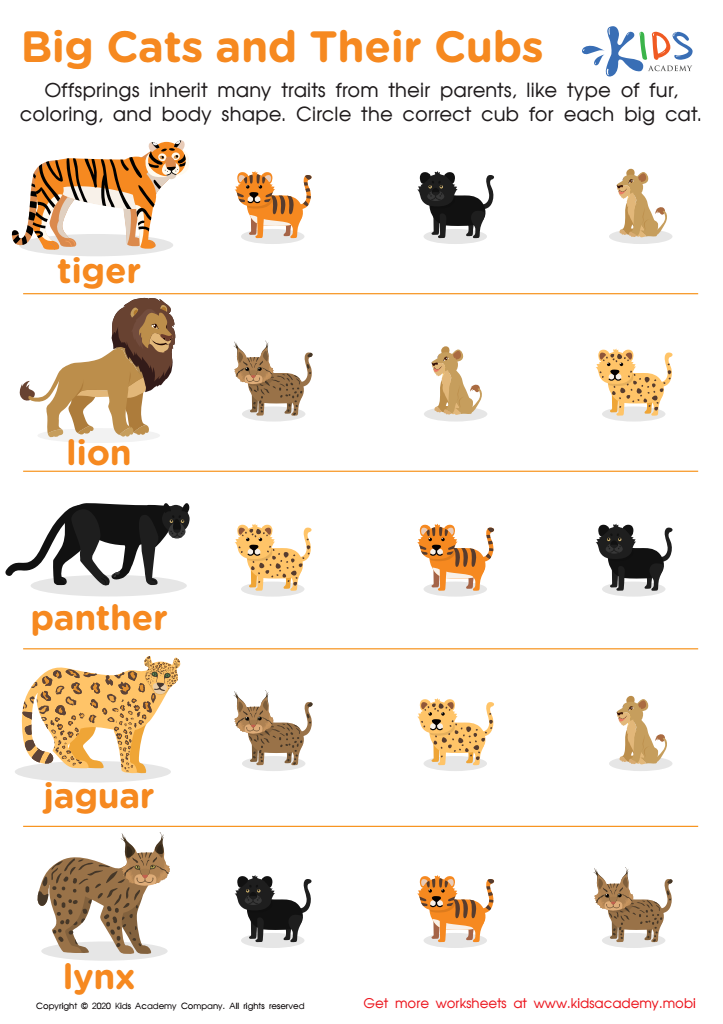
Big Cats and Their Cubs Worksheet
 Assign to My Students
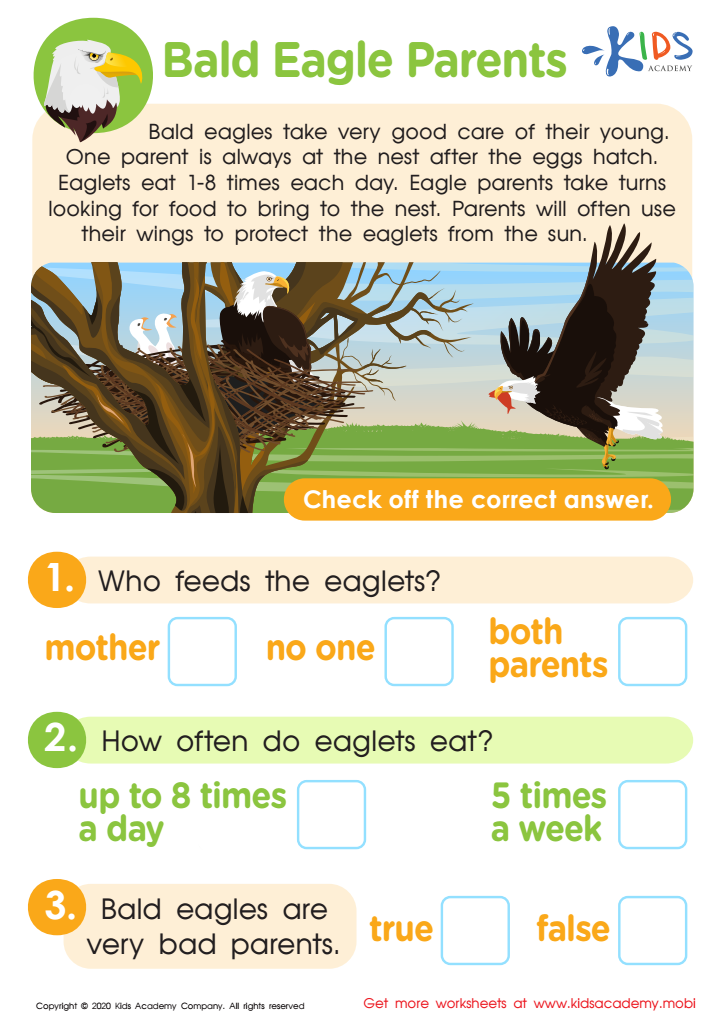
Bald Eagle Parents Worksheet
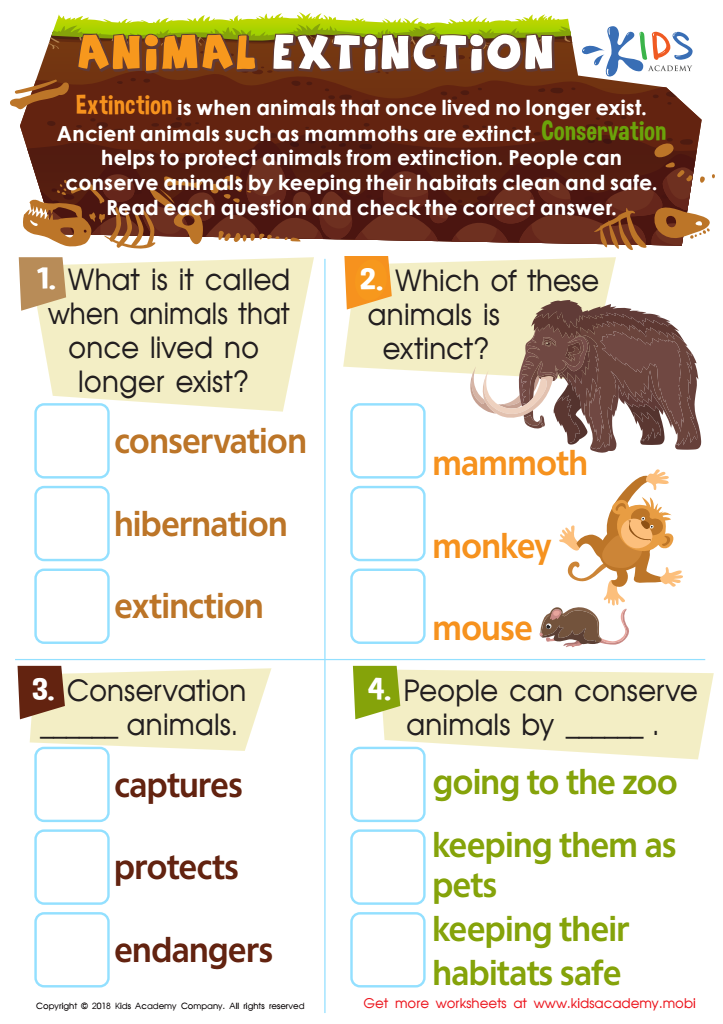
Animal Extinction Worksheet


%20(1).jpg)


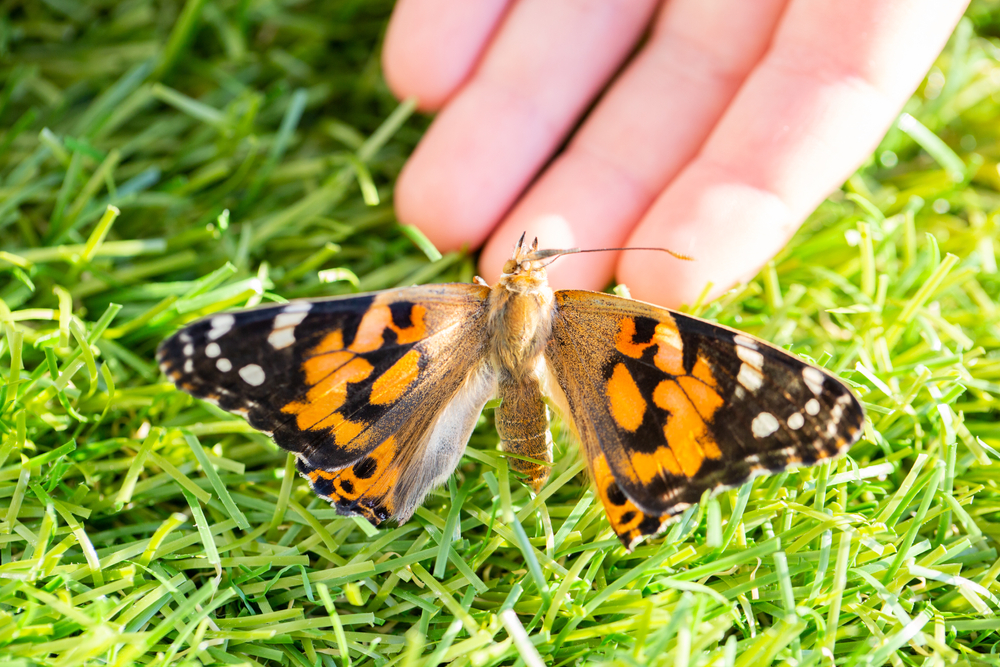


Analytical skills are crucial for a child's cognitive development, particularly in children aged 4-8. Engaging with animals can serve as a gateway for young learners to enhance these skills. When children observe and interact with animals, they begin to ask questions, make predictions, and draw conclusions—key components of analytical thinking.
Information about animals helps children make connections between different concepts, promoting reasoning and problem-solving skills. For instance, while discussing habitats, children analyze how different animals adapt to their environments. This encourages them to think critically about cause and effect, and to observe patterns in nature.
Moreover, animal-related activities can foster emotional intelligence, as children learn empathy through caring for pets or participating in discussions about wildlife conservation. They begin to understand the roles that different animals play in an ecosystem, encouraging them to think from multiple perspectives.
Teachers and parents play a vital role in nurturing these skills. By using stories, games, or science projects that focus on animals, adults can create enriching experiences that promote curiosity and exploration. Supporting children in developing analytical skills through their interest in animals prepares them for academic success and supports lifelong learning.








