
Categorization skills Animals Worksheets for Ages 4-8
4 filtered results
Difficulty Level
Grade
Age
-
From - To
Subject
Activity
Standards
Enhance your child's learning journey with our Categorization Skills Animals Worksheets designed for ages 4-8! These engaging activities encourage young learners to group animals based on various characteristics, fostering critical thinking and cognitive development. Kids can explore the animal kingdom as they sort, classify, and identify different species, helping them understand the diversity of wildlife. These worksheets provide a fun, interactive approach that promotes essential skills while keeping children entertained. Perfect for home or classroom use, our categorized worksheets support early science education and inspire a love for learning about animals. Download now to nurture curiosity and categorization skills!
Favorites
With answer key
Interactive
 Assign to My Students
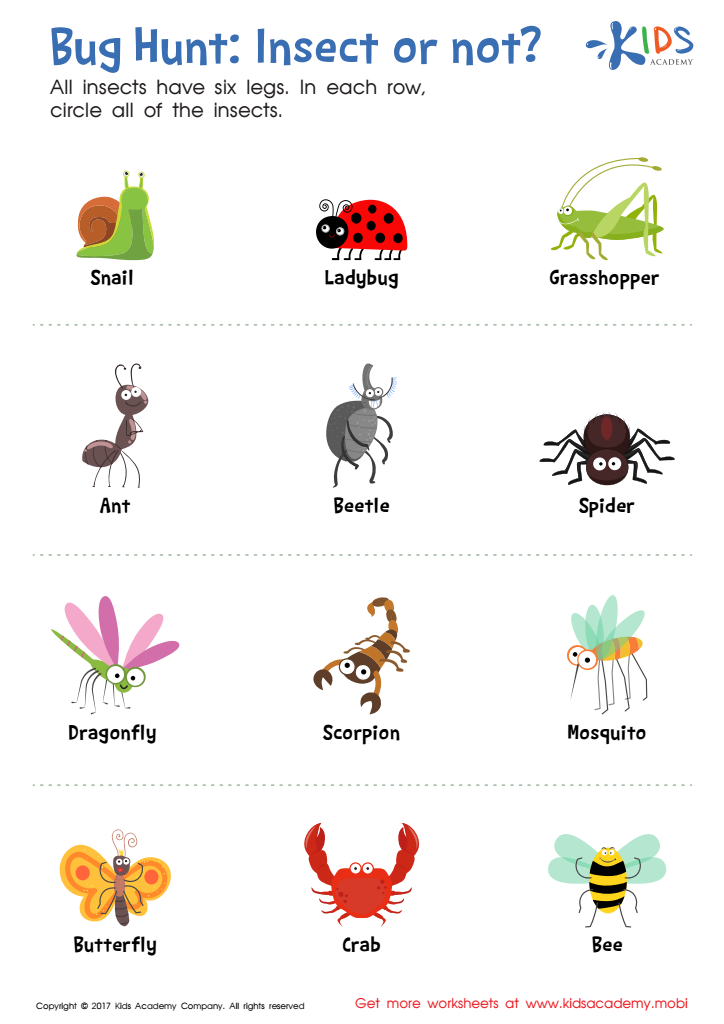
Insect or Not? Worksheet
Worksheet
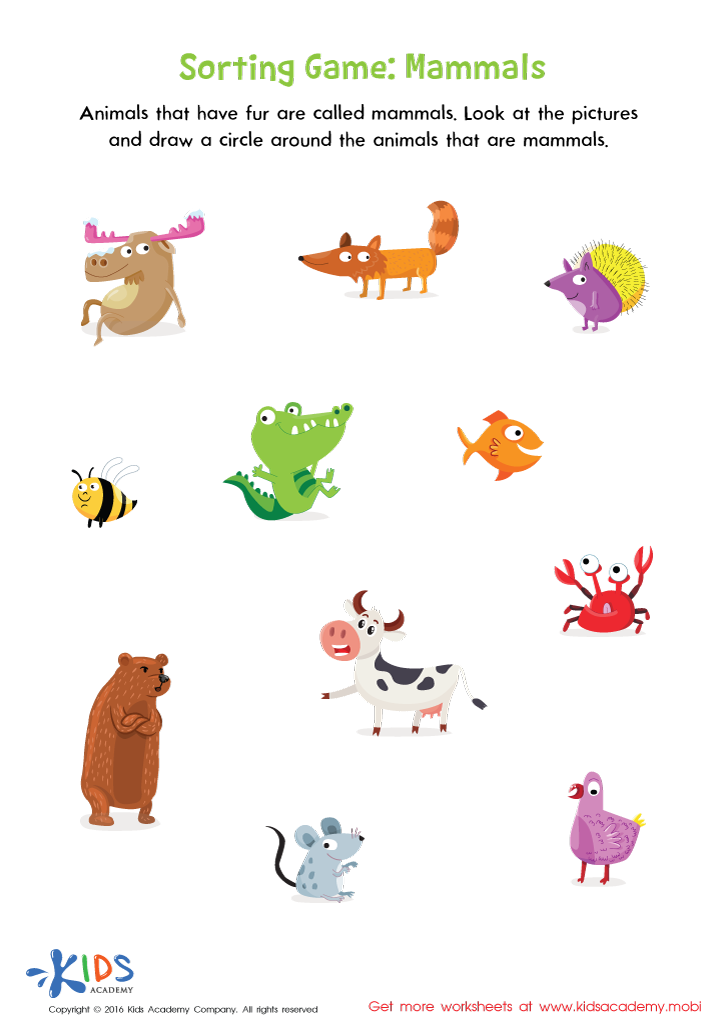
Mammals Sorting Worksheet
They'll practice sorting animals and learn their features with this fun worksheet.
Kids can test their scientific knowledge with this fun worksheet! They'll view pictures of animals, identify mammals based on their fur, and practice sorting them. This colorful worksheet is a great way for kids to learn about the differences between mammals and other animals.
Mammals Sorting Worksheet
Worksheet
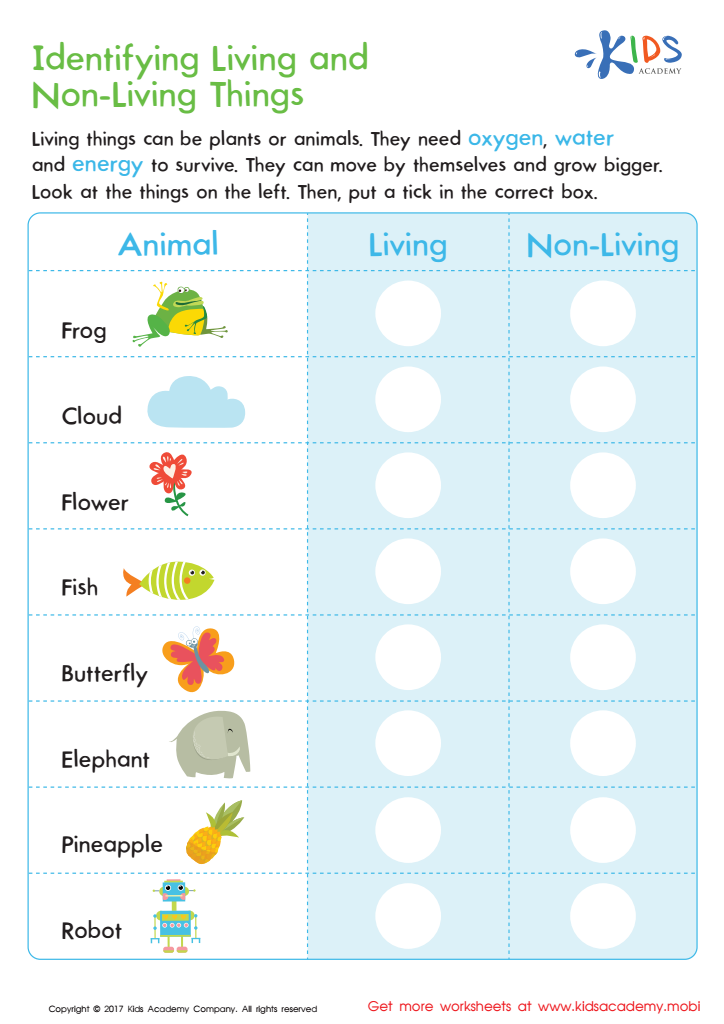
Identifying Living or Non–living Worksheet
Help your child learn to sort and categorize in a new way! Teach them to classify things as living or non-living using this worksheet. It's the perfect way to build their scientific understanding, and to have some learning fun! Print this worksheet and watch them discover the world of science!
Identifying Living or Non–living Worksheet
Worksheet
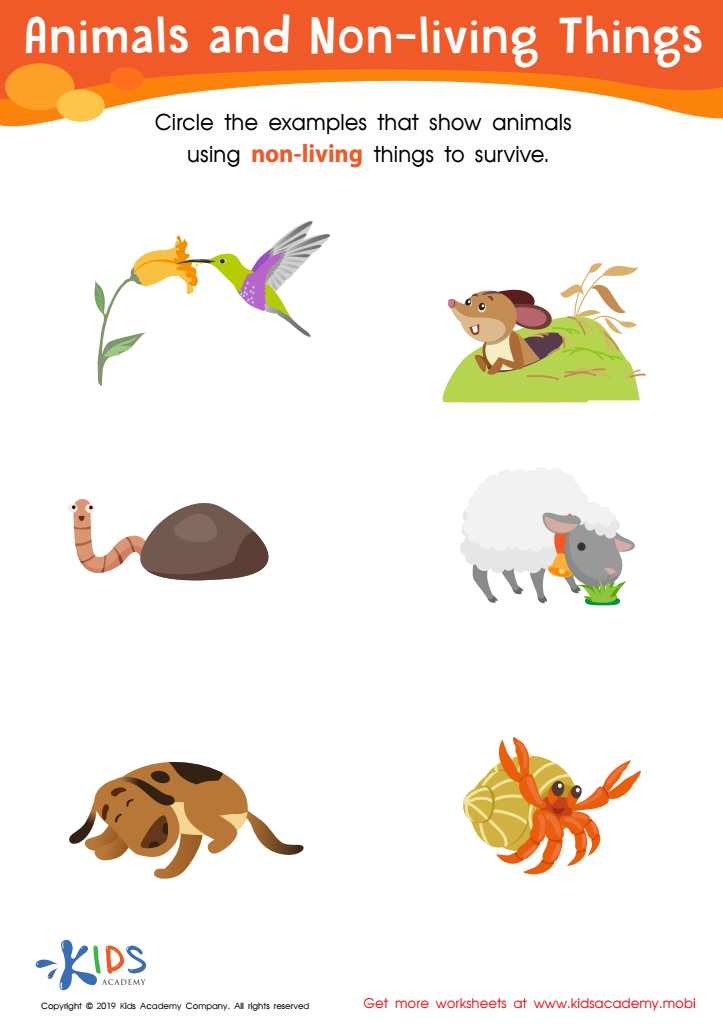
Animals and Non-Living Things Worksheet
People and animals both require more than food to survive. We need shelter, clothing and water, while animals use non-living things like rocks and trees. Ask your kids what else is necessary to survive - then have them identify the objects in the worksheet and circle the examples of animals using non-living things.
Animals and Non-Living Things Worksheet
Worksheet
Join Kids Academy for Free
Who is primarily going to use this learning content?








Categorization skills are crucial for children ages 4-8 as they play a foundational role in cognitive development. Understanding animals and their classifications enhances critical thinking and problem-solving abilities. When children categorize animals—such as identifying mammals, reptiles, or birds—they are not only learning about the natural world, but also developing skills to organize information logically. This skill helps in reinforcing patterns and relationships, which is a core component of early mathematics and science education.
Additionally, experiences with categorizing animals can foster vocabulary development, as children learn the names of various species and their characteristics. Engaging with this topic encourages curiosity and inquiry, leading to deeper learning experiences. Also, it enables discussions about biodiversity, essential for nurturing an appreciation for nature and environmental stewardship.
For teachers and parents, fostering categorization skills can improve children's ability to communicate and express their understanding of the world around them. By participating in fun, hands-on sorting activities or exploring wildlife, parents and teachers can create engaging learning opportunities. As these skills translate to other academic areas, caregivers have a lasting opportunity to impact children's learning trajectories, making such engagement both significant and beneficial.








