Categorization skills Science Worksheets for Ages 4-8
5 filtered results
-
From - To
Enhance your child's critical thinking with our Categorization Skills Science Worksheets for Ages 4-8. Tailored for young minds, these printable resources from Kids Academy foster essential skills in sorting and classifying. The engaging activities cover a range of topics, helping children recognize patterns, group similar items, and understand relationships in the natural world. Our fun and educational worksheets are designed by experts to support early scientific exploration and cognitive development. Perfect for both classroom and at-home learning, they turn the process of categorization into an enjoyable and rewarding experience for curious young learners.
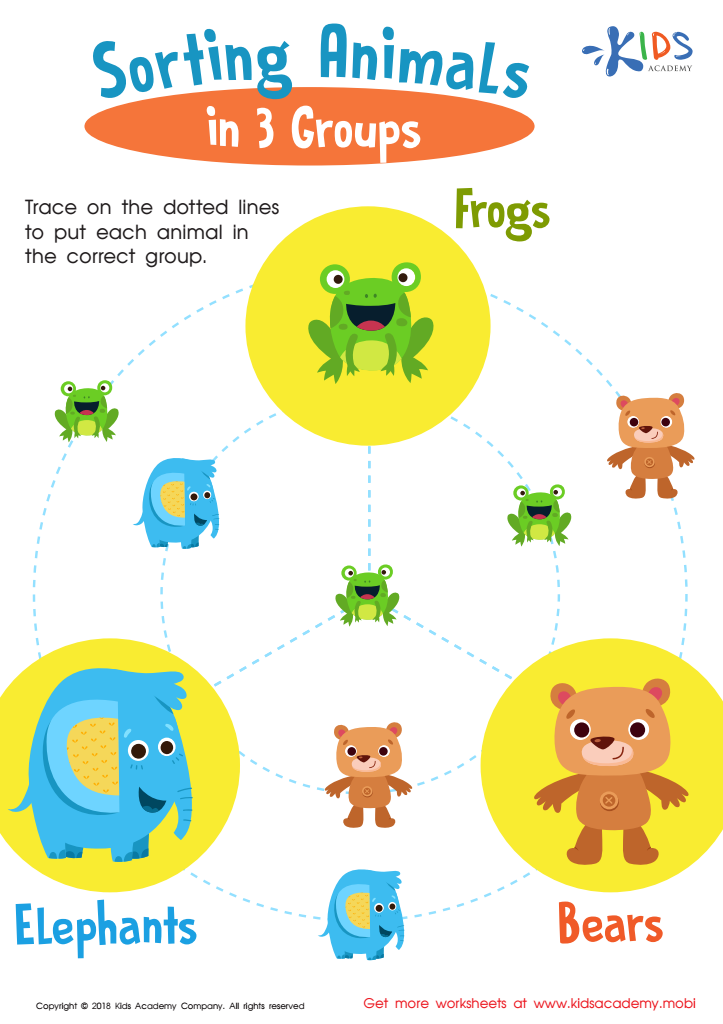
Sorting Animals in 3 Groups Worksheet
 Assign to My Students
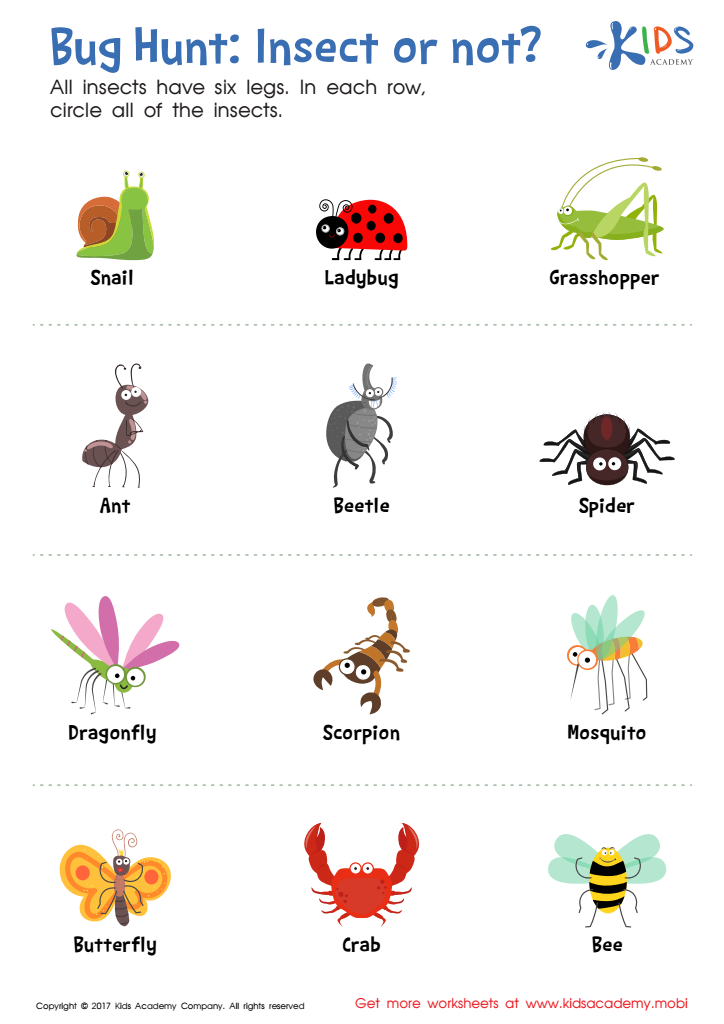
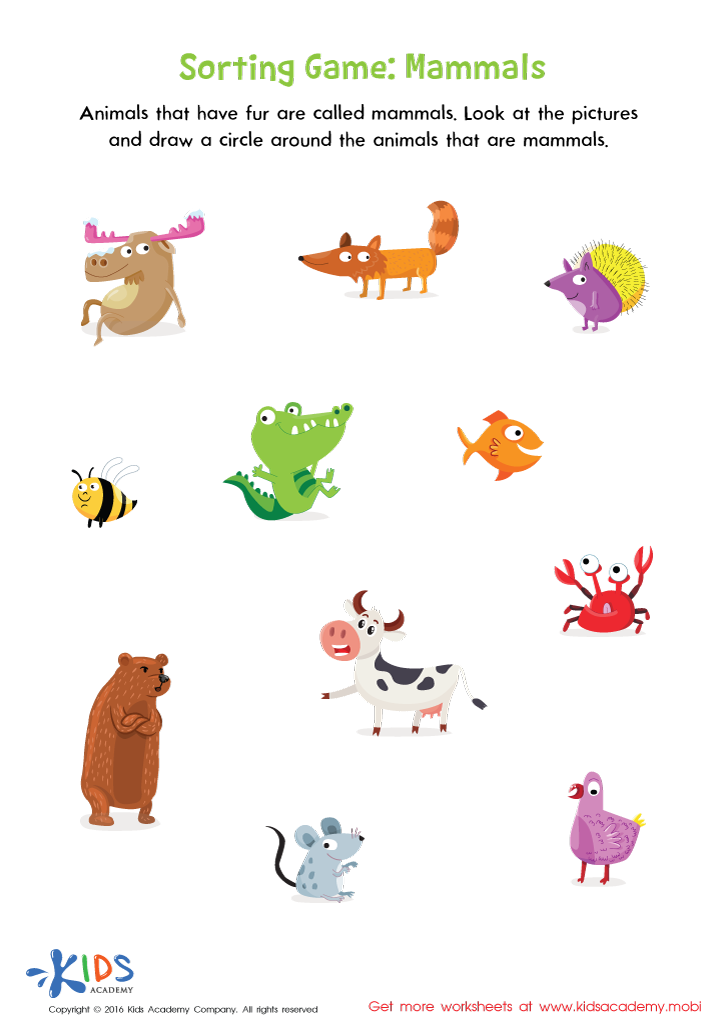
Mammals Sorting Worksheet
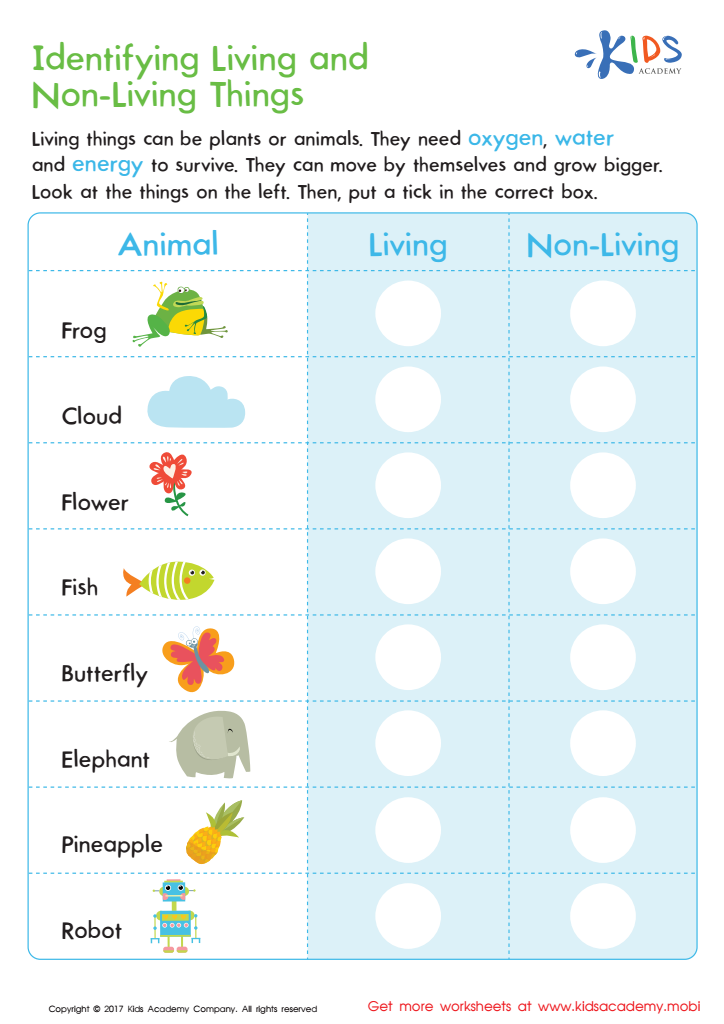
Identifying Living or Non–living Worksheet
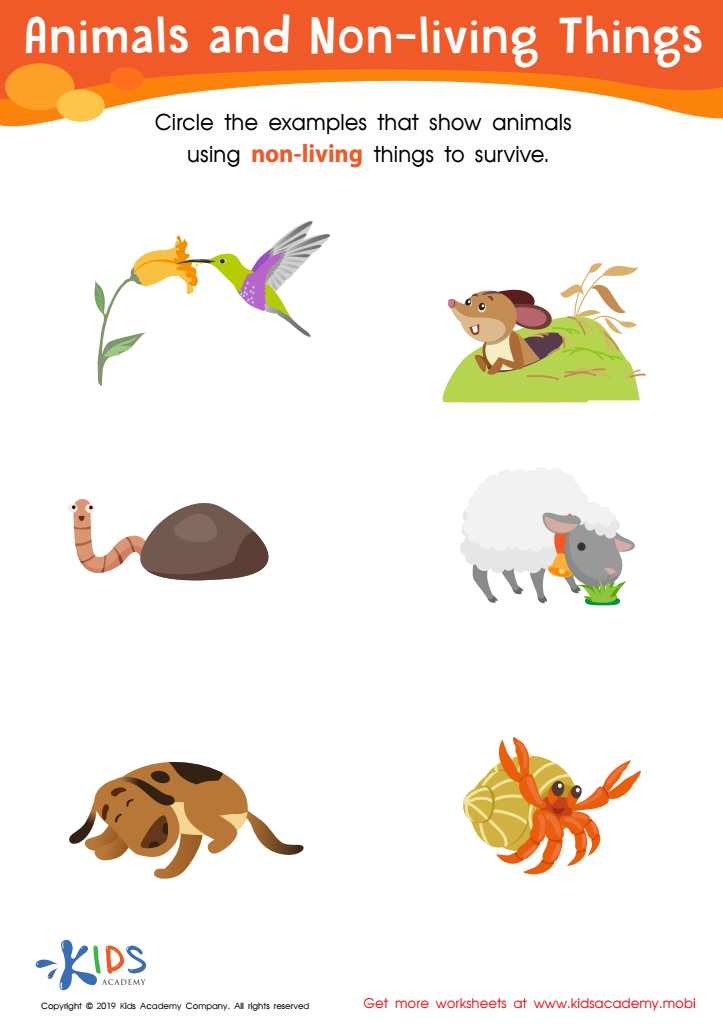
Animals and Non-Living Things Worksheet







Categorization skills are crucial for young children's cognitive development and form a foundational part of early science education. For ages 4-8, these skills help children make sense of the world by organizing information into meaningful groups, which enhances memory, understanding, and problem-solving abilities. When children learn to categorize, they develop critical thinking by recognizing patterns and making connections between objects and concepts.
For parents and teachers, fostering categorization skills promotes language development as children learn to label and describe groups. This vocabulary expansion supports literacy skills essential for overall academic success. Moreover, categorization skills are linked to logical thinking and sequencing, which are important in math and science. Children learn to classify objects by attributes such as size, shape, color, and function, which sets the stage for more complex scientific inquiry and experimentation.
Through playful, hands-on activities like sorting games and nature exploration, children naturally develop these abilities in a fun and engaging manner. When parents and teachers prioritize categorization, they help children build a solid cognitive framework that supports future learning in all subjects, fostering curiosity and a love for discovery that will benefit the child throughout their educational journey and beyond.







