Understanding life cycles Life Science Worksheets for Ages 4-8
3 filtered results
-
From - To
Discover an engaging way to teach young learners about life cycles with our specially designed worksheets for ages 4-8. These printable resources from Kids Academy make complex scientific concepts easy to grasp through fun and interactive activities. Children will explore the fascinating stages of development in plants, animals, and insects, enhancing their understanding of nature’s processes. Our worksheets encourage observational skills, critical thinking, and a love for science, providing a strong educational foundation. Perfect for classroom or at-home learning, these worksheets are an excellent tool to spark curiosity and foster a lifelong interest in life sciences.
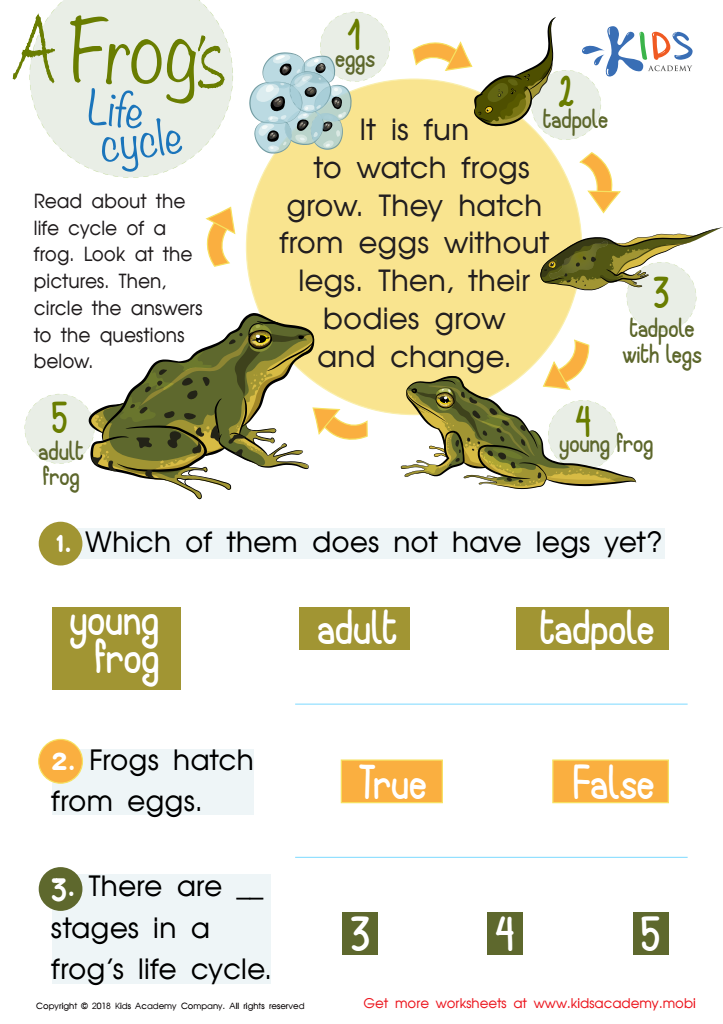
A Frog’s Life Cycle Worksheet
 Assign to My Students
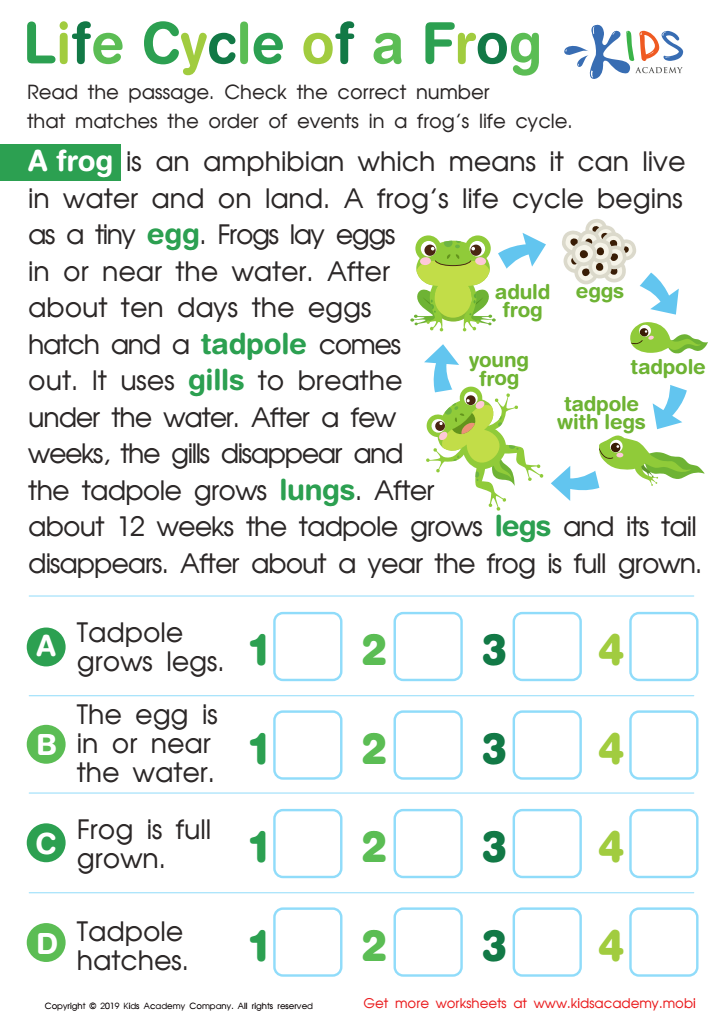
Life Cycle of a Frog Worksheet
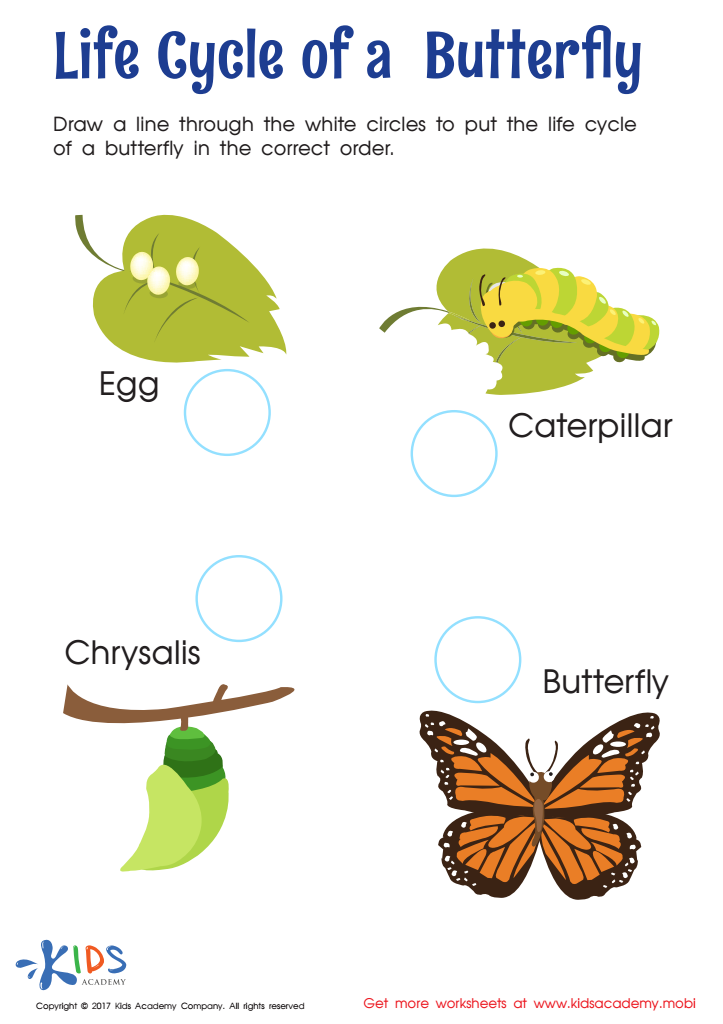
Life Cycle of Butterfly Worksheet








Understanding life cycles is essential for children aged 4-8 because it lays the foundation for important scientific concepts and fosters a deeper appreciation of the natural world. At this young age, children are naturally curious and eager to learn about their surroundings. Introducing them to life cycles—such as those of plants, insects, and animals—helps them recognize patterns and connections in nature. This awareness can inspire a sense of wonder and respect for living things.
Learning about life cycles also promotes critical thinking and observation skills. As children watch a caterpillar transform into a butterfly or a seed grow into a plant, they engage in hands-on learning and inquiry. These experiences encourage them to ask questions, make predictions, and draw conclusions, which are vital components of scientific thinking.
Moreover, understanding life cycles can have a broader impact on a child's development. It teaches fundamental biological concepts like growth, change, and reproduction, which are building blocks for more complex studies in science. Additionally, it connects to real-life phenomena, making learning relevant and meaningful.
For parents and teachers, facilitating knowledge about life cycles is an opportunity to foster lifelong learning habits and promote environmental stewardship. By investing time in these lessons, they help cultivate informed, observant, and responsible future citizens.








