
Knowledge application Physical Science Worksheets for Ages 4-8
4 filtered results
Difficulty Level
Grade
Age
-
From - To
Subject
Activity
Standards
Boost your child's understanding of physical science with our engaging Knowledge Application Worksheets, designed specifically for ages 4-8. These worksheets provide young learners with opportunities to explore fundamental concepts such as matter, energy, and forces through fun and interactive activities. Each worksheet encourages critical thinking and problem-solving skills, enabling children to apply their knowledge in real-world contexts. With vibrant visuals and age-appropriate exercises, your little scientist will develop a strong foundation in physical science while enjoying the learning process. Explore our collection to inspire curiosity and foster creativity in your child's educational journey today!
Favorites
With answer key
Interactive
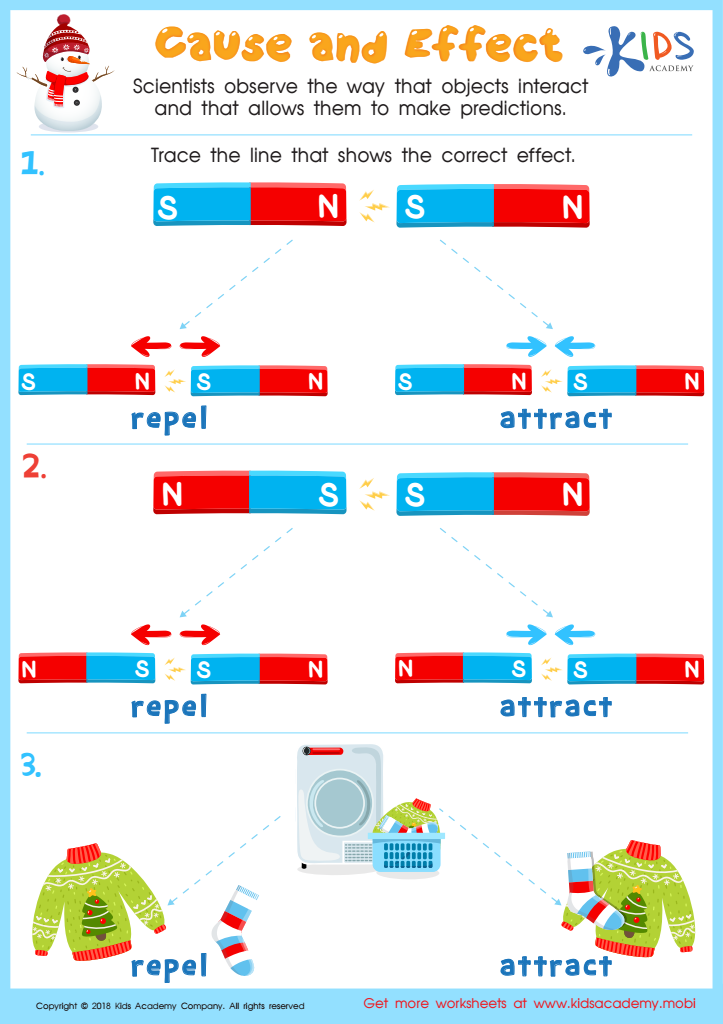
Repel and Attract Magnet Worksheet
Opposites attract in magnetism! Try this magnet worksheet to review the laws. Draw a line to show the effect when poles align. Then explore static electricity, and how it affects clothes at home.
 Assign to My Students
Repel and Attract Magnet Worksheet
Worksheet
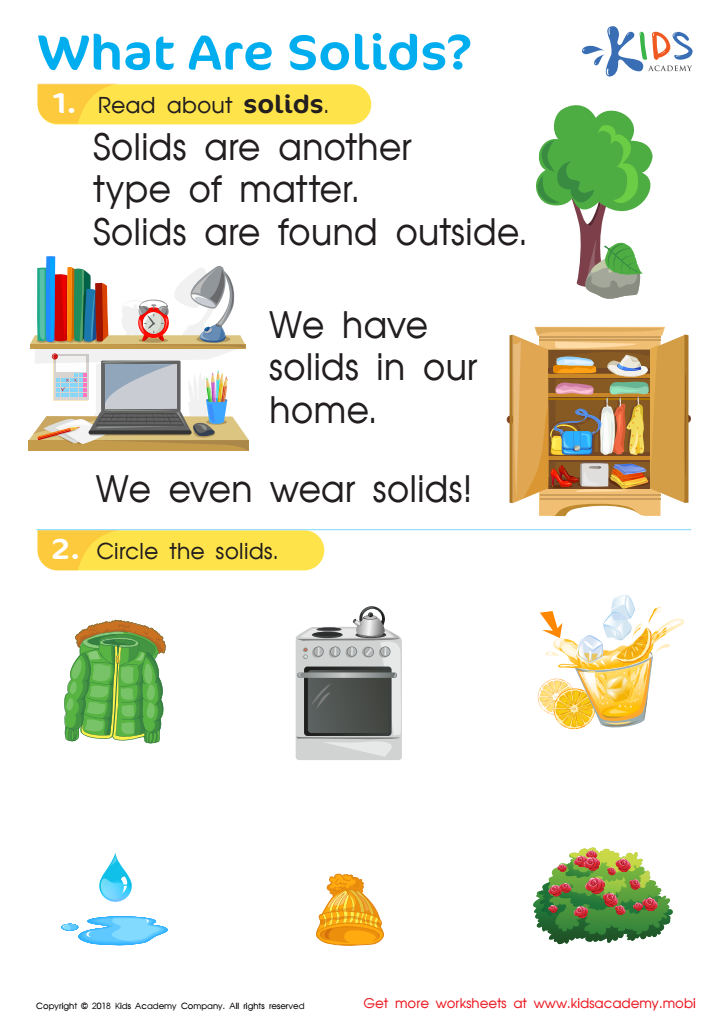
What Are Solids? Worksheet
Help your kids understand matter's three forms - solid, liquid, and gas - with examples. Ask them to give their own and where to find them. Then, read and discuss the worksheet's facts about solids. Afterward, have them circle the solids among the provided objects.
What Are Solids? Worksheet
Worksheet
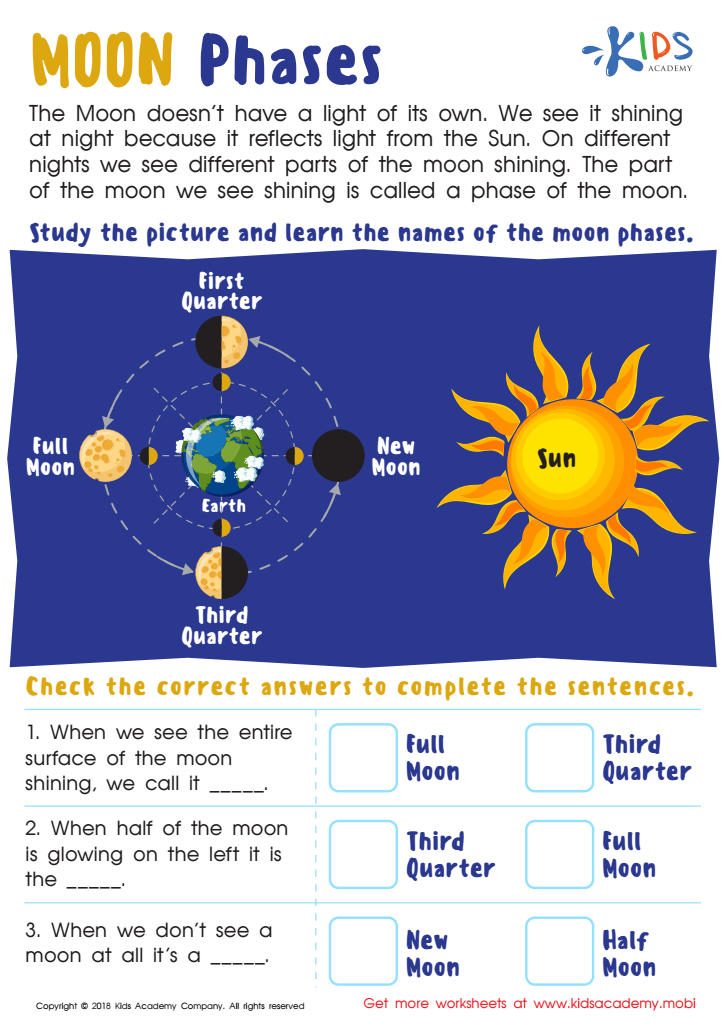
Moon Phases Worksheet
Gaze up at the night sky and the moon's appearance may change from night to night. Encourage your child to learn more about the sun, the moon, and space with this science worksheet. Have them read the text then study the picture. Finally, read the sentences and check the answers to identify the moon's phases.
Moon Phases Worksheet
Worksheet
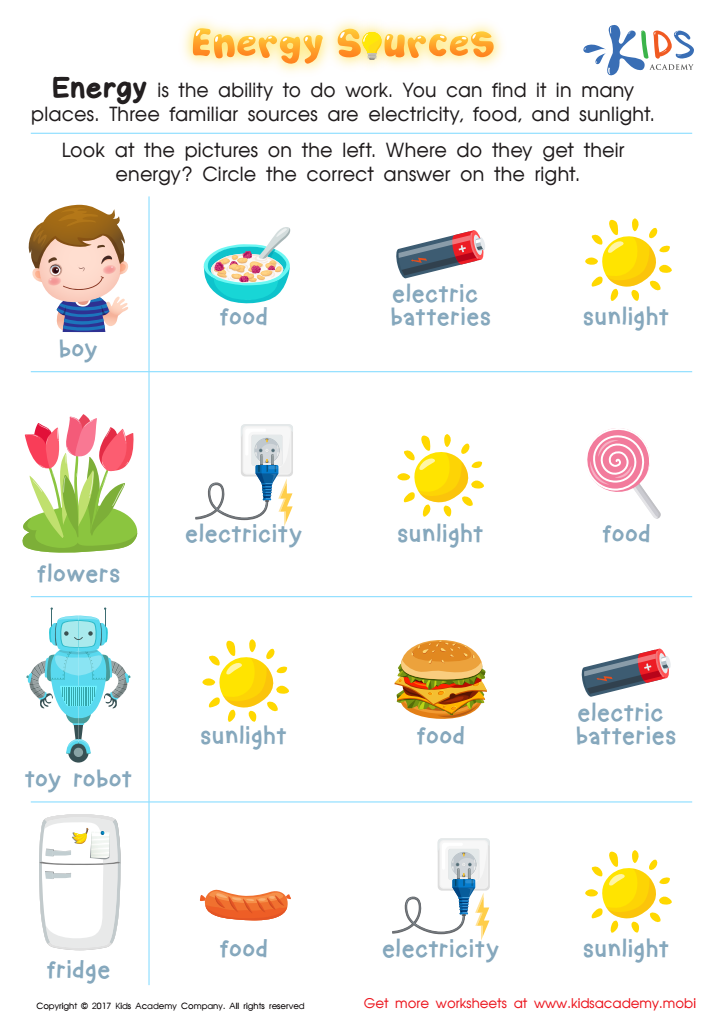
Energy Sources Printable
Introduce energy sources with this worksheet PDF — explore the sun, batteries, and more! Get your mini scientist excited about energy and power up their learning.
Energy Sources Printable
Worksheet
Join Kids Academy for Free
Who is primarily going to use this learning content?



.jpg)




Parents and teachers should care about knowledge application in Physical Science for ages 4-8 because this foundational stage of learning is crucial for a child's cognitive development and understanding of the world. Young children possess natural curiosity, and engaging them in physical science concepts fosters their inquiry and problem-solving skills. Through hands-on activities and real-world applications, children develop critical thinking abilities and learn how to apply concepts such as force, motion, and basic properties of materials.
Additionally, knowledge application in physical science encourages a sense of exploration and experimentation, which is vital for scientific literacy. It helps children grasp essential concepts through observation and interaction, making learning meaningful and relevant. By understanding the basic principles of physical science, children also start to develop reasoning skills that will benefit them in more complex subjects later on.
Furthermore, early exposure to science nurtures a child’s interest in STEM (Science, Technology, Engineering, and Math) fields, paving the way for future academic and career opportunities. By fostering an enthusiasm for science at a young age, parents and teachers cultivate independent, innovative thinkers who are prepared to engage with and address scientific challenges in the future.







