Multiplication practice Physical Science Worksheets for Ages 4-8
3 filtered results
-
From - To
Discover engaging "Multiplication Practice Physical Science Worksheets for Ages 4-8" that combine math with fascinating science concepts! Ideal for young learners, these worksheets guard both multiplication skills and basic physical science knowledge core through fun, hands-on activities. Each sheet is designed to reinforce multiplication while exploring principles like gravity, motion, and energy. Perfect for home or classroom use, our worksheets make learning interactive and enjoyable. Empower your child’s mathematical and scientific curiosity while solidifying essential skills. Download and delve into a world where numbers and science intersect, ensuring a well-rounded educational foundation.
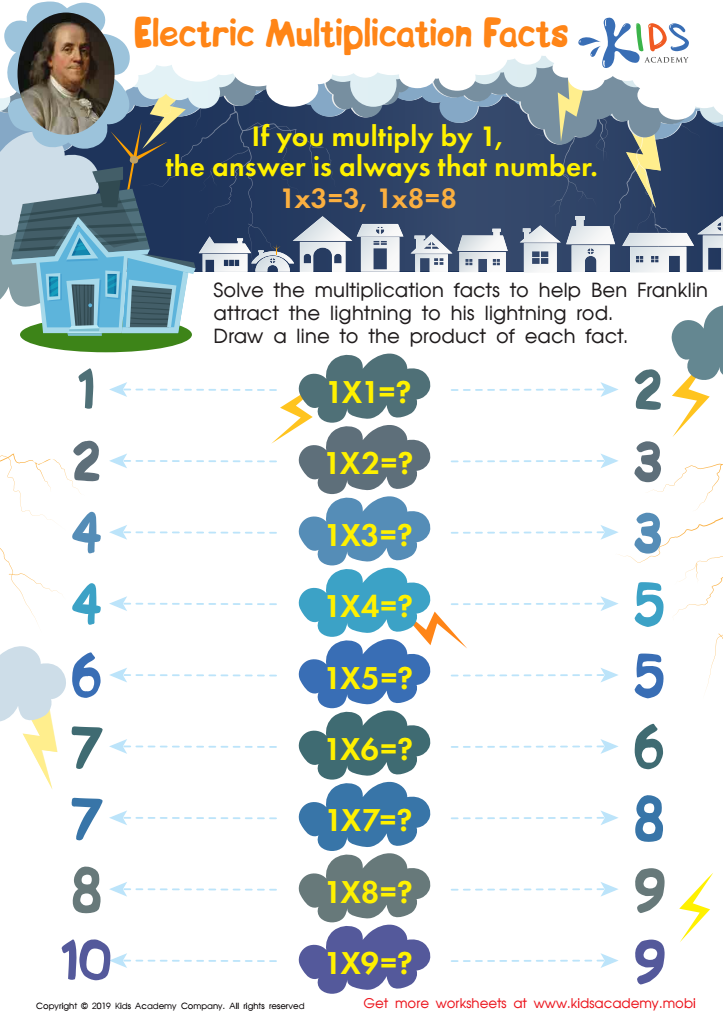
Electric Multiplication Facts Worksheet
 Assign to My Students
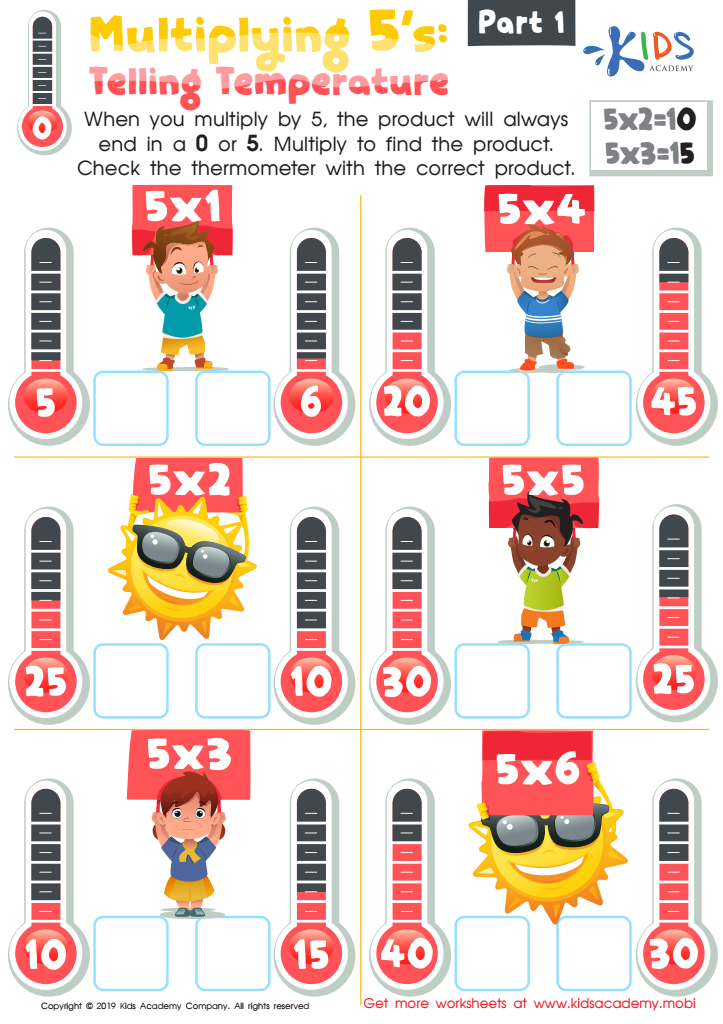
Multiplying 5’s: Telling Temperature Worksheet
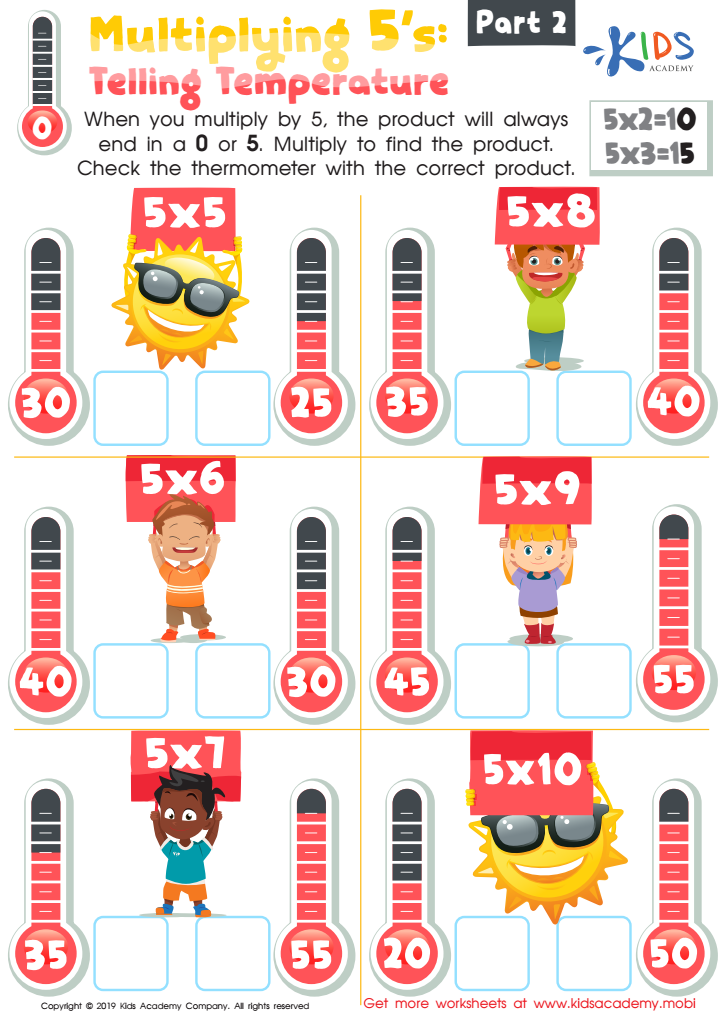
Multiplying 5’s: Telling Temperature Part 2 Worksheet



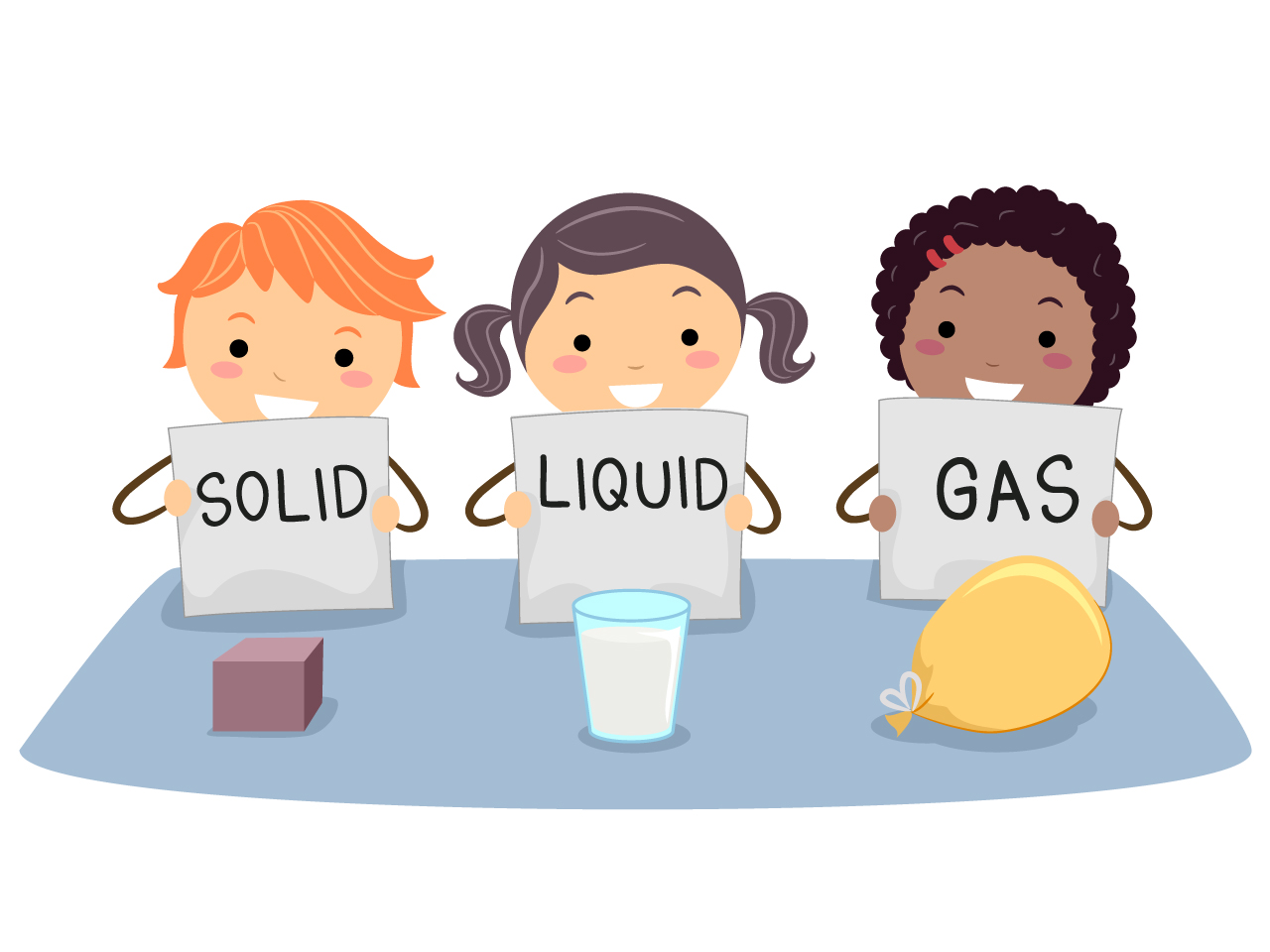




Parents and teachers should greatly emphasize multiplication practice within the broader context of physical science for children aged 4-8 due to its fundamental impact on cognitive and academic development. At this young age, children are exceptionally receptive to learning basic concepts that form the cornerstone of more complex problem-solving skills in later years. Introducing multiplication in the context of physical science can help reinforce understanding by tying abstract numbers to practical examples, such as counting molecules or understanding frequencies.
Moreover, early exposure to these concepts can promote curiosity and cultivate a positive attitude towards STEM (Science, Technology, Engineering, Mathematics) subjects. Children who see multiplication not just as rote memorization but as a tool for understanding the world around them are more likely to develop a love for learning and critical thinking skills. Physical science experiments involving measurements, quantities, and data analysis often inherently incorporate multiplication, thereby making the learning experience more dynamic and engaging.
Fostering these skills early can build a strong numerical and scientific foundation, setting the stage for academic success. Ultimately, investing in this facet of education at a young age can greatly benefit overall intellectual development, problem-solving abilities, and a lifelong interest in sciences, both physical and mathematical.







