Understanding light sources Physical Science Worksheets for Ages 4-8
6 filtered results
-
From - To
Dive into the fascinating world of light with our "Understanding Light Sources" Physical Science Worksheets, designed specifically for children ages 4-8. These engaging activities help young learners explore various light sources, from the sun to everyday objects like lamps and candles. Through fun and interactive worksheets, kids will discover how light is essential for seeing and learn to differentiate between natural and artificial light. Perfect for early grade science education, these printable resources support hands-on learning and skill development while sparking curiosity about the physical world. Brighten your child's understanding of science with our comprehensive worksheet collection.
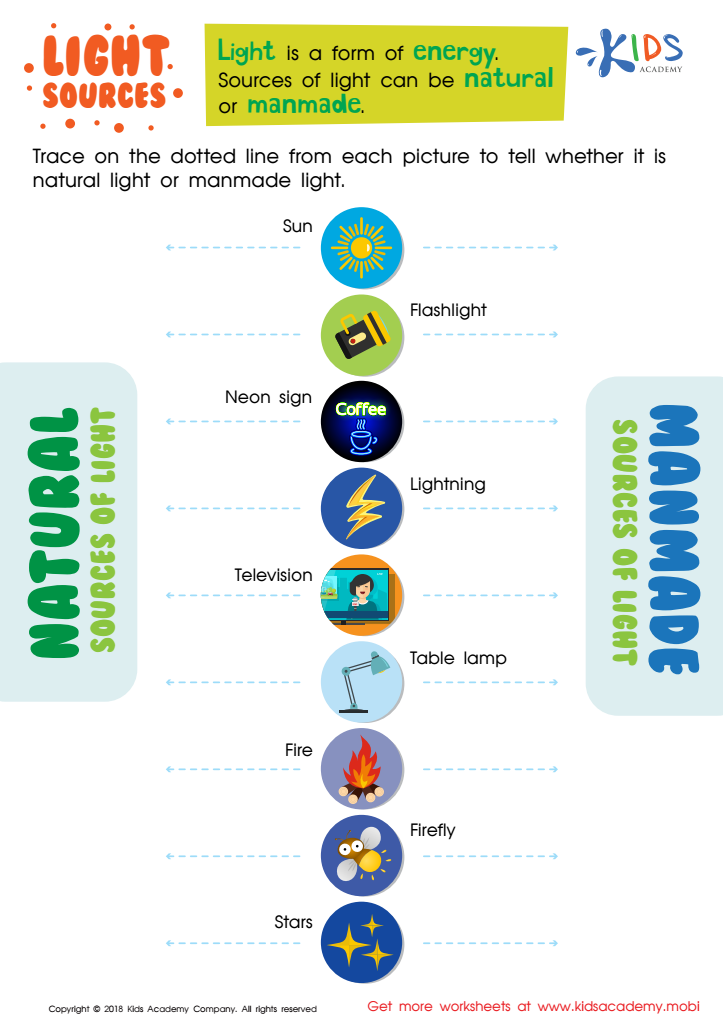
Natural and Manmade Light Sources Worksheet
 Assign to My Students
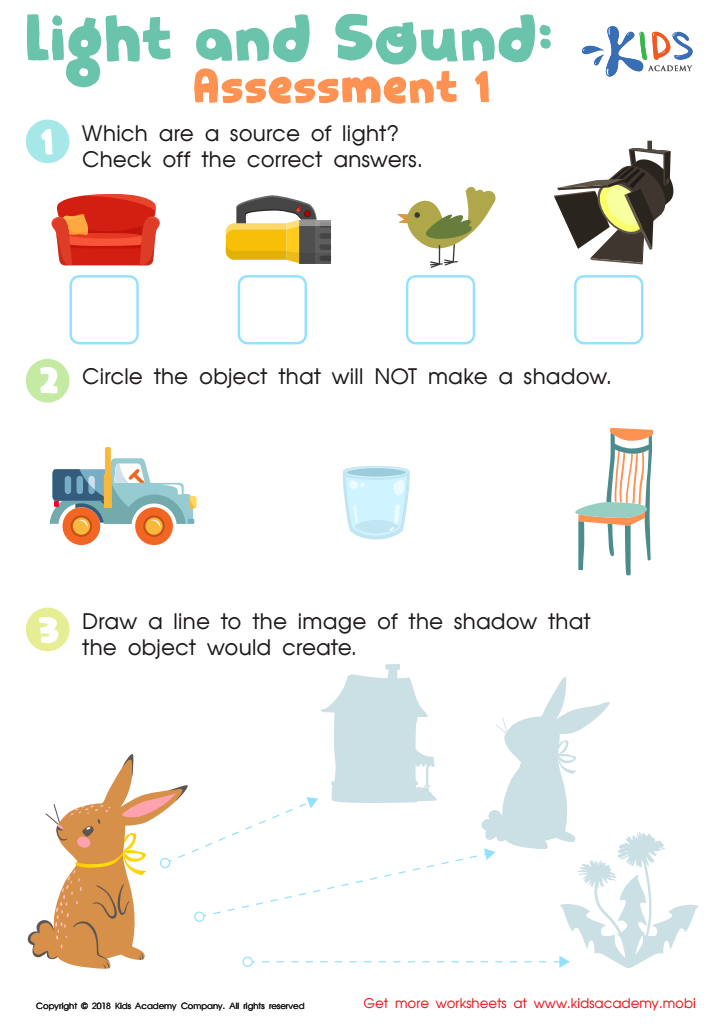
Light and Sound: Assessment 1 Worksheet
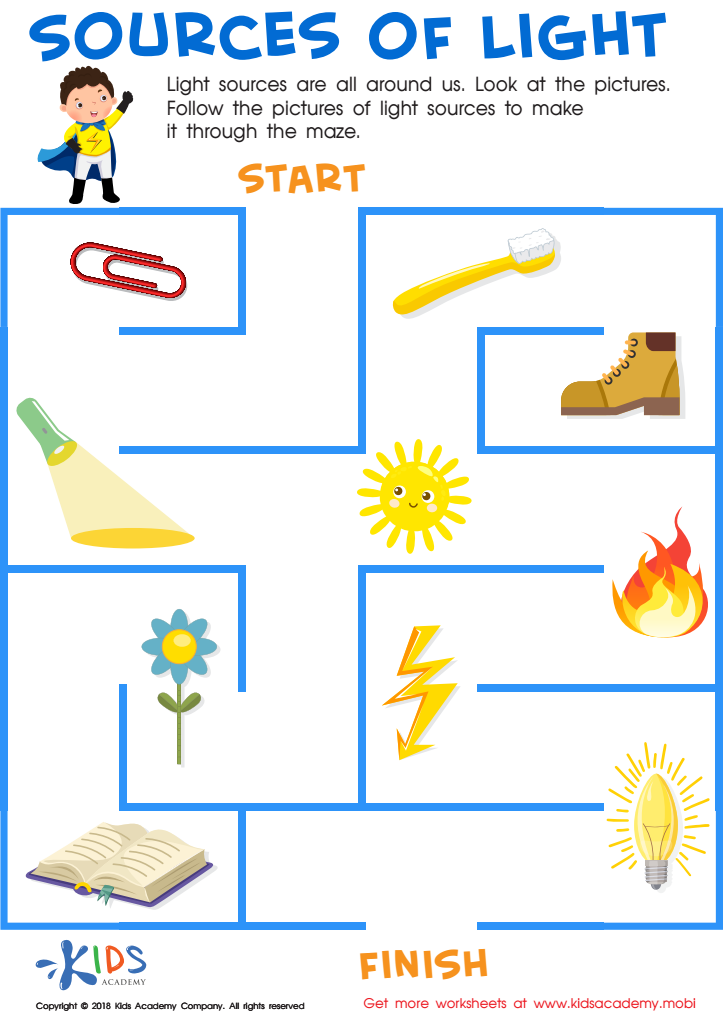
Sources of Light Worksheet
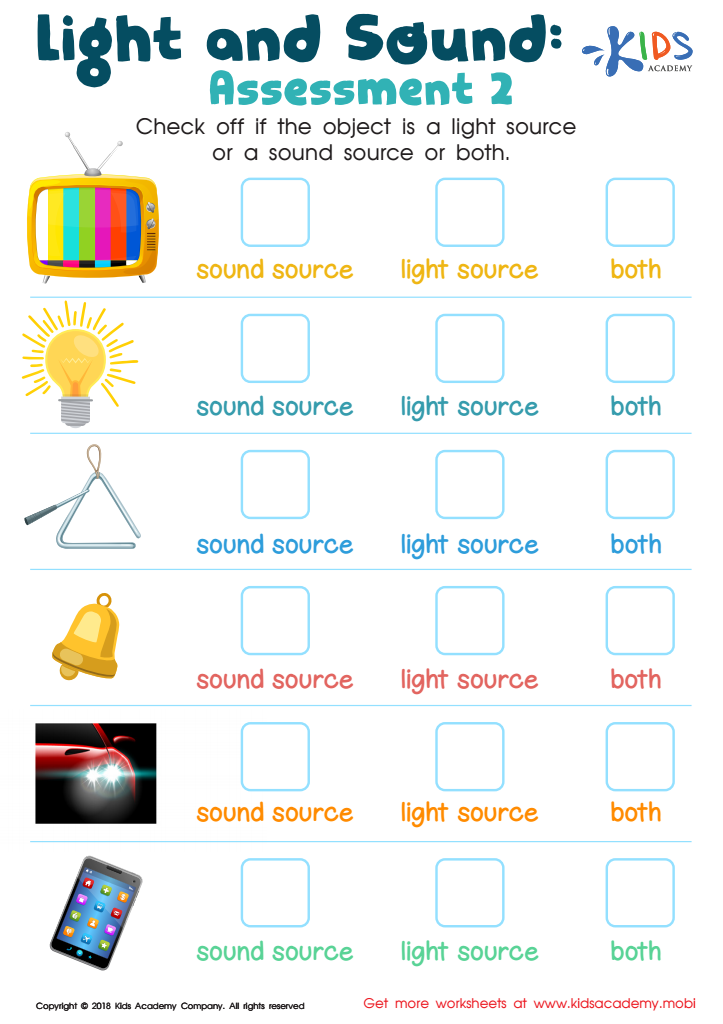
Light and Sound: Assessment 2 Worksheet
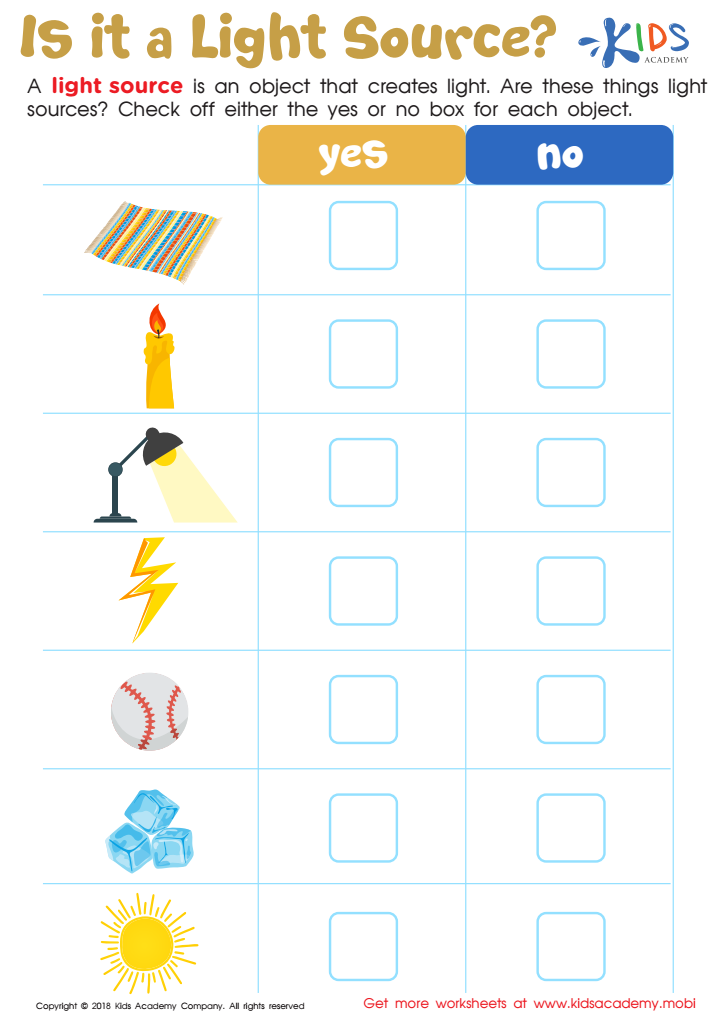
Is It a Light Source? Worksheet
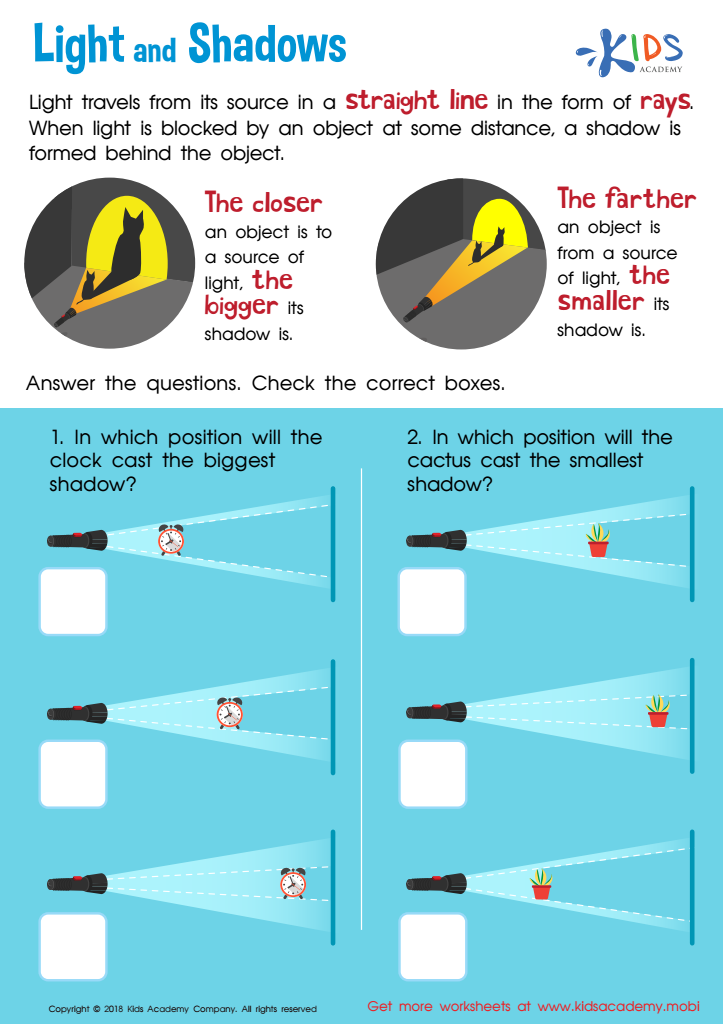
Light and Shadow Worksheet for Grade 3




.jpg)

Teaching young children about light sources in physical science is incredibly beneficial for their overall development and understanding of the world around them. For ages 4-8, learning about light encompasses not only the scientific aspect but also fosters curiosity, critical thinking, and observational skills.
Understanding light sources lays the groundwork for essential scientific literacy. Kids learn to categorize different sources as natural (like the Sun) or artificial (like light bulbs), helping them grasp foundational concepts about how our environment works. This knowledge is not only integral to science but also enhances everyday understanding, such as why daylight changes or how we use lamps at night.
Additionally, exploring light aids children's cognitive and sensory development. Activities involving light and shadow, for example, stimulate their imagination and enhance their problem-solving skills. Simple experiments, like making shadow puppets or seeing how light passes through different materials, make science tangible and enjoyable.
Moreover, addressing light and darkness can also tie into safety education. Children learn about the importance of visibility and light in keeping themselves safe, both indoors and outdoors.
In conclusion, introducing young kids to light sources in physical science isn’t just about imparting knowledge—it's about sparking a lifelong fascination with science, improving cognitive skills, and teaching practical life lessons.







