Decision making skills Community Worksheets for Ages 4-8
3 filtered results
-
From - To
Empower young minds with our Decision Making Skills Community Worksheets designed for children aged 4-8. These engaging, age-appropriate printables help kids develop essential decision-making skills through fun and interactive activities. Focusing on real-life scenarios, our worksheets encourage critical thinking, problem-solving, and understanding consequences, making decision-making a breeze. Perfect for parents and teachers, these resources support social-emotional learning while enhancing kids' confidence and independence. Join Kids Academy today and watch your children thrive in their decision-making abilities!

Is this a Home? Worksheet
 Assign to My Students
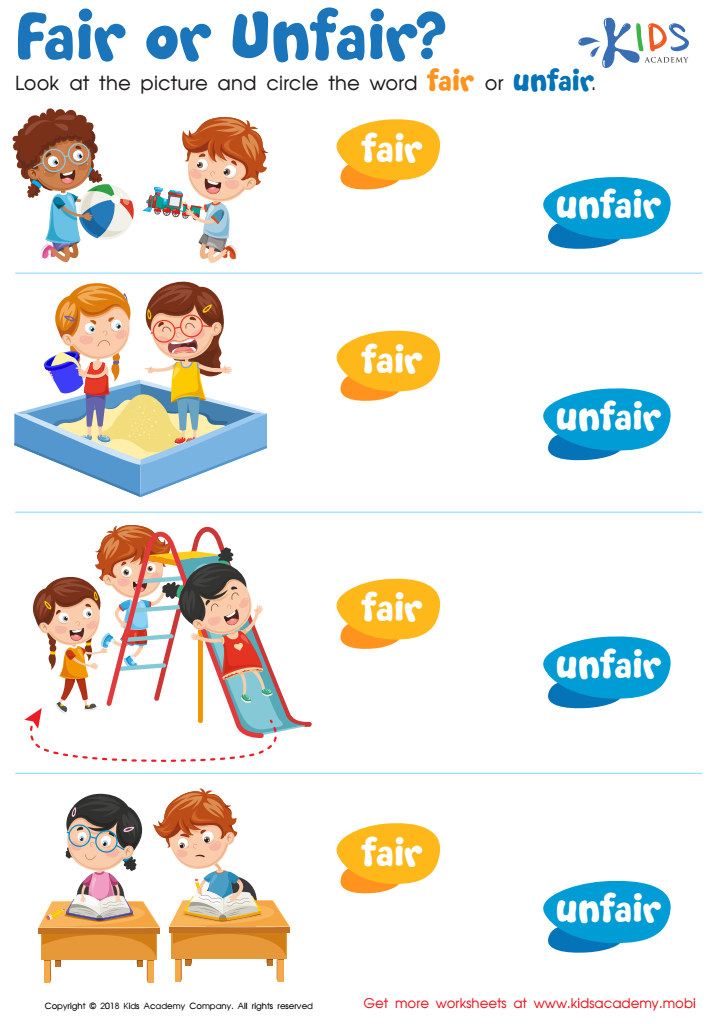
Fair or Unfair Worksheet

Towns Worksheet








Parents and teachers should deeply care about fostering decision-making skills in children aged 4-8 within a supportive community because these formative years are crucial for establishing the foundation of lifelong critical thinking and autonomy. Early decision-making experiences empower children to develop confidence, responsibility, and problem-solving abilities. By integrating these skills into their daily lives, children learn to weigh options, consider consequences, and make informed choices, which are vital for their personal development and future success.
In a community setting, children observe and learn from their peers and adults, gaining diverse perspectives and collaborating effectively. This social context enriches their understanding and highlights the importance of empathy, cooperation, and respecting different viewpoints. For parents and teachers, nurturing decision-making skills means actively guiding children through analyzing simple choices, encouraging thoughtful reasoning, and discussing outcomes.
Facilitating such skills within a community not only benefits individual growth but also fosters a supportive environment where children feel valued and heard. This collective experience enhances their social competencies and prepares them for more complex social interactions. Ultimately, investing in early decision-making education cultivates a generation of thoughtful, resilient, and socially adept individuals, forming a strong, cohesive community.