Map reading skills Community Worksheets for Ages 4-8
3 filtered results
-
From - To
Discover the joy of map reading with our engaging worksheets designed for children ages 4-8. Our community-focused activities are crafted to build essential map reading skills, including understanding symbols, directions, and landmarks. Each worksheet is fun, interactive, and tailored to captivate young learners' imaginations while providing foundational map literacy. Perfect for early grade educators and parents, these worksheets support cognitive development and offer a fantastic way for kids to explore their community and beyond. Join us at Kids Academy to ignite curiosity and foster a love for geography in your little explorers!
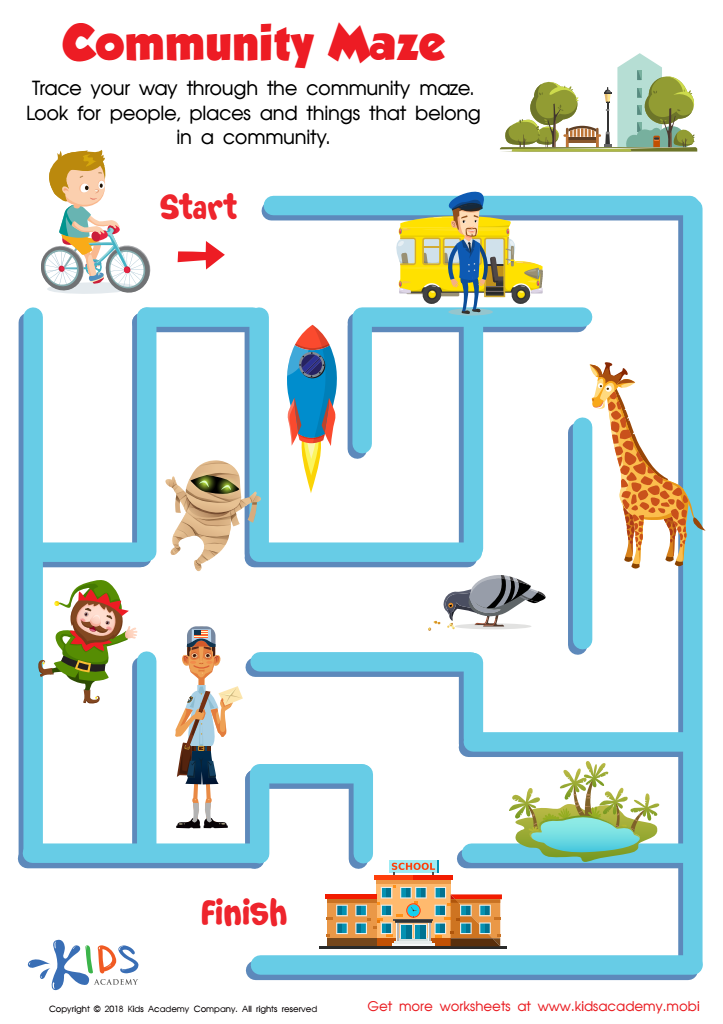
Community Maze Worksheet
 Assign to My Students
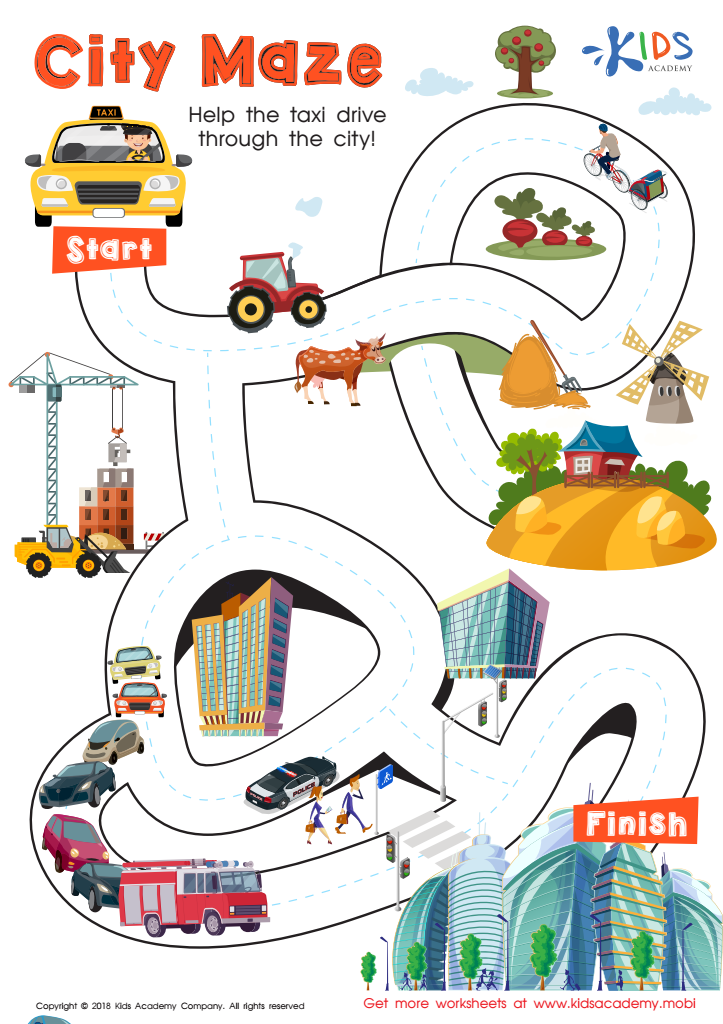
City Maze Worksheet

Towns Worksheet








Developing map-reading skills in children aged 4-8 is crucial for multiple reasons. First, it promotes spatial thinking, which helps children understand the world around them from different perspectives, crucial for later complex problem-solving. For example, knowing how to read a map can aid in comprehending geography, math, and science concepts.
Second, it enhances critical thinking and decision-making abilities. When children learn to use maps, they practice interpreting symbols and making logical inferences about locations and routes. This foundational skill supports their overall cognitive development and can improve their academic performance in various subjects.
Community map-reading activities also contribute to important social and emotional growth. Working in groups to navigate a map fosters teamwork, communication, and leadership skills. Additionally, it can build self-confidence as children successfully find their way and complete tasks.
Finally, map reading encourages a sense of adventure and curiosity about the world. It can inspire interest in exploring new places, whether it's their local neighborhood or faraway countries, thus broadening their horizons.
For parents and teachers, nurturing these skills during early childhood lays the groundwork for lifelong learning and adaptability, making it an invaluable part of early education.








