Map reading Geography Worksheets for Ages 4-8
3 filtered results
-
From - To
Explore our engaging Map Reading Geography Worksheets designed for children ages 4-8! These worksheets encourage young learners to develop essential map-reading skills through fun and interactive activities. Kids will embark on exciting adventures as they learn to identify symbols, understand map scales, and practice navigating various terrains. Our resources are tailored to cater to different learning stages, fostering curiosity about the world around them. Perfect for home or classroom use, these worksheets make geography approachable and enjoyable, helping children build a strong foundation for future learning. Join us in nurturing young explorers with our comprehensive map reading resources today!
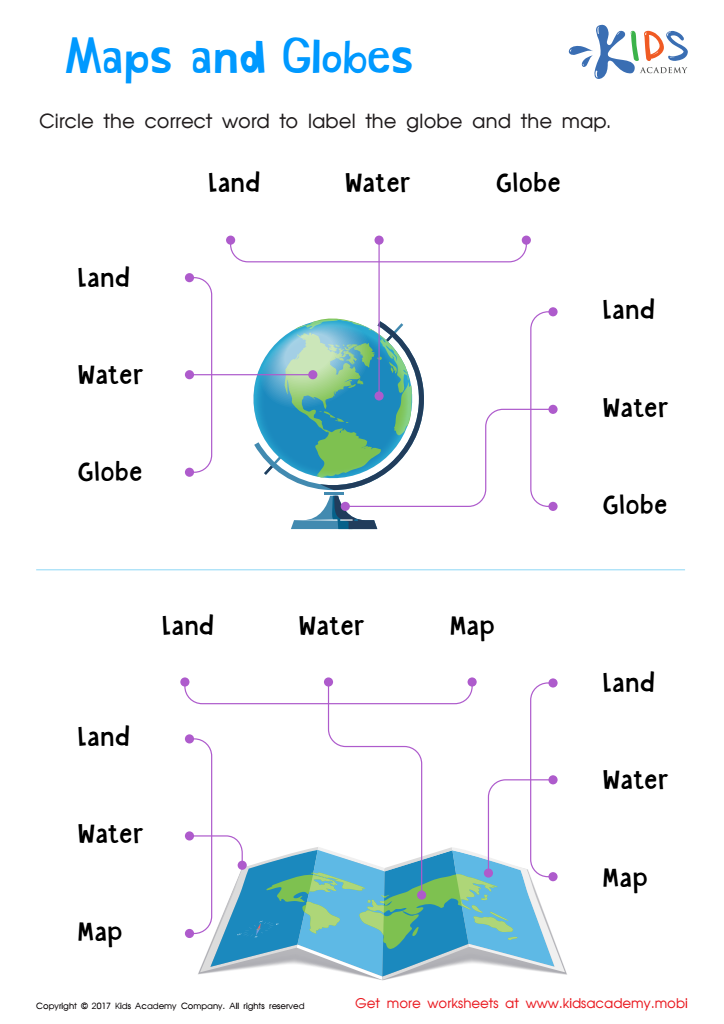
 Assign to My Students
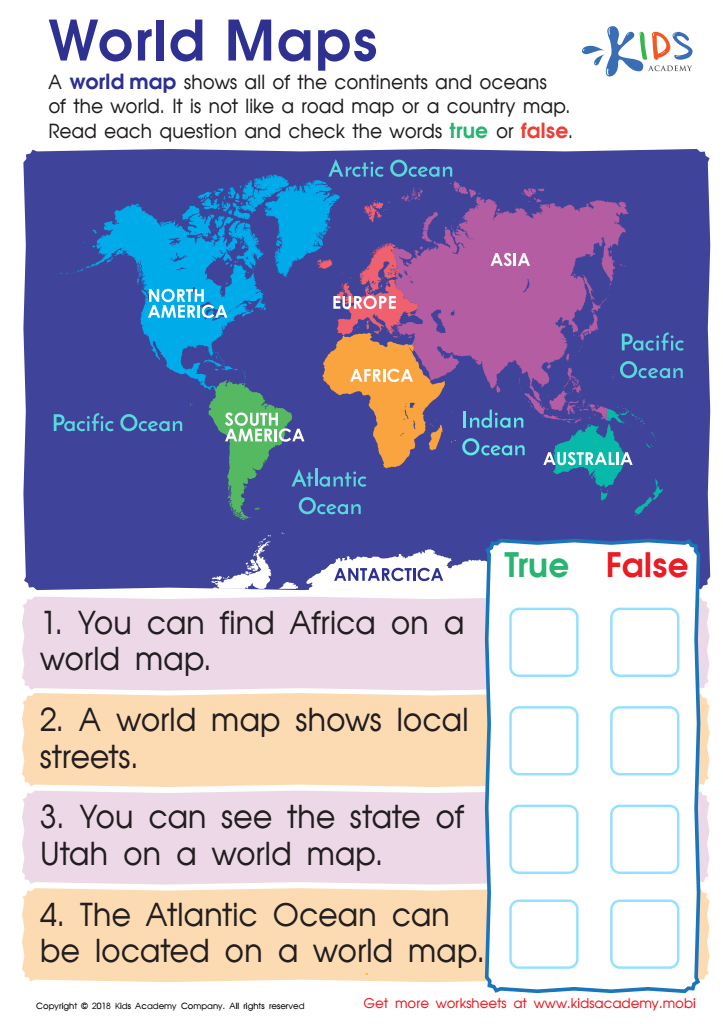
World Maps Worksheet
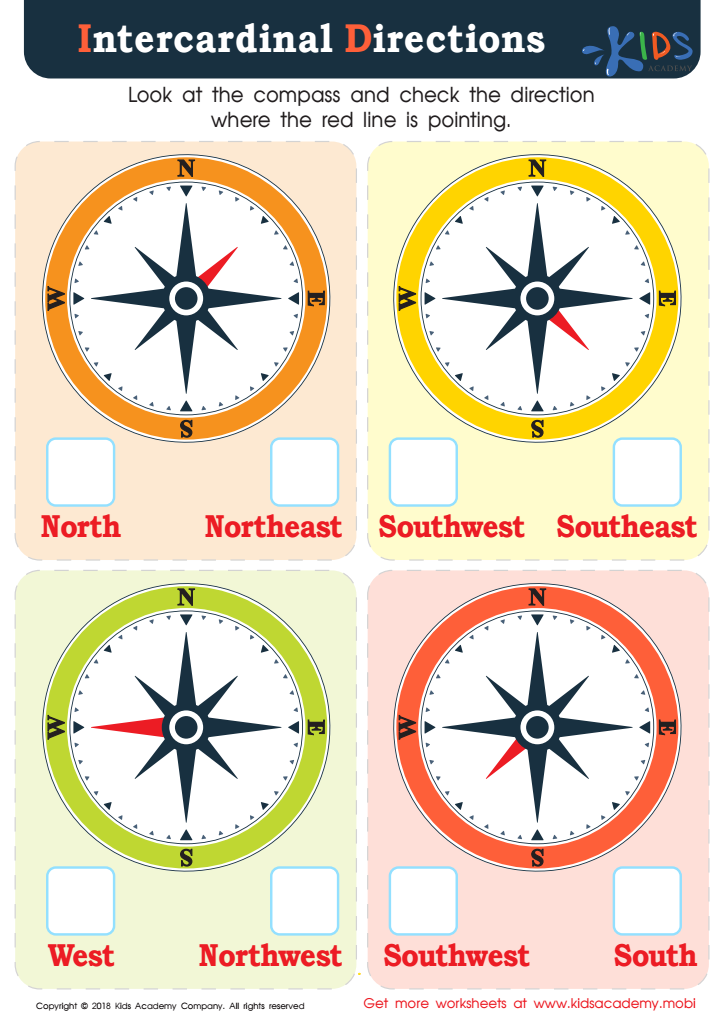
Intercardinal Directions Worksheet





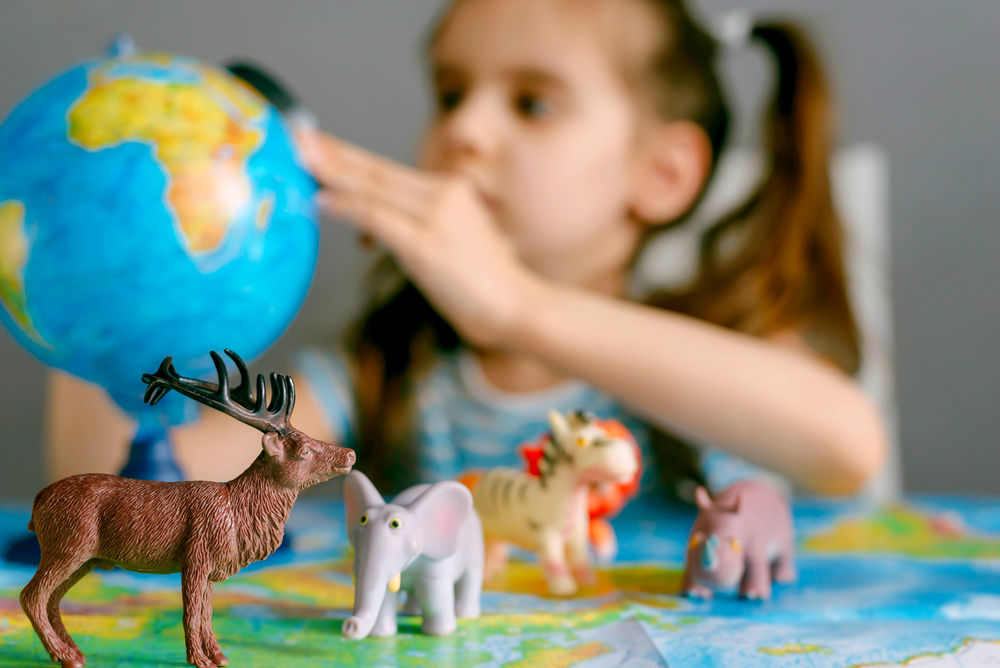

Map reading is an essential skill that fosters spatial awareness, critical thinking, and problem-solving in young children aged 4-8. For parents and teachers, encouraging map literacy at an early age can significantly enhance a child's understanding of the world around them.
First, map reading cultivates spatial reasoning, which is crucial for cognitive development. Children learn to interpret symbols and understand directions, which lays the groundwork for more advanced geography and mathematics later in life.
Second, learning about maps helps children develop a sense of place and identity. They start to connect their immediate environments with larger geographical contexts, fostering curiosity about their surroundings and increasing their awareness of different cultures and locations.
Moreover, engaging with maps promotes critical thinking. Children practice how to analyze information, make decisions, and solve location-based problems, skills they will need throughout their lives.
Finally, map reading can be a fun, interactive activity that promotes family bonding and teamwork. Whether planning a scavenger hunt or exploring local parks, parents and teachers can use maps to encourage exploration and adventure.
Ultimately, nurturing map reading skills in young learners equips them with lifelong abilities and sparks an appreciation for the world, fostering informed and engaged citizens.








