Understanding citizenship Good Citizenship Worksheets for Ages 4-8
5 filtered results
-
From - To
Explore our engaging "Understanding Citizenship Good Citizenship Worksheets" designed for children ages 4-8. These interactive resources help young learners comprehend key concepts of citizenship, social responsibility, and community involvement. Featuring vibrant illustrations and age-appropriate activities, these worksheets promote critical thinking and encourage discussions about what it means to be a good citizen. Topics include sharing, caring for others, respecting rules, and participating in community activities. Foster a sense of belonging and civic awareness in your child while making learning fun! Download these valuable tools to support your child's social development and instill important values from an early age. Start empowering young citizens today!
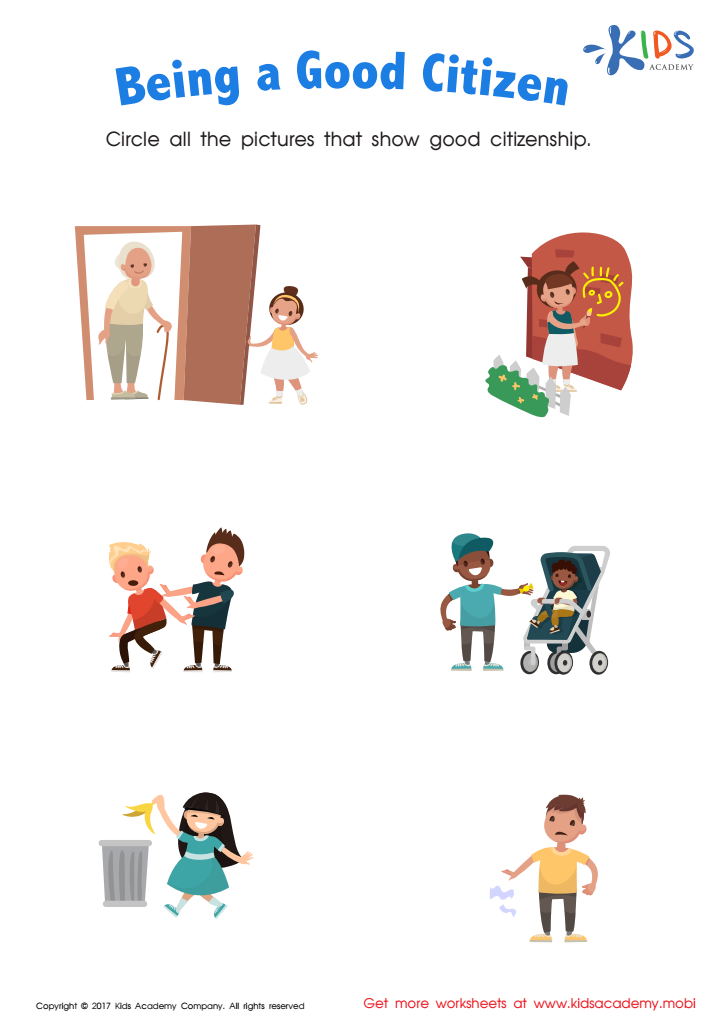
Being a Good Citizen Printable
 Assign to My Students
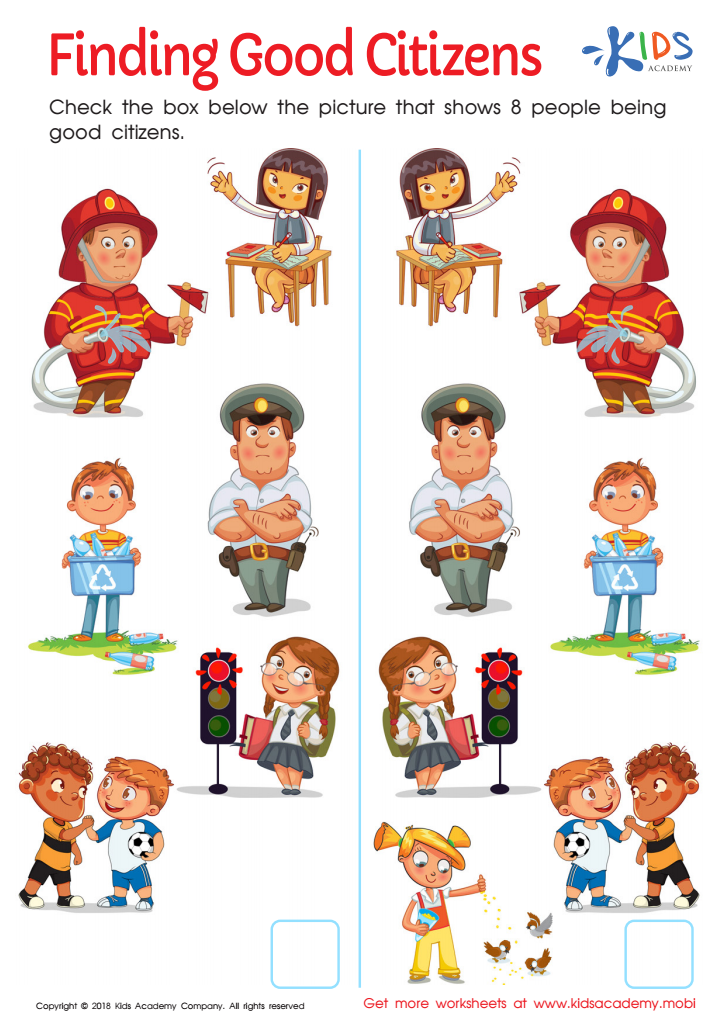
Finding Good Citizens Worksheet
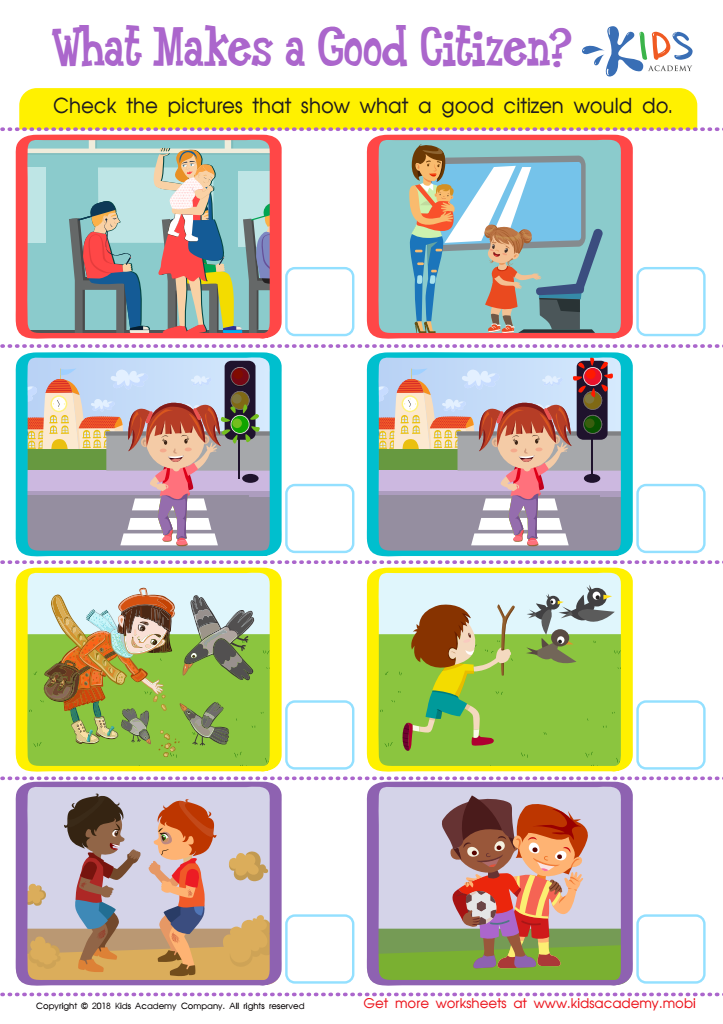
What Makes a Good Citizen? Worksheet
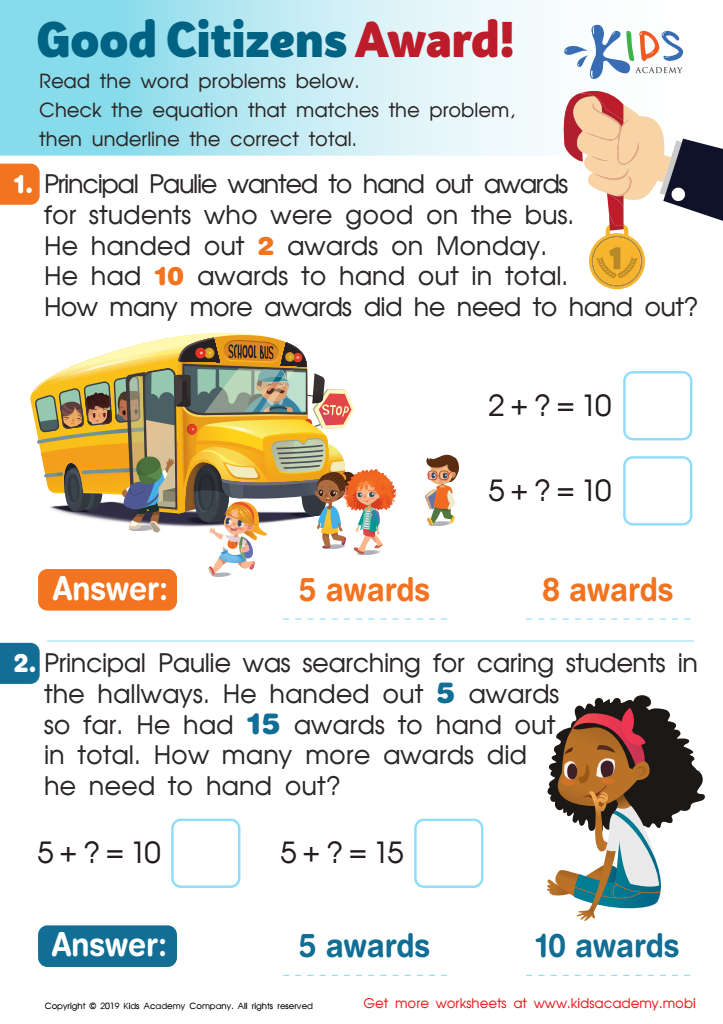
Good Citizens Award! Worksheet
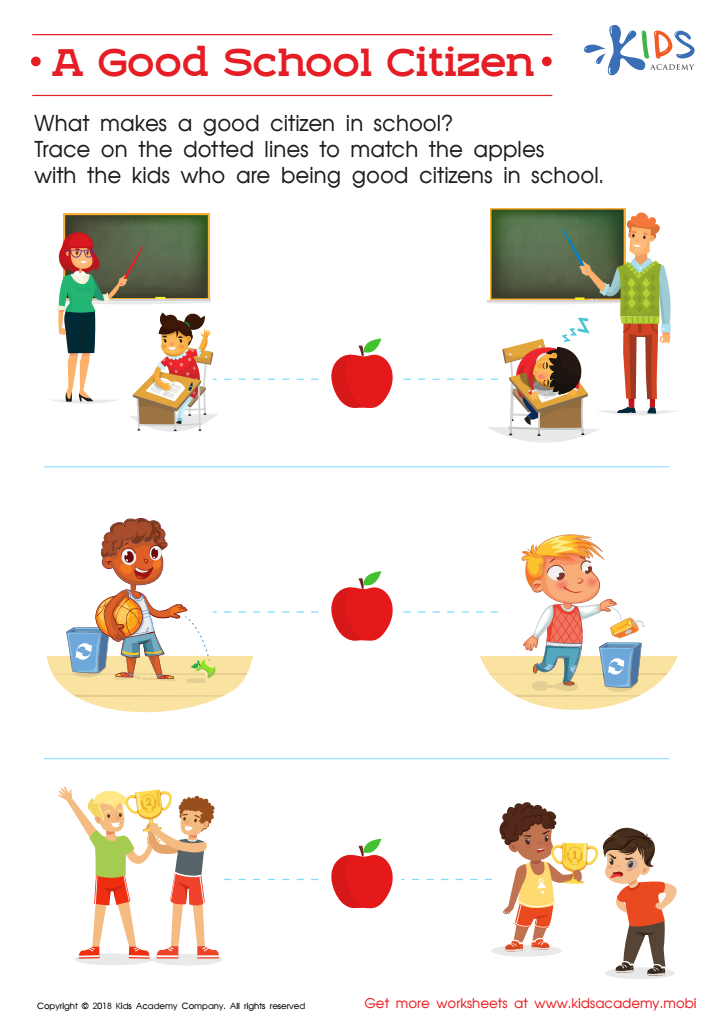
A Good School Citizen Worksheet




Understanding citizenship and good citizenship is crucial for children aged 4-8, as it lays the foundation for their social, emotional, and ethical development. At this tender age, children begin to construct their identities and understand their place in the world. Teaching them about citizenship helps them recognize their rights and responsibilities, fostering a sense of belonging and community.
Parents and teachers should care because instilling the values of good citizenship—such as respect, empathy, cooperation, and active participation—promotes positive behavior and harmonious interactions with peers. Children learn the importance of helping others, sharing, and resolving conflicts, which are essential skills for their personal growth and socialization.
Moreover, discussions about diversity and inclusion at this stage provide an understanding of different cultures and backgrounds, promoting tolerance and reducing prejudice. This early awareness prepares children to become informed and engaged citizens in the future, fostering a generation that values community and works collaboratively toward common goals.
In essence, nurturing good citizenship in young children contributes to their overall development and the creation of a more compassionate and responsible society. Parents and teachers play a pivotal role in guiding this learning process, ultimately shaping better citizens for tomorrow.