Reading Skills History Worksheets for Ages 4-8
3 filtered results
Difficulty Level
Grade
Age
-
From - To
Subject
Activity
Standards
Enhance your child's reading skills with our engaging Reading Skills History Worksheets tailored for ages 4-8. These worksheets intertwine historical themes with essential reading practice, making learning both fun and informative. Each sheet features age-appropriate content that encourages comprehension, vocabulary building, and critical thinking. Designed to captivate young minds, our interactive activities promote a love for reading while introducing basic historical concepts. Whether at home or in the classroom, these worksheets provide valuable resources for early learners. Explore our collection to help your child develop their literacy skills while embarking on a fascinating journey through history! Start their adventure today!
Favorites
With answer key
Interactive
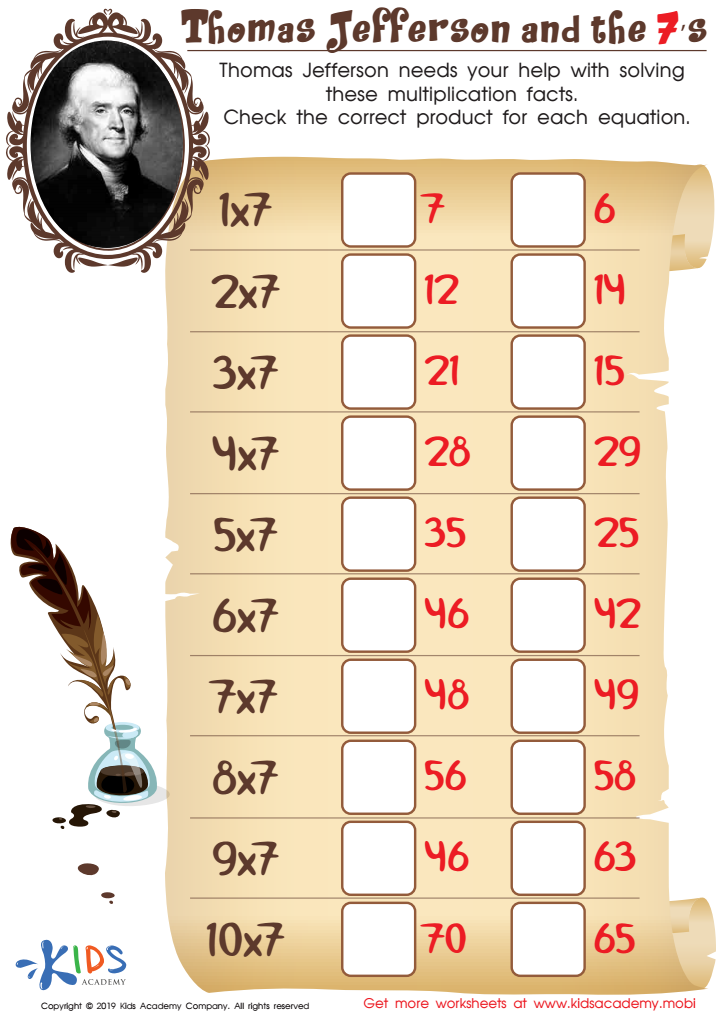
Thomas Jefferson and the 7’s Worksheet
Thomas Jefferson championed education and wants kids to know their times tables. Help your child with this worksheet focusing on 7's. Check the box for the correct answer for each multiplication problem. Make sure your child gets the facts right!
 Assign to My Students
Thomas Jefferson and the 7’s Worksheet
Worksheet
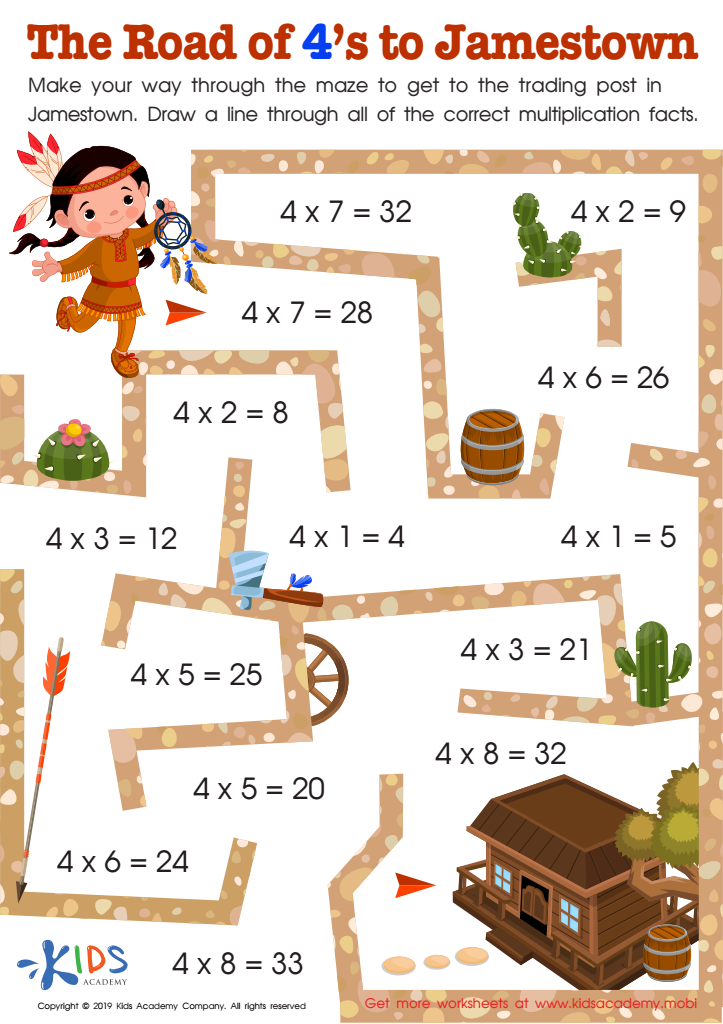
The Road of 4’s to Jamestown Worksheet
Does your child enjoy trips? Help them remember the best ones with this fun worksheet maze! Get your kid to look at the picture and draw a line through all the right multiplication facts to get to Jamestown's trading post. This worksheet is a great way to stimulate their problem-solving skills.
The Road of 4’s to Jamestown Worksheet
Worksheet
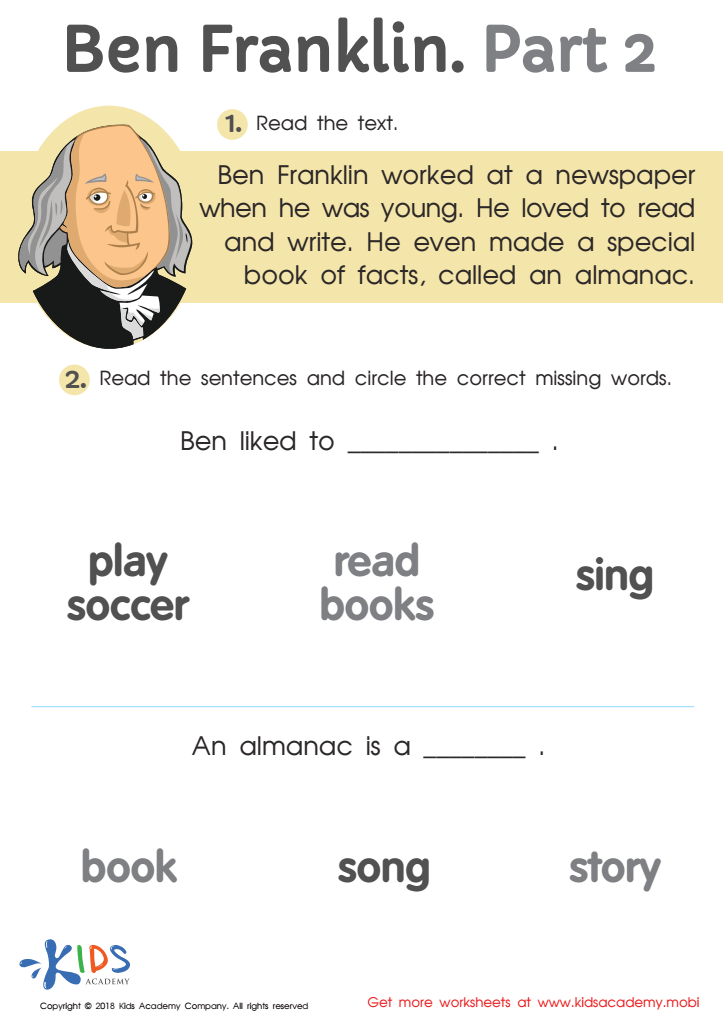
Ben Franklin Part 2 Worksheet
History is filled with great figures, like Benjamin Franklin. Let your kids in on the legacy by introducing them to the founder of the US fire department, diplomat, and inventor. Then, use a worksheet to have them fill in the blanks with the correct word to teach them more. Read the text, then read the sentences and have them circle the missing word.
Ben Franklin Part 2 Worksheet
Worksheet
Join Kids Academy for Free
Who is primarily going to use this learning content?








Understanding the history of reading skills for ages 4-8 is crucial for parents and teachers because it provides valuable insight into the developmental trajectory of literacy. This age group is a critical period for establishing foundational language and reading abilities. Knowing the historical context allows caregivers to appreciate traditional and emerging methods of teaching reading and the evolution of literacy standards over time.
This historical perspective can inform current practices, helping educators implement effective strategies that enhance reading skills. For instance, appreciating the significance of phonics, whole language, and balanced literacy approaches encourages educators to blend techniques suited for diverse learners. Parents informed about past challenges and successes in promoting literacy can better support their children's reading journeys.
Furthermore, understanding the role of cultural and technological changes in reading can help both teachers and parents navigate ongoing shifts in literacy education, including digital literacy. By fostering a love for reading and recognizing early signs of reading difficulties, adults can provide tailored support that aligns with historical trends in effective literacy learning. Ultimately, this awareness can lead to more informed choices about teaching strategies, making reading a more enriching and accessible experience for young learners.