Historical Knowledge Social Studies Worksheets for Ages 4-8 - Page 2
26 filtered results
-
From - To
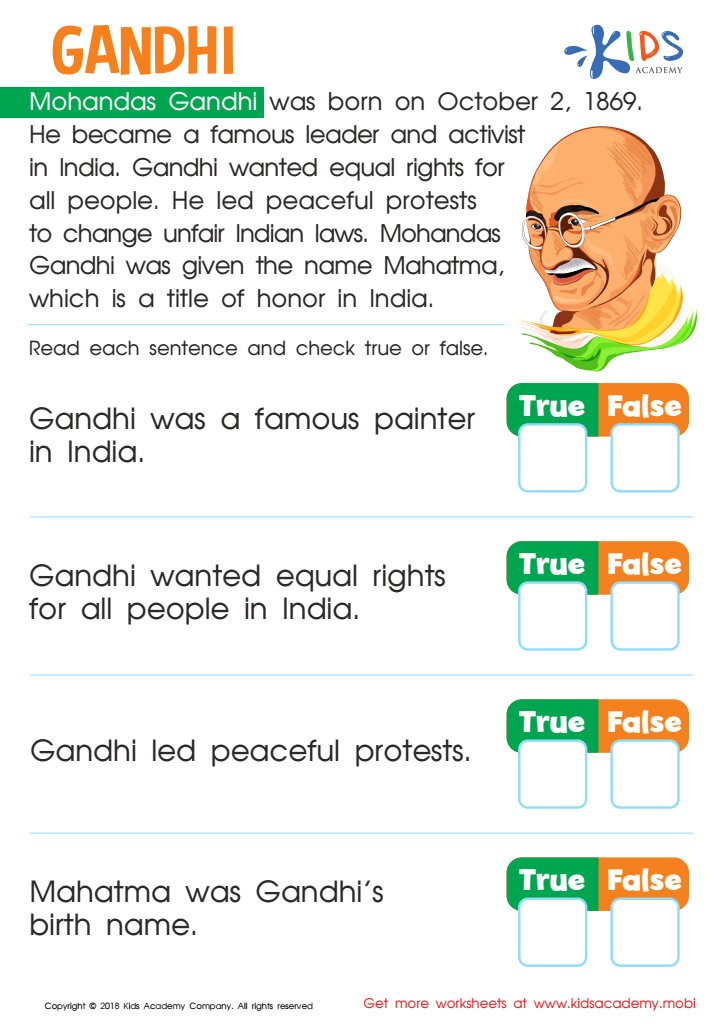
Gandhi Worksheet
 Assign to My Students
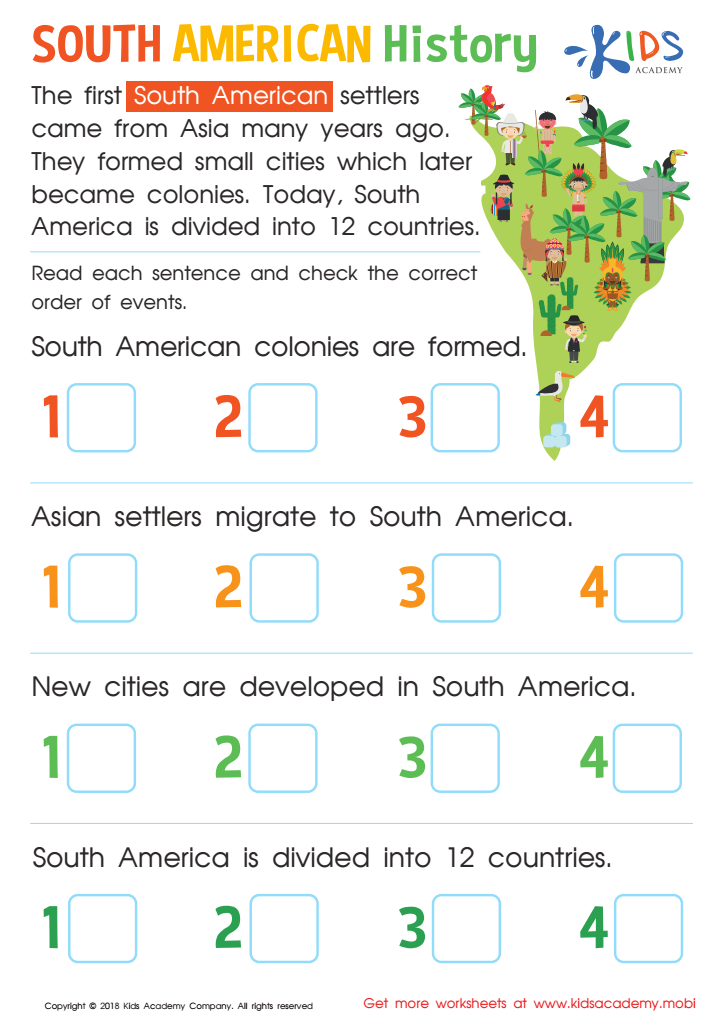
South American History Worksheet








Parents and teachers should prioritize Historical Knowledge in Social Studies for children aged 4-8 because it lays the foundation for critical thinking, comprehension, and empathetic understanding. At this age, children start making connections between their lives and the world around them. By exploring history, they gain insight into diverse cultures, significant events, and influential figures, fostering a sense of identity and belonging.
Understanding historical contexts helps young learners appreciate societal values and traditions, which is crucial in nurturing respectful and informed citizens. Furthermore, history encourages curiosity; children learn to ask questions, seek answers, and develop a love for learning. Engaging with historical stories and experiences also aids in enhancing literacy and comprehension skills, as they read about and discuss various narratives.
Moreover, teaching historical knowledge promotes social awareness and empathy. As children encounter different perspectives and experiences, they cultivate respect for others and improve their social emotional skills. Ultimately, integrating historical knowledge into social studies provides a nurturing environment for social development, cognitive growth, and informed citizenship, setting the stage for lifelong learning and engagement with the world. Parents and teachers play a pivotal role in guiding children through this process, making it essential to emphasize historical understanding at an early age.