Phonics skills improvement Grammar Worksheets for Ages 4-8
3 filtered results
-
From - To
Enhance your child's foundational reading skills with our Phonics Skills Improvement Grammar Worksheets, designed for ages 4-8. These engaging worksheets help young learners grasp the essential sounds and structures of language, fostering confidence in their reading and writing abilities. Featuring interactive activities that focus on phonemic awareness, blending sounds, and decoding simple words, these resources are perfect for at-home learning or classroom use. Our thoughtfully created worksheets encourage playful exploration of language, allowing children to practice at their own pace. Unlock the joy of reading with our comprehensive phonics worksheets, tailored to support every child's learning journey.
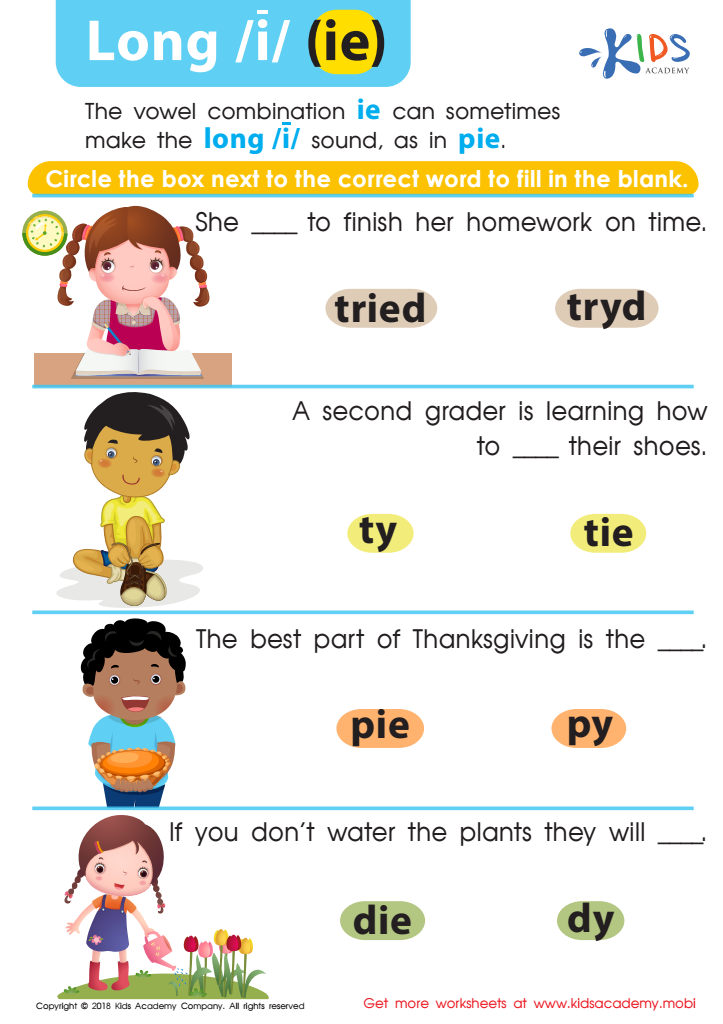
Reading: Long I and IE Worksheet
 Assign to My Students
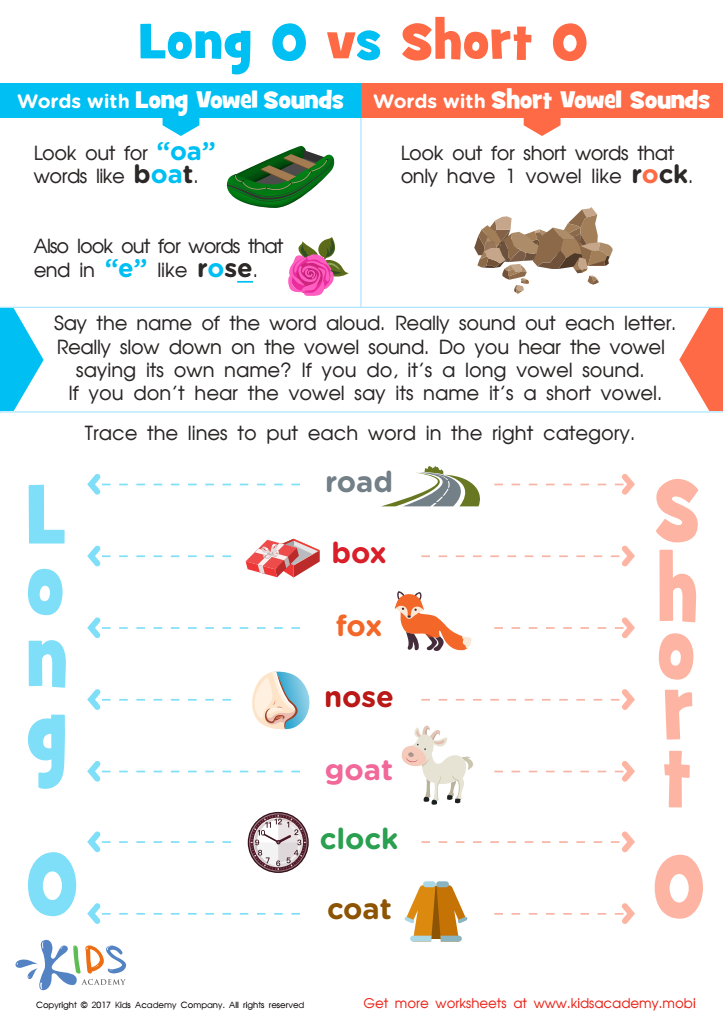
Long and Short Vowel O Spelling Worksheet
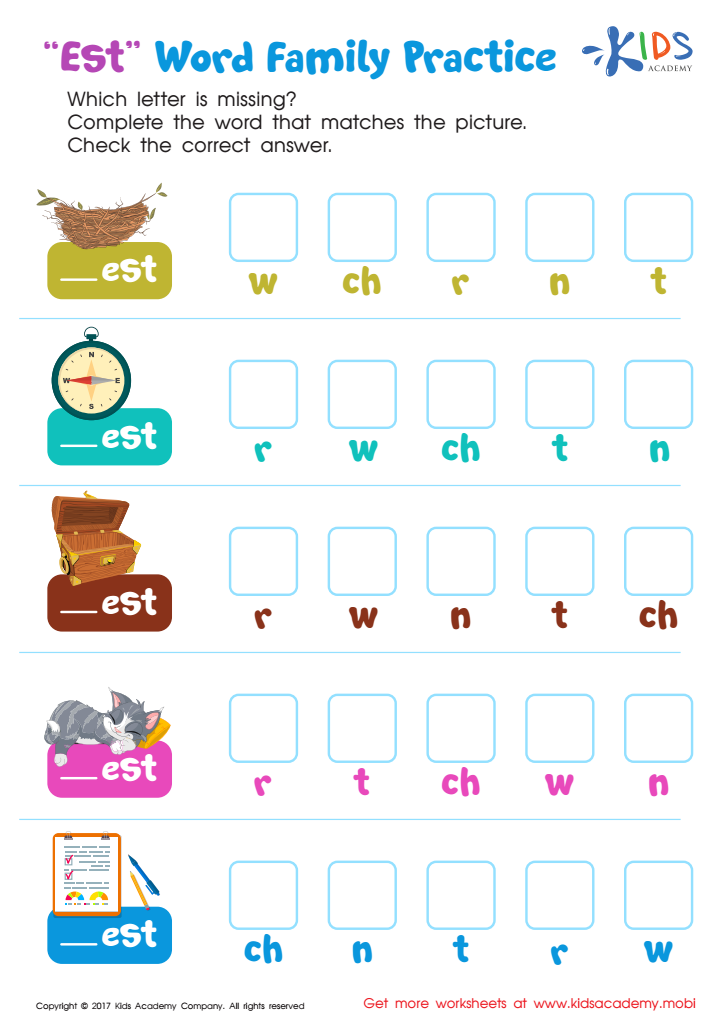
Words Family "est" Spelling Worksheet



.jpg)
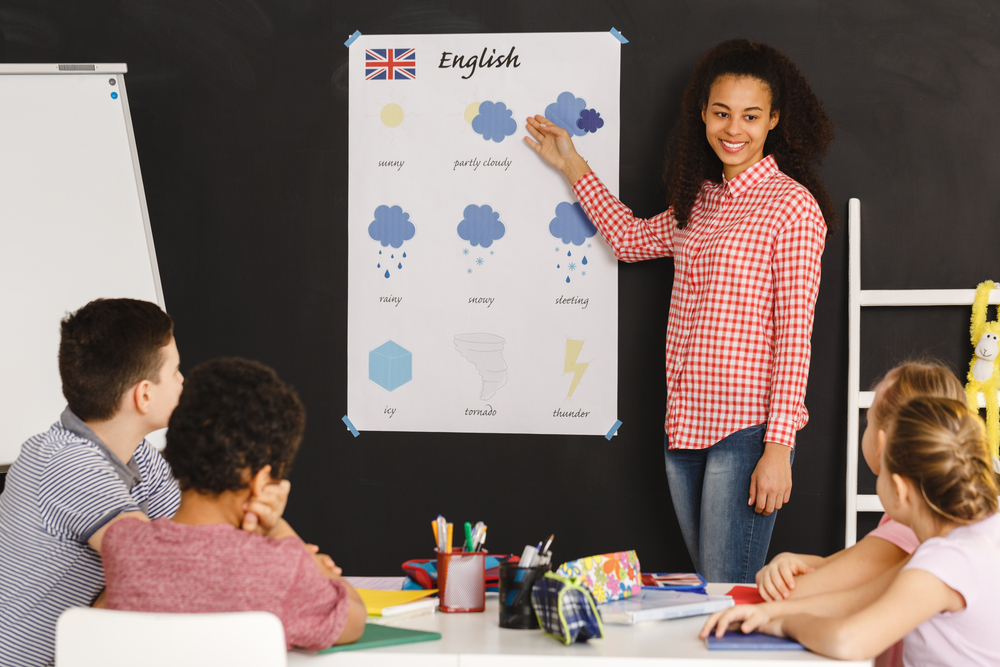


Phonics skills are fundamental for children aged 4-8 as they lay the groundwork for reading fluency and comprehension. At this developmental stage, children learn to recognize the relationship between sounds and letters, which is crucial for decoding words. Improved phonics skills empower young learners to tackle new vocabulary, resulting in enhanced reading confidence and motivation.
Parents and teachers should care about phonics skills improvement for several reasons. First, strong phonics foundations minimize the risk of future reading difficulties, enabling children to enjoy and excel in academic pursuits. Reading is critical across all subjects, and proficient readers are often more successful in school.
Moreover, developing phonics skills supports overall language development. It helps children understand the structure of words, contributing to their vocabulary growth, spelling accuracy, and even writing skills. Engaging young learners in phonics activities fosters a love for reading, encouraging lifelong learning habits.
Additionally, in today’s digital age, reading is more important than ever for critical thinking and communication. By prioritizing phonics skills, parents and teachers can significantly impact a child's educational journey, ensuring they have the essential tools required for success in school and beyond.








