
Vocabulary Building Grammar Worksheets for Ages 4-8
12 filtered results
Difficulty Level
Grade
Age
-
From - To
Subject
Activity
Standards
Our "Vocabulary Building Grammar Worksheets for Ages 4-8" are designed to enhance young learners' language skills through engaging and educational activities. These printable worksheets help kids expand their vocabulary, understand sentence structure, and grasp grammar concepts in a fun, interactive way. Perfectly suited for children aged 4 to 8, each worksheet features colorful illustrations and exercises tailored to different learning levels. From identifying new words to creating simple sentences, our worksheets make mastering grammar an enjoyable experience. Boost your child's linguistic confidence and proficiency with our expertly crafted vocabulary-building resources. Explore the collection today and watch them thrive!
Favorites
With answer key
Interactive
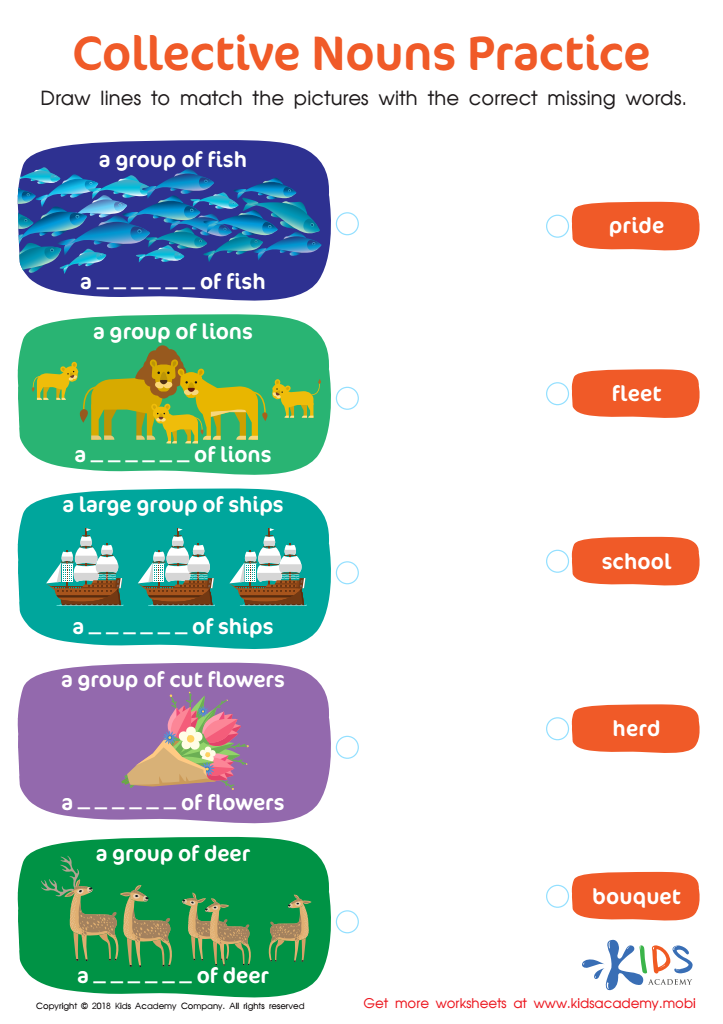
Collective Nouns Practice Worksheet
This worksheet helps your child master collective nouns. Five pictures show different groups of nouns, and your child must draw lines to the right collective noun words. It's a great way to help them sort out the words and understand collective nouns.
Collective Nouns Practice Worksheet
Worksheet
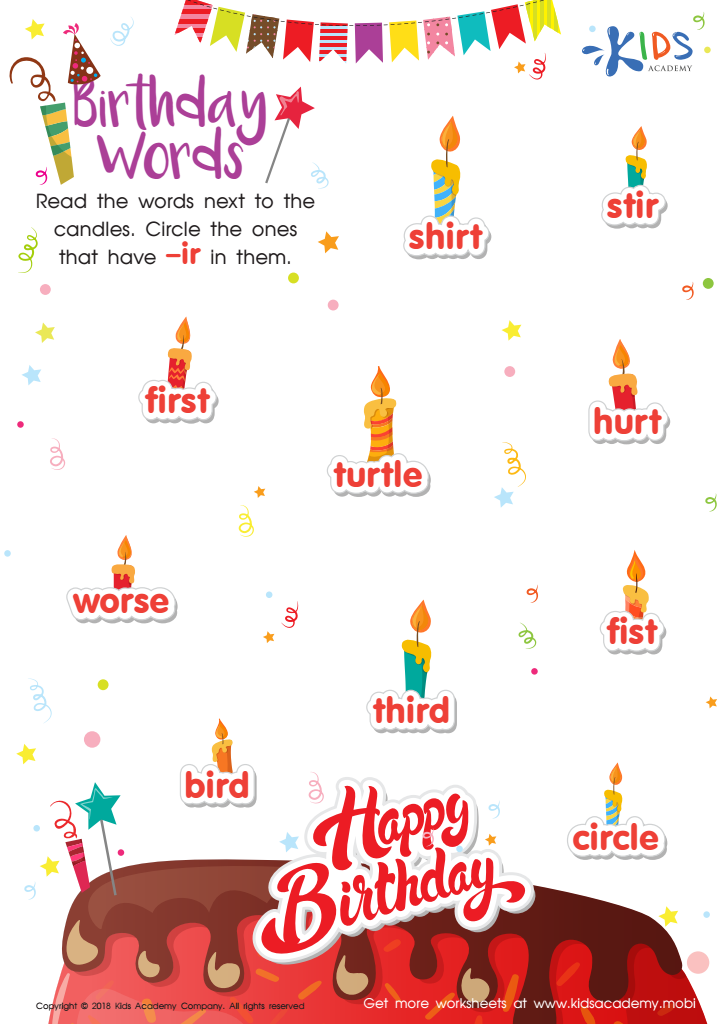
Birthday Words Worksheet
Kids adore birthday parties! Whether it's theirs or a friend's, the event is a huge draw for kids. This fun birthday-themed worksheet teaches kids to identify the letter combination -ir. Get them to scan and circle the colorful words that contain -ir. It's an exciting PDF page they won't want to miss!
Birthday Words Worksheet
Worksheet
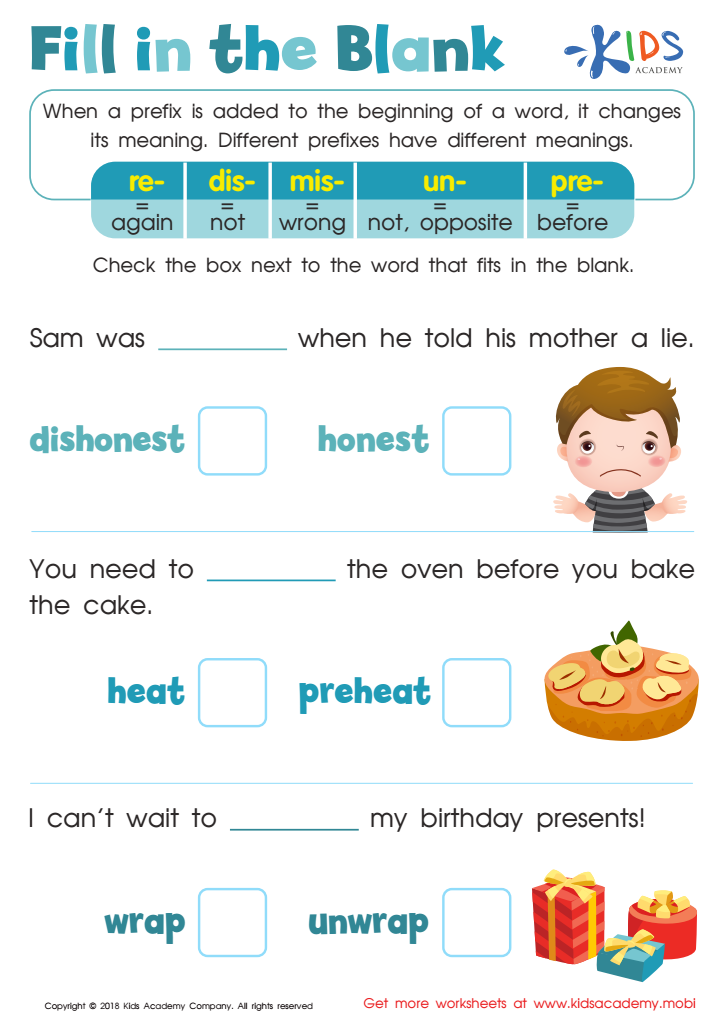
Reading: Fill in the Blank Worksheet
Students can practice understanding the meaning of common prefixes with this worksheet. They read sentences and pick the correct word with the appropriate prefix to complete it. Downloadable and a great addition to reading and vocabulary resources, this helps improve comprehension with mastery of the skill!
Reading: Fill in the Blank Worksheet
Worksheet
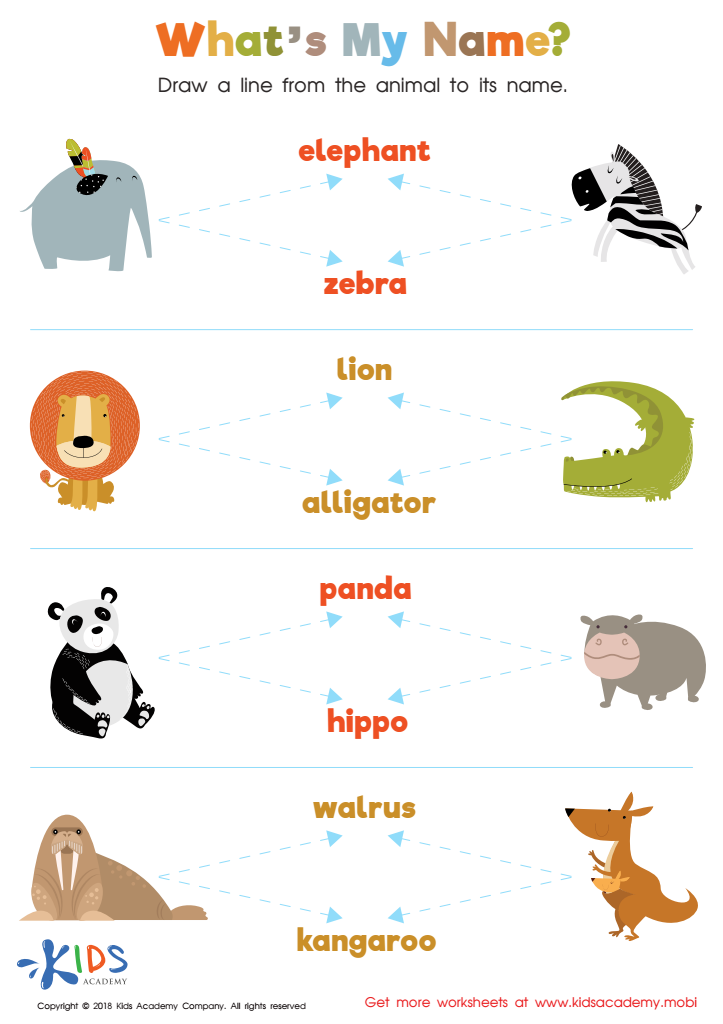
Animals and Their Names Worksheet
Match animals with their names with this worksheet! Draw a line from the word to its picture. Say the name of each animal. Later, search for these animals at the zoo - great for reinforcing learning!
Animals and Their Names Worksheet
Worksheet
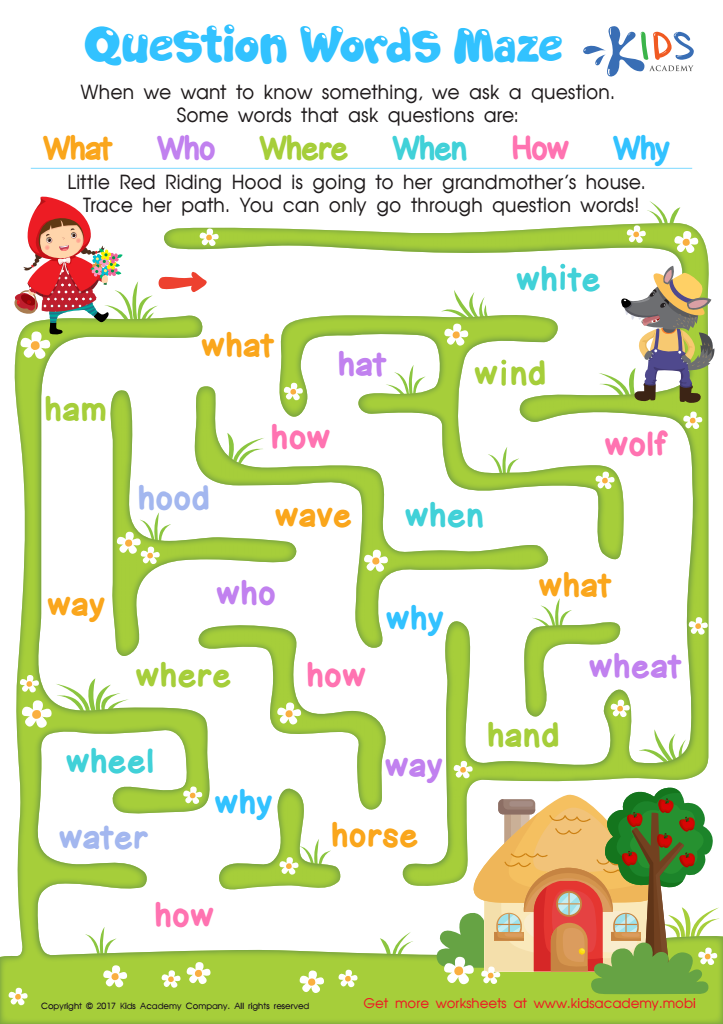
Question Words Maze Worksheet
Start each query with the right words: practice using the "who", "what", "where", "when" and "how" of questions in this fun maze. Guide Little Red Riding Hood away from the wolf and to her grandmother's house with a pencil, tracing a path through the question words only, leaving the wolf and other words behind.
Question Words Maze Worksheet
Worksheet
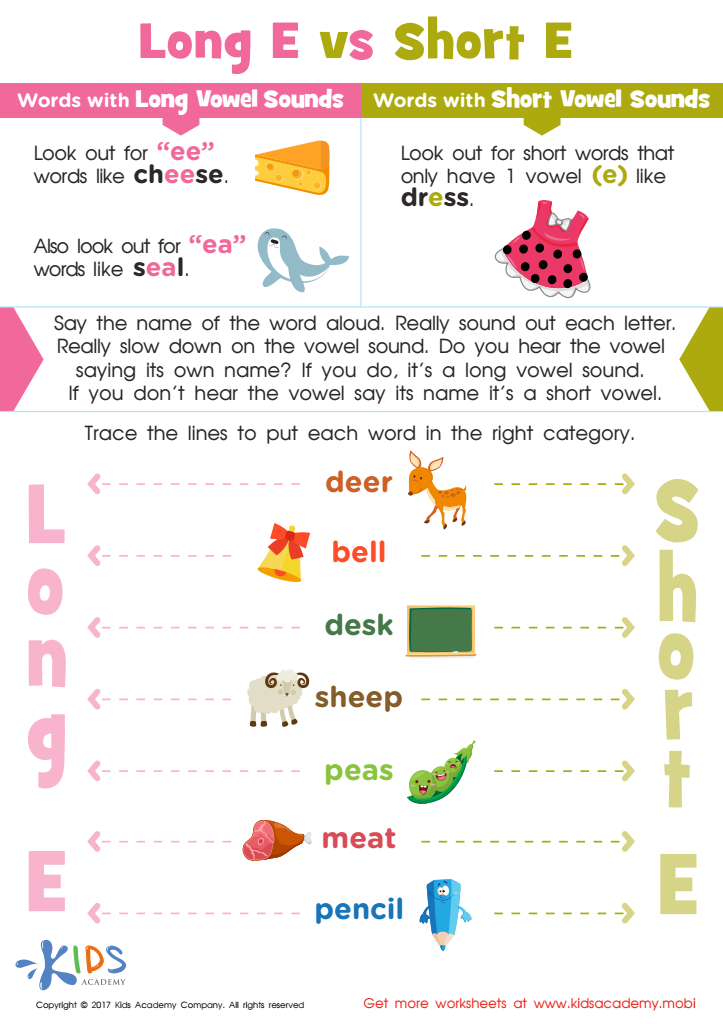
Long and Short Vowel E Spelling Worksheet
This worksheet helps kids master spelling with the letter "E". They read about long and short vowel sounds, view examples and sound out words to complete it. Two vowels distinguish long "E" sounds from its short vowel counterparts with just one.
Long and Short Vowel E Spelling Worksheet
Worksheet
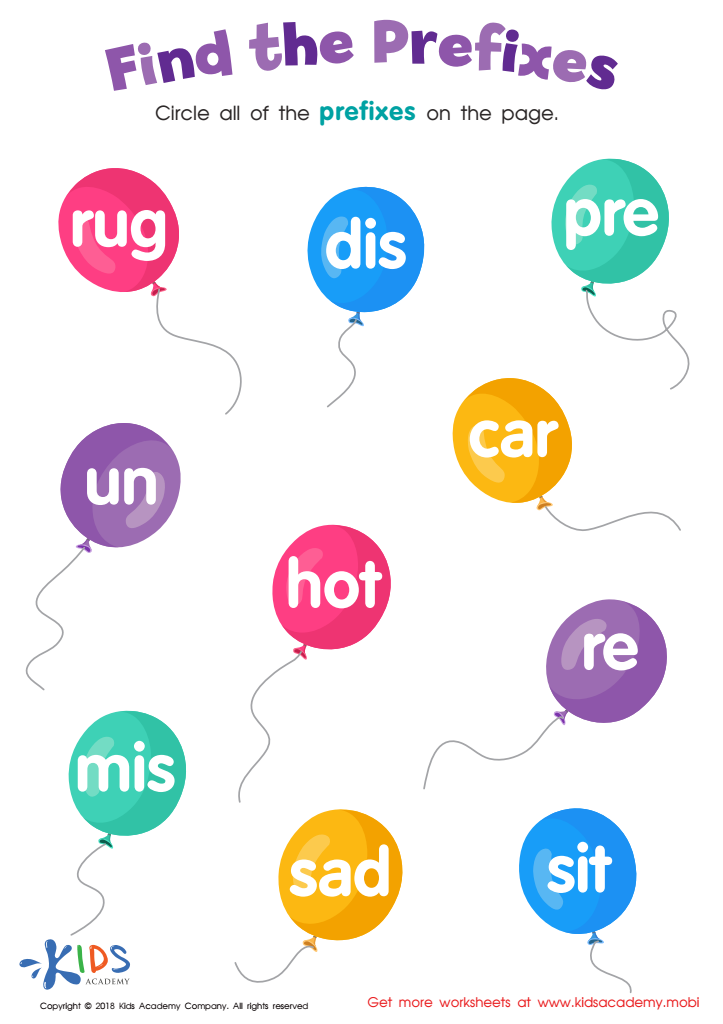
Reading: Find the Prefixes Worksheet
Students are asked to circle all prefixes on this worksheet and brainstorm a list of words that have them. It's a great tool for teaching vocabulary and helps students understand new and unfamiliar words by recognizing how prefixes change meaning.
Reading: Find the Prefixes Worksheet
Worksheet
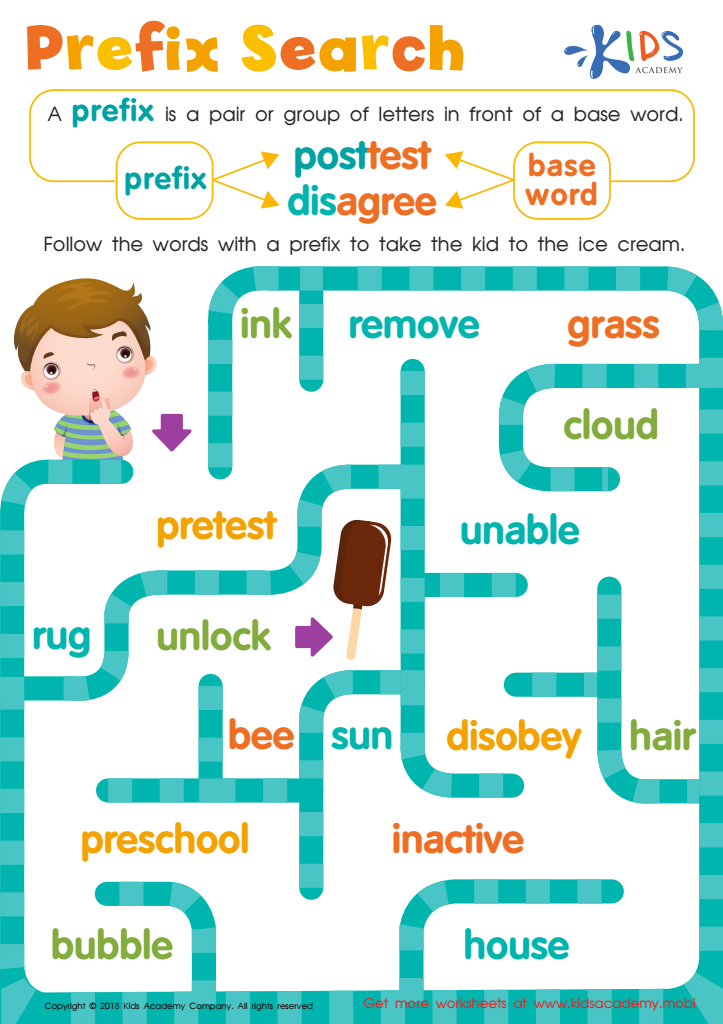
Reading: Prefix Search Worksheet
Maze your way through prefixes! This worksheet helps students practice reading new words with a prefix and figuring out the base word. An understanding of prefixes gives students the skills to comprehend new words. A fun and useful activity for the reading classroom!
Reading: Prefix Search Worksheet
Worksheet
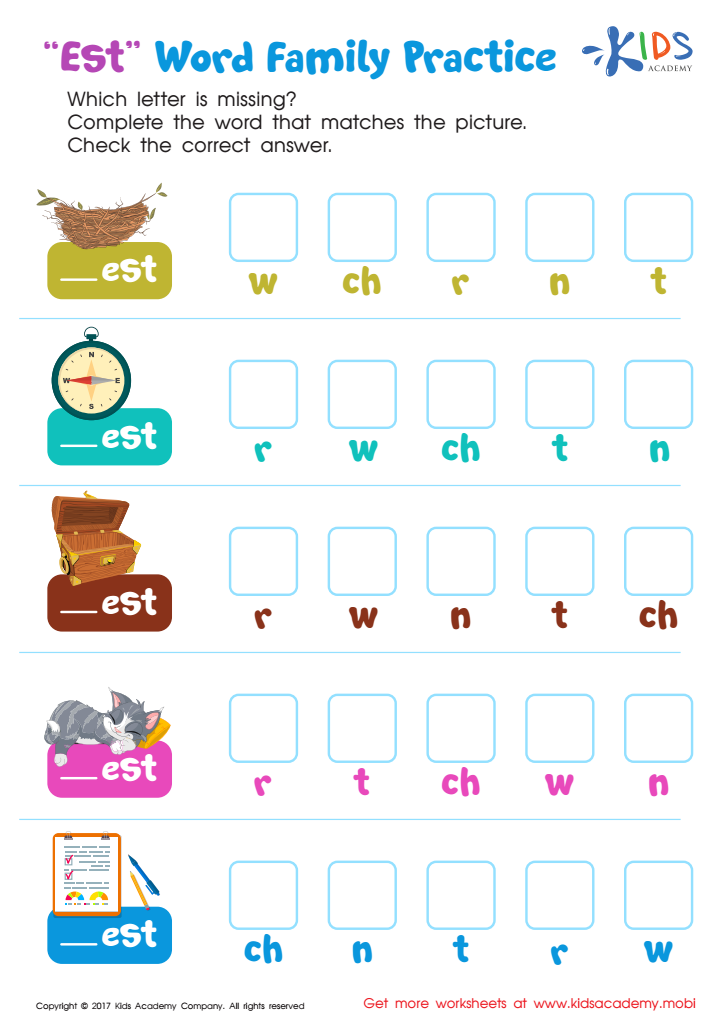
Words Family "est" Spelling Worksheet
Pictures are great for motivating kids as they learn. This spelling worksheet on words ending in "est" will help kids gain confidence and recognition in their spelling ability.
Words Family "est" Spelling Worksheet
Worksheet
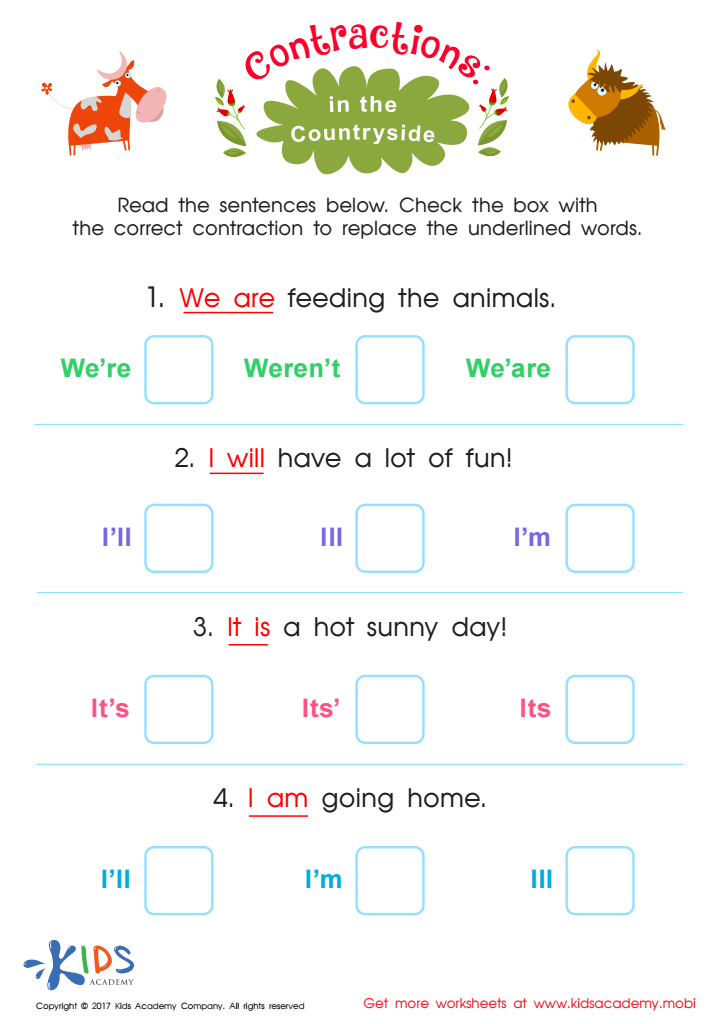
Contractions: In the Countryside Worksheet
This worksheet is great for building reading and writing skills.
Help your child master basic contractions with this printable worksheet: In the Countryside. Have them go through each sentence and select the right contraction. It's perfect for developing reading and writing skills.
Contractions: In the Countryside Worksheet
Worksheet
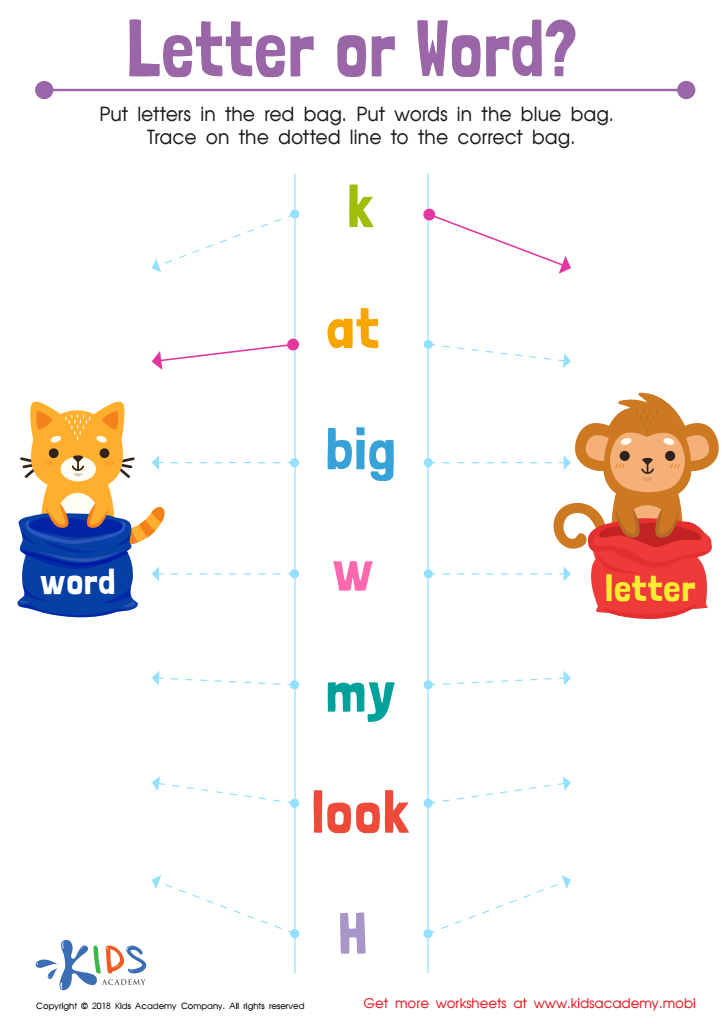
Letter or Word? Worksheet
Help your kids differentiate between words and letters. If they can recite their alphabets and identify common words, this tracing sheet will be a breeze. Have them trace on the dotted lines to place the letters in the red bag with the kitten, and the words in the blue bag with the monkey.
Letter or Word? Worksheet
Worksheet
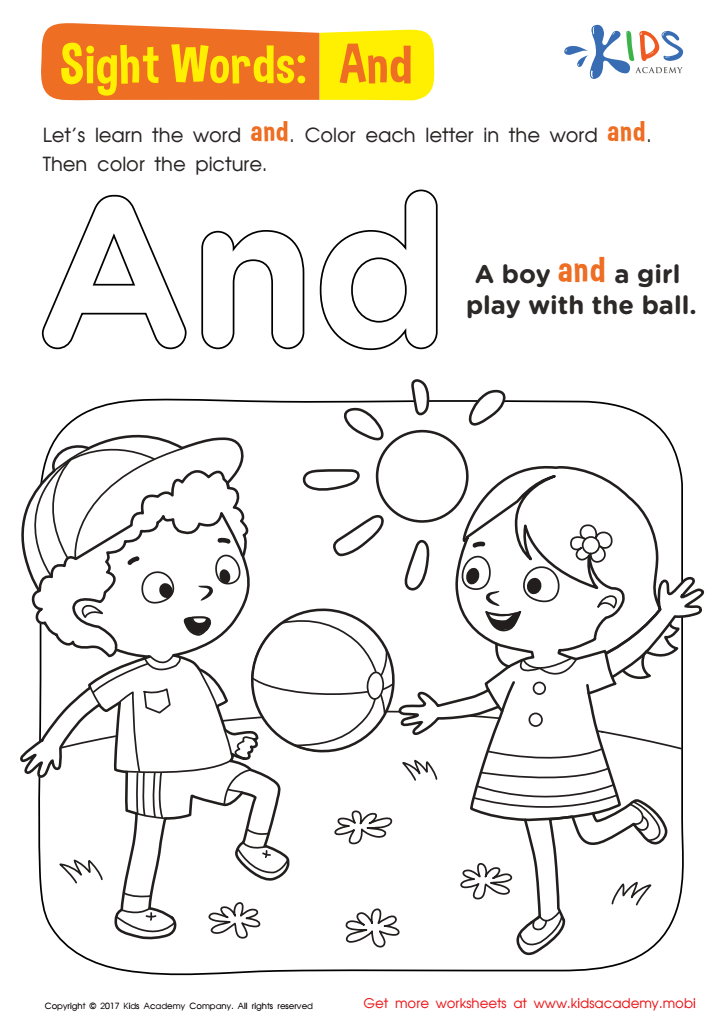
And Worksheet Sight Words Worksheet
Help your child get a jumpstart on reading with sight words! Print out this fun worksheet and get your child to read the sentence. Point out the word "and", then color the word and enjoy the rest of the scene! It's a great way to introduce sight words and get their early reading skills going!
Download (PDF)
 Assign to My Students
Assign to My Students
And Worksheet Sight Words Worksheet
Worksheet
Join Kids Academy for Free
Who is primarily going to use this learning content?







Vocabulary building and grammar acquisition are crucial during the ages of 4 to 8, as these formative years lay the foundation for a child’s academic success and overall cognitive development. During this critical period, children’s brains are exceptionally receptive to language learning, making it an optimal time to expand their vocabulary and understanding of grammar.
A rich vocabulary enhances a child’s ability to communicate effectively, improving both expressive and receptive language skills. With a broader range of words at their disposal, children can express their thoughts, emotions, and needs more precisely, leading to better interactions with peers and adults, which nurtures social and emotional growth.
Proper grammar usage is equally important as it provides the structure needed to understand and produce coherent sentences. Mastery of grammar rules aids in reading comprehension, enabling children to grasp the meaning of complex texts as they progress through their education. Furthermore, a solid grasp of vocabulary and grammar contributes to writing skills, essential for academic achievement across all subjects.
For parents and teachers, prioritizing vocabulary and grammar involves engaging activities like reading aloud, playing word games, and engaging in conversations. Encouraging such linguistic exposure at home and in school prepares children not only for academic challenges but also for a lifetime of effective communication and critical thinking.








