
Contextual understanding Writing Worksheets for Ages 4-8
6 filtered results
Difficulty Level
Grade
Age
-
From - To
Subject
Activity
Standards
Introducing our Contextual Understanding Writing Worksheets for Ages 4-8! These engaging and educational resources will transform young learners into budding authors. Each worksheet is carefully designed to build critical thinking and comprehension skills, helping children make connections between words and their meanings. With fun activities and colorful illustrations, our worksheets inspire creativity while laying a strong foundation in language arts. Whether your child is just starting to write or already crafting short stories, these worksheets are perfect for developing contextual awareness, vocabulary, and sentence structure. Empower your child's writing journey with Kids Academy’s innovative and interactive worksheets today!
Favorites
With answer key
Interactive
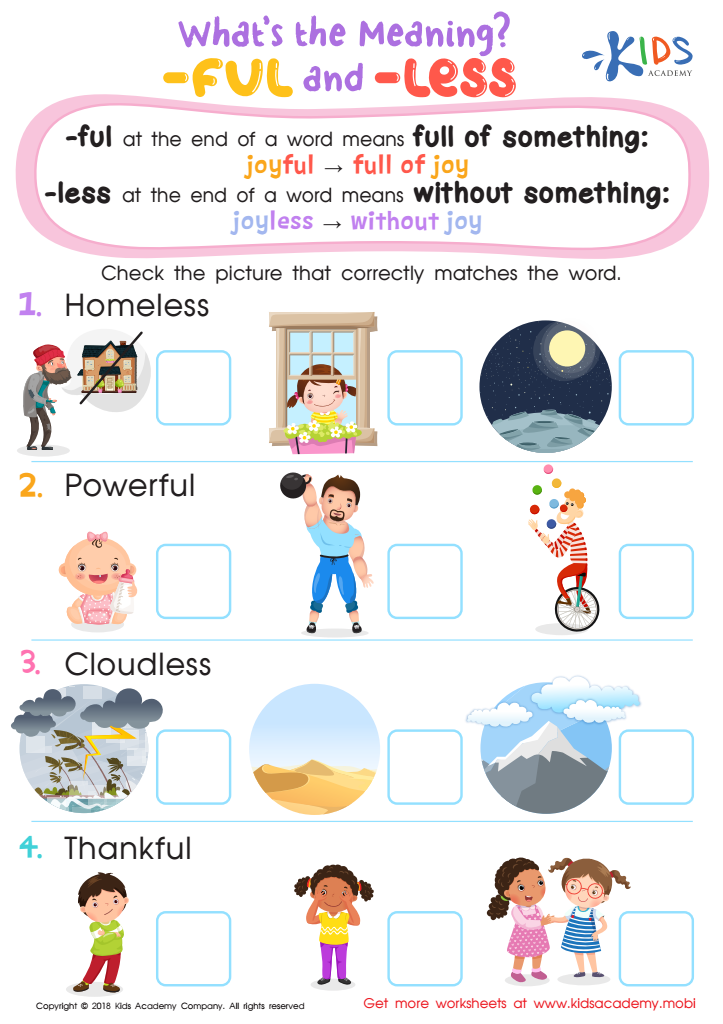
What's the Meaning? Worksheet
Look with your youngster through this colorful worksheet and match the pictures to the words at the top. These words have different meanings due to either a prefix or suffix being added, such as "ful" or "less".
 Assign to My Students
What's the Meaning? Worksheet
Worksheet
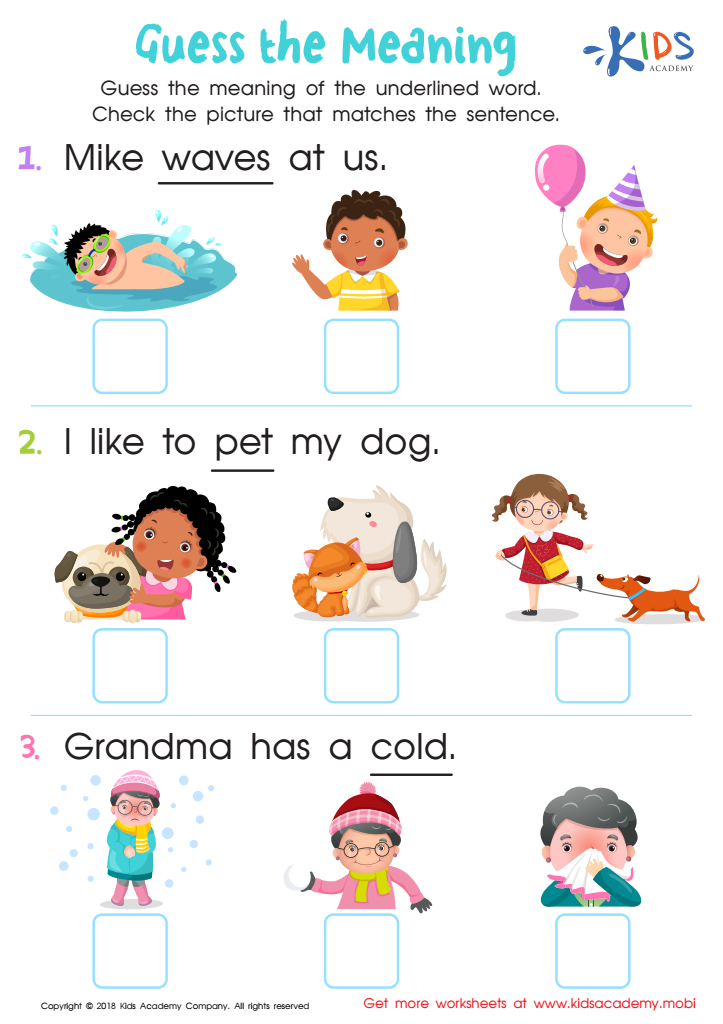
Guess the Meaning Worksheet
Help your child learn the meanings of words in different contexts by using this colourful, free worksheet. What is the meaning of the underlined words in each sentence? Look at the images and pick the one that accurately describes the word's context.
Guess the Meaning Worksheet
Worksheet
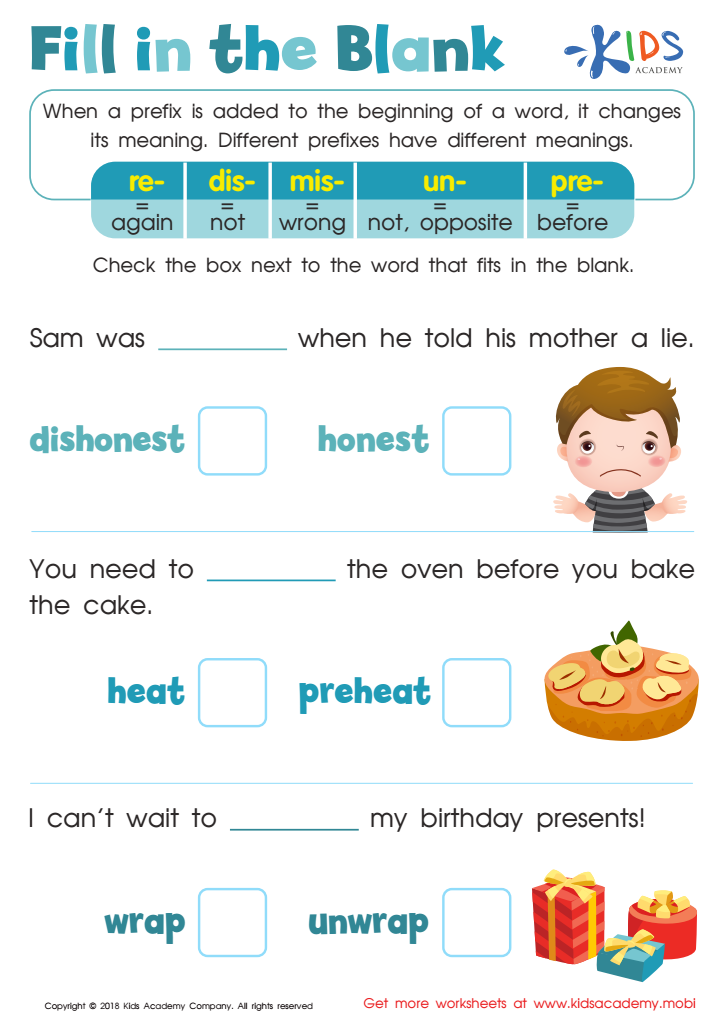
Reading: Fill in the Blank Worksheet
Students can practice understanding the meaning of common prefixes with this worksheet. They read sentences and pick the correct word with the appropriate prefix to complete it. Downloadable and a great addition to reading and vocabulary resources, this helps improve comprehension with mastery of the skill!
Reading: Fill in the Blank Worksheet
Worksheet
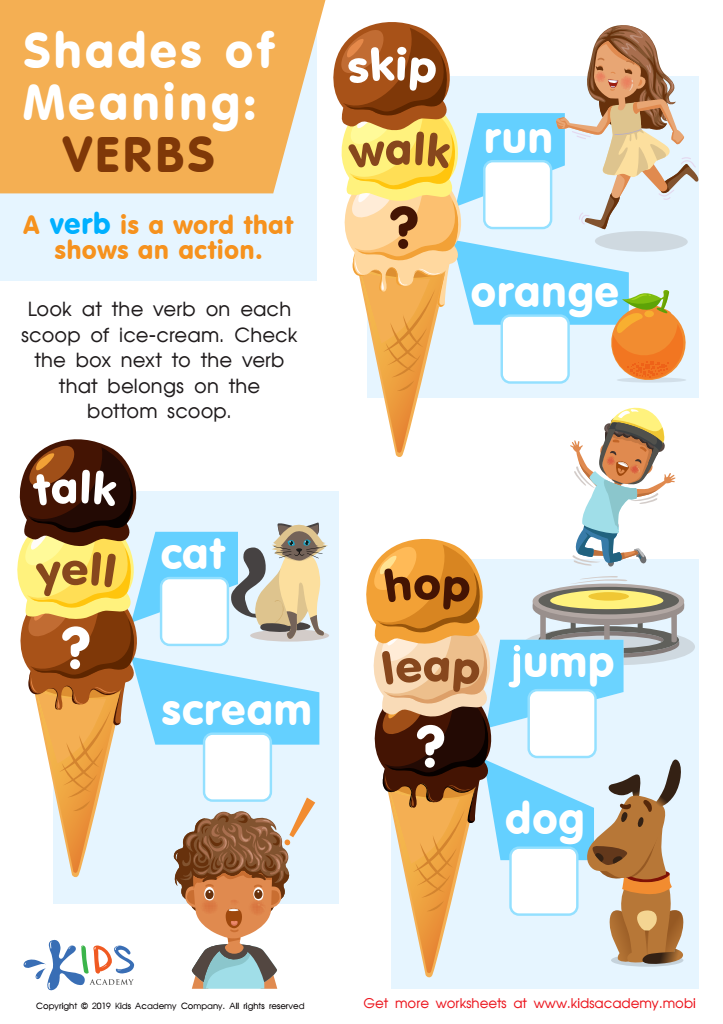
Shades of Meaning: Verbs Worksheet
Verbs are words that show action. Introduce kindergartners to verbs by having them check the box next to the verb that belongs on the bottom scoop in a worksheet. This is a great way to teach them this important part of speech and help them learn to write proper sentences and speak correctly.
Shades of Meaning: Verbs Worksheet
Worksheet
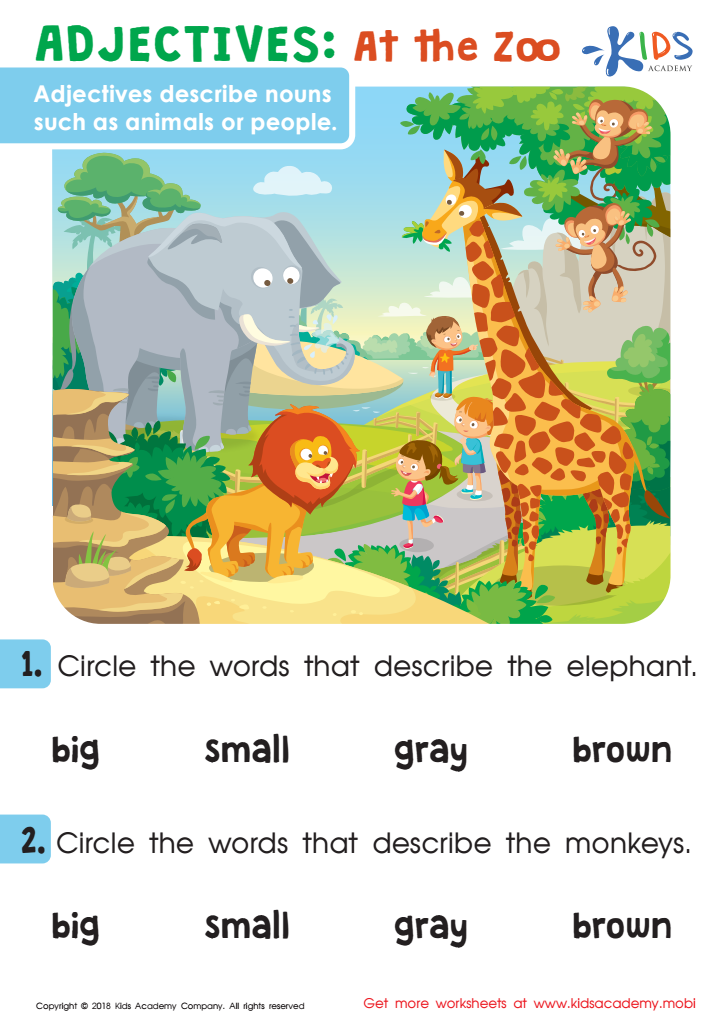
Adjectives: At The Zoo Worksheet
Take your kids to the zoo and ask them about their favorite activities and animals. This worksheet is a great way for kids to learn about adjectives. Explain that adjectives describe nouns like people or animals (e.g. big, tall, dark). Look at the printout with your kids and help them circle words that describe the animals in the picture.
Adjectives: At The Zoo Worksheet
Worksheet
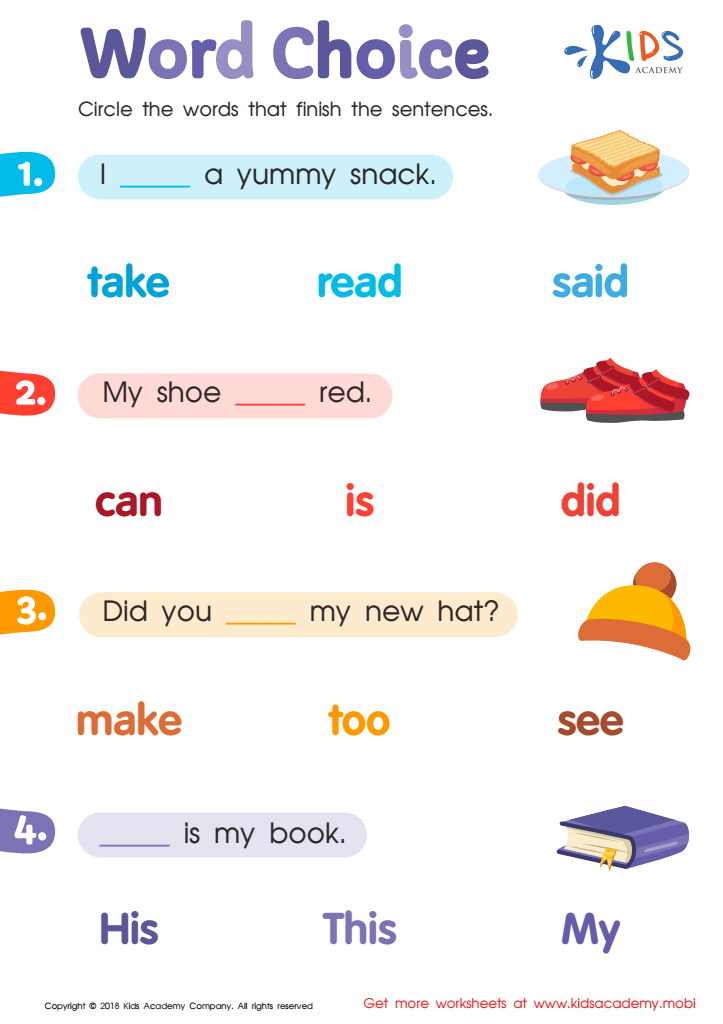
Word Choice Worksheet
This worksheet can help your children become better readers. By now, you should have an idea of their reading level. Read the incomplete sentences aloud and point to the missing piece. Have your students pick the correct word they think best fits the sentence out of the options given.
Word Choice Worksheet
Worksheet
Join Kids Academy for Free
Who is primarily going to use this learning content?








Contextual understanding in writing for children ages 4 to 8 is crucial for their overall language and cognitive development. When young children learn to write contextually, they are not just memorizing words or stringing sentences together, but also comprehending the meanings and significance behind their writing. This deeper level of understanding fosters critical thinking, enhancing a child’s ability to grasp abstract concepts and engage more meaningfully with literature and communication.
For parents and teachers, encouraging contextual writing ensures that children are developing key literacy skills in a supportive and structured environment. As children learn to consider the context, they understand the nuances of different writing styles, purposes, and audiences. This practice builds their vocabulary, improves grammar, and enhances their ability to express themselves clearly and effectively. Additionally, promoting contextual understanding from an early age sets a strong foundation for more complex reading and writing skills in later academic years.
Moreover, contextual writing activities can be fun and engaging, allowing children to explore their creativity while making connections to their own experiences and the world around them. When children write about familiar contexts or imaginative scenarios, they feel more motivated and confident, cementing their love for learning and discovery. By prioritizing contextual understanding in writing, parents and teachers are equipping children with essential tools that will serve them not only academically but also in everyday life.








