Critical Thinking Writing Worksheets for Ages 4-8
4 filtered results
-
From - To
Discover our engaging Critical Thinking Writing Worksheets designed specifically for children ages 4-8! These fun activities encourage young learners to develop essential critical thinking skills through creative writing, problem-solving, and logical reasoning. Each worksheet promotes imagination and helps children articulate their ideas effectively. Whether enhancing storytelling abilities or improving comprehension, our worksheets provide a perfect balance of challenge and enjoyment. Ideal for both classroom use and at-home learning, these resources lay the foundation for strong writing skills and analytical thinking. Explore the world of critical thinking today and watch your child's confidence and creativity flourish!
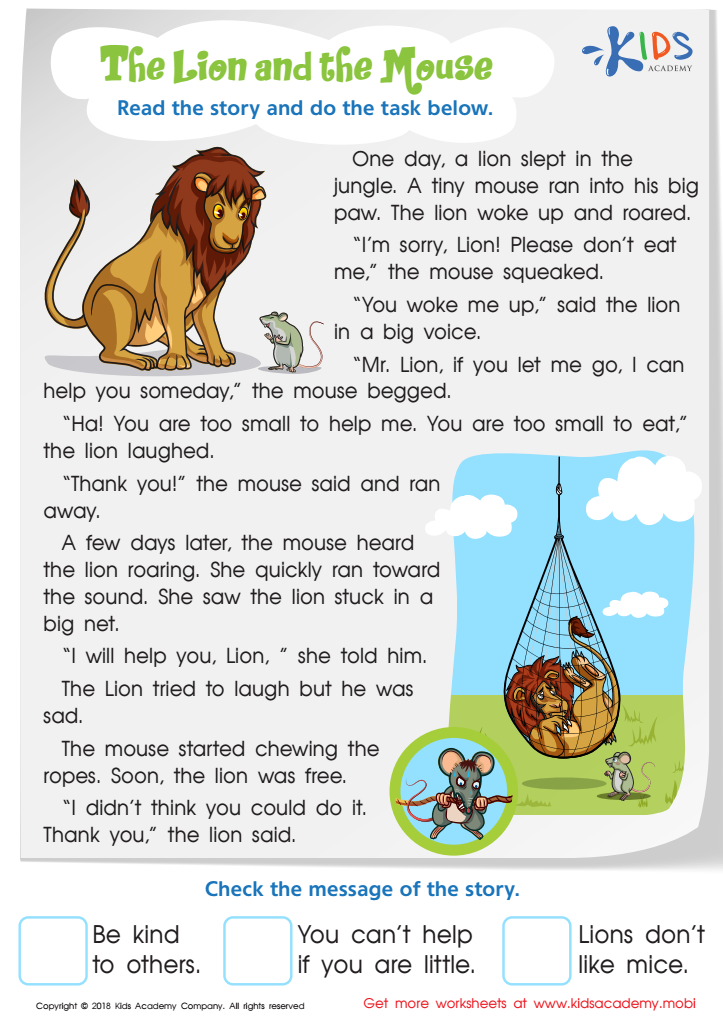
The Lion and the Mouse Worksheet
 Assign to My Students
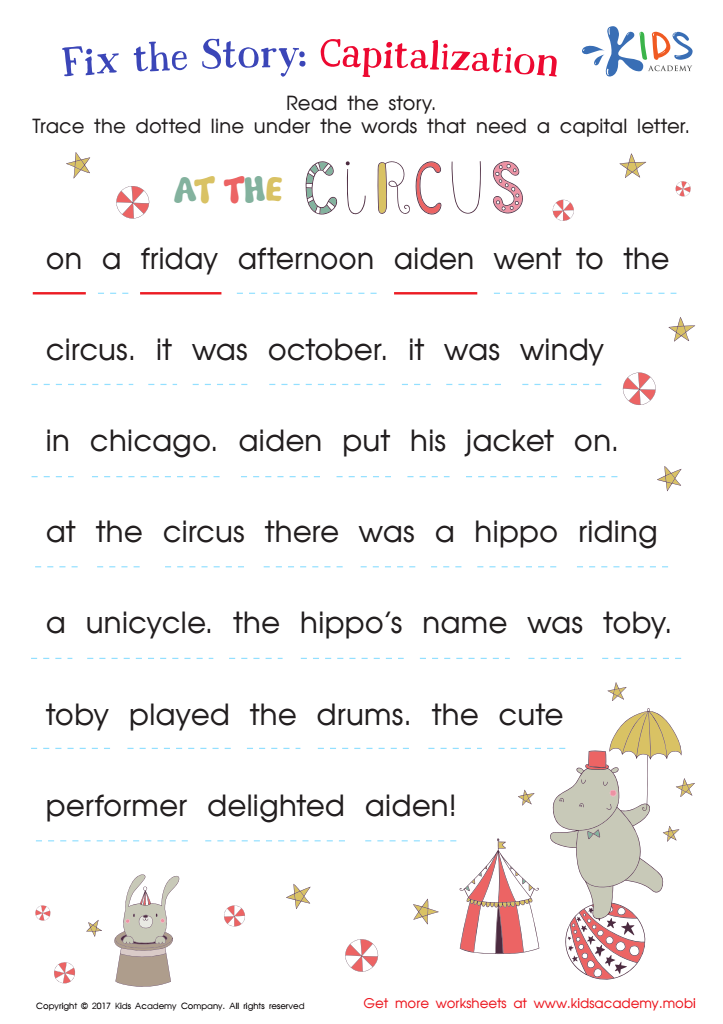
Capitalization: Fix the Story Worksheet
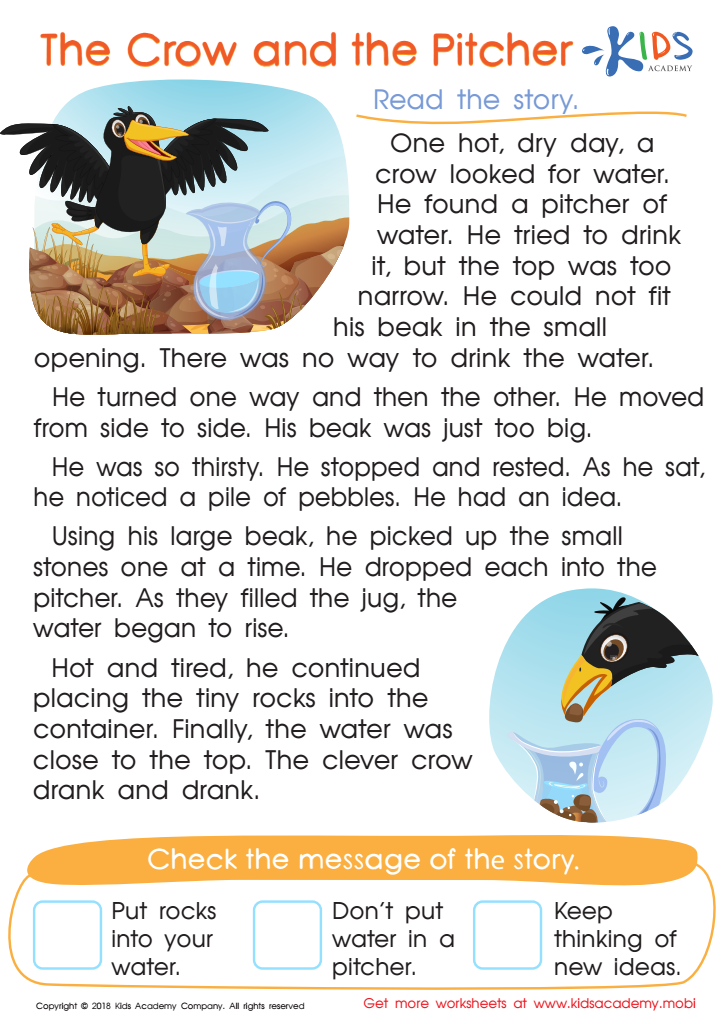
The Crow and the Pitcher Worksheet
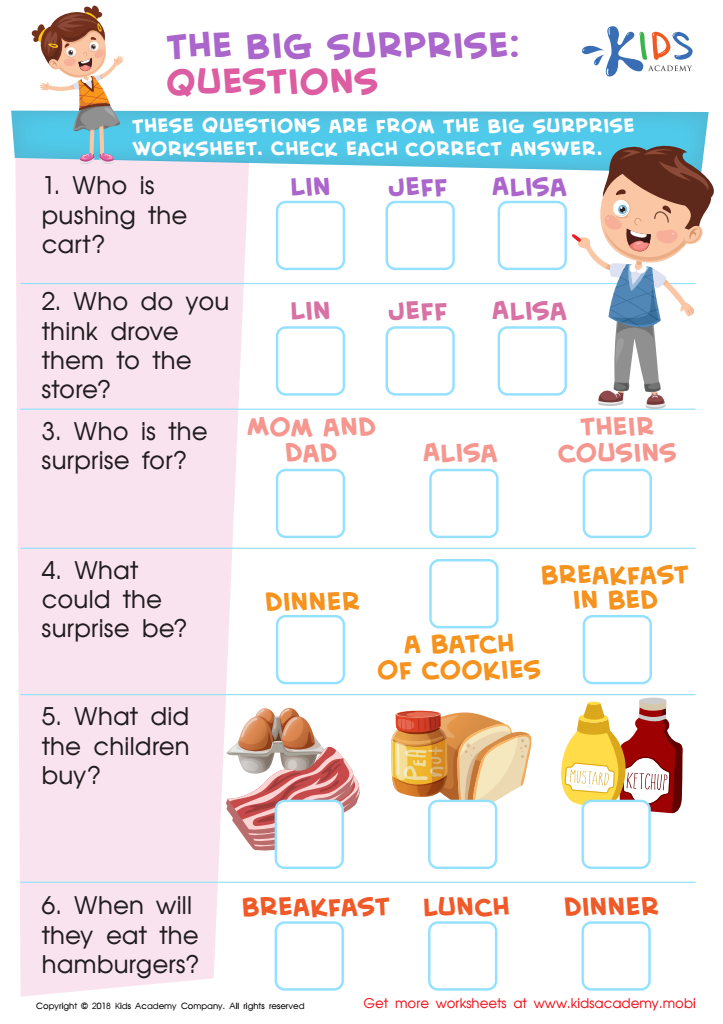
The Big Surprise: Questions Worksheet








Critical thinking writing is crucial for children aged 4-8 as it lays the foundation for their cognitive and emotional development. As young learners begin to express themselves through writing, cultivating their critical thinking skills enables them to analyze information, articulate their ideas coherently, and explore diverse perspectives. This ability fosters creativity and problem-solving, encouraging children to question assumptions and develop independent thought.
Parents and teachers should prioritize critical thinking writing because it enhances language skills and promotes confidence in self-expression. When children learn to evaluate and organizes their thoughts, they gain clarity in communication, which is vital for effective interaction in their social environments. Additionally, these skills are essential for adapting to future learning challenges, as critical thinking is a core competency in education and beyond.
Engaging children in critical thinking writing activities, such as storytelling or journal writing, enriches their academic experiences and builds resilience. As they learn to process their thoughts and inquiries, young learners become more engaged and motivated, and their academic performance is likely to improve over time. Thus, nurturing critical thinking writing in early education benefits not just the child's current development but also equips them with skills for lifelong success.








