
Punctuation understanding Writing Worksheets for Ages 4-8
5 filtered results
Difficulty Level
Grade
Age
-
From - To
Subject
Activity
Standards
Enhance your young learner's writing skills with our fun and engaging Punctuation Understanding Writing Worksheets, designed for ages 4-8! These educational resources focus on the fundamental aspects of punctuation, including periods, question marks, commas, and more. Our worksheets not only help children recognize and use these essential marks correctly but also improve their overall grammar and writing abilities. Perfect for both classroom and homeschooling settings, these worksheets create an interactive experience that makes learning punctuation both enjoyable and effective. Start your child's journey to clear and confident writing today with Kids Academy's expertly designed punctuation tools.
Favorites
With answer key
Interactive
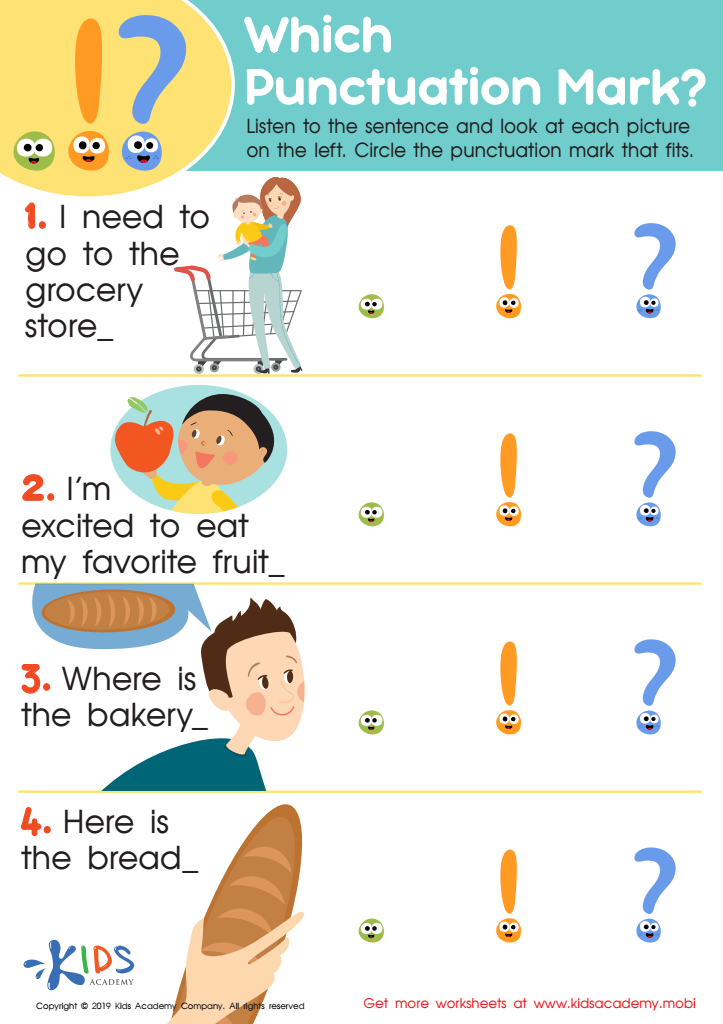
Which Punctuation Mark Worksheet
Punctuation marks are essential for expressing what we say. This worksheet asks your kindergarten student to circle the correct punctuation mark for each sentence. Read each sentence aloud and help them identify the expression needed. A picture accompanies each sentence. Enjoy! (79 words)
 Assign to My Students
Which Punctuation Mark Worksheet
Worksheet
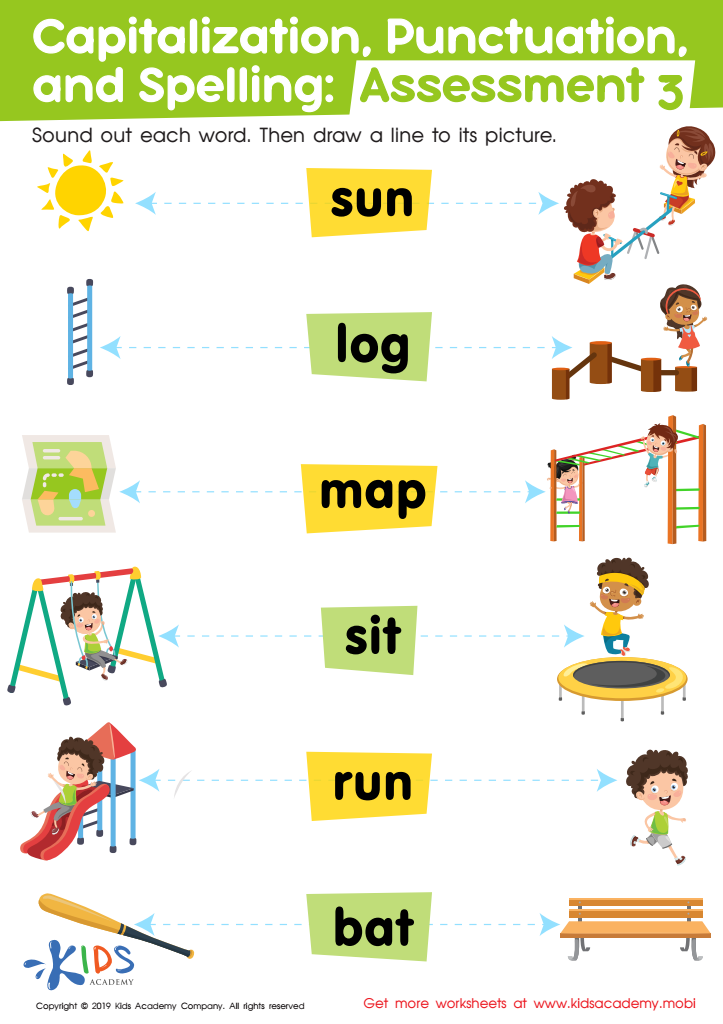
Capitalization. Punctuation. Spelling. Assessment 3 Worksheet
Before starting this worksheet, have your kids spell some simple words. Correct if wrong and show the right spellings. Then, ask them to link the pictures to the words you read out. Spelling is key for a good writer, and kids need to know how to spell to read texts easily.
Capitalization. Punctuation. Spelling. Assessment 3 Worksheet
Worksheet
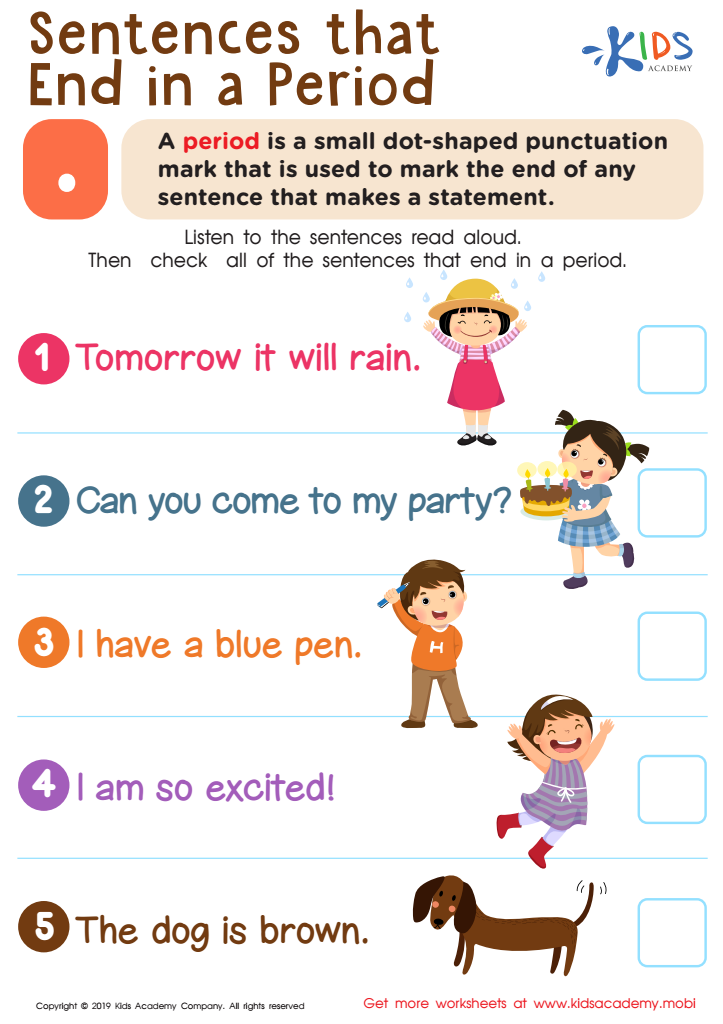
Sentences That End in a Period Worksheet
Before beginning, ask your kids if they know what punctuation marks are and can name a few. Common examples are the period (a small dot-shaped mark at the end of sentences), comma, question mark, and exclamation mark. Help practice their use with questions in the worksheet.
Sentences That End in a Period Worksheet
Worksheet
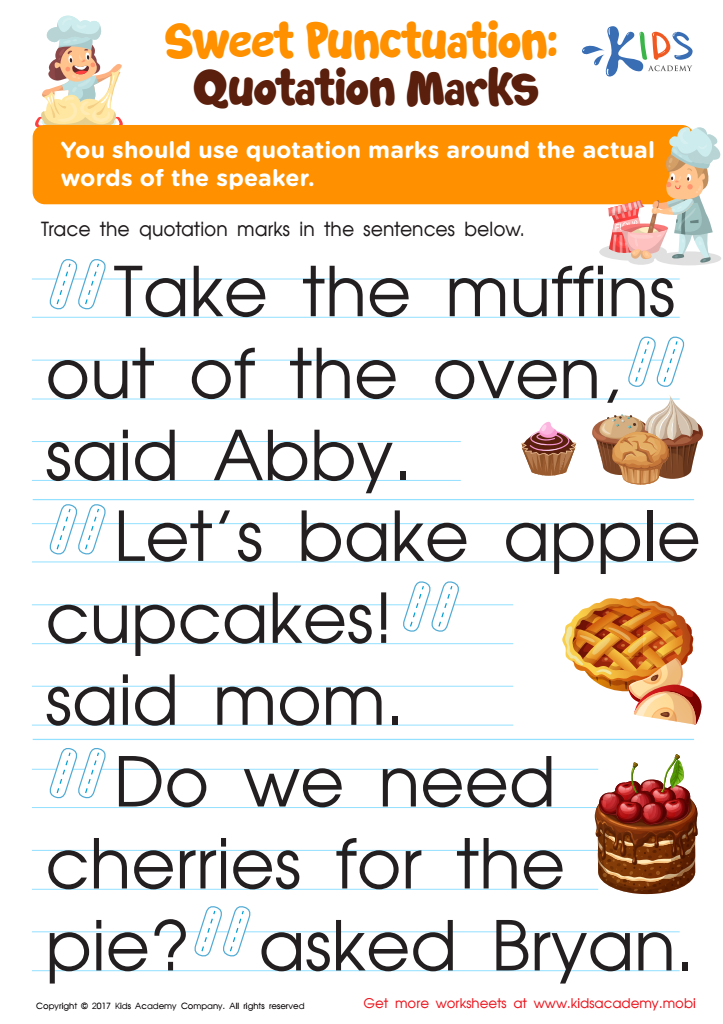
Commas and Quotation Marks Worksheet
This 3rd grade quotation marks worksheet introduces kids to using quotation marks in dialogue. Kids trace the quotation marks around each character's dialogue, learning to punctuate dialogue accurately.
Commas and Quotation Marks Worksheet
Worksheet
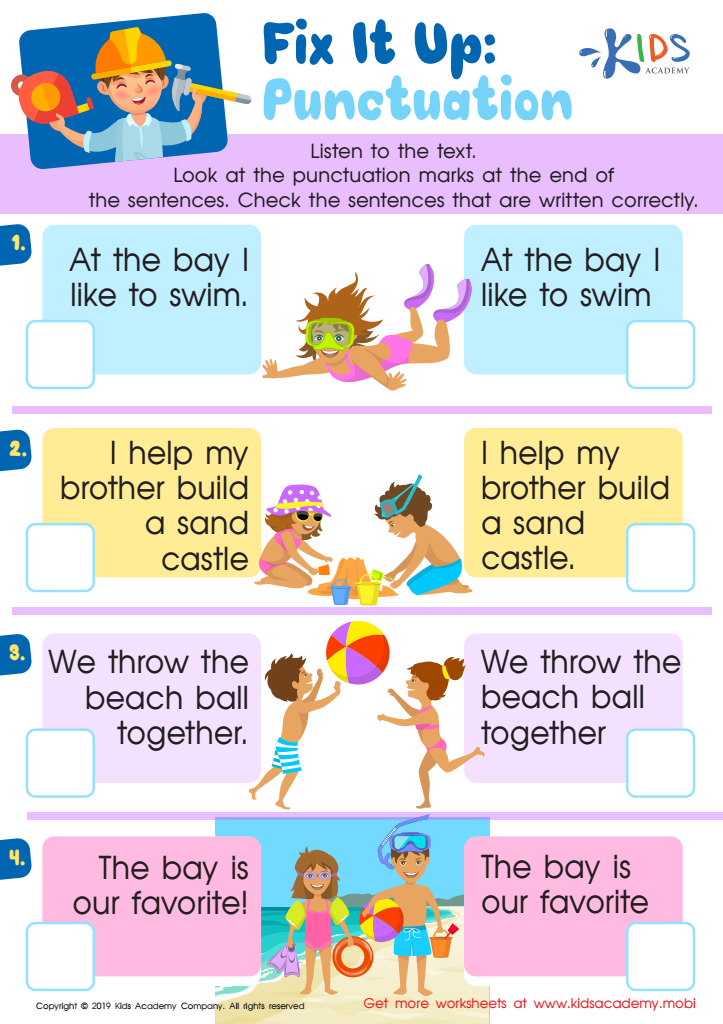
Fix Punctuation Worksheet
Have your kids tell you which punctuation marks they know before using this colorful worksheet. Read the sentences together and ask them to identify which are correctly punctuated. Guide them to check their answers. This simple activity helps teach kids to use punctuation correctly.
Fix Punctuation Worksheet
Worksheet
Join Kids Academy for Free
Who is primarily going to use this learning content?








Understanding punctuation is foundational for young children, ages 4-8, as they begin their journey into reading and writing. Parents and teachers should care about this for several reasons. Firstly, punctuation teaches children how to break text into manageable pieces. This helps them understand sentence structure and enhances their reading comprehension, making stories and instructions easier to follow.
Secondly, proper punctuation improves communication skills. Knowing how to use periods, question marks, and commas enables children to express their thoughts clearly and accurately. For instance, “Let's eat, grandma” conveys a polite invite, while “Let's eat grandma” is quite alarming!
Moreover, exposing children to punctuation early helps establish good writing habits. As they progress to higher grades, a solid understanding of punctuation can differentiate between mediocre and superior writing. It promotes attention to detail and fosters a sense of discipline in their academic work.
Lastly, punctuation knowledge is crucial in developing critical thinking. Understanding how punctuation affects meaning encourages children to read attentively and think about the text while considering the writer’s intentions.
In summary, caring about punctuation from an early age lays the groundwork for better reading comprehension, effective communication, structured writing habits, and enhanced critical thinking skills.








