Sight word recognition Writing Worksheets for Ages 4-8
6 filtered results
-
From - To
Boost your child's reading and writing skills with our Sight Word Recognition Writing Worksheets designed for ages 4-8. These worksheets from Kids Academy focus on helping young learners recognize and write essential sight words, providing a solid foundation for fluent reading. Through engaging activities and exercises, children will practice word recognition, spelling, and sentence formation. Ideal for home or classroom use, these resources cater to different learning styles, ensuring that every student can enhance their literacy skills with confidence. Equip your child with the tools they need to succeed in their reading journey today!
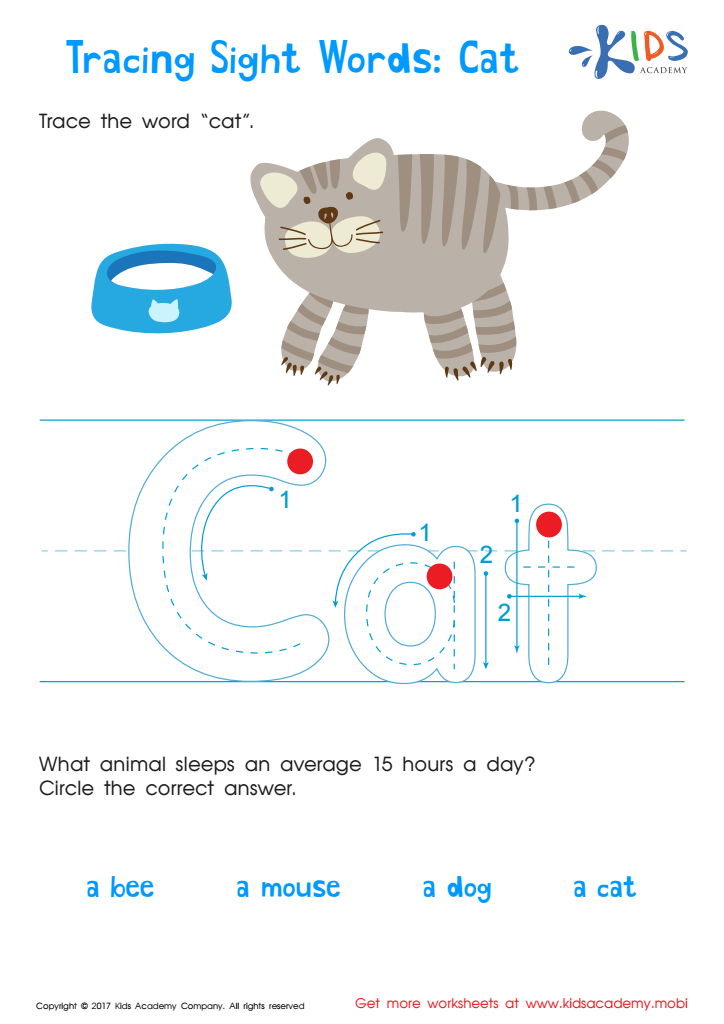
Cat Printable Sight Words Worksheet
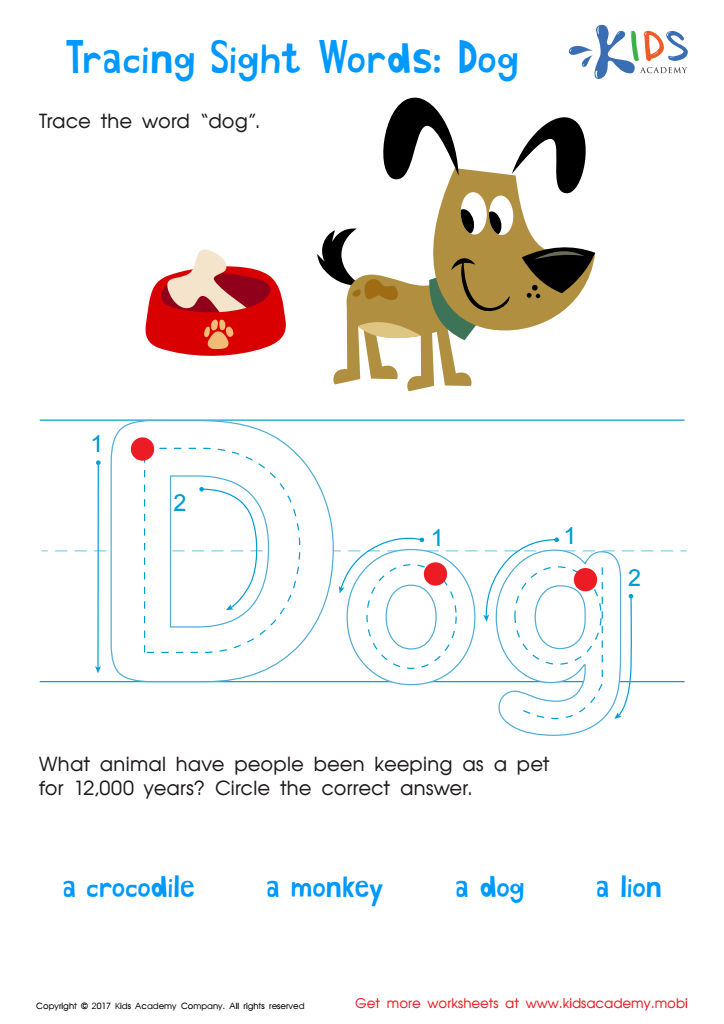
Dog Worksheet Sight Words Worksheet
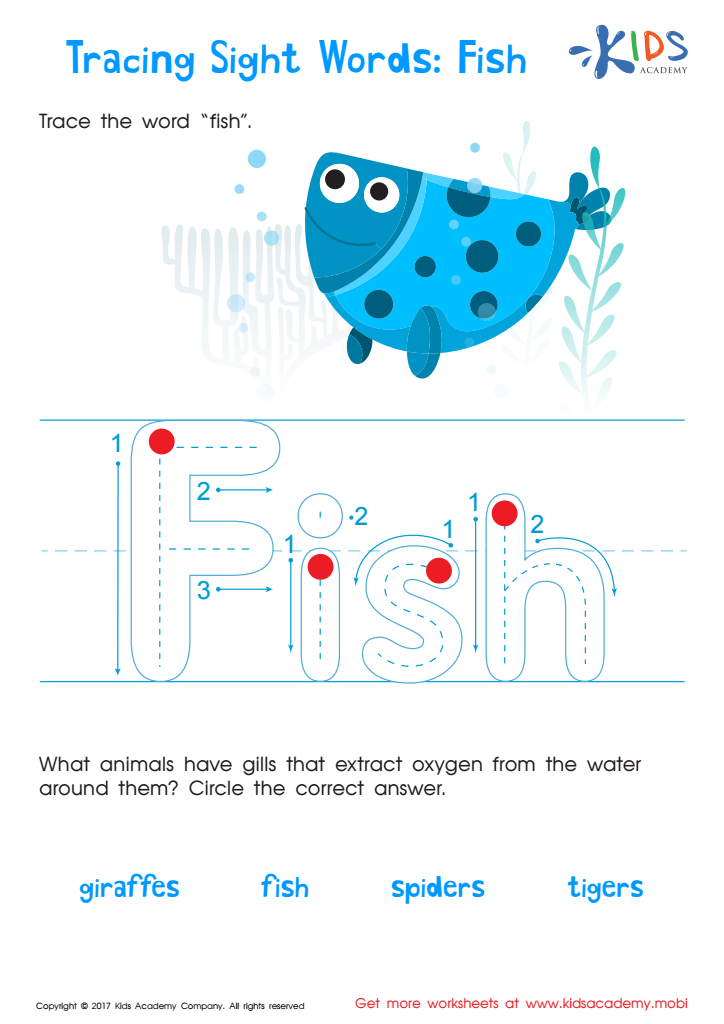
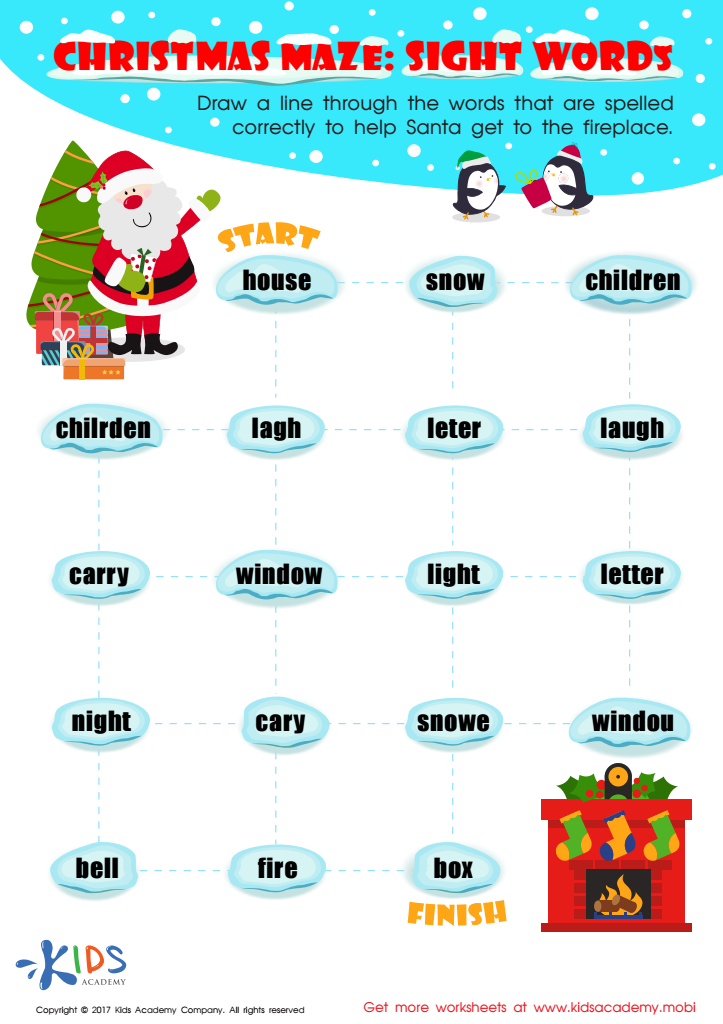
Sight Words Christmas Maze Printable
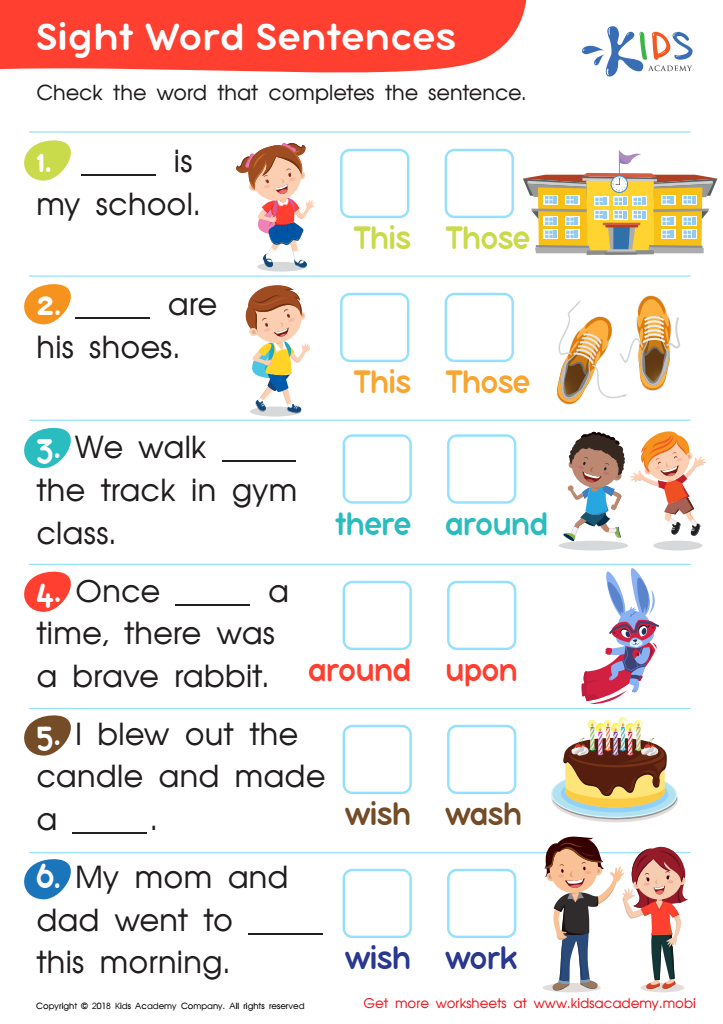
Sight Word Sentences Worksheet
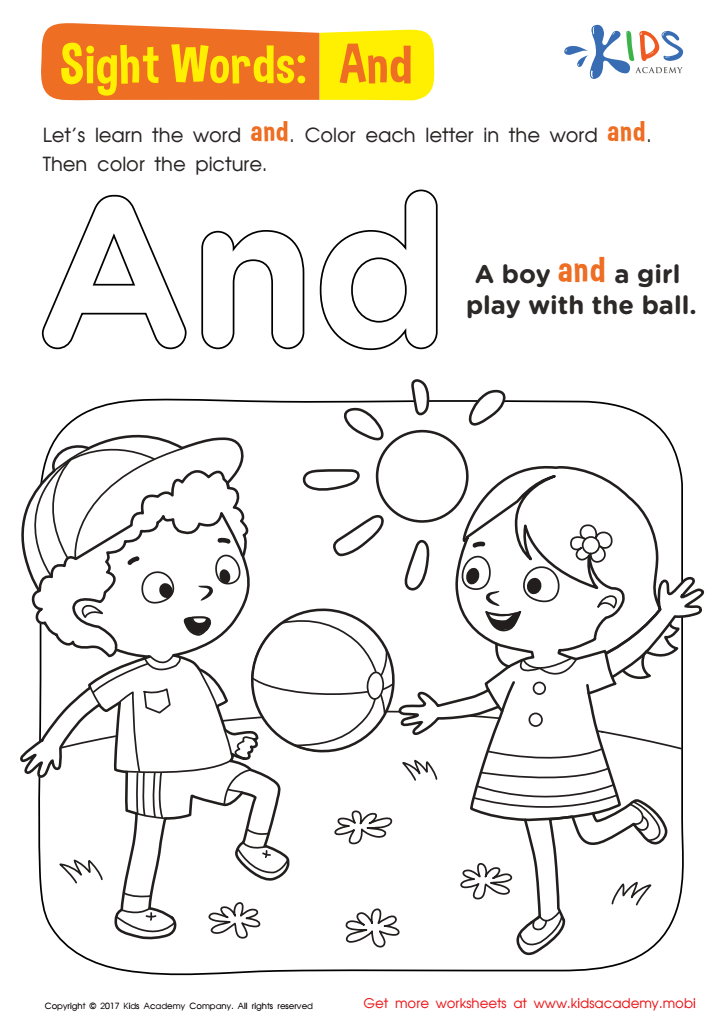
And Worksheet Sight Words Worksheet
 Assign to My Students







Sight word recognition is a critical component of early literacy development for children aged 4-8 and is essential for several reasons. Firstly, sight words are high-frequency words that often do not follow regular phonetic rules; therefore, being able to recognize them immediately helps children read more fluently. Improved fluency reduces cognitive load, allowing young readers to focus on comprehending the text rather than decoding each word mechanically.
Secondly, sight word recognition supports reading confidence and motivation. When children can quickly identify common words, they experience a sense of accomplishment that encourages them to read more. This increased reading practice inevitably helps expand their vocabulary and general language skills.
Moreover, sight word recognition lays a foundational step for literacy, bridging the gap between decoding simple words and reading more complex sentences. It enables children to understand the structure of written language better and provides them with the tools needed for effective writing. For teachers and parents, emphasizing sight word recognition cultivates a balanced approach to reading that combines phonics and whole-word strategies.
Lastly, early mastery of sight words correlates with academic success. Children proficient in sight word recognition often display enhanced performance across various subjects, as reading skills are integral to learning and understanding instructional material. Therefore, fostering this skill is crucial for building proficient and enthusiastic young readers.








