
Sentence completion Punctuation Worksheets for Ages 4-8
3 filtered results
Difficulty Level
Grade
Age
-
From - To
Subject
Activity
Standards
Explore our engaging Sentence Completion Punctuation Worksheets, designed specifically for children aged 4-8! These interactive resources help young learners practice their writing and punctuation skills by completing sentences with the appropriate punctuation marks. Each worksheet encourages creativity while reinforcing essential language concepts, making learning fun and enjoyable. Perfect for at-home practice or classroom activities, these worksheets cater to various skill levels, ensuring that every child can effectively enhance their understanding of sentence structure and punctuation. Boost your child's writing confidence and comprehension with these essential learning tools. Get started today and watch your young writer flourish!
Favorites
With answer key
Interactive
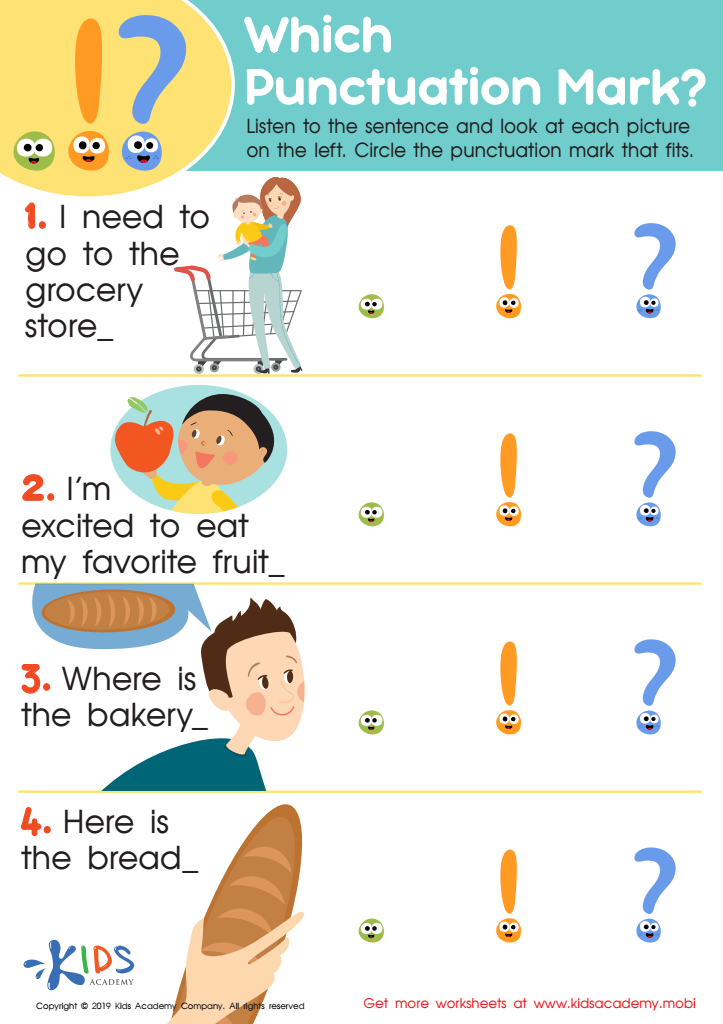
Which Punctuation Mark Worksheet
Punctuation marks are essential for expressing what we say. This worksheet asks your kindergarten student to circle the correct punctuation mark for each sentence. Read each sentence aloud and help them identify the expression needed. A picture accompanies each sentence. Enjoy! (79 words)
 Assign to My Students
Which Punctuation Mark Worksheet
Worksheet
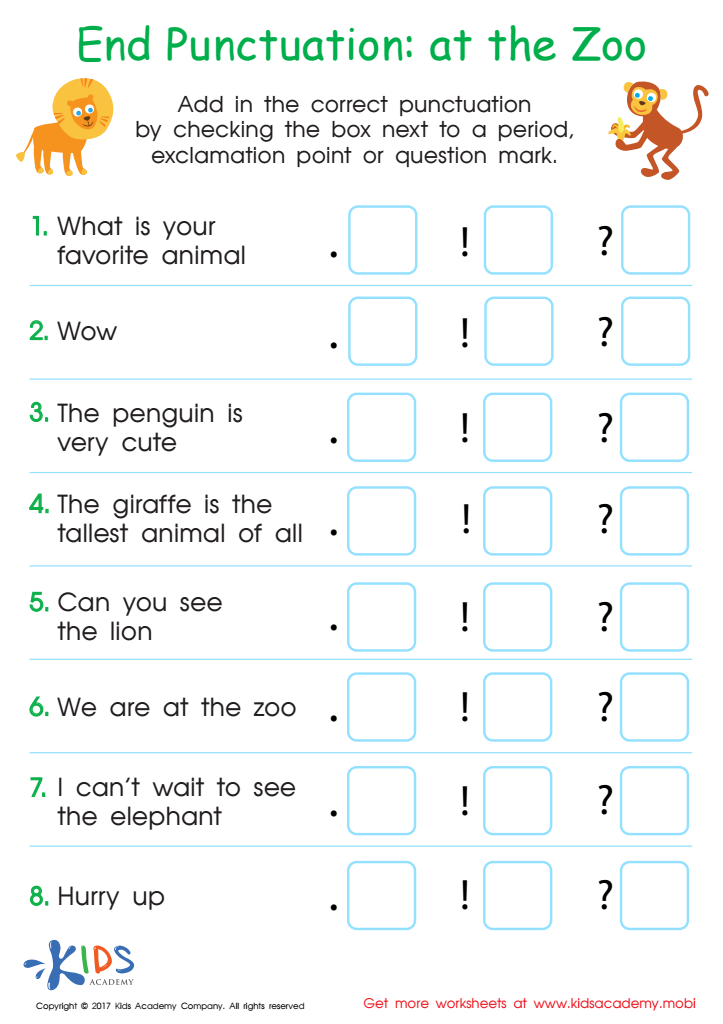
End Punctuation: At the Zoo Worksheet
Let your kid hone their sentence and punctuation skills with this cute At the Zoo worksheet. Read it out loud to provide guidance if needed, and help your child find the right punctuation mark for each sentence.
End Punctuation: At the Zoo Worksheet
Worksheet
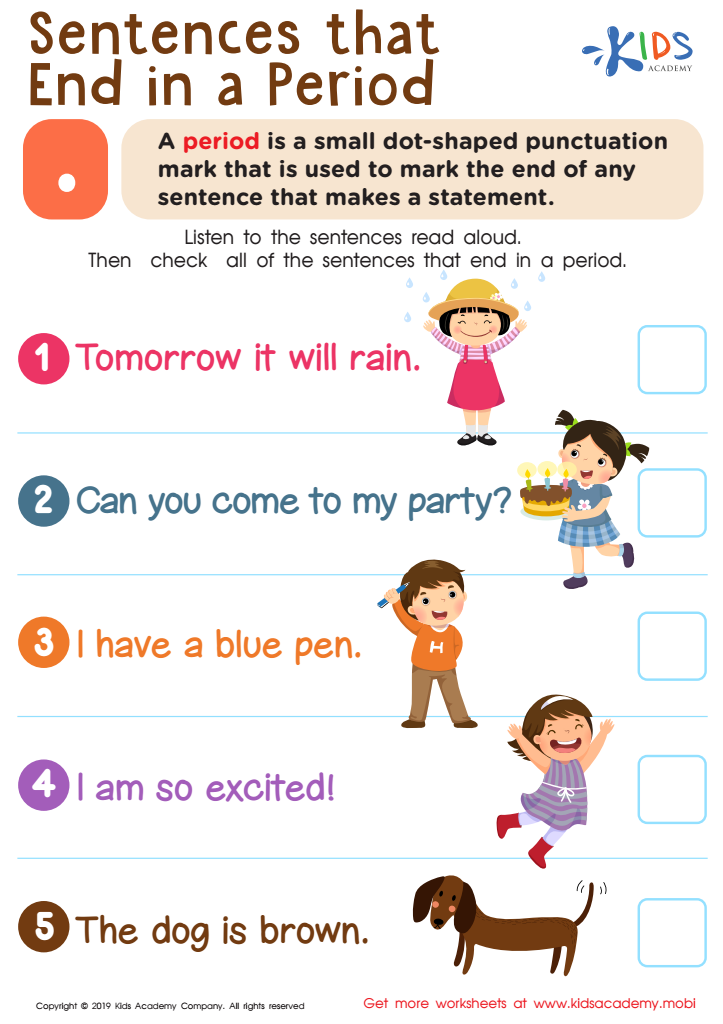
Sentences That End in a Period Worksheet
Before beginning, ask your kids if they know what punctuation marks are and can name a few. Common examples are the period (a small dot-shaped mark at the end of sentences), comma, question mark, and exclamation mark. Help practice their use with questions in the worksheet.
Sentences That End in a Period Worksheet
Worksheet
Join Kids Academy for Free
Who is primarily going to use this learning content?







Sentence completion and punctuation play crucial roles in early literacy development for children aged 4-8. At this stage, children are beginning to grasp the fundamentals of language, making it essential for parents and teachers to invest time in these areas.
Understanding sentence structure helps children express their thoughts clearly. When they engage in sentence completion activities, they learn to identify types of sentences and their components, fostering creativity and encouraging them to articulate their ideas more effectively.
Punctuation, on the other hand, acts as the traffic signals of language, guiding readers through the flow of sentences. Learning the importance of periods, commas, and question marks enables young learners to understand the rhythm and pauses in writing, which enhances their comprehension skills.
Moreover, these skills are foundational for further academic success. Proficiency in punctuation and sentence structure sets the stage for effective reading, writing, and communication as they progress in school.
In sum, prioritizing sentence completion and punctuation activities not only builds essential literacy skills but also boosts children's confidence in their ability to communicate. By nurturing these foundational skills early, parents and teachers contribute significantly to a child's future educational achievements.








