Reading comprehension Tracing Words Worksheets for Ages 4-8
10 filtered results
-
From - To
Enhance your child's reading skills with our engaging Tracing Words Worksheets designed for ages 4-8! These worksheets not only improve handwriting but also boost reading comprehension. Children will trace and recognize essential vocabulary, allowing them to connect words with meanings in an interactive way. Each worksheet is tailored to promote phonetic awareness, critical thinking, and language development while making learning enjoyable. With colorful illustrations and age-appropriate content, kids will stay motivated as they practice. Ideal for both classroom and home use, our resources support early literacy development and foster a lifelong love for reading. Start nurturing your child's reading journey today!
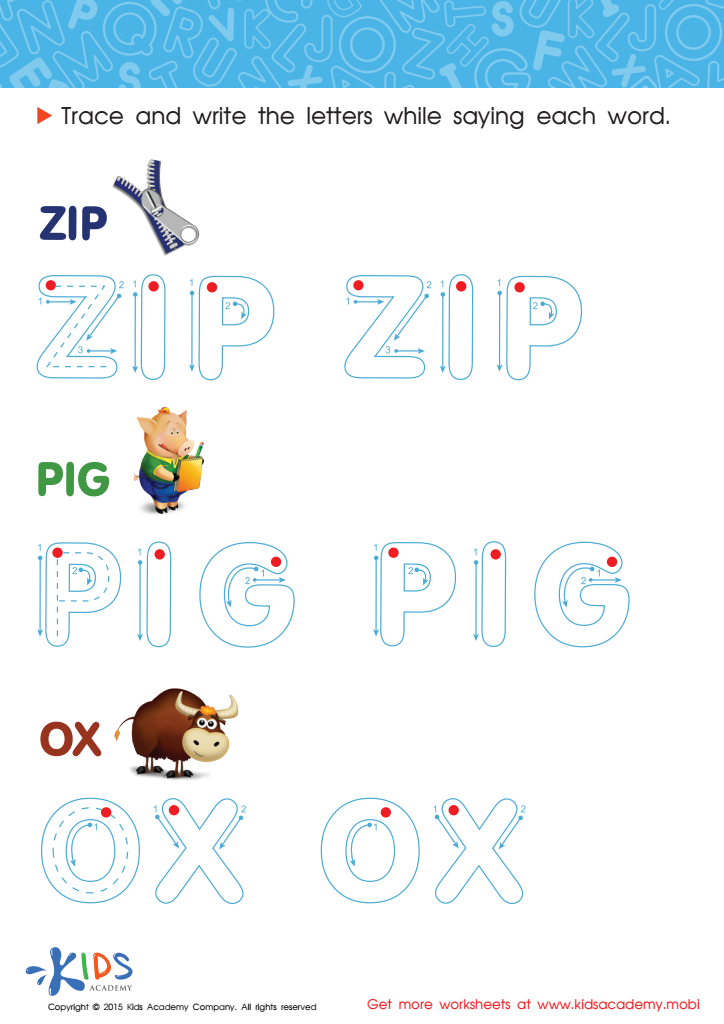
A Zip, a Pig and an Ox Spelling Worksheet
 Assign to My Students
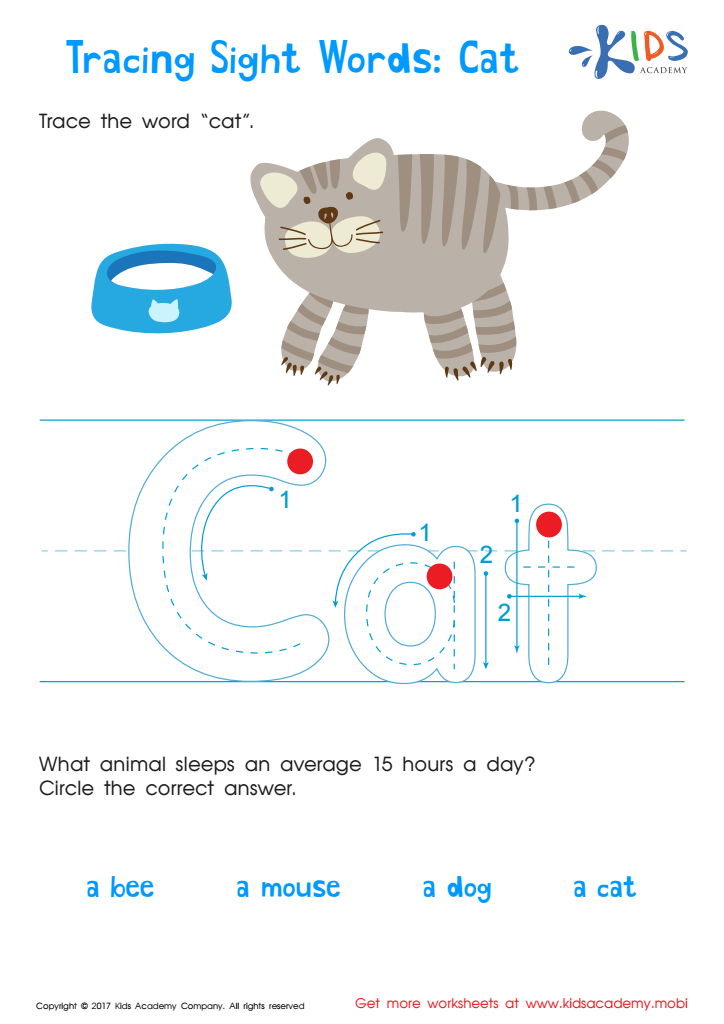
Cat Printable Sight Words Worksheet
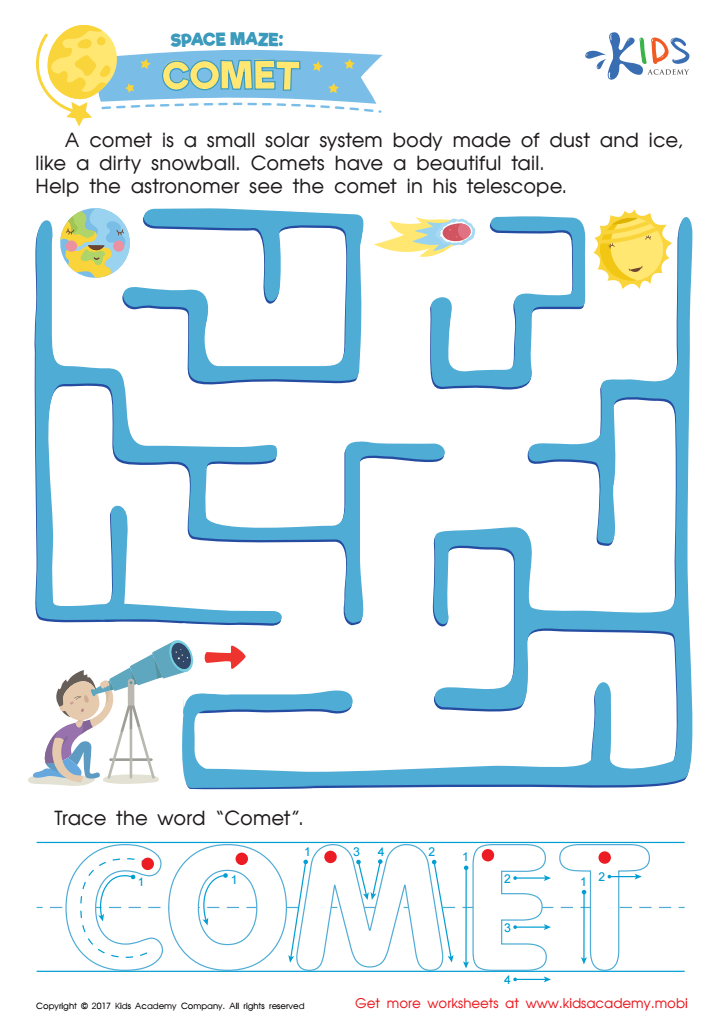
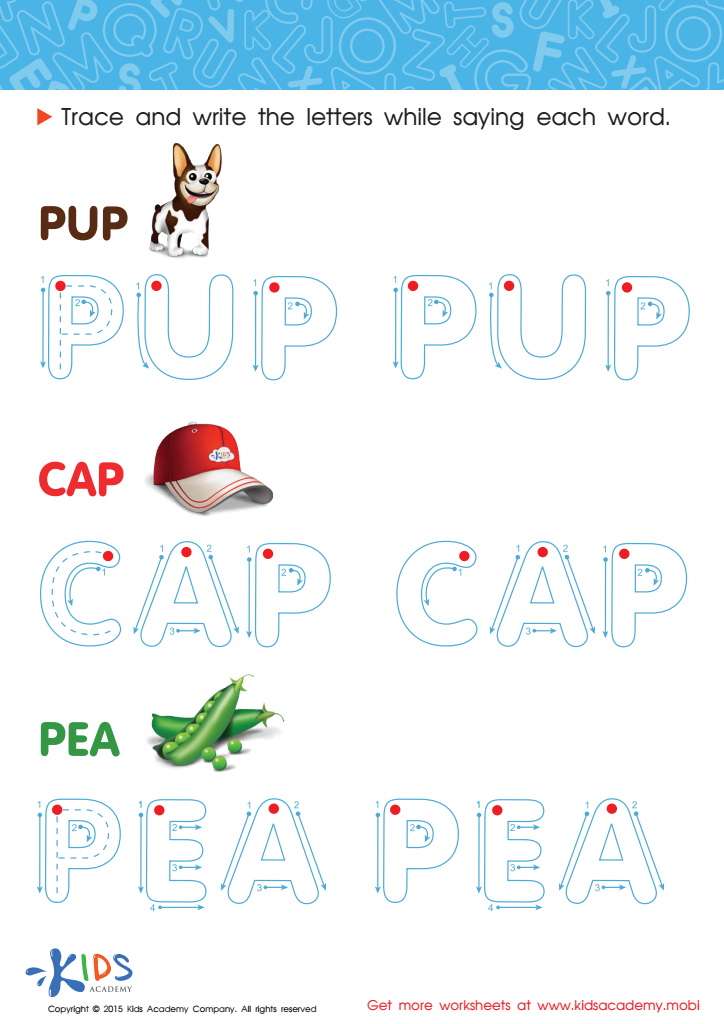
A Pup, a Cap and a Pea Spelling Worksheet
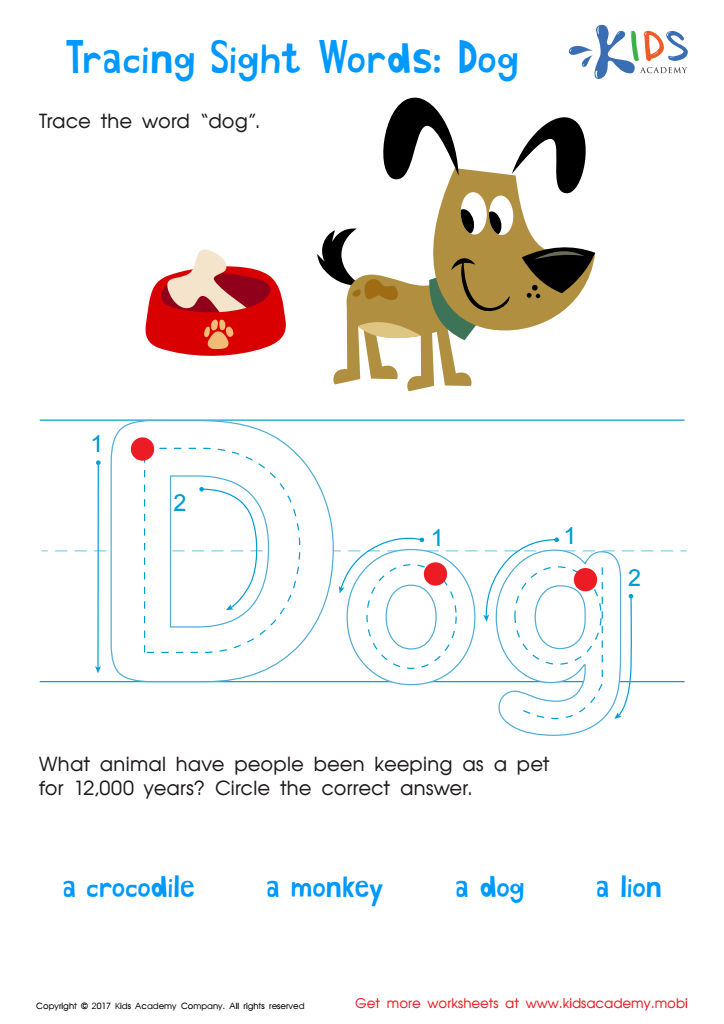
Dog Worksheet Sight Words Worksheet
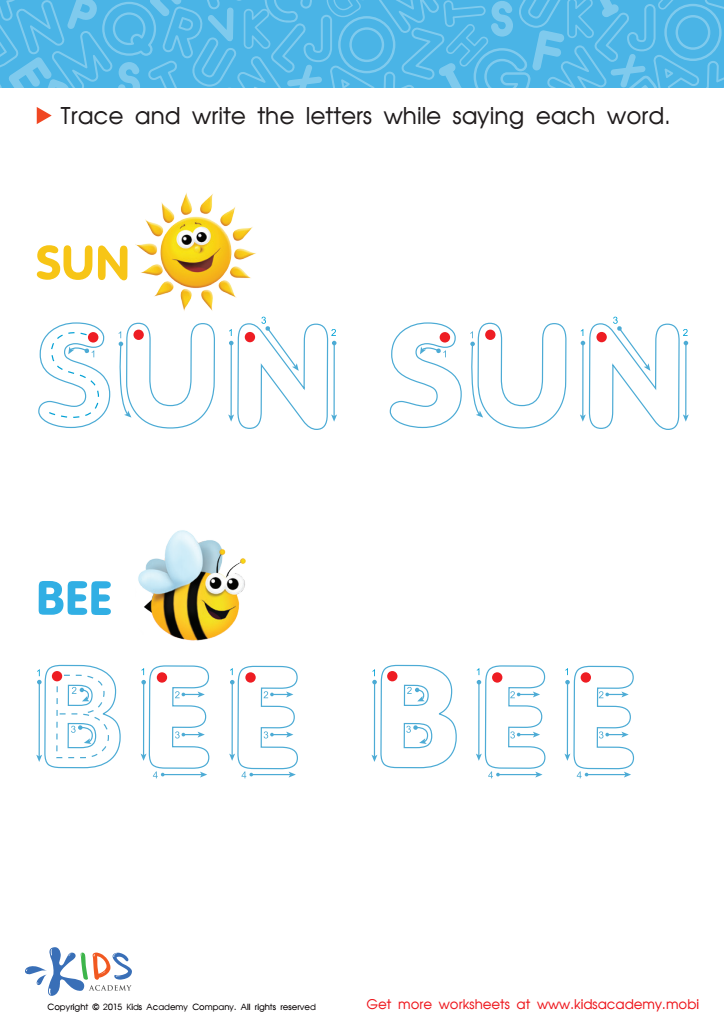
The Sun and a Bee Spelling Worksheet
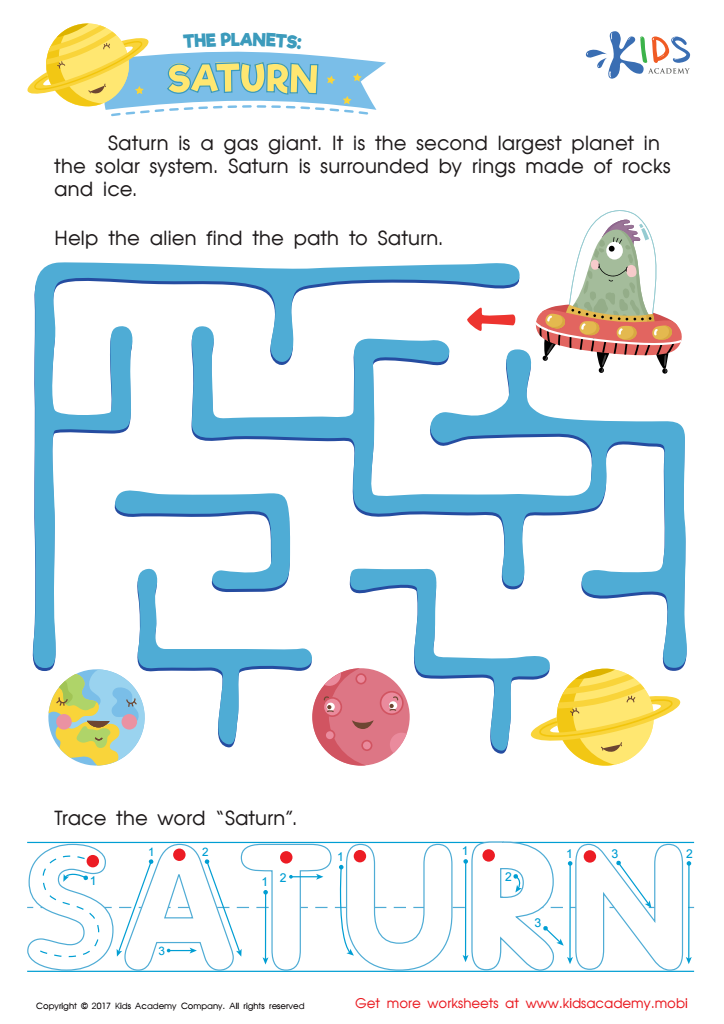
The Planets: Saturn Printable
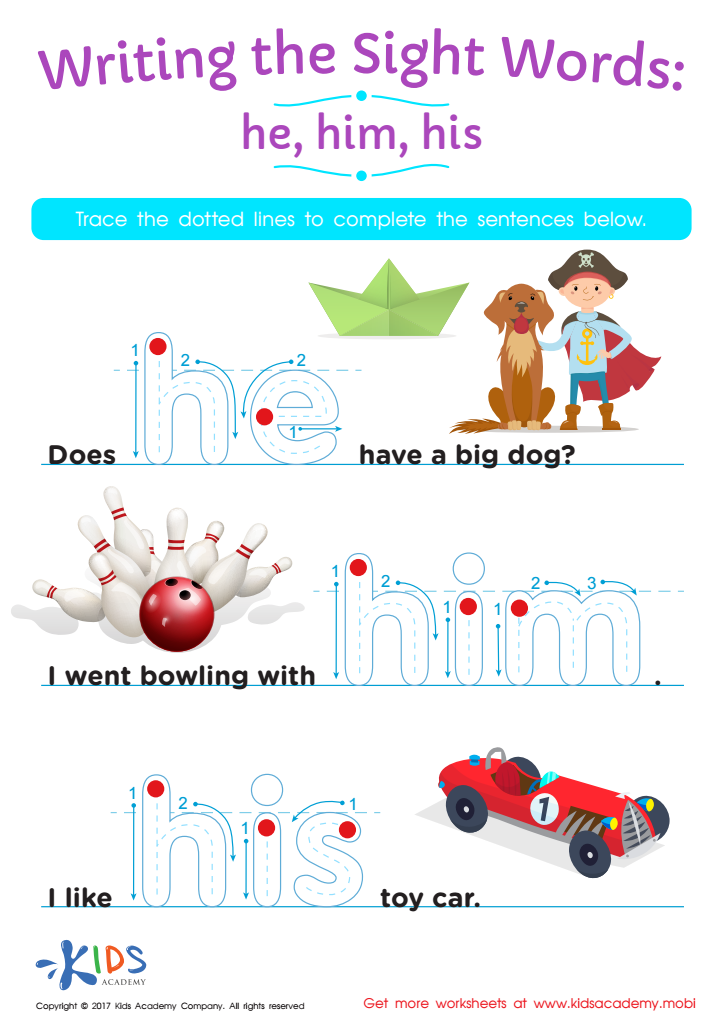
He, Him, His Printable Sight Words Worksheet
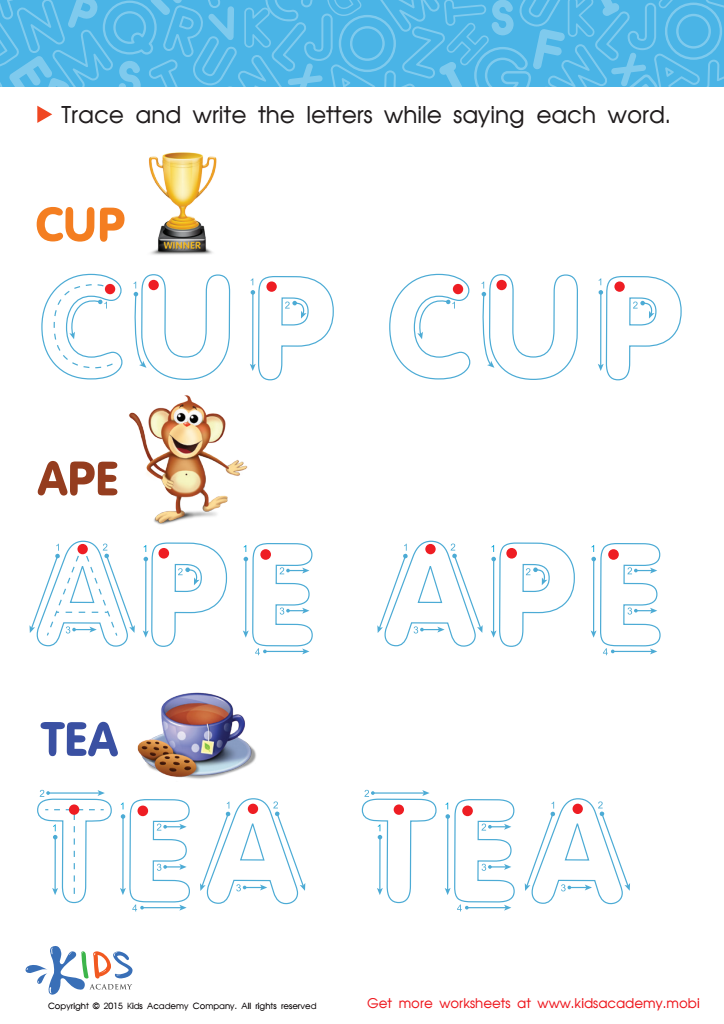
A Cup, an Ape and Tea Spelling Worksheet
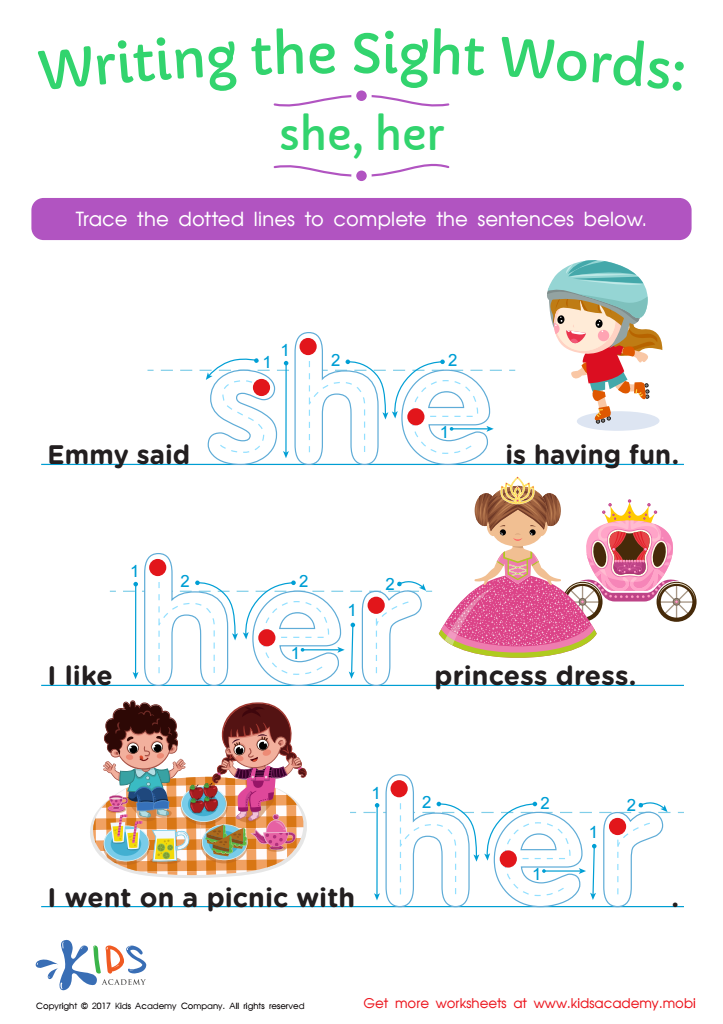
She, Her Printable Sight Words Worksheet








Reading comprehension is a vital skill that serves as the foundation for a child’s academic success and lifelong learning. For children aged 4-8, developing reading comprehension skills through activities like "Tracing Words" can play a significant role in this process.
Firstly, tracing words helps improve fine motor skills, which are essential for early writing and communication. By reinforcing hand-eye coordination, children can gain confidence in their writing abilities. This physical engagement with text encourages them to focus on letters, spelling, and word formation, laying a solid groundwork for reading fluency.
Moreover, tracing promotes familiarity with vocabulary and sentence structure, enabling children to become more adept readers. When kids trace words, they start to understand the connection between spoken and written language, building a foundation for fluent reading and meaningful comprehension.
Additionally, engaging with text at this early stage allows children to make predictions and draw conclusions, enhancing critical thinking skills. Guided tracing can stimulate conversations about stories and meanings, fostering a love for reading.
In essence, parents and teachers should prioritize reading comprehension activities like word tracing; they support essential cognitive, motor, and linguistic development, ultimately cultivating eager, capable readers who are equipped for future academic challenges.








