Filters

6 filtered results

Clear all filters
Favorites
With answer key
Interactive

6 filtered results

Difficulty Level

Grade


Discover the Color Identification Alphabet Worksheets, designed for kids ages 4-9! These vibrant and engaging printable worksheets make learning letters and colors a delightful adventure. Each page features fun illustrations and activities that help children effortlessly recognize, identify, and match colors while reinforcing their knowledge of the alphabet. Perfect for classroom or home use, these worksheets support essential early learning skills, enhancing vocabulary, fine motor development, and cognitive abilities. Make mastering the alphabet a colorful journey and set a strong educational foundation with our expertly crafted worksheets. Join us in creating a fun, educational experience for young learners!

Check out this FREE Trial Lesson on Alphabet for age 4-9!

My Name

Favorites
With answer key
Interactive
  • 4-9
  • Color Identification
  • Alphabet
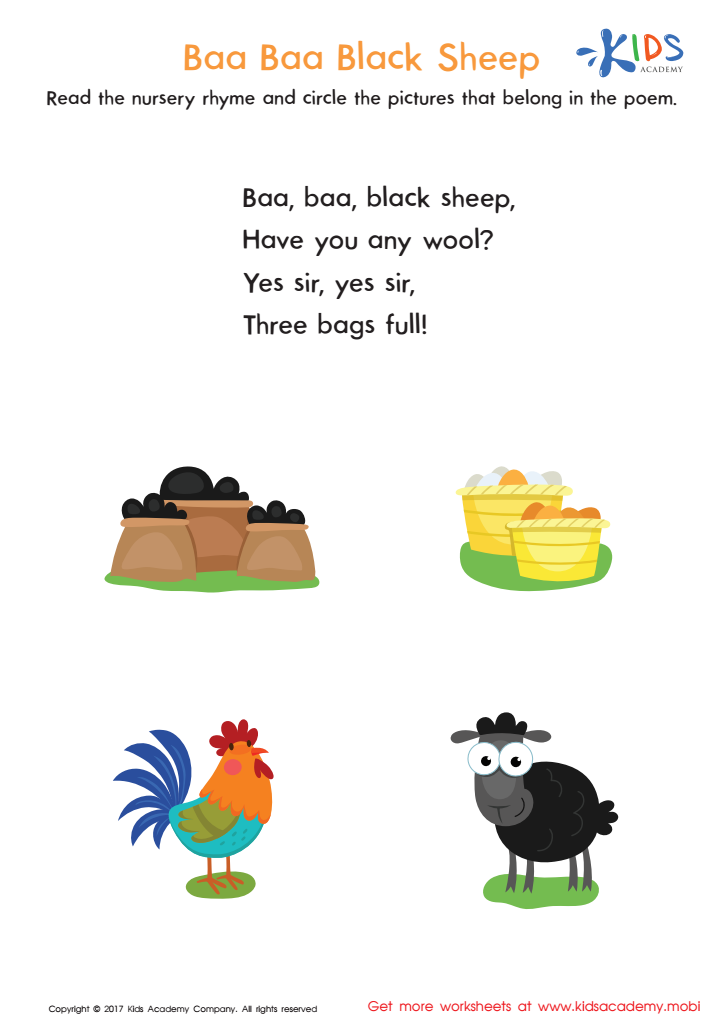
Baa Baa Black Sheep printable worksheet

Baa Baa Black Sheep Printable

Jumpstart your child's reading skills with this printable Baa Baa Black Sheep worksheet! Recite the lines with them, then have them select the pictures associated with the poem to test comprehension. Fun and educational!
Baa Baa Black Sheep Printable
Worksheet
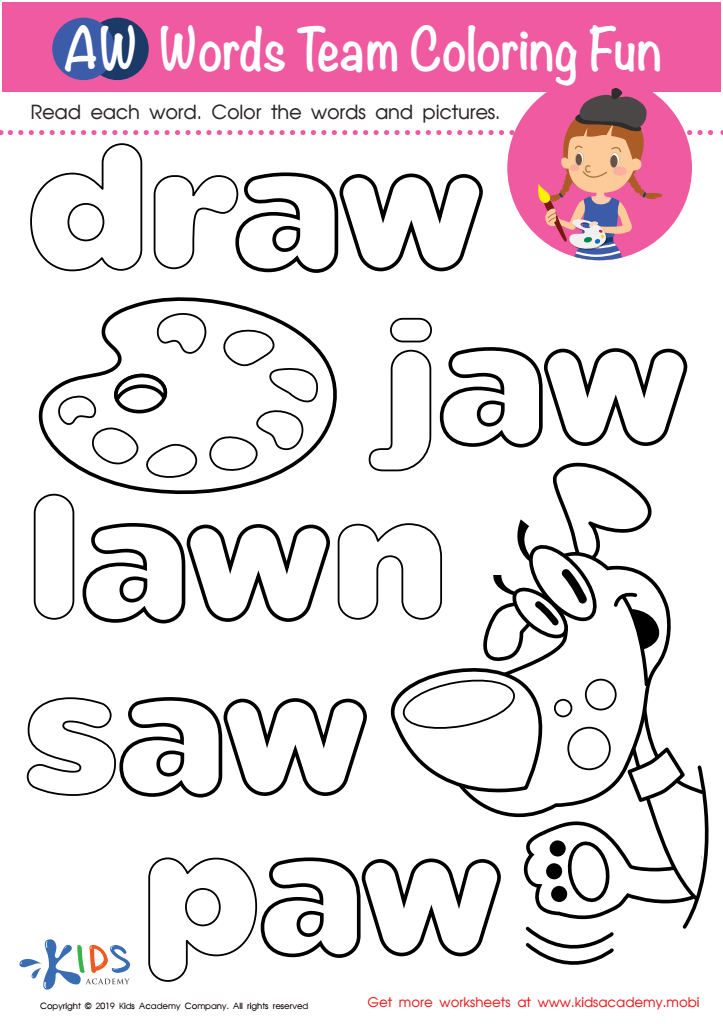
AW Words Team Coloring Fun Worksheet

AW Words Team Coloring Fun Worksheet

Coloring words they can read is a blast for little learners! This worksheet offers emerging readers the chance to practice and gain confidence in reading words from the -aw family, while also improving fine-motor and creativity skills. Without knowing it, they'll learn about phonetic teams along the way!
Download (PDF)
Assign to My Students
AW Words Team Coloring Fun Worksheet
Worksheet
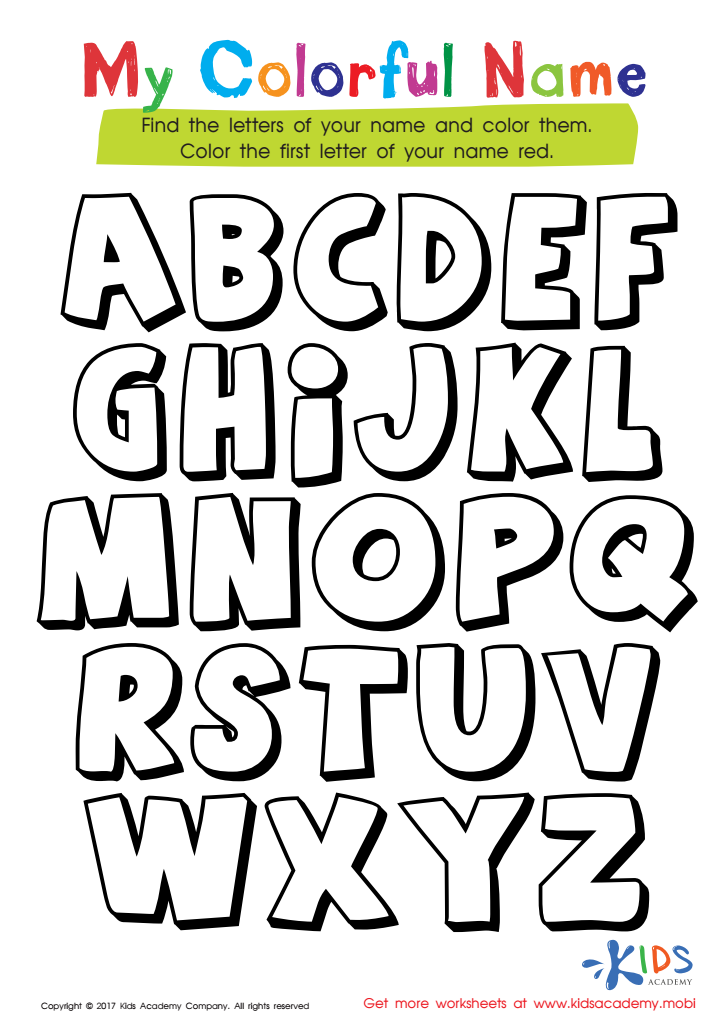
My Colorful Name Worksheet

My Colorful Name Worksheet

Writing their names is a milestone for children. With this worksheet, they recall the letters in their name and color the letters one at a time. Spelling and alphabet order are reinforced as they find each letter. Use this fun printable to help kids learn to write their names!
Download (PDF)
Assign to My Students
My Colorful Name Worksheet
Worksheet
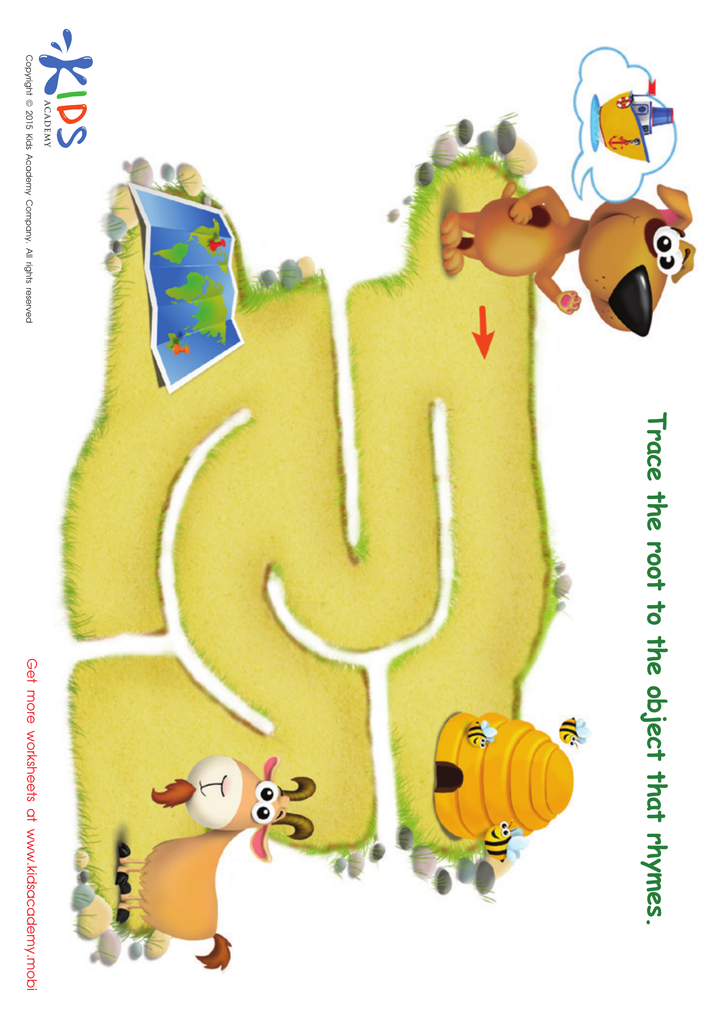
Rhyming Words PDF Worksheets, Boat

Boat Rhyming Words Worksheet

Help your preschooler complete the maze and rhyme with their favorite pooch! Draw a line from the dog to the matching item - is it a hive, a map or a goat? This fun activity lets them name the root words of pictures, and listen for rhymes to help them with phonics and reading.
Boat Rhyming Words Worksheet
Worksheet
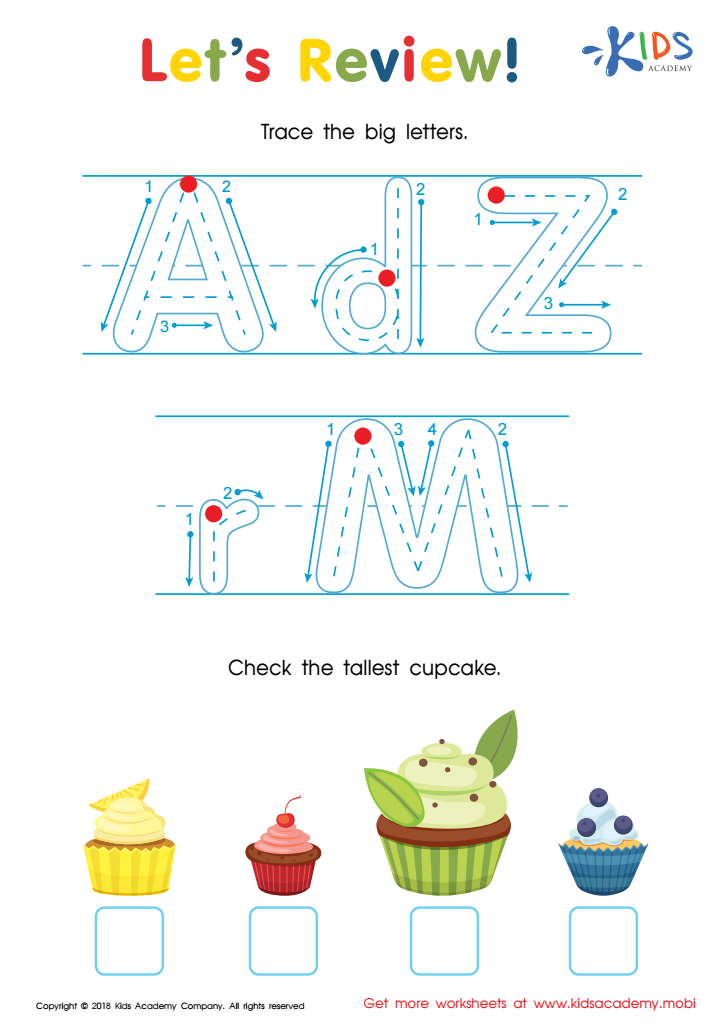
Let's Review! Big Letters Worksheet

Let's Review! Big Letters Worksheet

Teach your child to read and write big and small letters with Kids Academy's tracing worksheet. Show them how to guide their pencil with each stroke. Reinforce their understanding with fun cupcake pictures and help them choose the tallest one. It's a great way to help them differentiate between uppercase and lowercase letters.
Let's Review! Big Letters Worksheet
Worksheet
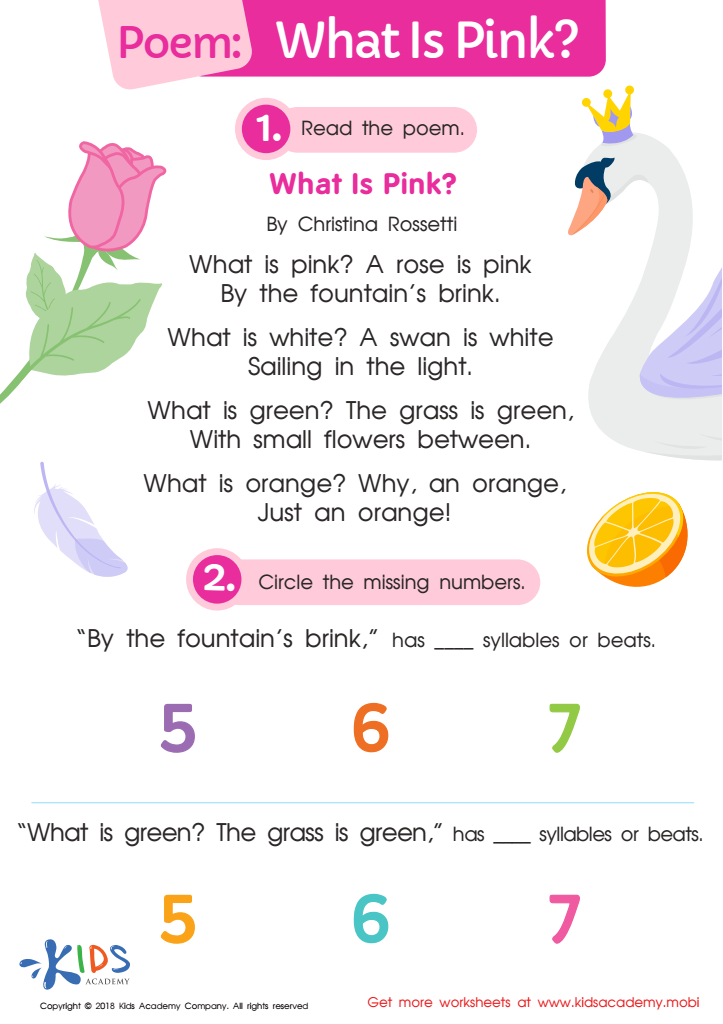
Poem: What Is Pink? Worksheet


Poem: What Is Pink? Worksheet

Help your kids learn with short, fun, interesting poems! Read it aloud to them and point out the rhyme patterns. Have them circle the missing numbers to answer two questions. Show examples of objects with the colors in the poem. This will help them learn to read, and also understand colors better.
Poem: What Is Pink? Worksheet
Worksheet


Color Identification Alphabet is a valuable educational tool for children ages 4-9, blending foundational literacy and cognition. When parents and teachers incorporate this method, they enrich both reading and visual skills. Recognizing colors and associating them with letters can significantly enhance memory retention and comprehension. For young children, visual learning is powerful. Combining bright, engaging colors with alphabet learning makes it enjoyable and less intimidating.

Moreover, color-coding aids in the differentiation of letters, especially beneficial for young learners who might struggle with letter recognition. This method can also cater to various learning styles, engaging both visual and kinesthetic learners. For instance, children might more easily recall that "A is red" or "B is blue," bolstering their ability to identify letters quickly and correctly.

Additionally, understanding various colors fosters other essential cognitive skills like categorization and pattern recognition, which are critical in early childhood development. Engaging with the Color Identification Alphabet not only prepares children for future academic success by building a robust language foundation but also makes learning more interactive and enjoyable. In essence, this multisensory approach accommodates diverse learning needs, nurturing a child's confidence and enthusiasm for learning.