Fine motor development Alphabet Worksheets for Ages 4-9
3 filtered results
-
From - To
Boost your child's fine motor skills with our engaging Alphabet Worksheets, designed specifically for kids ages 4-9. These fun, interactive worksheets incorporate tracing, cutting, and coloring activities that help enhance hand-eye coordination and dexterity. As children practice letter shapes and sounds, they develop essential pre-writing skills, laying a strong foundation for their educational journey. Our carefully crafted worksheets cater to various learning styles, ensuring that every child finds joy in mastering the alphabet. Explore our collection today to inspire creativity and confidence in your little learners while reinforcing fundamental literacy skills! Perfect for home or classroom use!
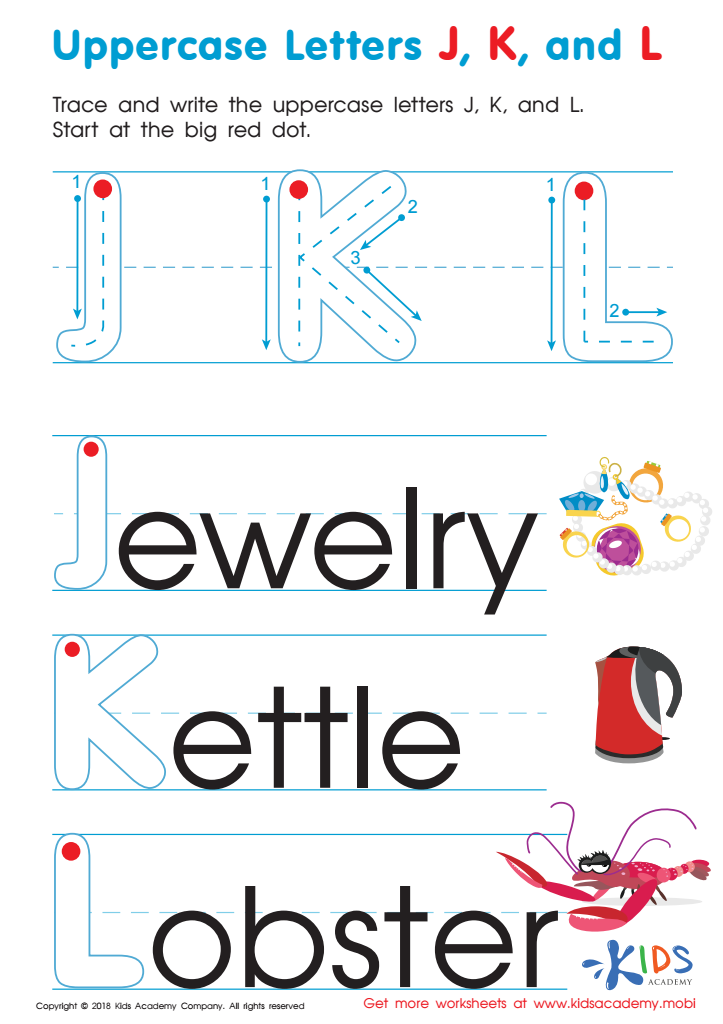
Uppercase Letters J, K, and L Worksheet
 Assign to My Students
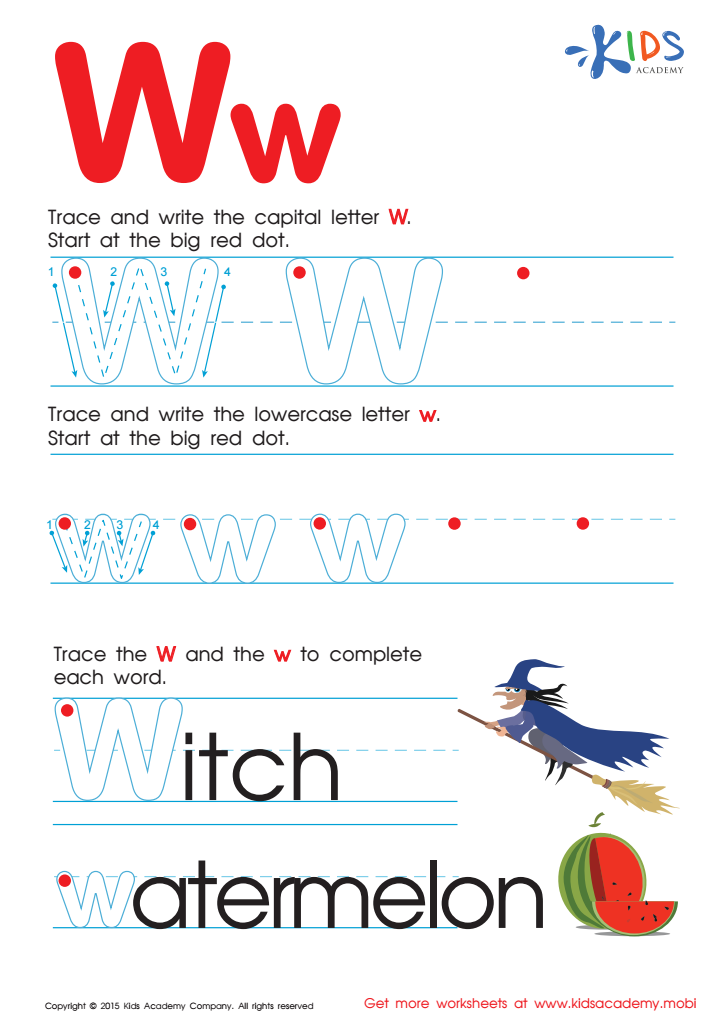
Letter W Tracing Page
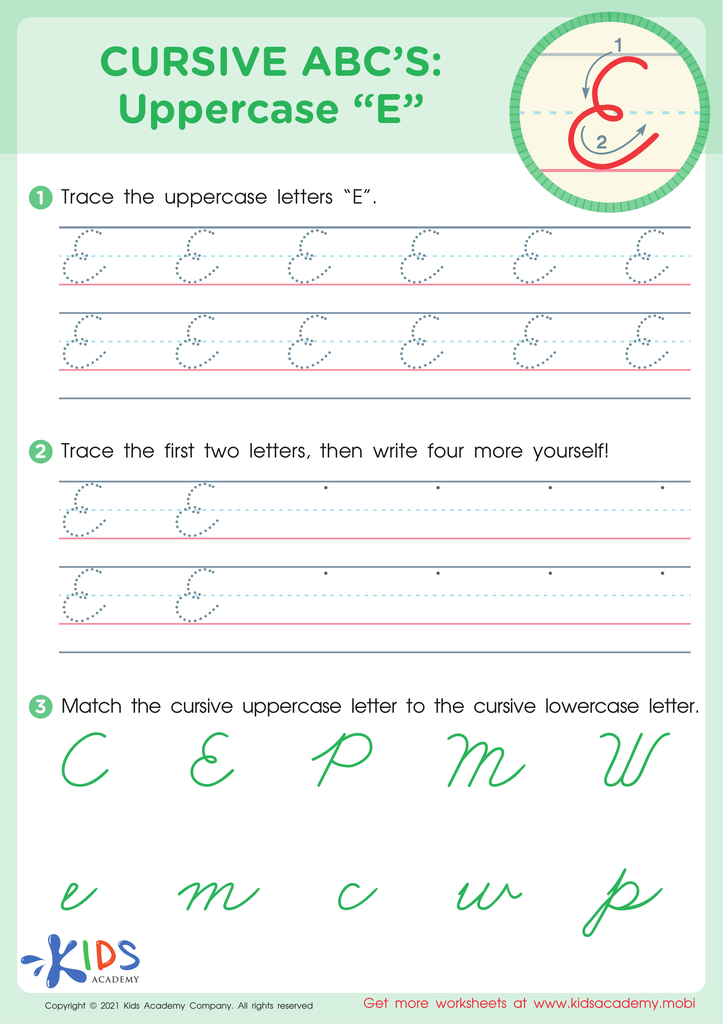
Cursive ABCs: Uppercase E





Fine motor development is crucial for children aged 4 to 9, as it lays the foundation for numerous skills they will rely on throughout their lives. During this age, children's dexterity and coordination are rapidly evolving, making it the perfect time for them to practice and refine these abilities. By focusing on fine motor development, particularly through activities that involve the alphabet and writing, parents and teachers can enhance children's handwriting, spelling, and reading skills.
Activities like tracing letters, using playdough to form letters, or engaging in cut-and-paste crafts help to strengthen the small muscles in a child’s hands and fingers. These exercises not only promote muscle control and hand-eye coordination but also foster cognitive development, as children begin to associate the shapes of letters with their sounds and meanings. Furthermore, sophisticated fine motor skills are essential for performing daily tasks, such as buttoning shirts, tying shoelaces, or handling utensils, boosting children's confidence and independence.
In sum, supporting fine motor development in early education ensures that children are well-equipped for academic challenges and life skills further down the road, making it a conscientious focus for both parents and teachers.







