Lowercase letter writing Alphabet Worksheets for Ages 4-9
3 filtered results
-
From - To
Our Lowercase Letter Writing Alphabet Worksheets are designed to help children aged 4-9 master the basics of writing. These engaging, educational worksheets provide a fun way to practice forming each lowercase letter. With clear, traceable letters and ample space for independent practice, kids can develop fine motor skills and letter recognition effortlessly. These worksheets are perfect for both classroom use and at-home learning, offering a structured yet enjoyable approach to mastering the alphabet. Foster your child’s writing skills with our easy-to-follow, high-quality worksheets tailored to support early language development. Explore our wide selection online today!
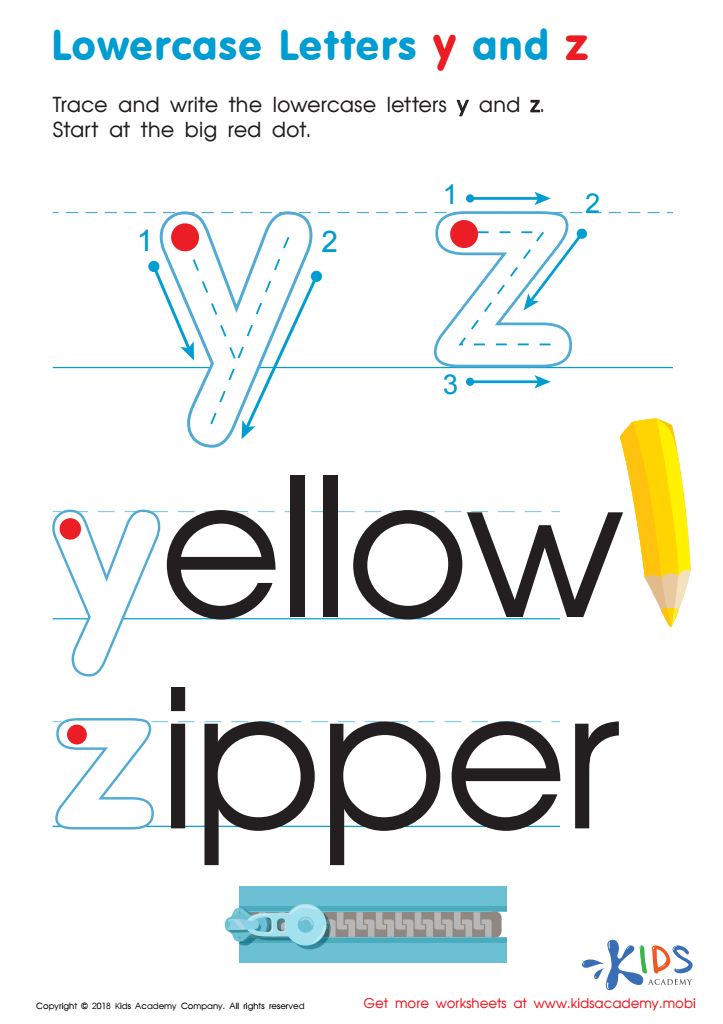
Lowercase Letters y z Worksheet
 Assign to My Students
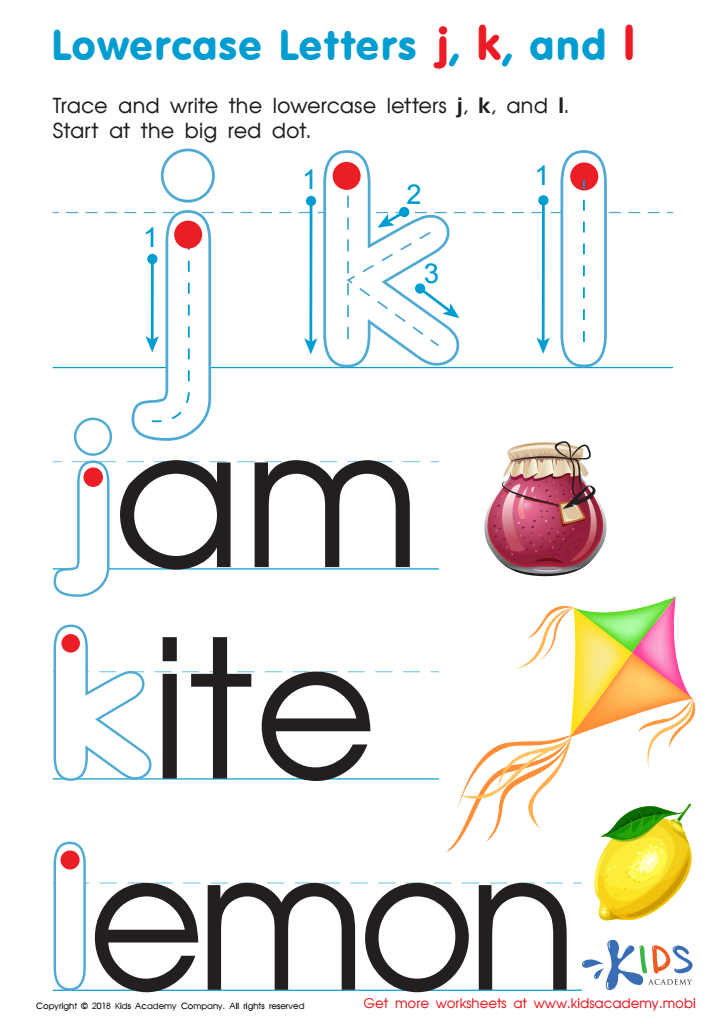
Lowercase Letters j k l Worksheet
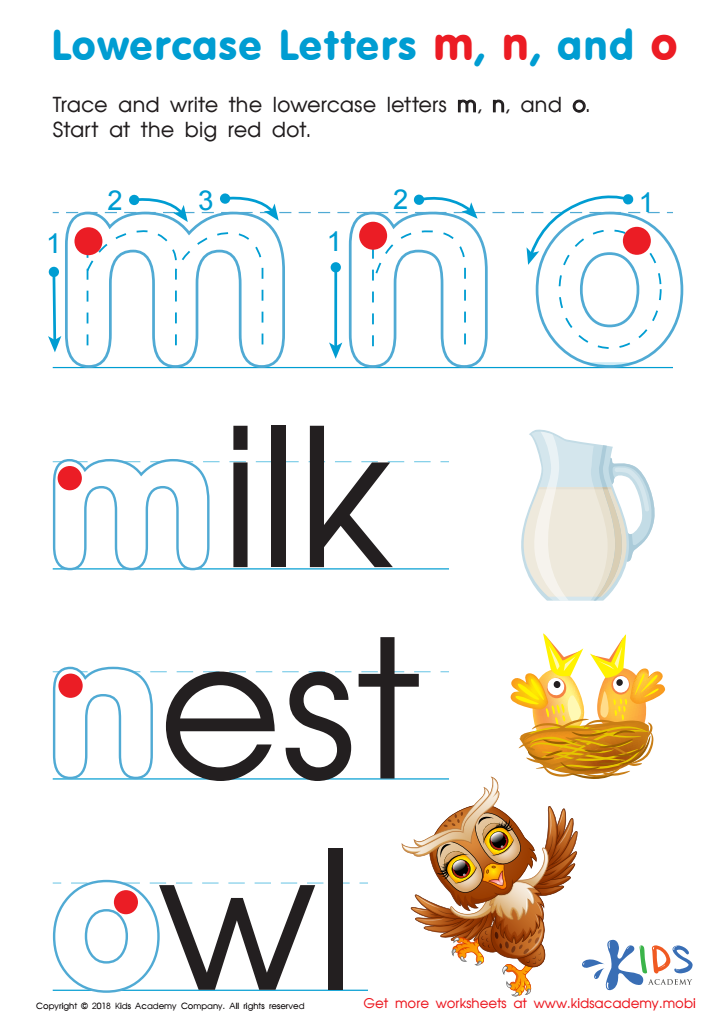
Lowercase Letters m n o Worksheet




.jpg)


Parents and teachers should emphasize lowercase letter writing for children aged 4-9 as it establishes a crucial foundation for literacy and academic success. At this age, children are developing fine motor skills and cognitive abilities that are essential for writing. Learning lowercase letters builds these skills progressively, as these letters are used more frequently in sentences and reading materials.
Practicing lowercase letter formation helps children in recognizing letter shapes and understanding letter-sound relationships, which is fundamental in phonics instruction. Correct formation improves legibility and sets the stage for fluid, efficient handwriting. Moreover, competency in lowercase letter writing enhances a child's confidence, encouraging them to engage more in classroom activities.
Early proficiency also aids in comprehension and written communication, as students are more likely to focus on content rather than wrestling with letter formation. Consistent practice can reduce frustration and prevent bad habits that are harder to correct later.
In sum, nurturing lowercase letter writing skills in young learners fosters not just cursive fluency but broad educational growth, ensuring children are well-prepared for future literacy challenges. Engaged parents and teachers can make this crucial learning phase both effective and enjoyable.







