Rhyming skills development Alphabet Worksheets for Ages 4-9
5 filtered results
-
From - To
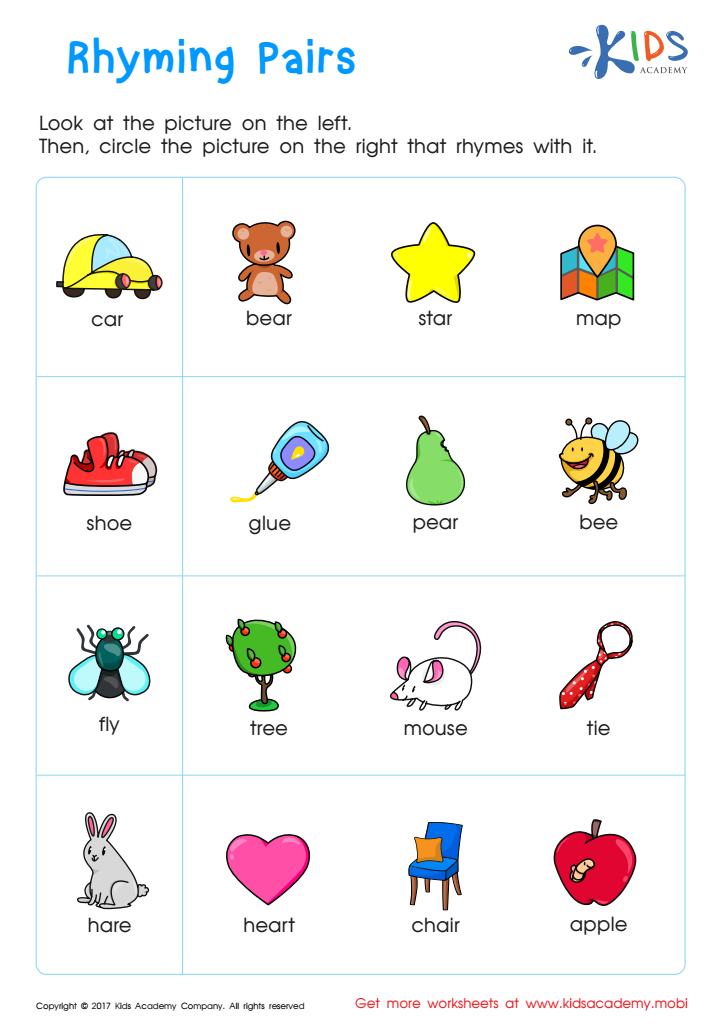
Enhance your child's reading foundation with our engaging Rhyming Skills Development Alphabet Worksheets, designed for ages 4-9. Our expertly crafted worksheets focus on phonemic awareness, helping children recognize rhyming patterns and sounds through playful activities. Each worksheet combines visual and auditory learning to make the process enjoyable and effective. From matching rhyming words to completing rhyming puzzles, these exercises foster essential literacy skills and creativity. Perfect for use at home or in the classroom, these worksheets are tailored to support early learners at various development stages, ensuring a fun and educational experience for all.
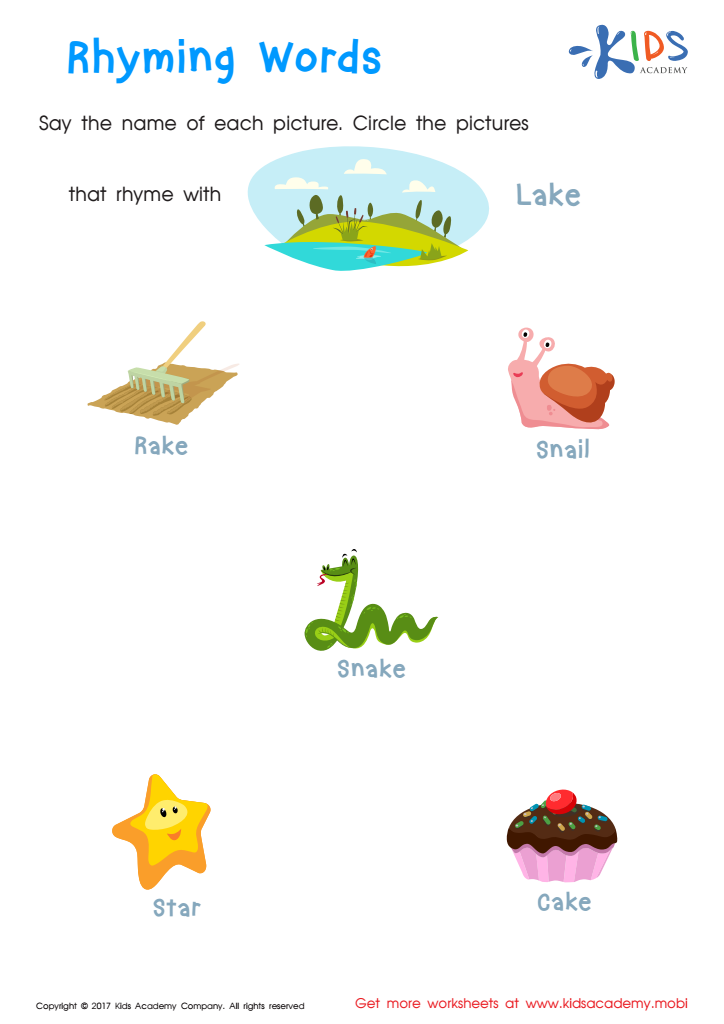
Rhyming Words Rhyming Worksheet
 Assign to My Students
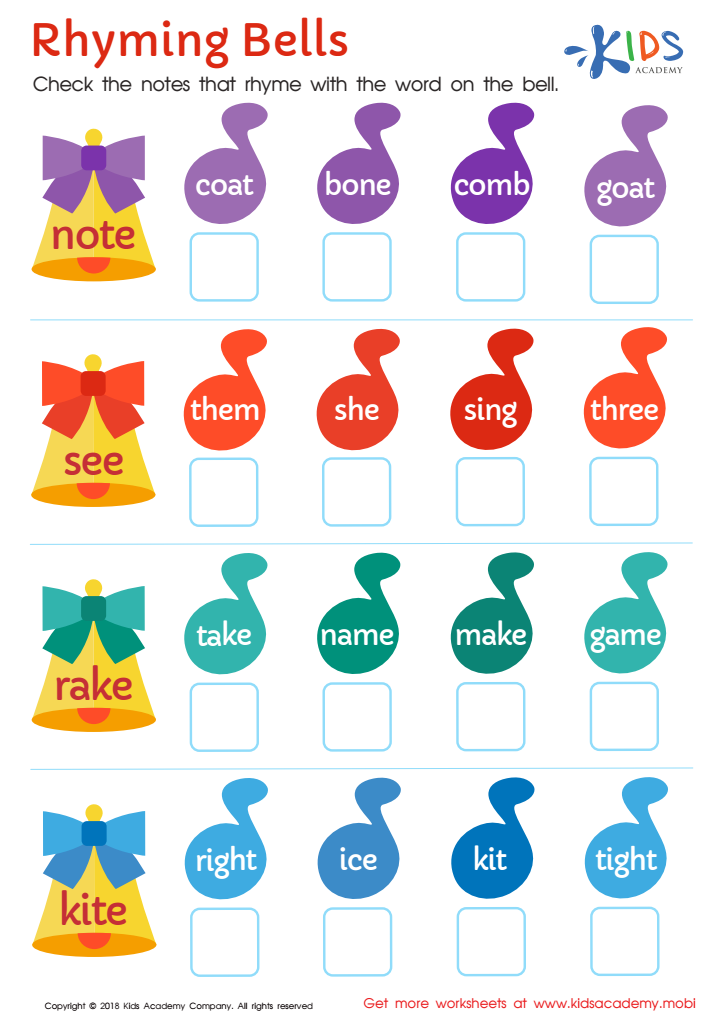
Rhyming Bells Worksheet
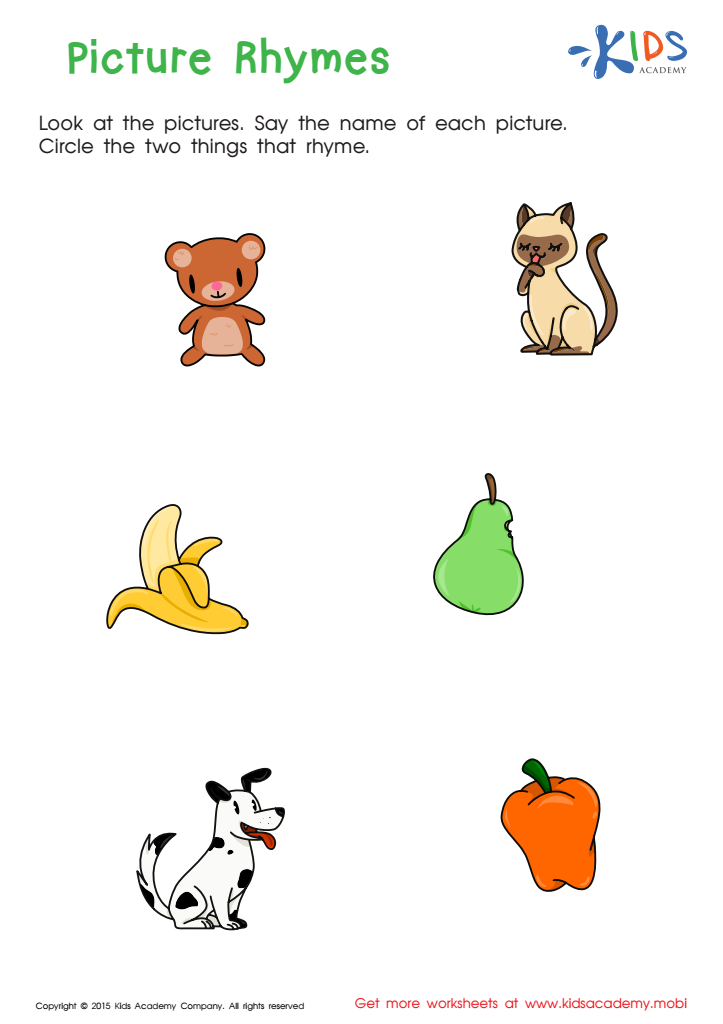
First Words: Picture Rhymes Worksheet
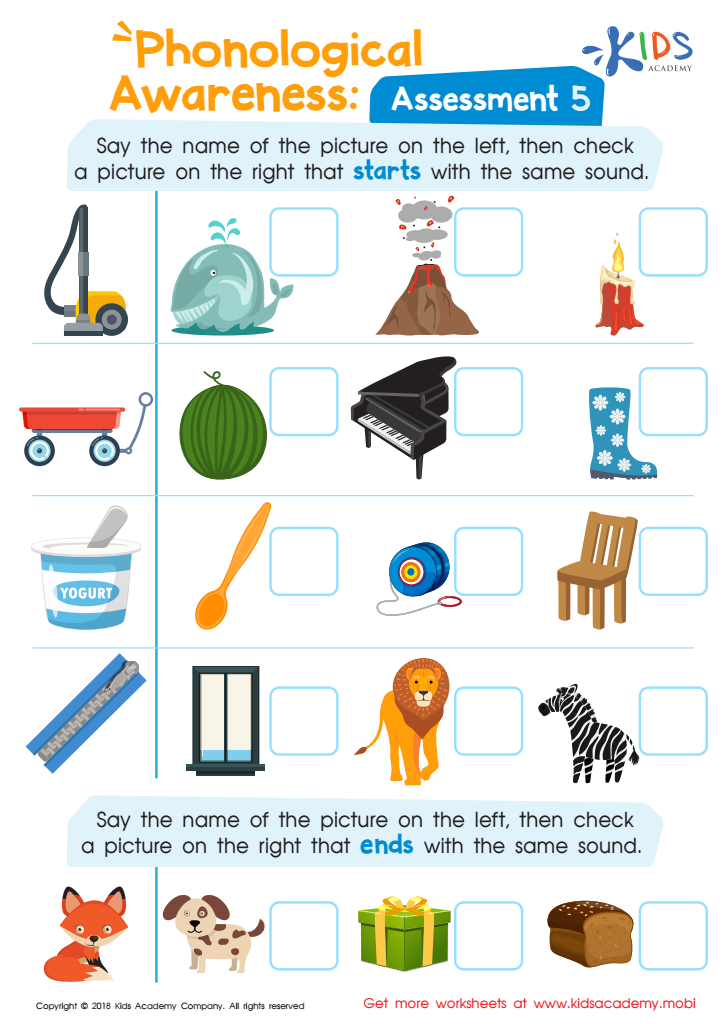
Phonological Awareness: Assessment 5 Worksheet






Rhyming skills are fundamental for early childhood literacy development, making them a critical aspect for parents and teachers to nurture in children aged 4-9. Rhyming aids in phonemic awareness, allowing children to recognize and predict sound patterns within words, which is essential for reading proficiency. When children learn and play with rhymes, they sharpen their ability to discern sounds, rhythms, and auditory sequences.
Rhyme awareness also enhances memory and cognitive skills, as children often find rhyming words easier to remember. This bolsters vocabulary and language acquisition in a fun, engaging manner, ensuring a stronger grasp of language from an early age. Activities such as reading rhyming books, singing nursery rhymes, and engaging in rhyming games can instill a love for words and spark creativity, as children begin to play with language inventively.
Furthermore, identifying rhyming patterns can make the learning experience more enjoyable, building confidence and a positive attitude towards reading and writing. For teachers and parents, fostering a child's ability to recognize rhymes aligns seamlessly with their broader educational mission, laying a solid foundation for future academic success. By focusing on rhyme, we help build critical language skills that support overall literacy development and empower children as confident communicators.







