Sound recognition Alphabet Worksheets for Ages 4-9
14 filtered results
-
From - To
Explore our engaging Sound Recognition Alphabet Worksheets designed for children aged 4-9. These interactive resources help young learners connect letters with their corresponding sounds, enhancing phonemic awareness and reading skills. Our worksheets feature vibrant illustrations and fun activities that capture kids' attention while reinforcing vital early literacy concepts. Whether at home or in the classroom, these worksheets are perfect for individualized learning or group activities. With a variety of exercises to choose from, your child will strengthen their understanding of sounds and letters, paving the way for reading success. Start building a strong foundation in literacy with our Sound Recognition Alphabet Worksheets today!
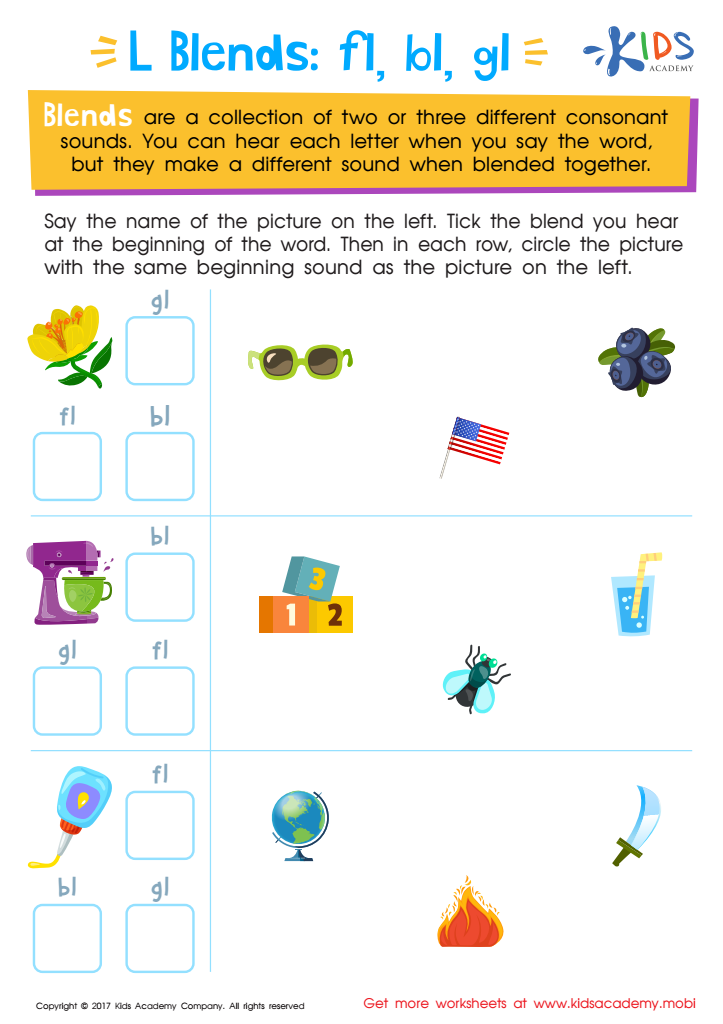
Blending Consonants: "Fl", "Bl" and "Gl" Printable
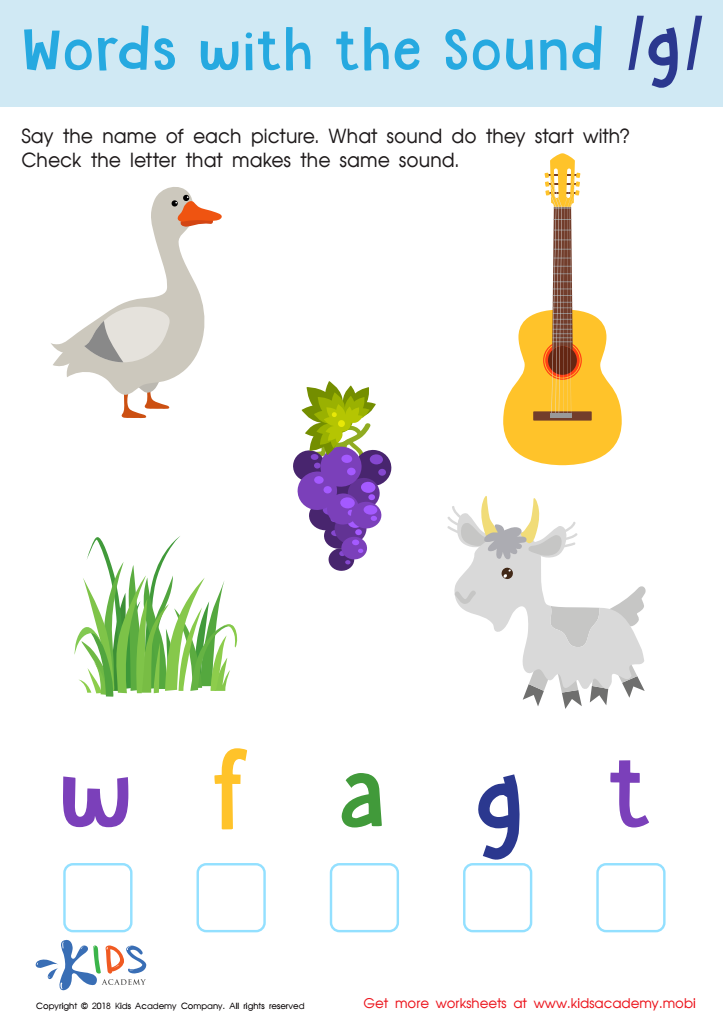
Words with sound g Reading Worksheet
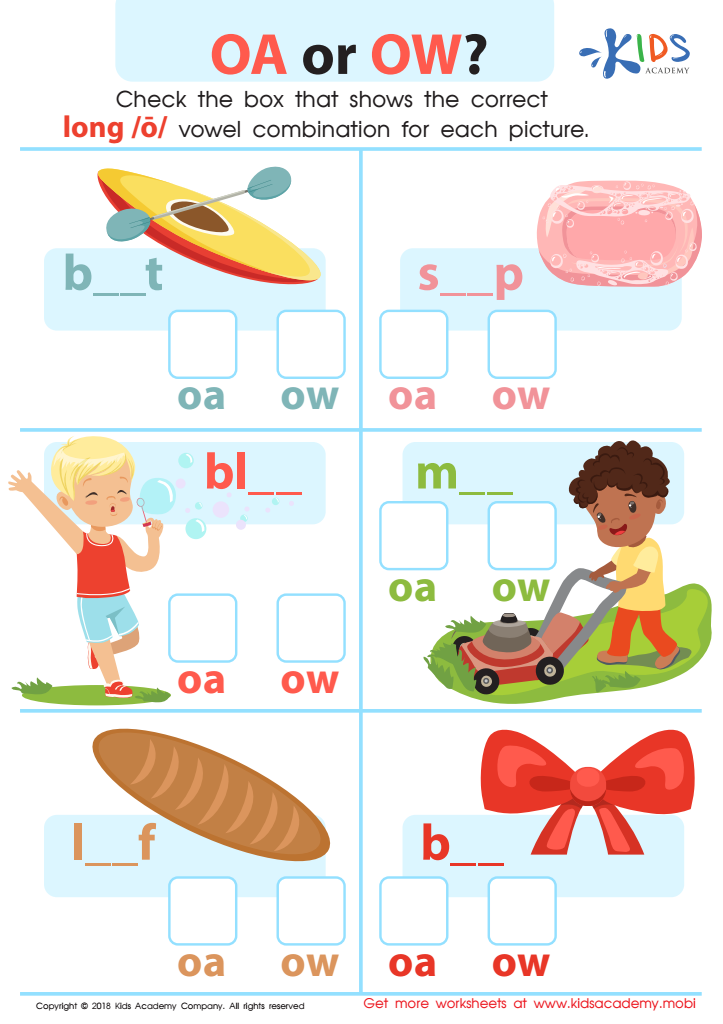
Reading: OA or OW Worksheet
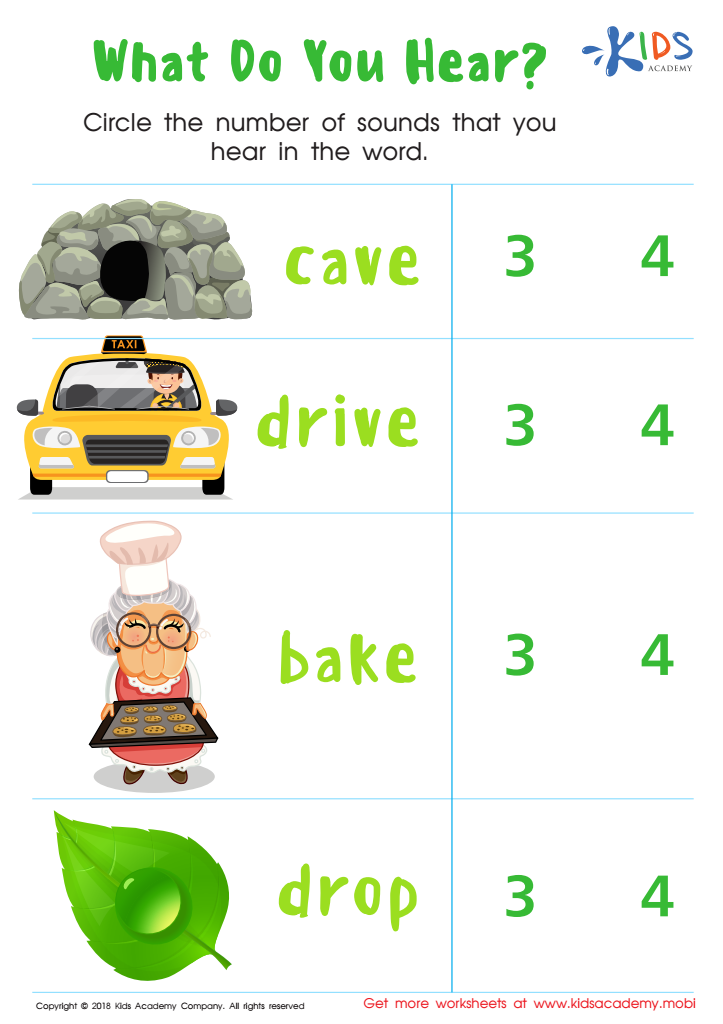
What Do You Hear? Worksheet
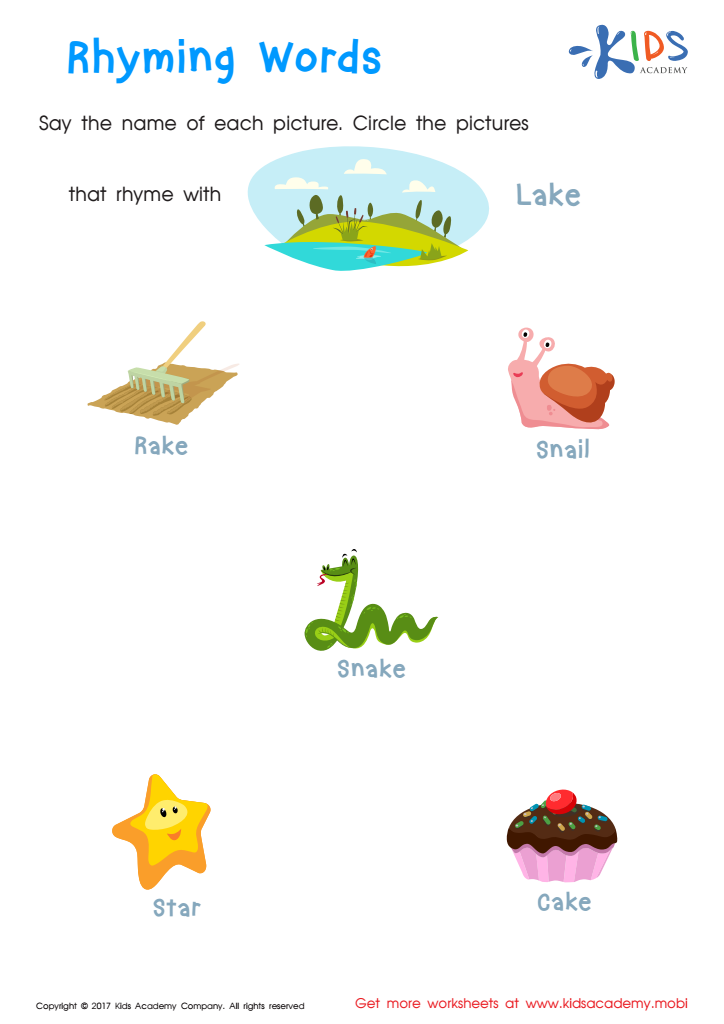
Rhyming Words Rhyming Worksheet
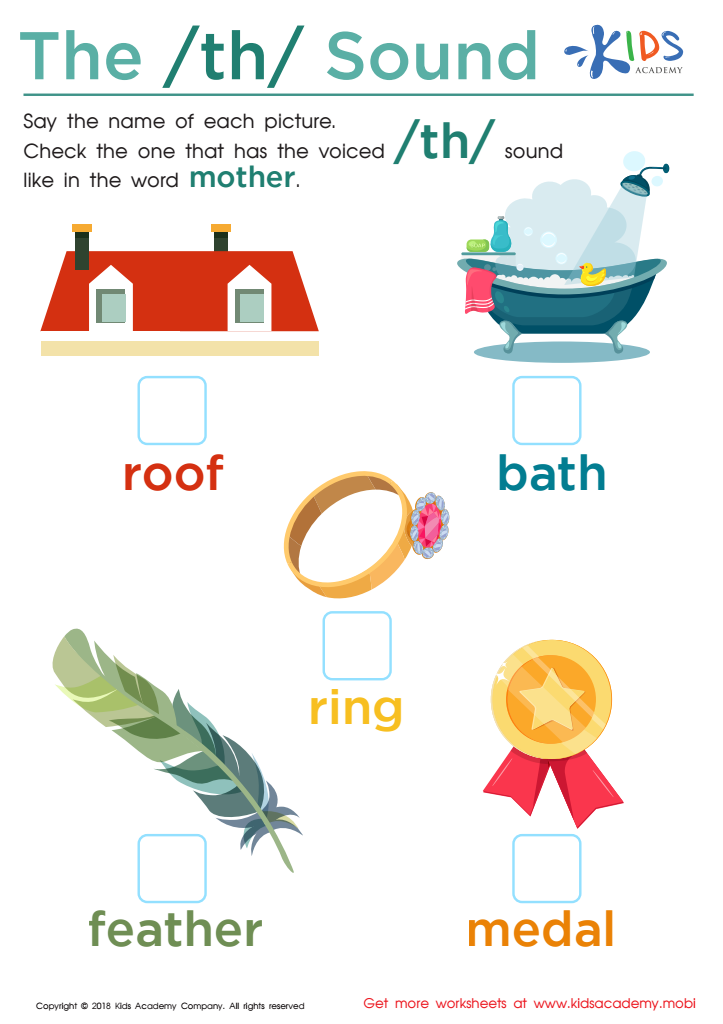
The /th/ Sound Worksheet
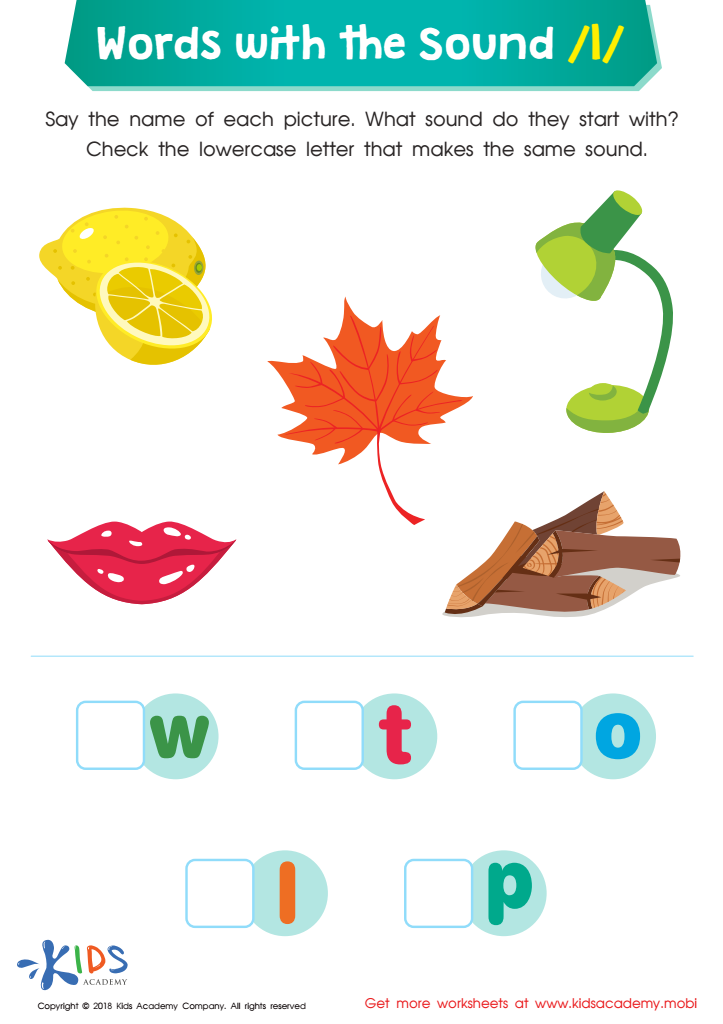
Words with Sound L Reading Worksheet
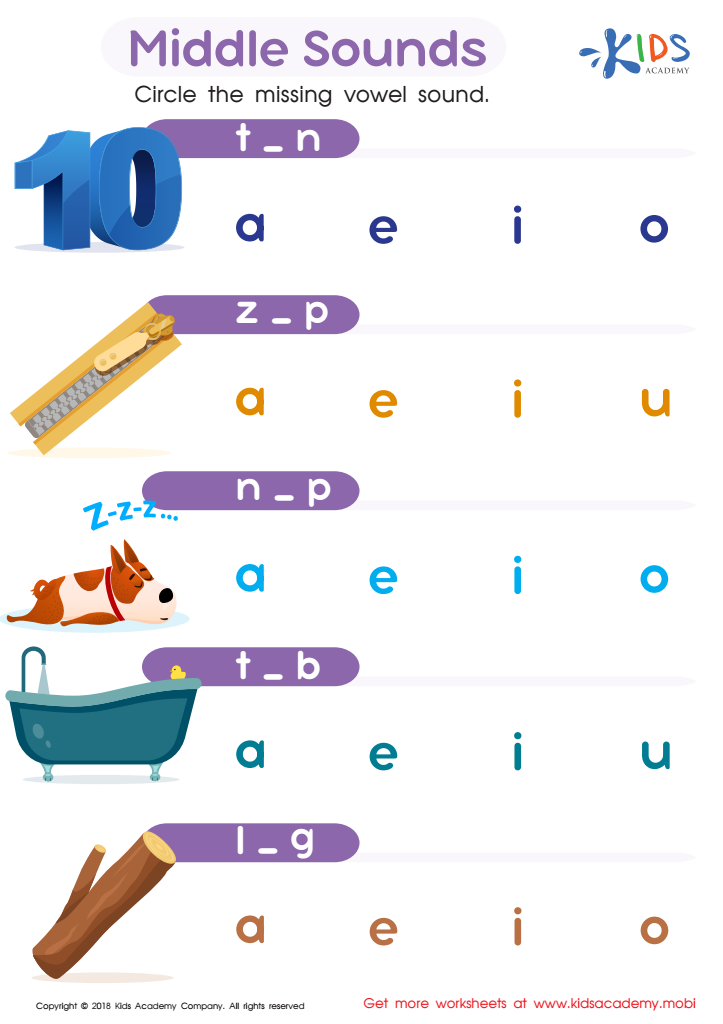
Middle Sounds Worksheet

Long and Short U Worksheet
 Assign to My Students
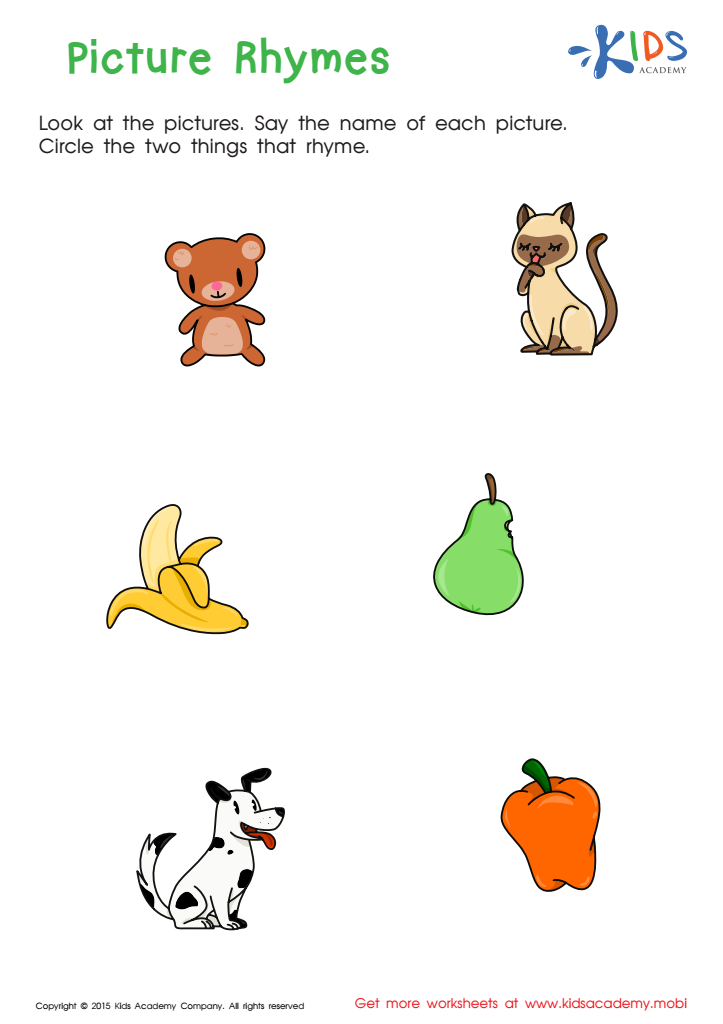
First Words: Picture Rhymes Worksheet
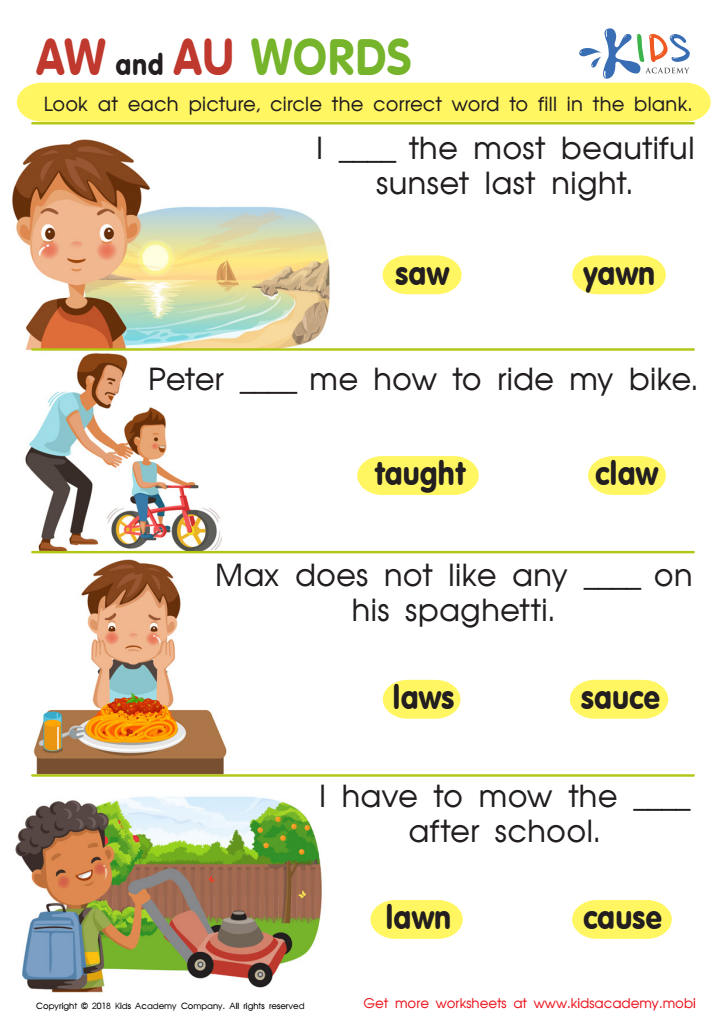
Reading: AW and AU Words Worksheet
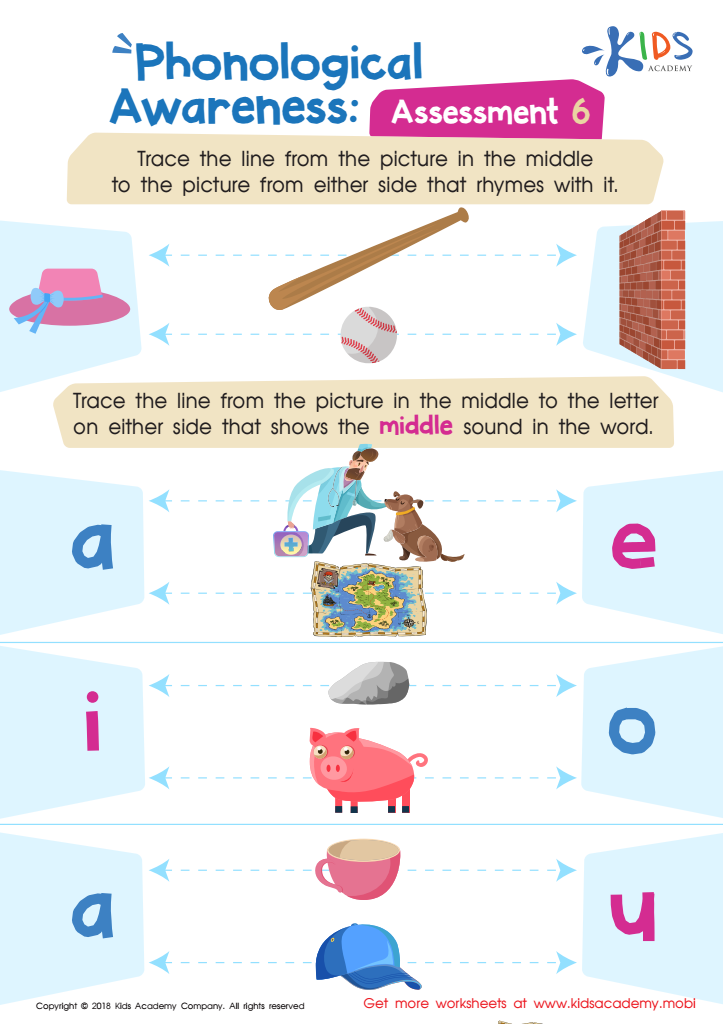
Phonological Awareness: Assessment 6 Worksheet
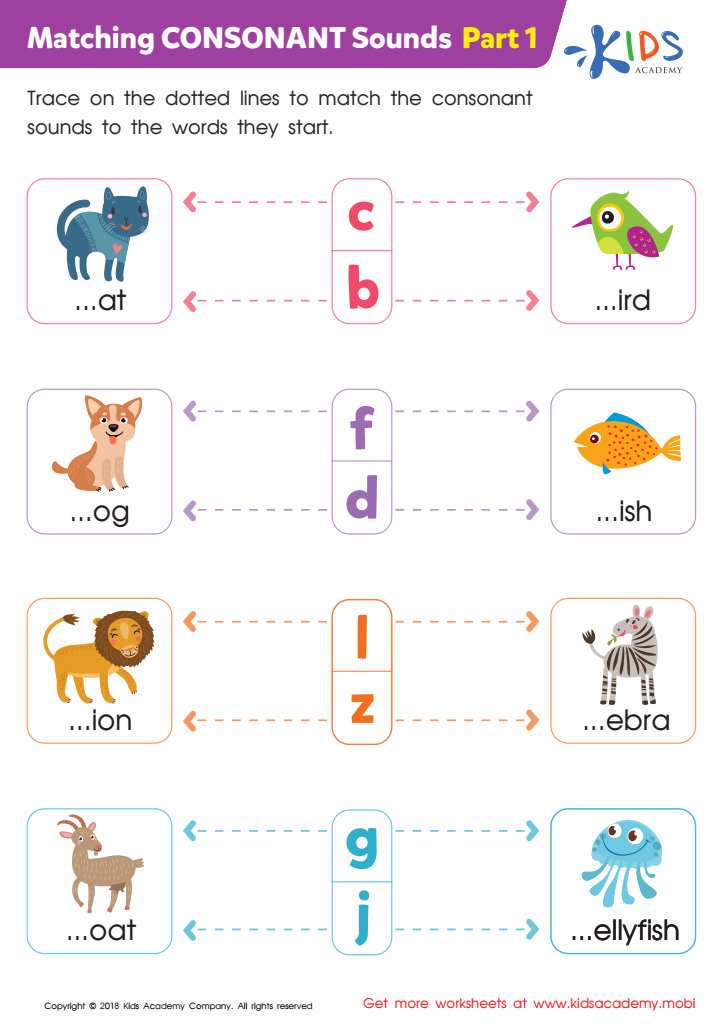
Matching Consonant Sounds: Part 1 Worksheet
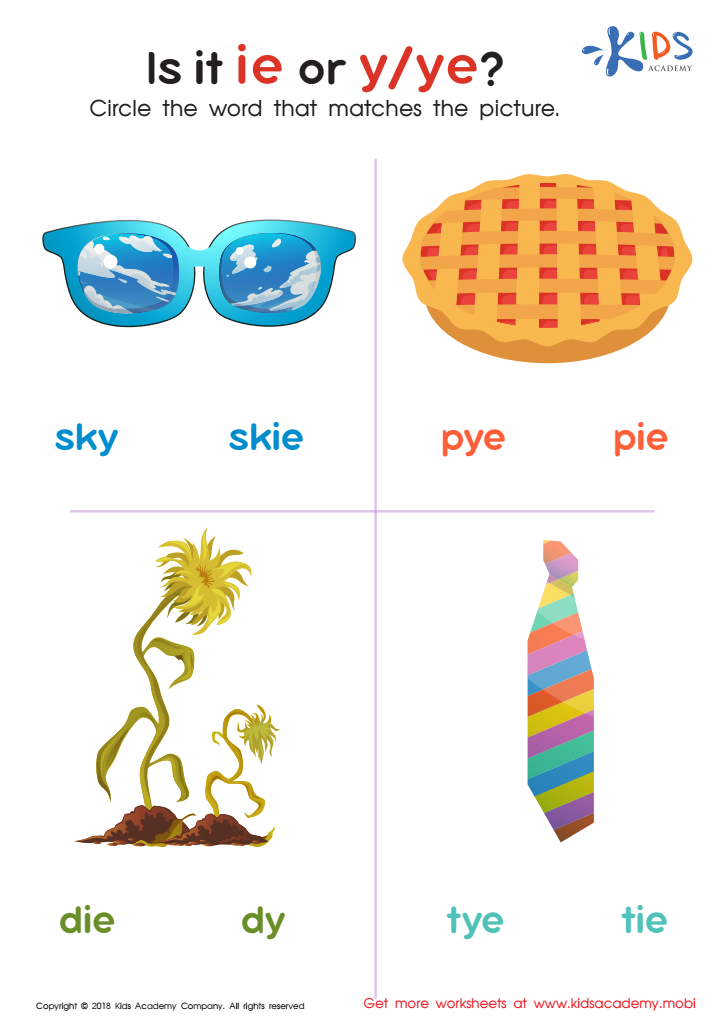
Is It IE or Y/Ye? Worksheet





.jpg)


Sound recognition is a crucial component of early literacy development, especially for children aged 4-9. Understanding that letters represent sounds is foundational for reading and writing skills. When parents and teachers prioritize sound recognition, they help children learn to decode words, leading to increased fluency and comprehension.
Additionally, sound recognition plays a vital role in phonemic awareness, which is the ability to hear, identify, and manipulate individual sounds in spoken words. This skill significantly predicts future reading success. When children grasp the relationship between sounds and letters—often through engaging activities such as rhymes, songs, and phonics games—they become confident learners.
Furthermore, mastering sound recognition fosters critical thinking and enhances vocabulary development. As children learn to break down words into individual sounds, they also become more adept at understanding new words and their meanings. Parents and teachers benefit from integrating sound recognition into daily activities, making learning fun and interactive.
Ultimately, encouraging sound recognition creates a strong literacy foundation, paving the way for academic achievement and a lifelong love for reading. When caregivers support this skill, they contribute significantly to a child’s overall educational success and personal growth.







