Understanding syllables Alphabet Worksheets for Ages 4-9
4 filtered results
-
From - To
Discover our engaging "Understanding Syllables Alphabet Worksheets for Ages 4-9" designed to bolster early literacy skills. Perfect for young learners, these worksheets make phonics fun by breaking down words into manageable syllables. Kids will enhance their reading abilities while practicing phonemic awareness, assisting them in mastering pronunciation and spelling. Ideal for classroom use or homeschooling, these activities cater to different learning styles and keep children motivated. Transform the way your child learns syllables with these printable resources, laying a solid foundation for their future reading and writing success. Download today and watch as their skills grow!
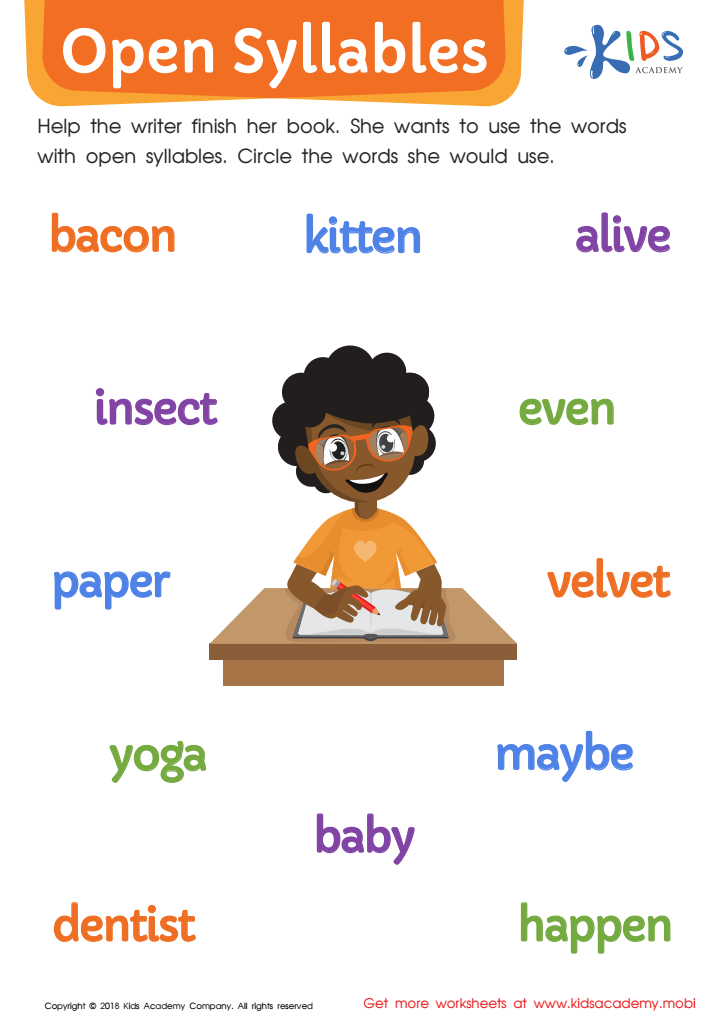
Open Syllables Worksheet
 Assign to My Students
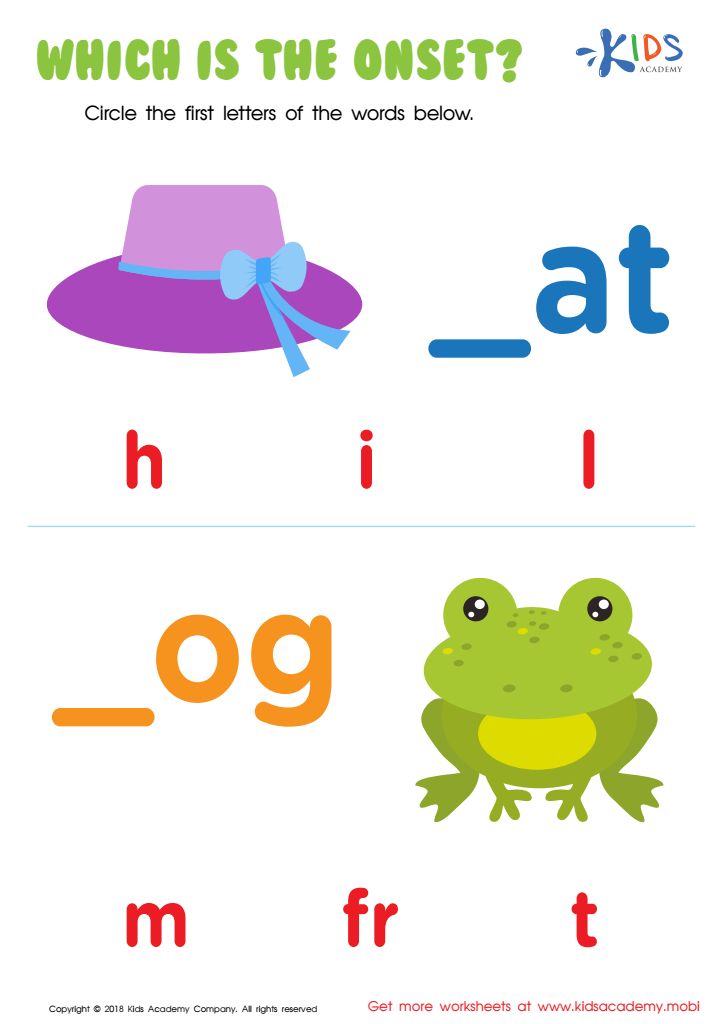
Which Is the Onset? Worksheet
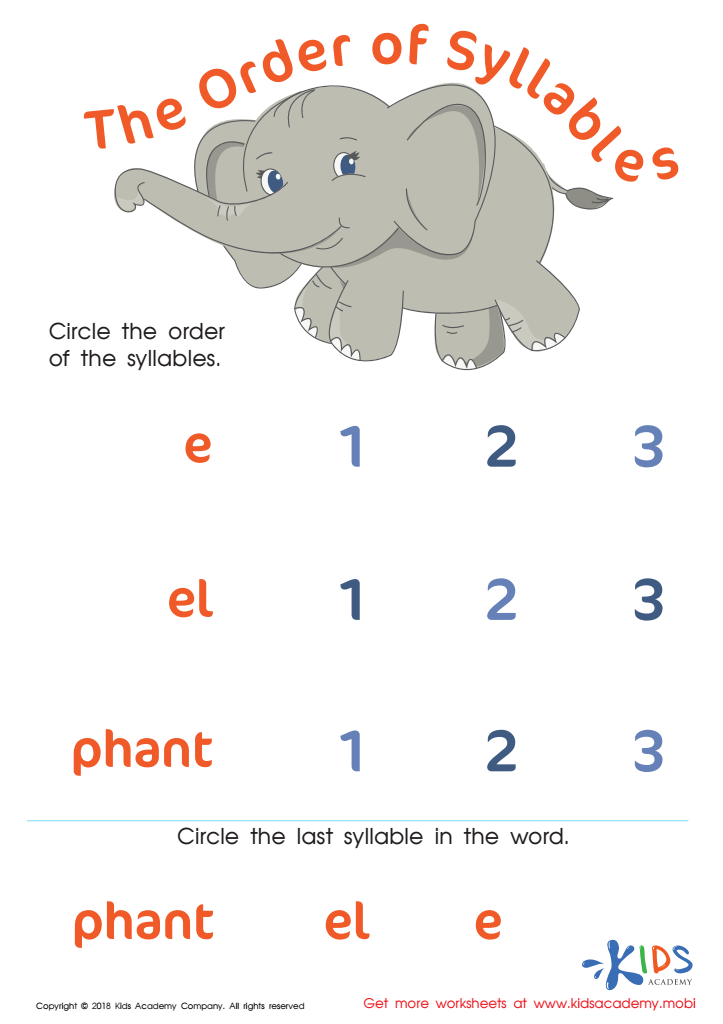
The Order of Syllables Worksheet
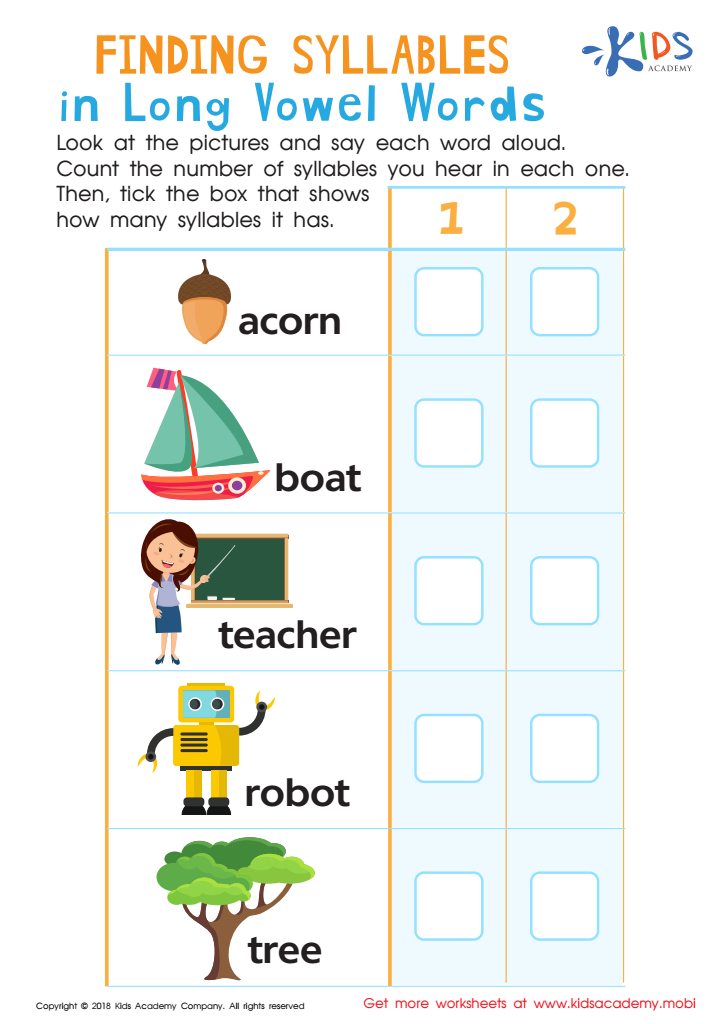
Finding Syllables in Long Vowel Words Worksheet






Understanding syllables and the alphabet is critically important for children aged 4-9 as it lays the foundation for their growing literacy skills. During these formative years, children move from recognizing letters to putting them together to form words. Mastery of syllables simplifies this process, enhancing both reading proficiency and pronunciation.
Firstly, syllables break words into manageable units, making it easier for young learners to decode and spell unfamiliar words. Knowing how to chunk words into syllables enables children to read them more fluidly and with better confidence. For instance, a longer word like "basketball" becomes less intimidating when divided into syllables: "bas-ket-ball."
Moreover, understanding the alphabet and syllable structure inculcates phonemic awareness, a crucial component of reading. Phonemic awareness helps kids realize that words are composed of distinct sounds and patterns, aiding them in linking letters to their corresponding sounds during reading and writing.
For parents and teachers, fostering these skills involves more than just conveying academic knowledge—it’s about scaffolding all future learning endeavors. Children who readily understand syllables demonstrate superior reading comprehension and writing abilities, bridging to more advanced literacy tasks as they progress in their education. Overall, instilling a robust understanding of syllables and the alphabet equips young minds with the skills necessary for academic success and lifelong learning.







