Rhyming skills development Phonics Worksheets for Ages 4-9
5 filtered results
-
From - To
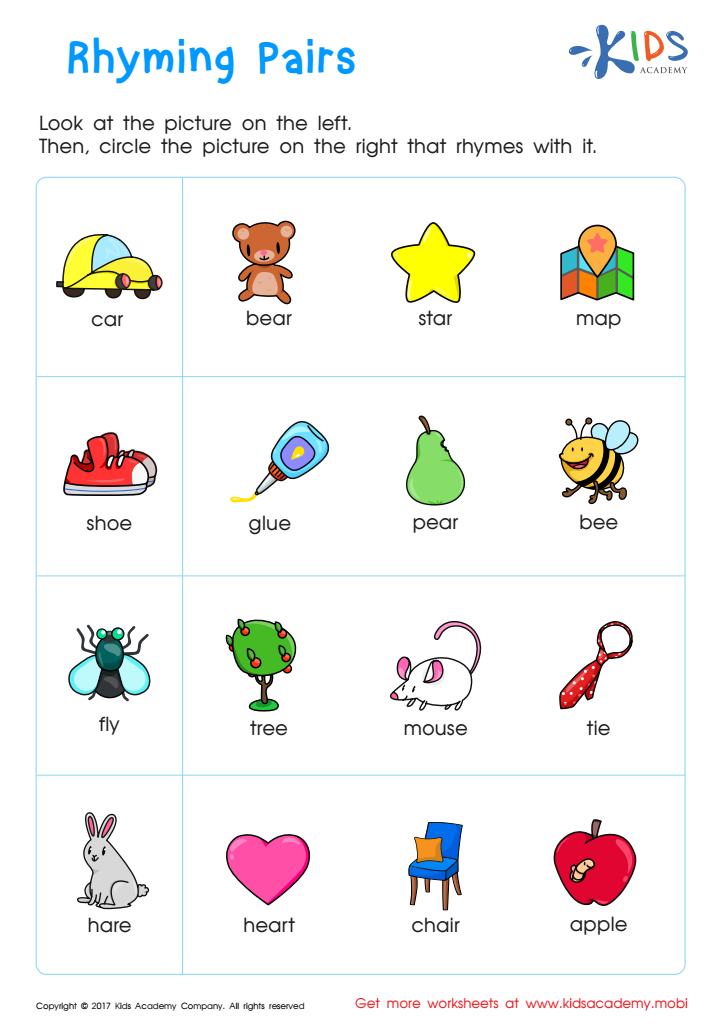
Unlock the joy of reading with our engaging Rhyming Skills Development Phonics Worksheets, specially designed for children ages 4-9. These interactive resources enhance phonemic awareness, helping young learners recognize and produce rhymes. With colorful illustrations and fun activities, children will build essential language skills while enjoying the learning process. From simple word pairs to more complex rhyming challenges, our worksheets cater to various learning levels, encouraging creativity and confidence in language use. Perfect for classroom use or at-home learning, these worksheets support early literacy development and ensure a strong foundation for future reading success. Explore our collection today and inspire a love for learning!
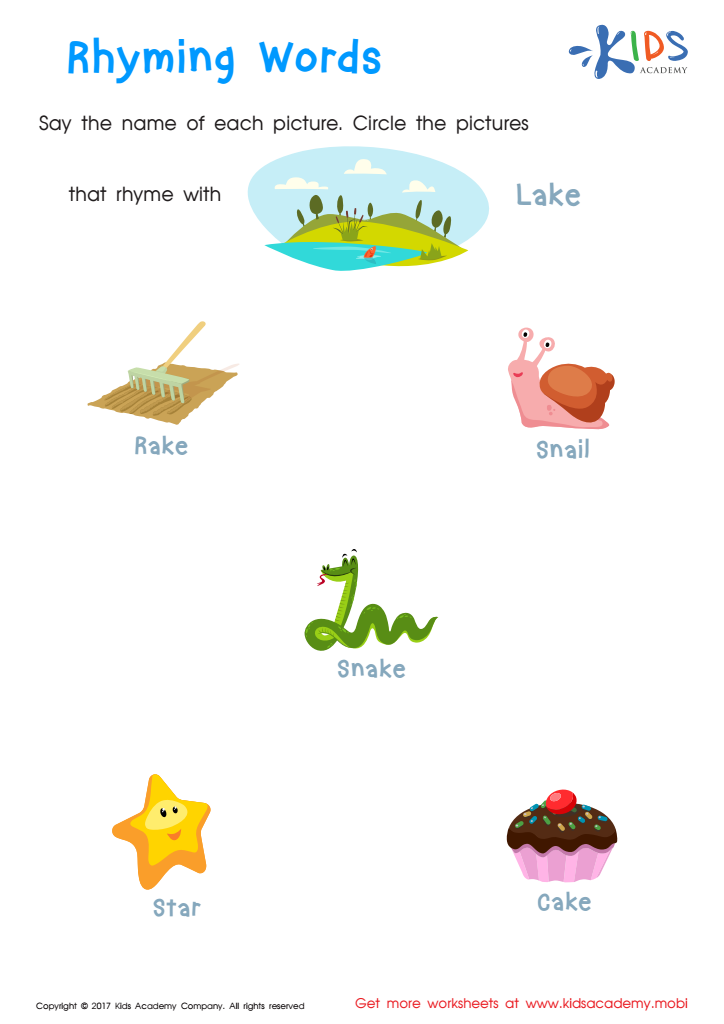
Rhyming Words Rhyming Worksheet
 Assign to My Students
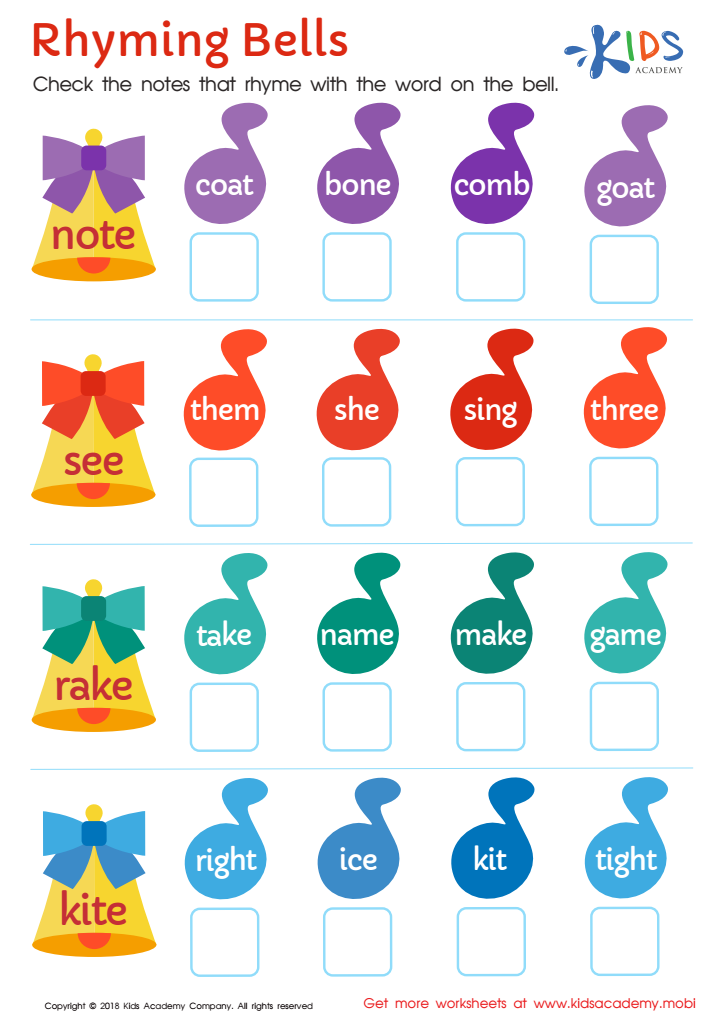
Rhyming Bells Worksheet
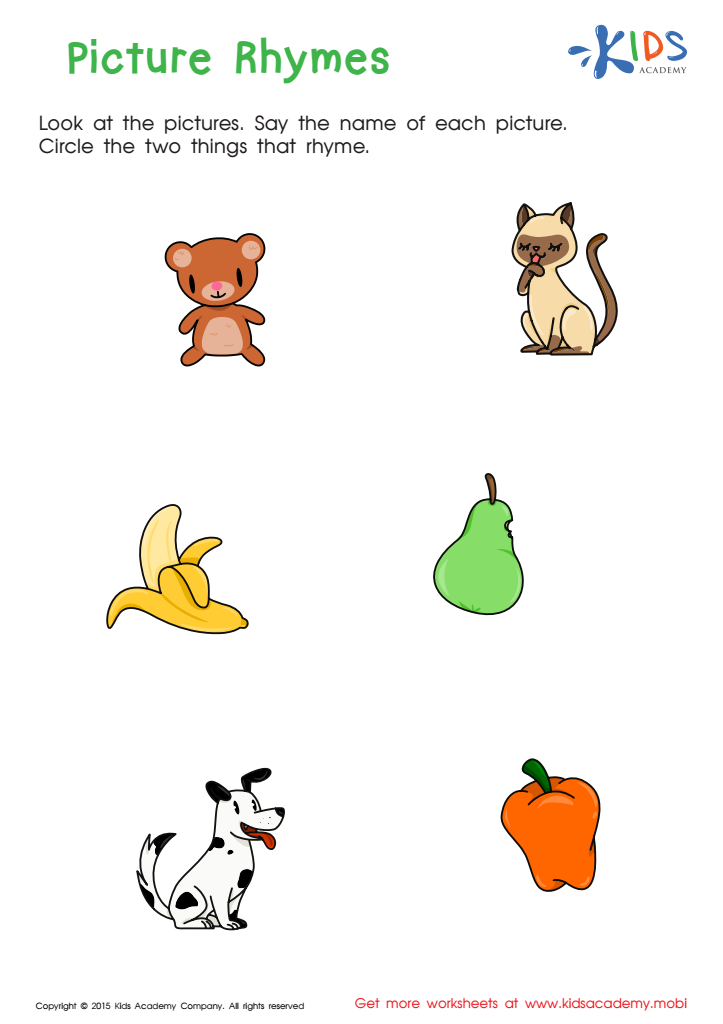
First Words: Picture Rhymes Worksheet
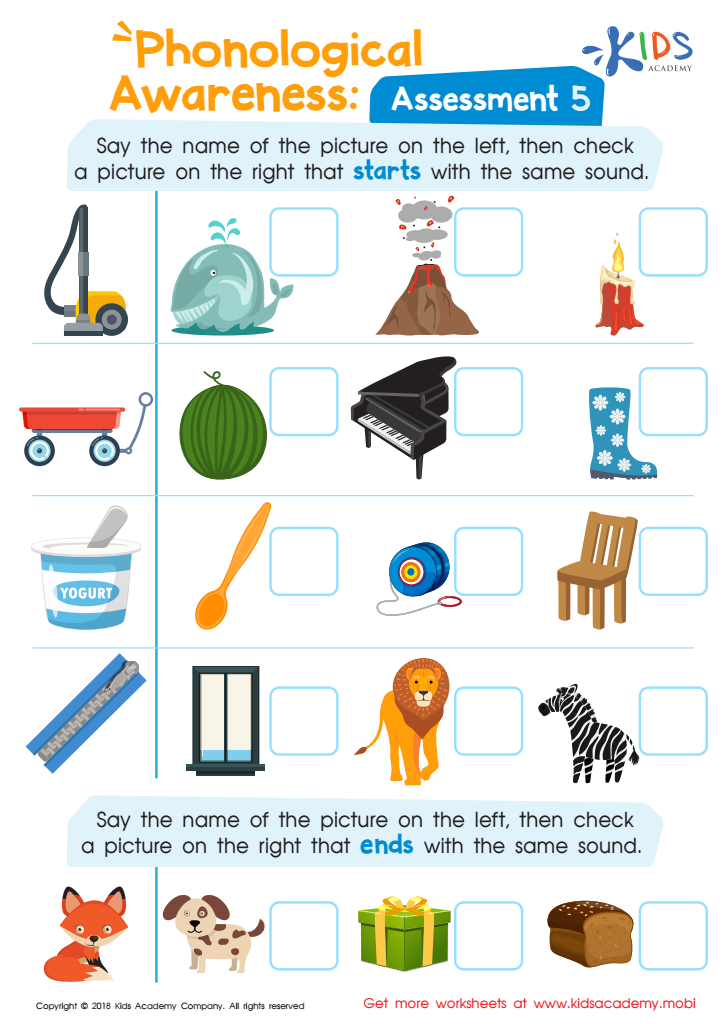
Phonological Awareness: Assessment 5 Worksheet








Rhyming skills development through phonics is crucial for children ages 4-9 as it lays the foundation for reading and writing. When children engage in rhyming activities, they enhance their phonemic awareness, which is the ability to hear, identify, and manipulate sounds in language. This skill is essential for decoding words and developing spelling abilities.
Rhyming helps children discover patterns in language, making it easier to predict how words work and interact. This understanding promotes confidence in reading, as children can better anticipate word structures and meanings. Moreover, rhymes often make language more memorable and enjoyable, transforming learning into a playful and engaging activity—essential for young learners with shorter attention spans.
Phonics instruction strengthens these rhyming skills by providing children with the tools to connect sounds with letters, supporting their progress toward fluent reading and writing. Through exposure to rhymes in books, songs, and games, children become more motivated and excited about literacy, fostering a lifelong love of reading.
Ultimately, by prioritizing rhyming skills development through phonics, parents and teachers can significantly impact children's literacy journey, ensuring they are better prepared for future academic success.







