Sound differentiation Phonics Worksheets for Ages 4-9
4 filtered results
-
From - To
Enhance your child's phonics skills with our Sound Differentiation Phonics Worksheets, designed specifically for ages 4-9. These engaging worksheets help young learners identify and differentiate between various sounds, laying a strong foundation for reading and writing. Activities include matching sounds to letters, practicing sound recognition, and interactive exercises that promote auditory discrimination. With colorful illustrations and age-appropriate challenges, your child will enjoy meaningful learning experiences while building confidence in their phonics abilities. Perfect for at-home practice or classroom use, these worksheets make phonics fun and accessible. Explore our collection to support your child's literacy journey today!
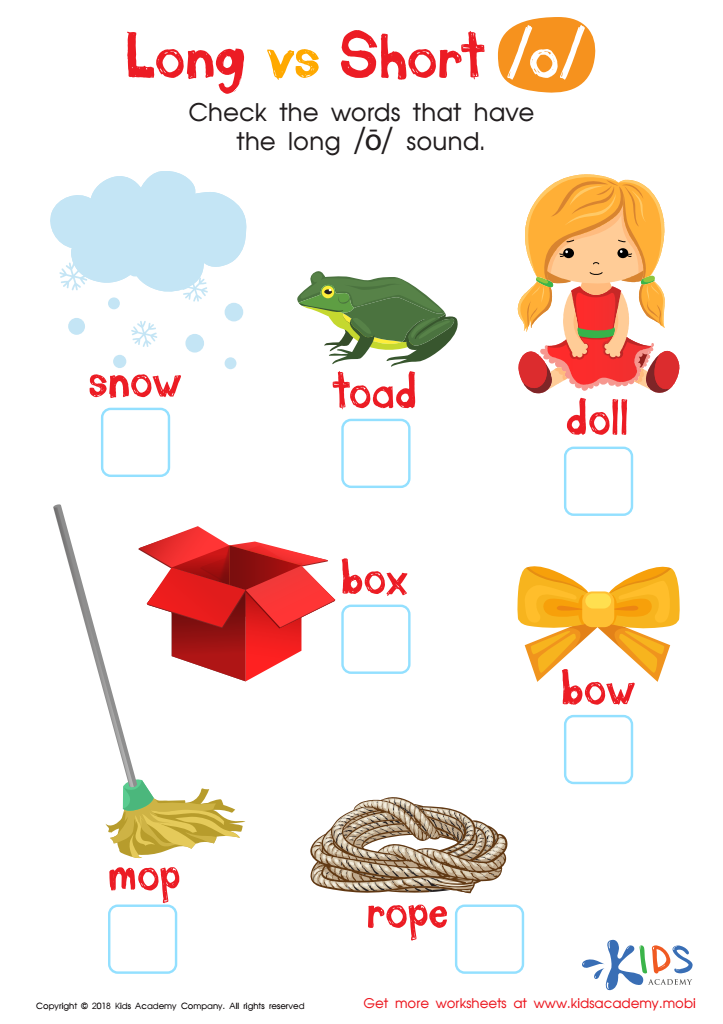
Long vs Short O Reading Worksheet
 Assign to My Students
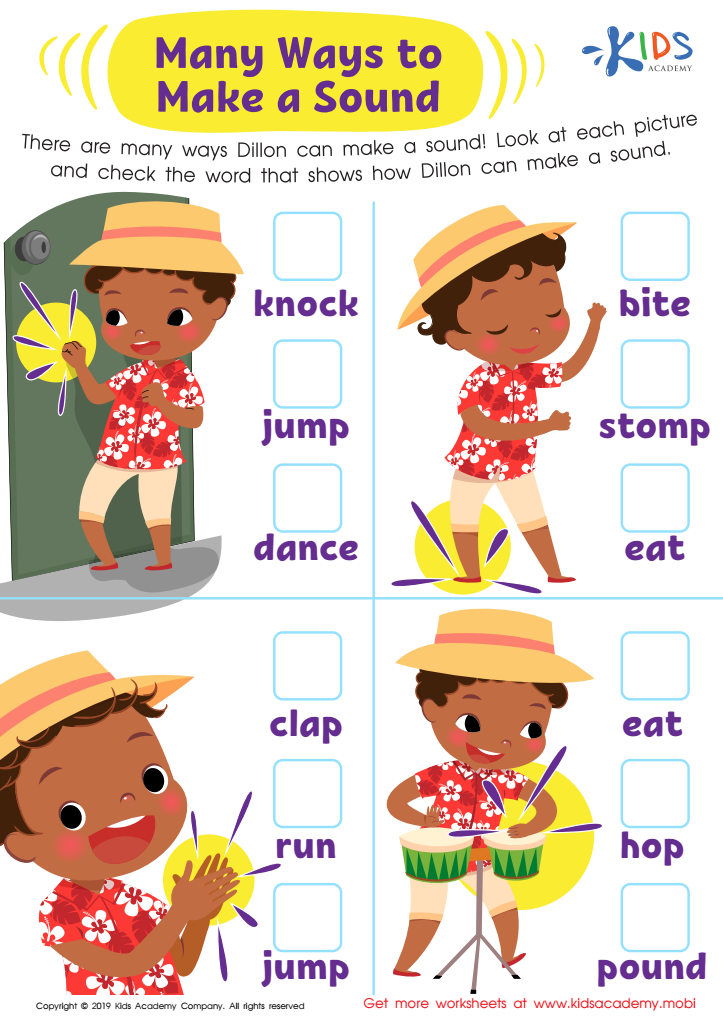
Many Ways to Make a Sound Worksheet
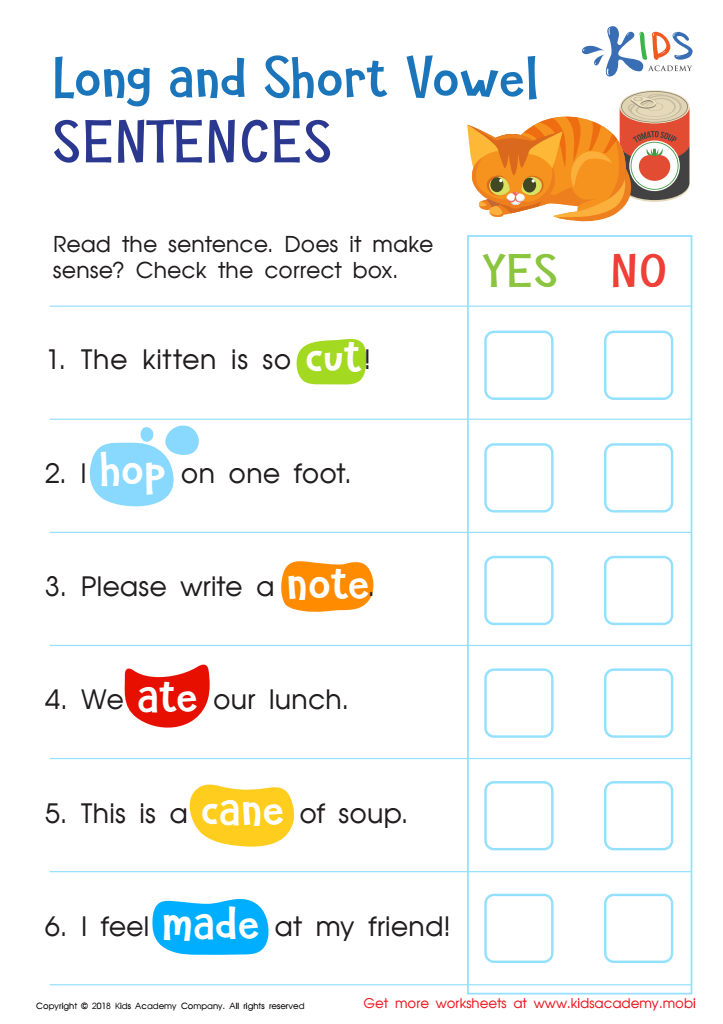
Long and Short Vowel Sentences: Assessment Worksheet
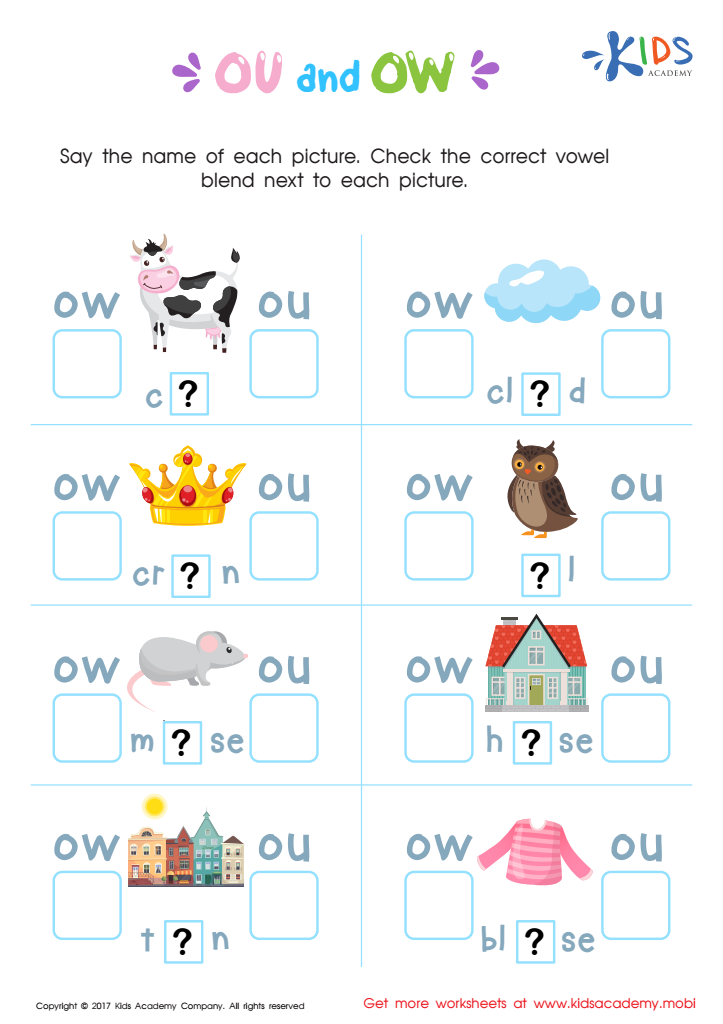
OU and OW Words Worksheet








Sound differentiation phonics is crucial for children aged 4-9 as it forms the foundation of their reading and writing skills. During this developmental stage, children are learning to recognize and manipulate sounds, which are essential components of phonemic awareness. Understanding how different sounds correspond to letters and letter combinations helps children decode words efficiently. This skill not only enhances their reading fluency but boosts their confidence and enjoyment in literacy activities.
Parents and teachers play a vital role in facilitating this process. By engaging in sound differentiation activities, such as using rhymes, word games, and phonics-focused exercises, they can create an interactive learning environment. This hands-on approach helps children differentiate between similar sounds, such as /b/ and /d/, or /s/ and /sh/, which are often challenging for young learners.
Moreover, mastering sound differentiation helps prevent future literacy difficulties. Early intervention in phonics can mitigate issues such as dyslexia and poor spelling. Consequently, when parents and teachers prioritize sound differentiation phonics, they contribute to not only the immediacy of literacy development but also the long-term academic success of children. Overall, a solid grounding in phonics is indispensable for lifelong learning and effective communication skills.







