Filters

28 filtered results

Clear all filters
Favorites
With answer key
Interactive

28 filtered results

Difficulty Level

Grade


Check out this FREE Trial Lesson on Tracing Letters for age 4-9!

Tracing Uppercase Letters S-Z

Favorites
With answer key
Interactive
  • 4-9
  • Handwriting practice
  • Tracing Letters
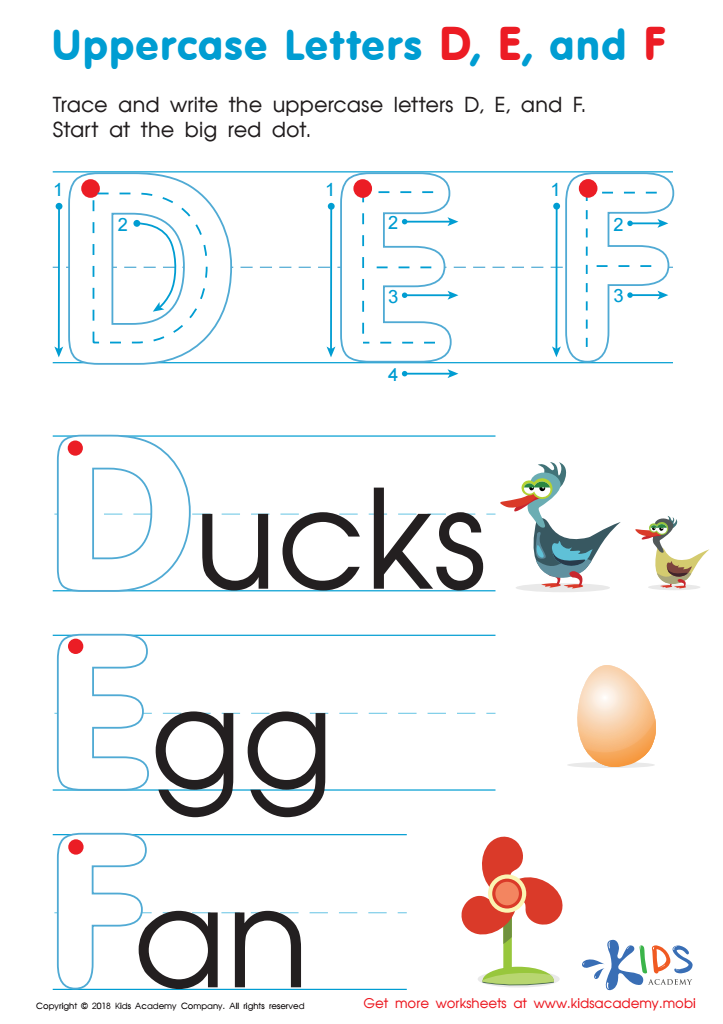
Uppercase Letters D, E, and F Worksheet Preview

Uppercase Letters D, E, and F Worksheet

A-F are important letters! Get kids tracing with this free printable worksheet. Help them learn the right pencil strokes by following the tracing lines, starting at the big red dot. Reinforce letter sounds with the colorful pictures. 80 words.
Uppercase Letters D, E, and F Worksheet
Worksheet
Uppercase Letters Y Z Worksheet

Uppercase Letters Y Z Worksheet

Help your child learn their ABCs with this fun tracing activity! They must trace and write Y and Z in uppercase form, starting from the red dot. Kids will love the fun images for extra engagement. Guiding their hand carefully will help them practice and perfect their writing skills.
Uppercase Letters Y Z Worksheet
Worksheet
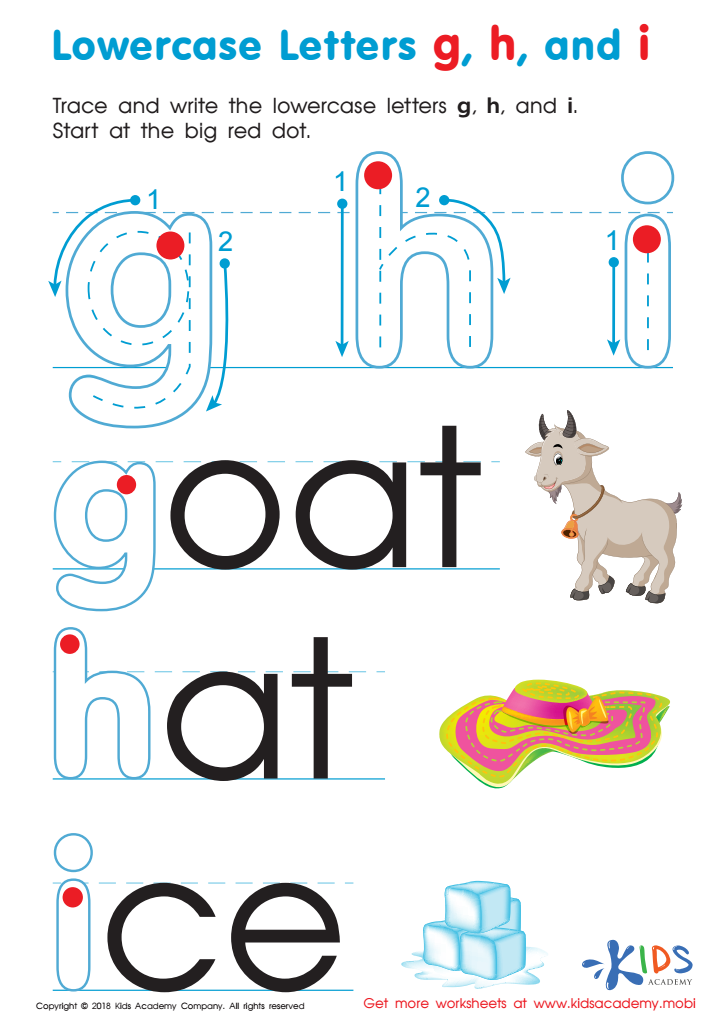
Lowercase Letters g h i Worksheet

Lowercase Letters g h i Worksheet

Learning is fun for your youngster with color and an enjoyable exercise. Help them build their understanding of the alphabet by starting at the big red dot drawn on each letter and carefully following the dotted lines to draw g, h, and i.
Lowercase Letters g h i Worksheet
Worksheet
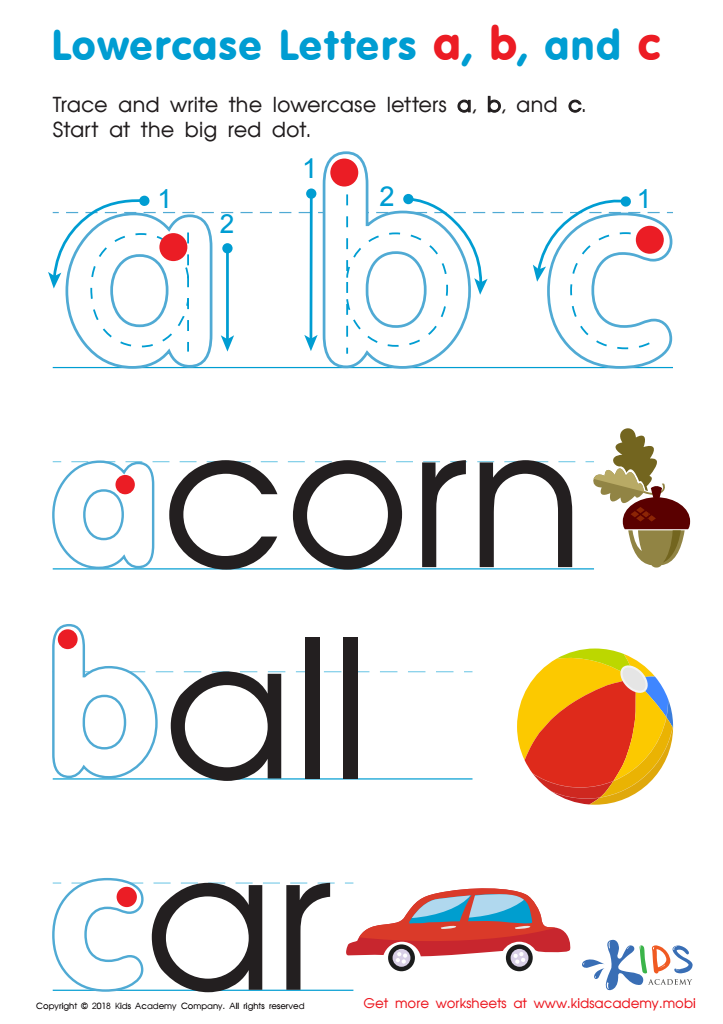
Lowercase Letters a b c Worksheet


Lowercase Letters a b c Worksheet

Help your child trace and write the lowercase letters of the alphabet with this fun worksheet. Start by following the arrows and directions from the red dot, and watch them improve their writing skills! Vibrant illustrations make it easy and enjoyable.
Lowercase Letters a b c Worksheet
Worksheet


Handwriting practice, especially through tracing letters, is crucial for children ages 4-9 for several reasons. Firstly, it is essential for developing fine motor skills, which are necessary for tasks beyond writing, such as using scissors or tying shoelaces. Tracing letters provides a structured way for children to practice grip and control, allowing them to build muscle memory.

Moreover, early handwriting experiences support cognitive development. Each letter has a unique shape and structure, and tracing helps children recognize these patterns, enhancing their ability to recall and produce letters independently. This early literacy foundation becomes pivotal as they progress to reading and writing full sentences.

Additionally, good handwriting can boost a child's self-esteem. As they become more confident in their ability to communicate through writing, they are more likely to engage in writing tasks, express their thoughts, and perform better in school.

Engaging parents in the tracing process can also foster bonding and provide opportunities for discussions about letters and sounds, reinforcing language development. Therefore, handwriting practice should be prioritized by both parents and teachers to ensure children develop the skills they need for future academic success and effective communication.