Lowercase identification Upper & Lowercase Letters Worksheets for Ages 4-9
5 filtered results
-
From - To
Introduce essential literacy skills to your child with our "Lowercase Identification: Upper & Lowercase Letters Worksheets for Ages 4-9." These expert-designed, printable worksheets are perfect for young learners to effortlessly recognize and differentiate between uppercase and lowercase letters. With engaging activities, colorful illustrations, and straightforward instructions, our resources help children from preschool to grade 3 strengthen their alphabet knowledge, improving reading readiness. Access a diverse collection of activities that turn learning into a fun and interactive experience. Give your child the tools to excel in their literacy journey with our effective and entertaining worksheets.
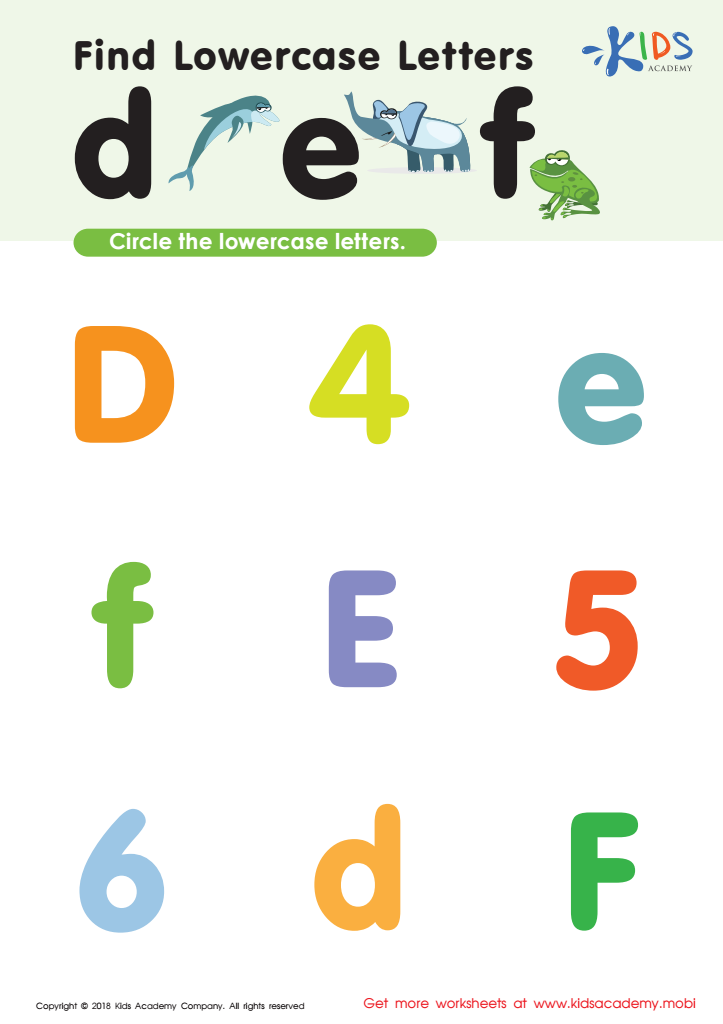
Find Lowercase Letters d e f Worksheet
 Assign to My Students

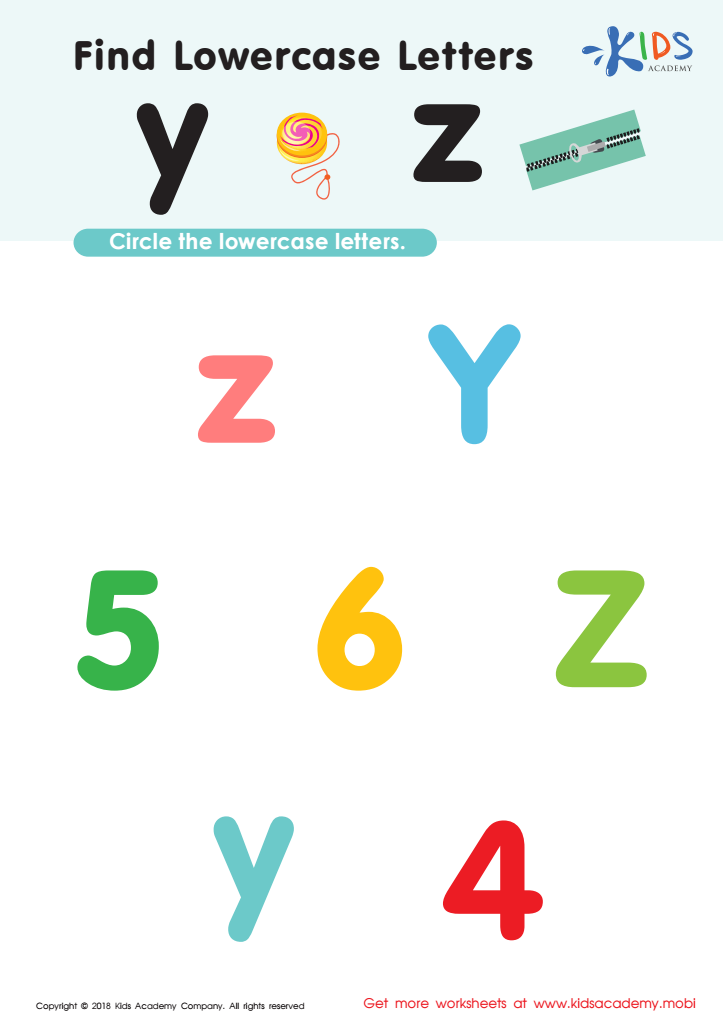
Find Lowercase Letters y z Worksheet
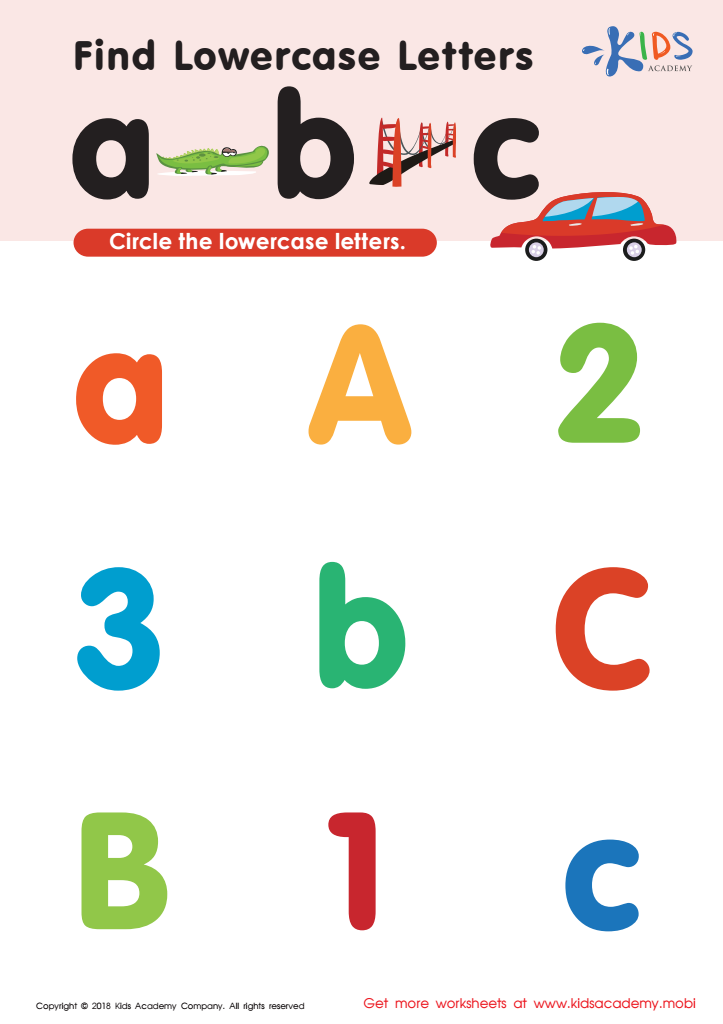
Find lowercase letters a b c Worksheet
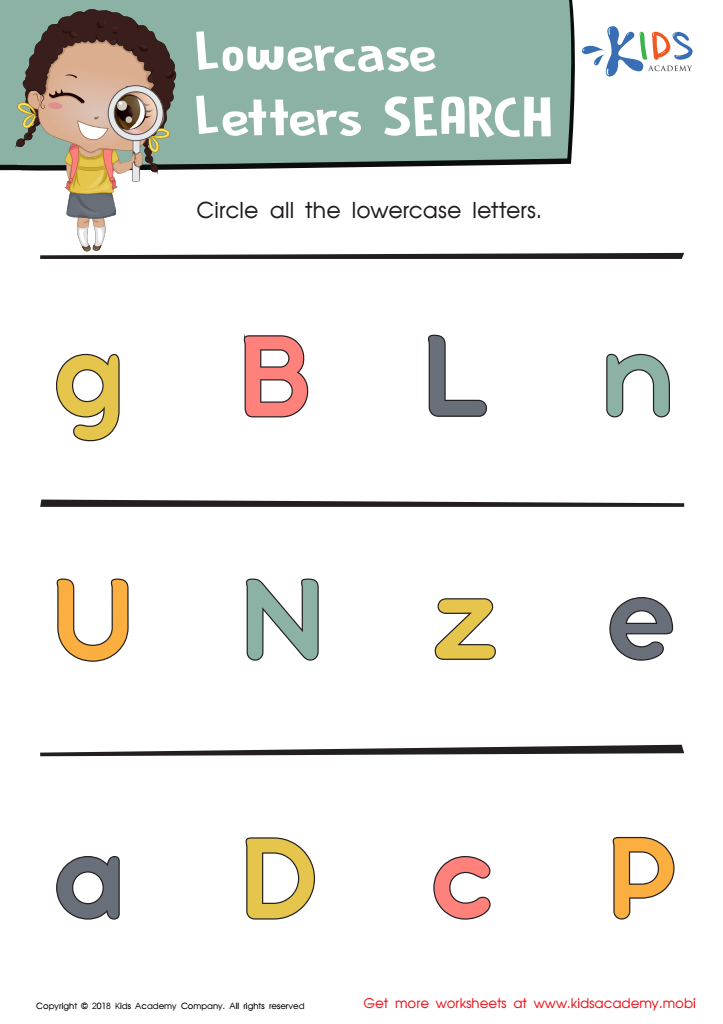
Lowercase Letters Search: Assessment Worksheet
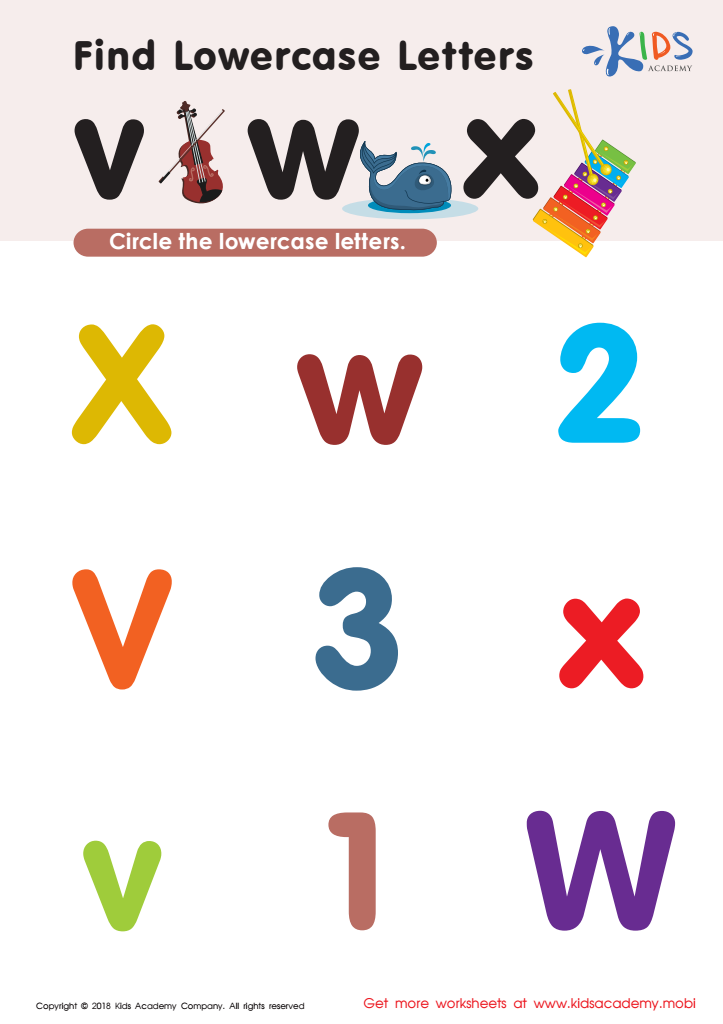
Find Lowercase Letters v w x Worksheet






Parents and teachers should care deeply about students' ability to identify both uppercase and lowercase letters, as it forms a cornerstone of early literacy, especially for children ages 4-9. Understanding the relationship between these letter forms is essential for reading fluency and writing efficiency, two critical skills for academic success.
When children can easily recognize both uppercase and lowercase letters, they can transition smoothly between the two when reading or writing. This skill helps them quickly learn to sound out words, build their vocabulary, and comprehend texts more effectively. Furthermore, most written text in books, worksheets, and everyday reading materials predominantly use lowercase letters; familiarity with them allows children to navigate and decode these texts confidently.
Additionally, accurate identification of both letter forms supports proper spelling, note-taking, and grammar usage. For example, knowing when to appropriately use capital letters—as in the beginning of sentences or proper nouns—is fundamental to clear and correct writing.
Finally, fostering this aspect of literacy at a young age sets the stage for lifelong learning, creativity, and communication. It builds children's self-esteem as they master a foundational skill, making them more eager and prepared to tackle more advanced literacy challenges in later grades. Therefore, emphasizing awareness and practice of uppercase and lowercase letters benefits children's educational journeys profoundly.







