
Animal recognition Worksheets for Ages 4-9
121 filtered results
Difficulty Level
Grade
Age
-
From - To
Subject
Activity
Standards
Discover our engaging Animal Recognition Worksheets designed for children ages 4-9! These fun and interactive worksheets help young learners identify and name various animals, enhancing their vocabulary and observational skills. With vibrant illustrations and age-appropriate activities, kids will enjoy practicing their animal knowledge through coloring, matching, and fill-in-the-blank exercises. Perfect for home or classroom use, our worksheets foster creativity while supporting early learning concepts in an enjoyable way. Whether your child is an animal enthusiast or just beginning to explore the animal kingdom, our resources ensure a delightful educational experience that will spark curiosity and a love for learning!
Favorites
With answer key
Interactive
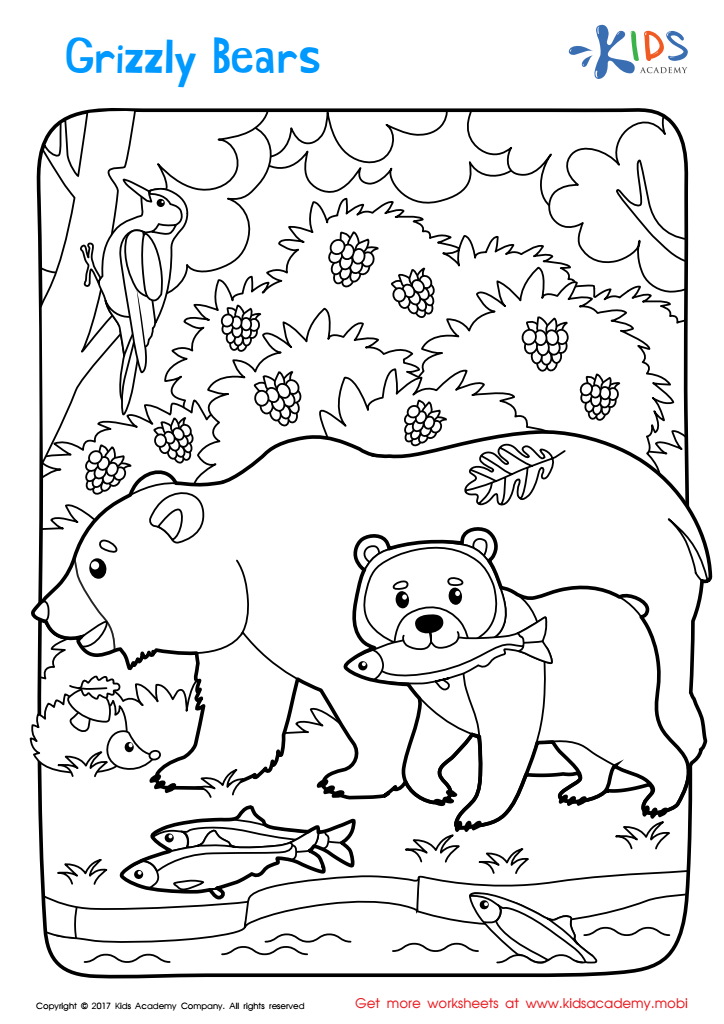
Free Printable Grizzly Bear Coloring Page
Today we're exploring the Great Plains and its most popular inhabitant: the grizzly bear! Our free printable coloring page introduces kids to the bear's natural habitat and food, like salmon and berries. Join us for a fun and educational experience!
Download (PDF)
 Assign to My Students
Assign to My Students
Free Printable Grizzly Bear Coloring Page
Worksheet
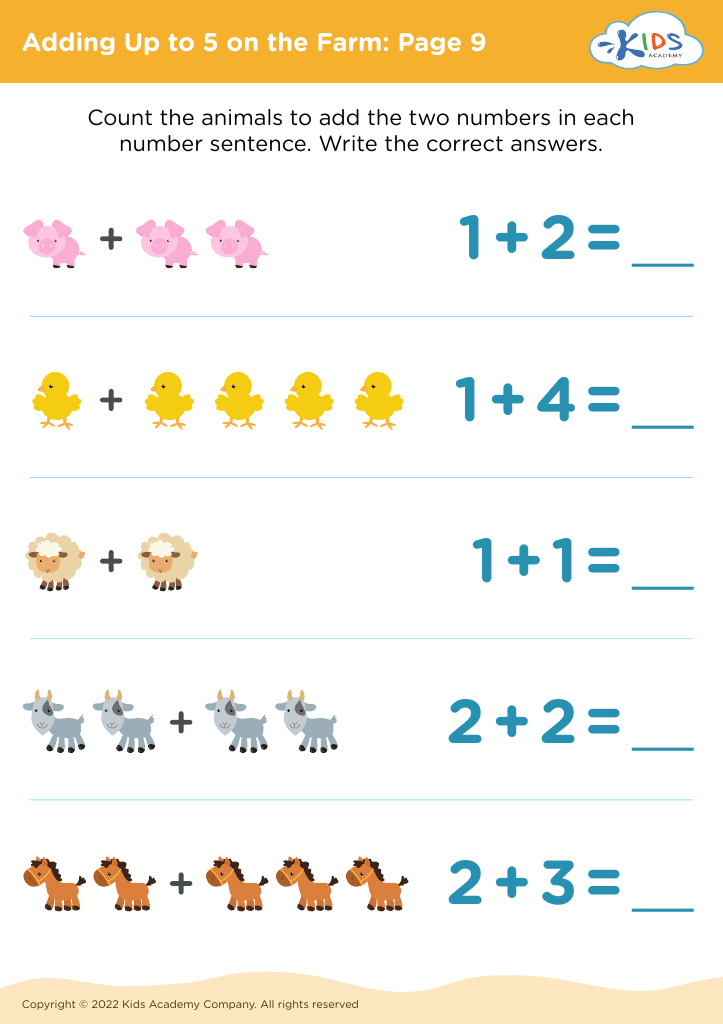
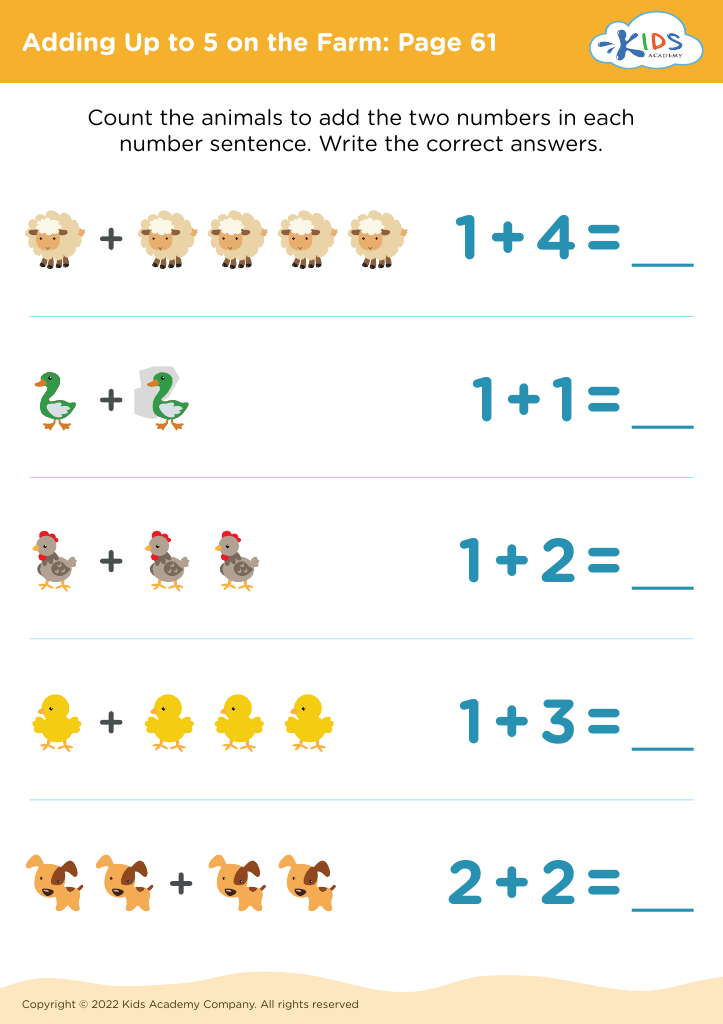
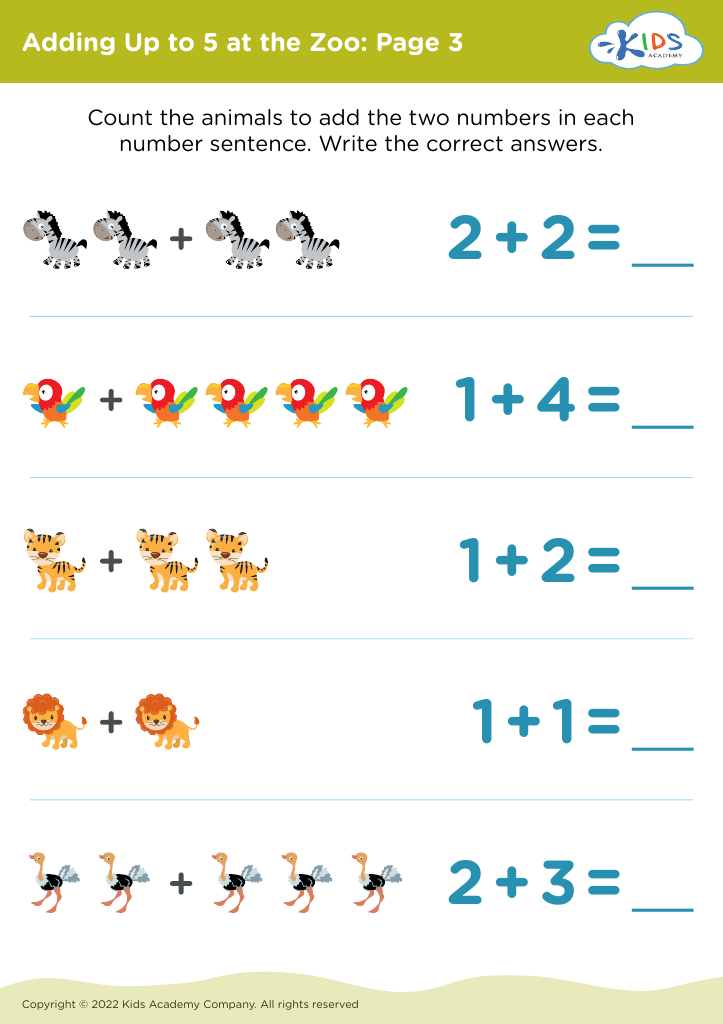
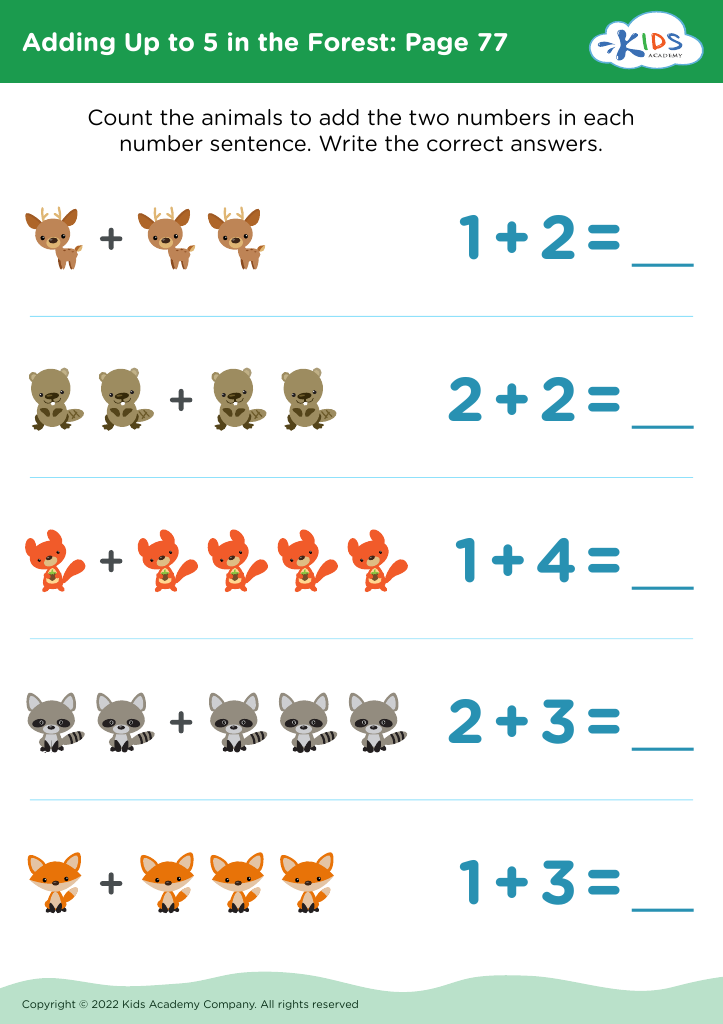
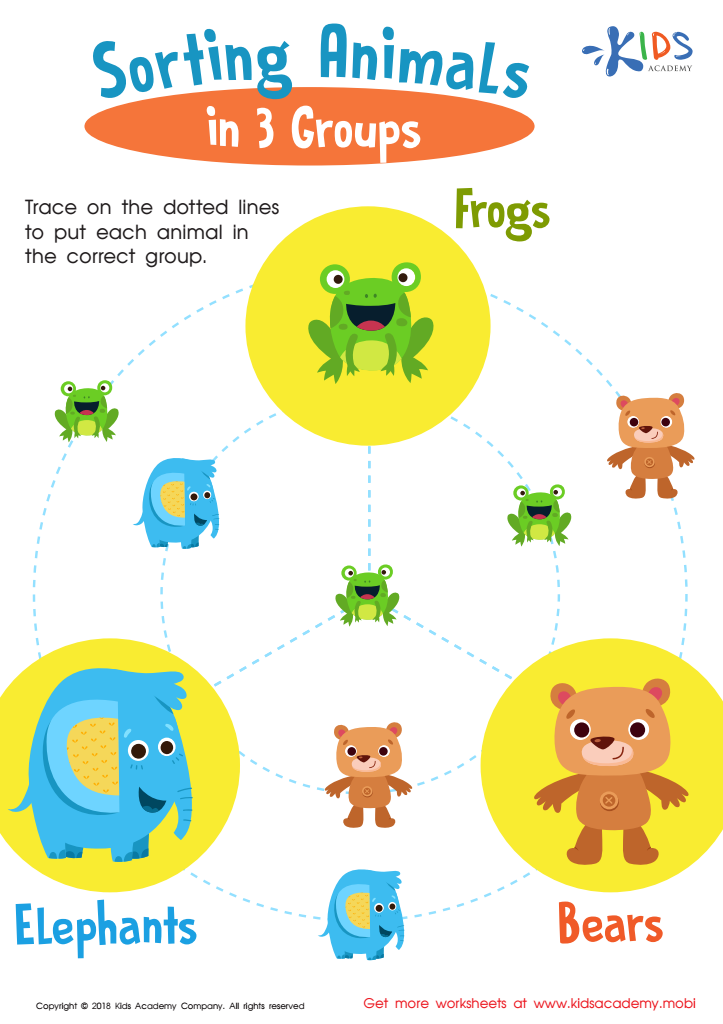
Sorting Animals in 3 Groups Worksheet
Let your kids practice and build skills for future Venn Diagrams with this PDF worksheet. They'll trace lines to match and group animals, and learn the differences and similarities of animals by categorizing with pictures and words. Plus, it's a great way to develop fine motor skills.
Sorting Animals in 3 Groups Worksheet
Worksheet
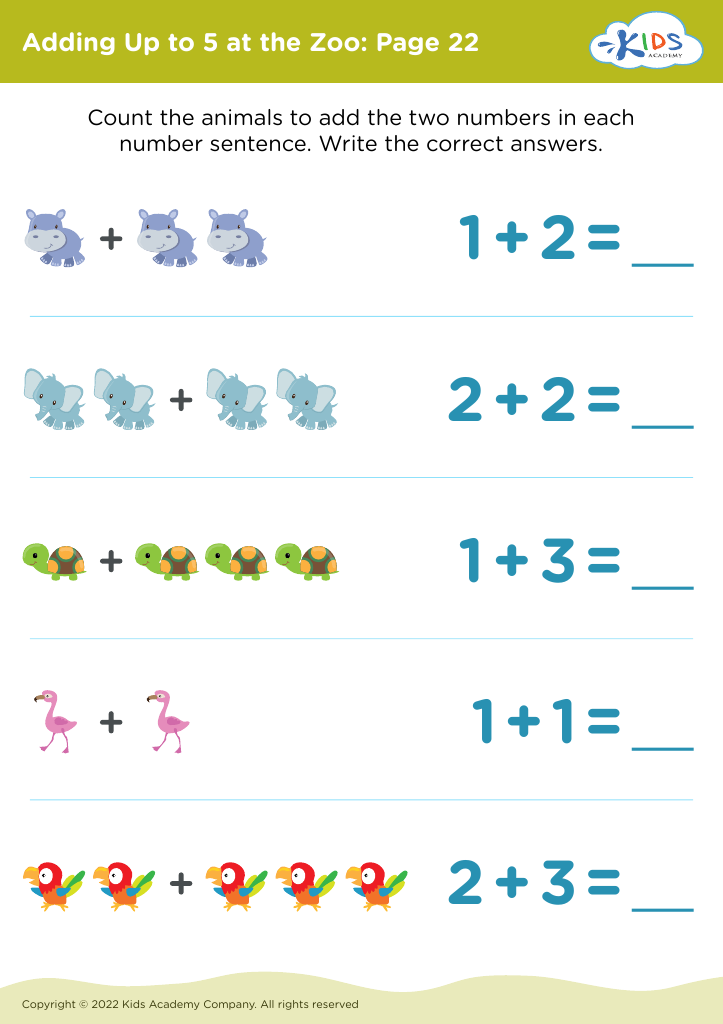
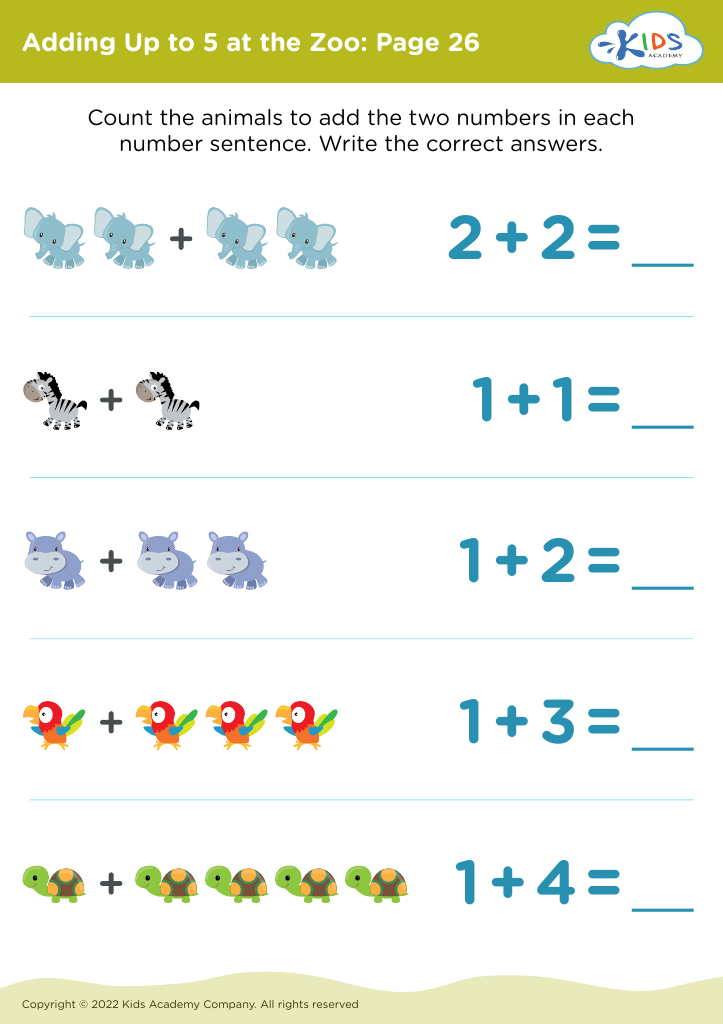
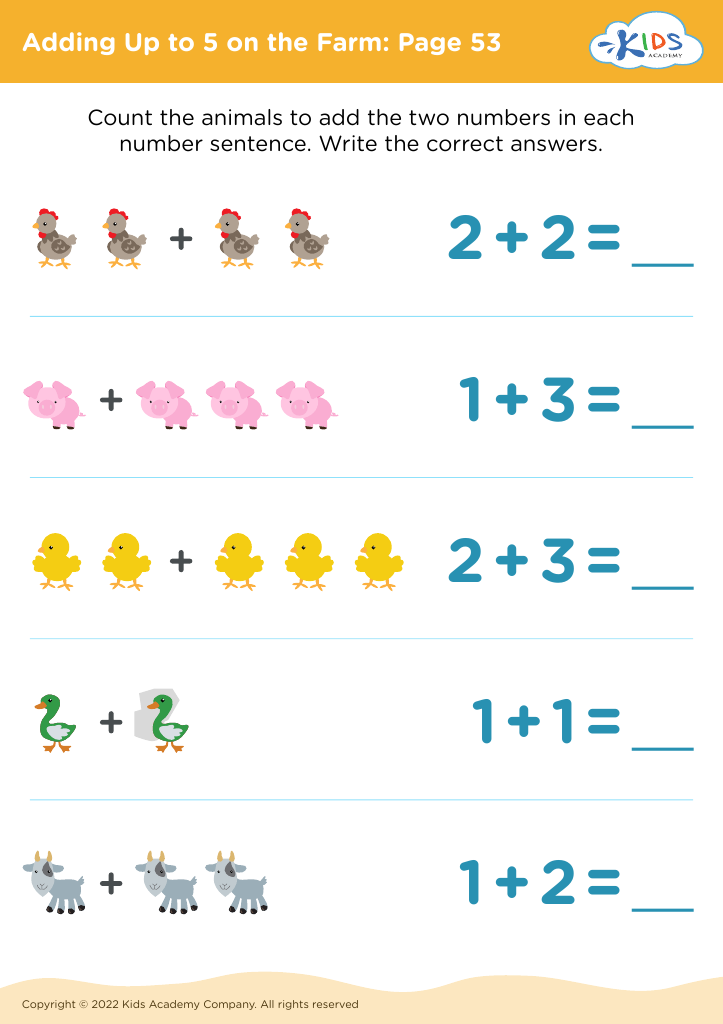
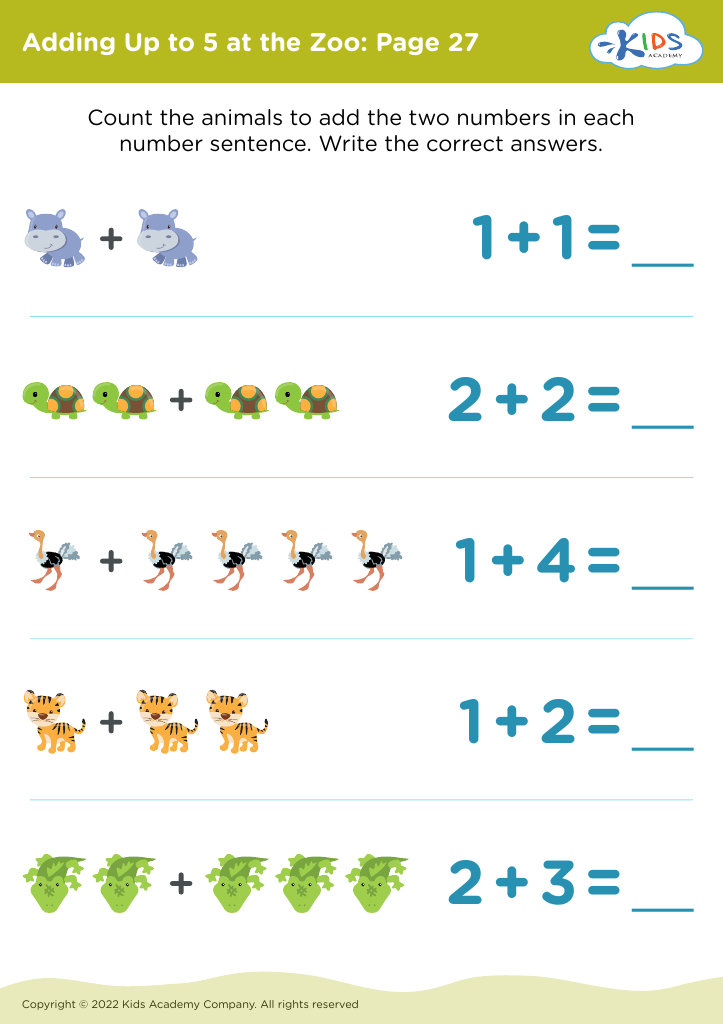
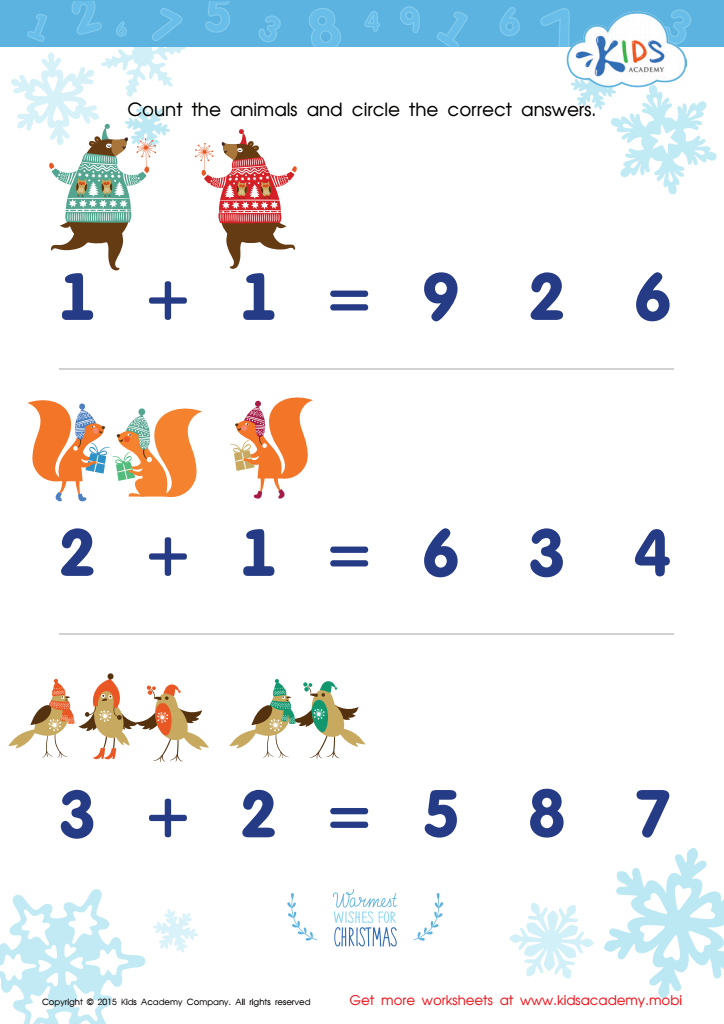
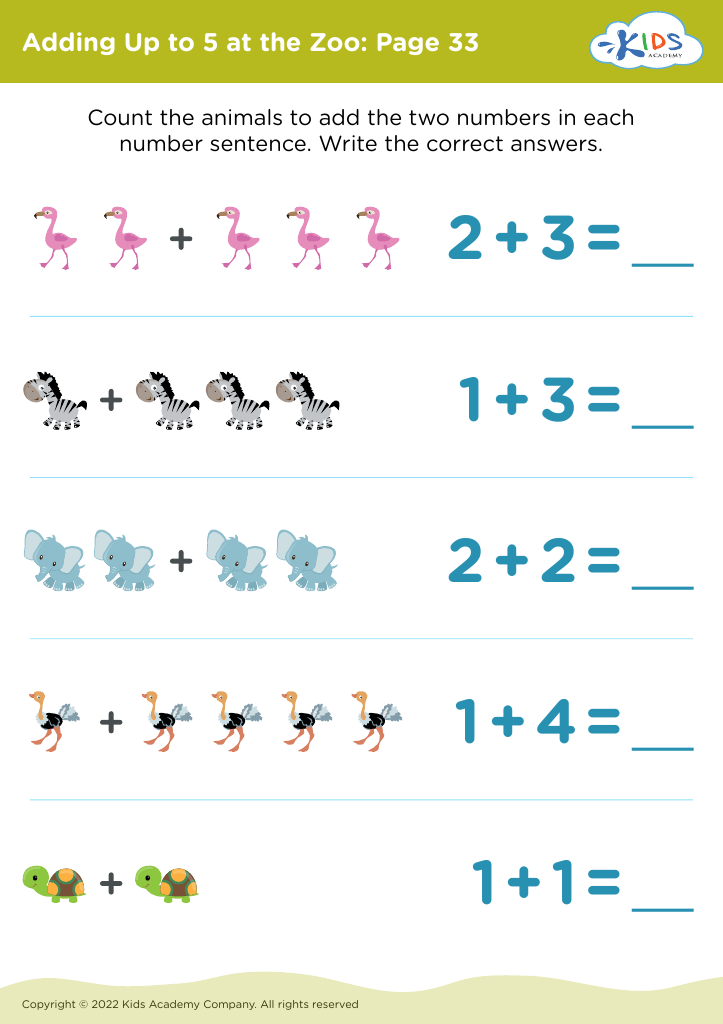
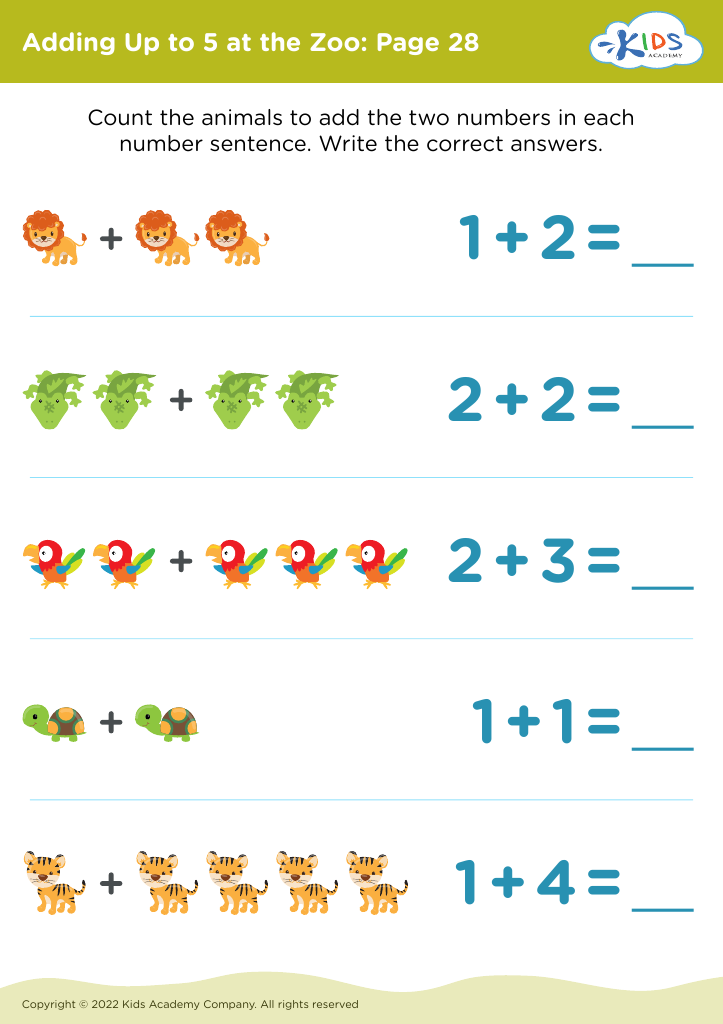
Count Funny Animals Worksheet
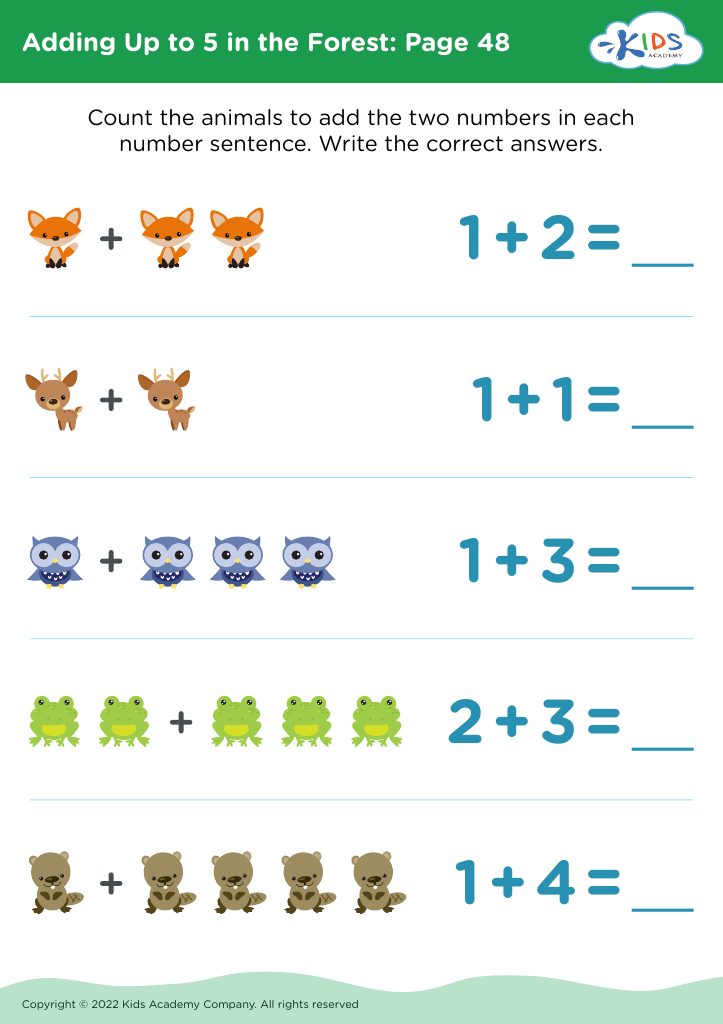
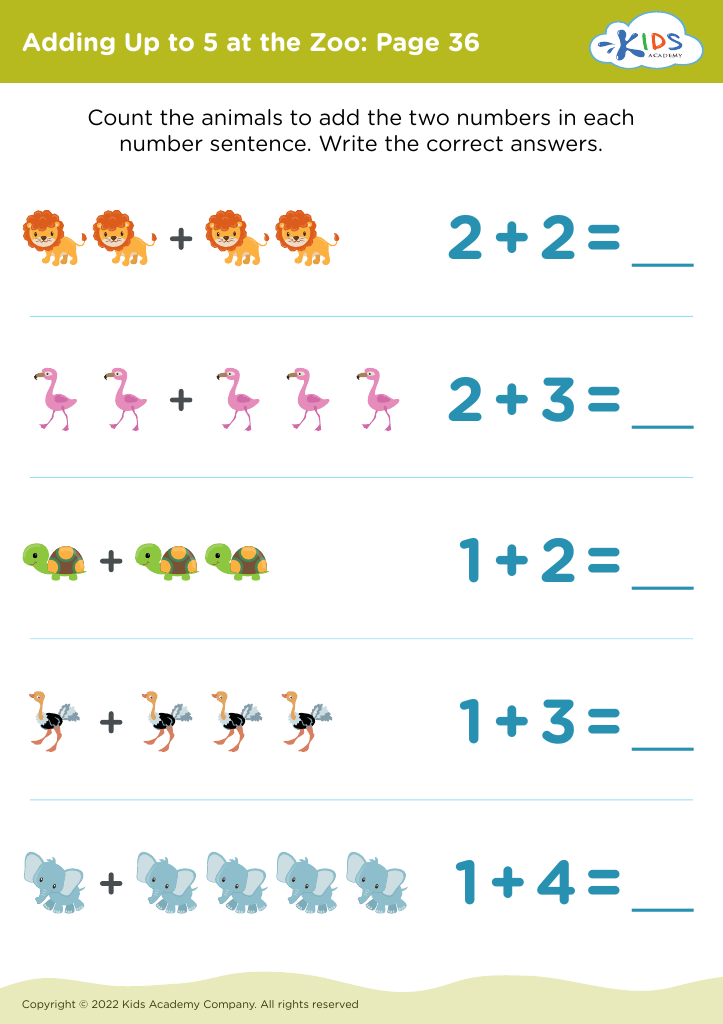
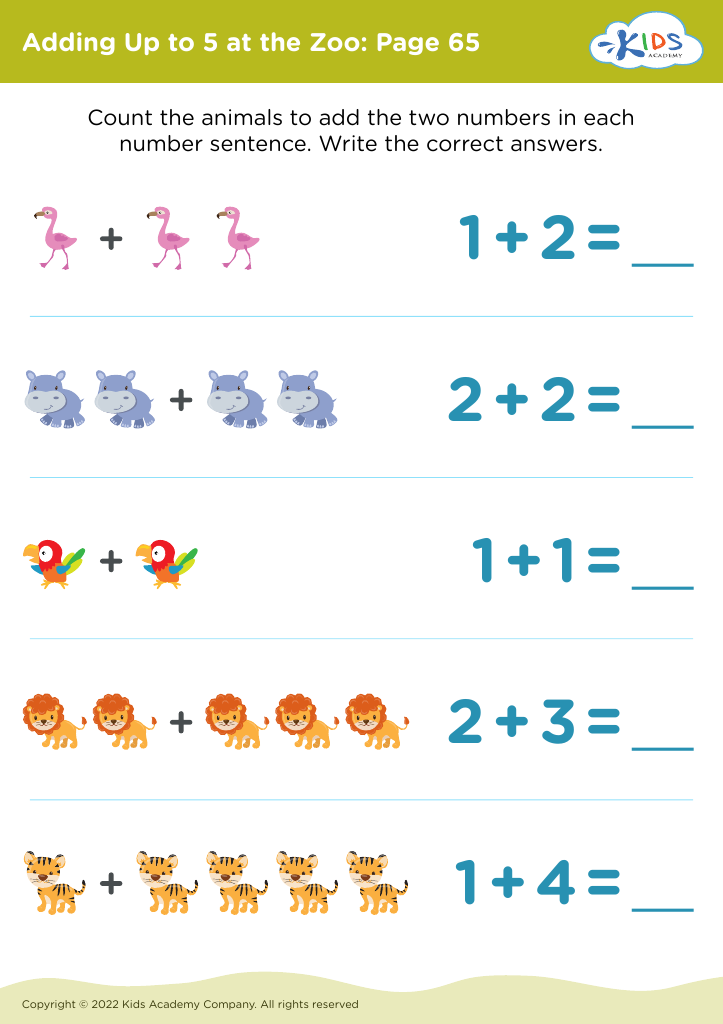
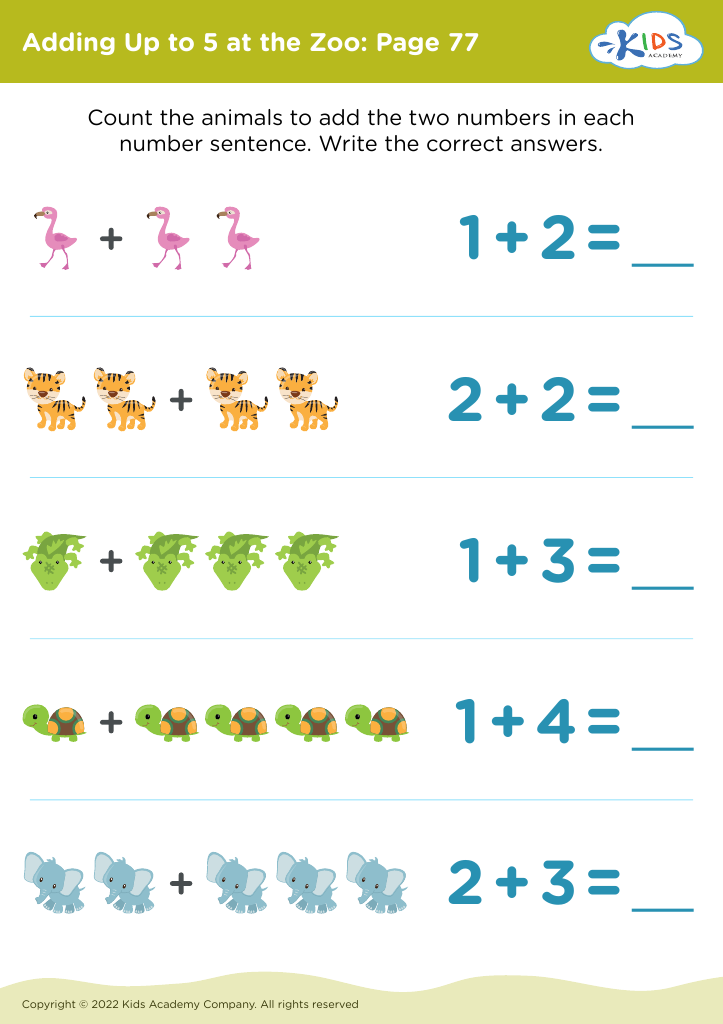
Get your kid in the Christmas spirit with this festive addition worksheet! They'll have fun counting the colorful animals and writing in the numbers. Our graphic layout makes it easy for them to visualize and solve the task. Print it out and help your kid keep their math skills sharp this winter with Kids Academy!
Count Funny Animals Worksheet
Worksheet
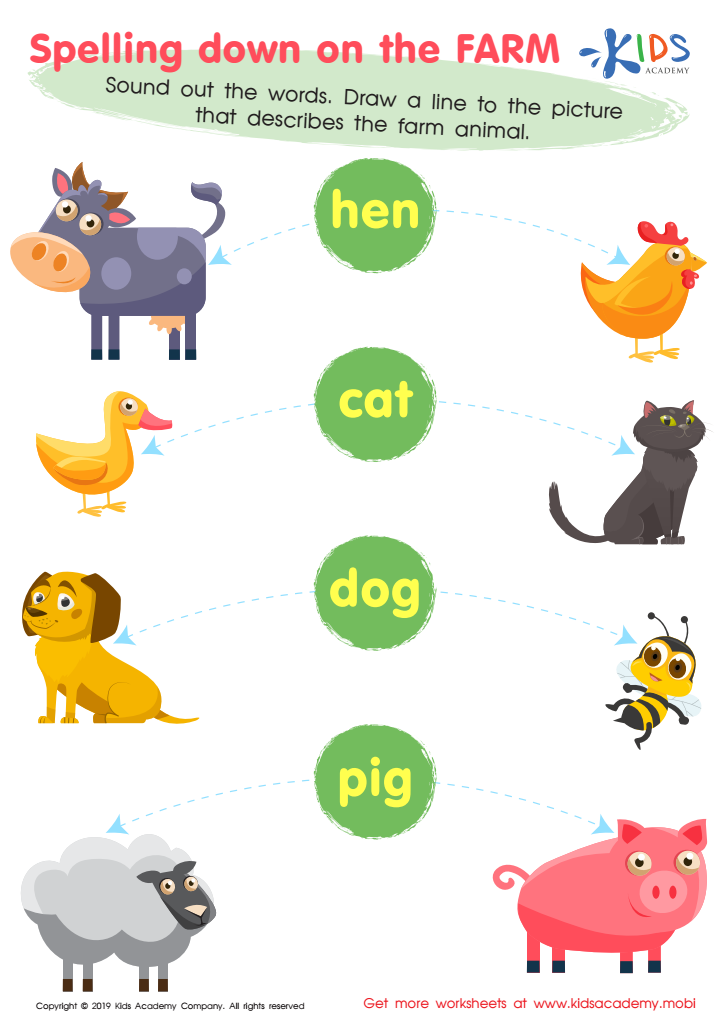
Spelling Down on the Farm Worksheet
Want to help your kids nail their spelling? Introduce them to this farm animal worksheet! Get them to look at the animals in the tracing sheet, name them and then sound out the words. Have them draw a line to the picture that describes it. You'll be surprised at how quickly their skills improve.
Spelling Down on the Farm Worksheet
Worksheet
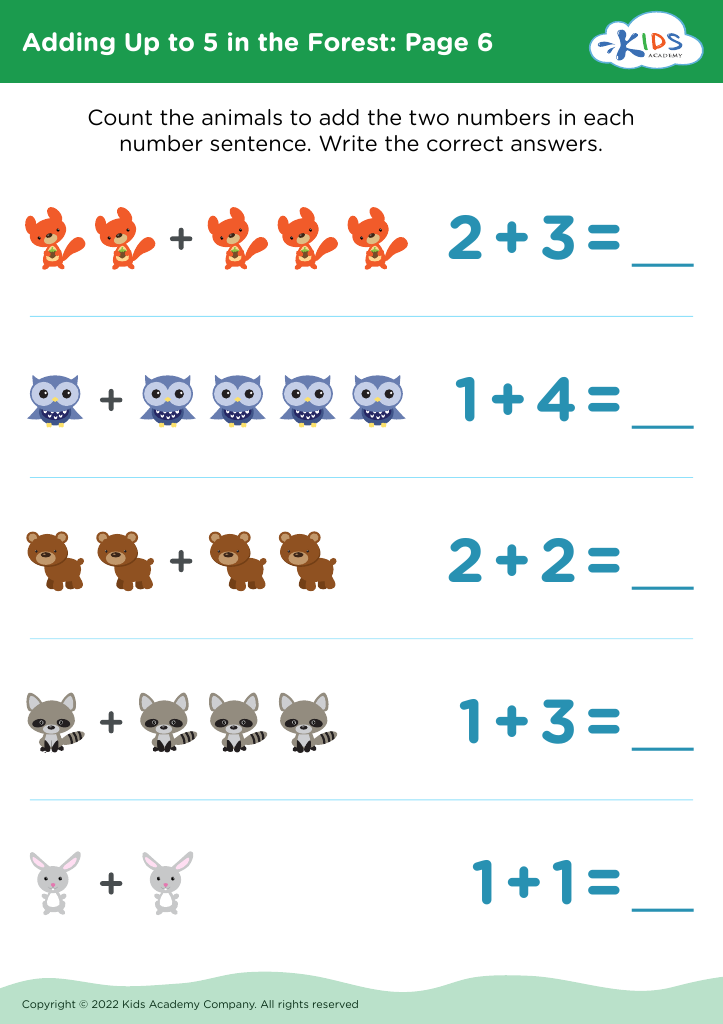
Join Kids Academy for Free
Who is primarily going to use this learning content?






Animal recognition is a vital aspect of early childhood education, particularly for children ages 4-9. Parents and teachers should care about facilitating this learning for several reasons. First, animal recognition fosters cognitive development. Children develop critical thinking and observational skills as they learn to identify different animals, including recognizing their physical traits, habitats, and behaviors.
Second, it contributes to emotional intelligence. As children recognize animals and understand their needs and behaviors, they cultivate empathy and compassion. A child who learns about pets, wildlife, or farm animals often develops a greater appreciation for the living world around them.
Additionally, animal recognition can enhance vocabulary and language development. Engaging with animal names, characteristics, and sounds enriches a child's spoken and written language skills, providing a strong foundation for communication.
Moreover, teaching kids about animals often ignites a lifelong interest in biology and environmental science. Understanding ecosystems and animals contributes to a sense of responsibility towards wildlife conservation, promoting awareness of ecological issues.
In conclusion, fostering animal recognition among young children not only supports various developmental domains but also plants the seeds for a generation that values and preserves the diverse creatures that share our planet.








