Check out this FREE "Basic Addition Skills" Trial Lesson for age 4-9!

H

Favorites
With answer key
Interactive
  • 4-9
  • Basic Addition Skills
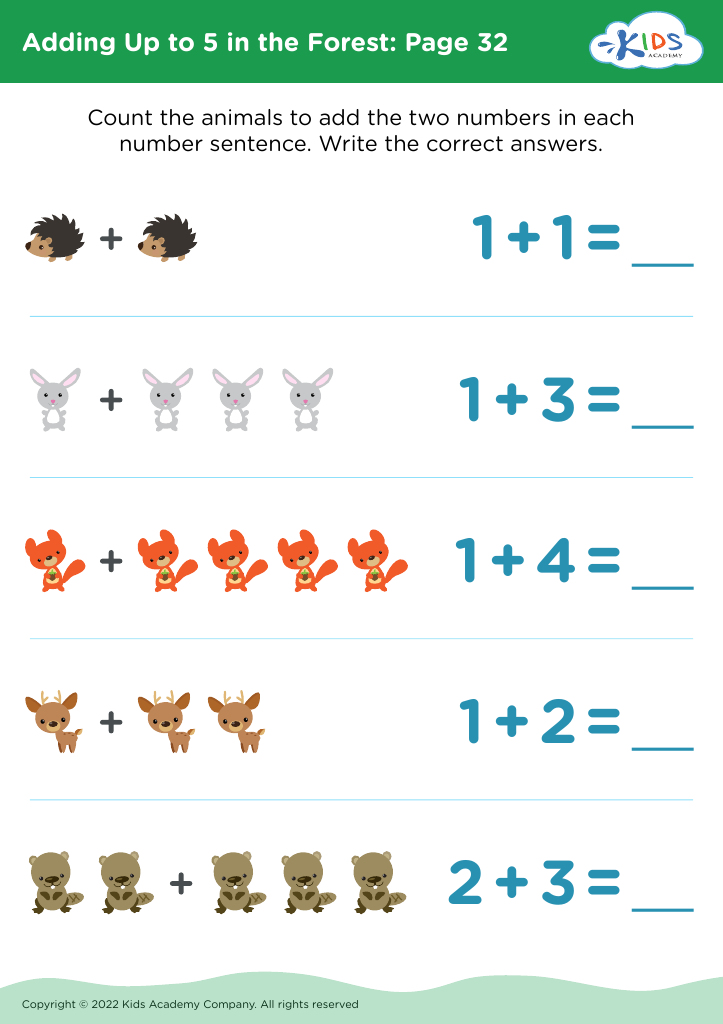
Adding Up to 5 in the Forest: Page 32
Worksheet
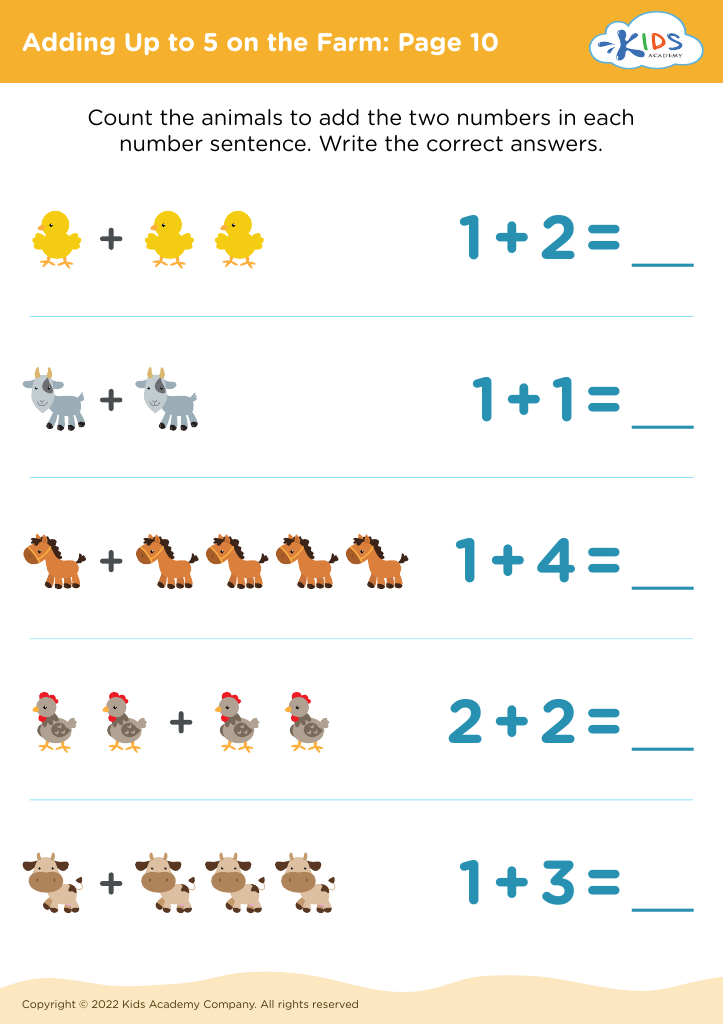
Adding Up to 5 on the Farm: Page 10
Worksheet
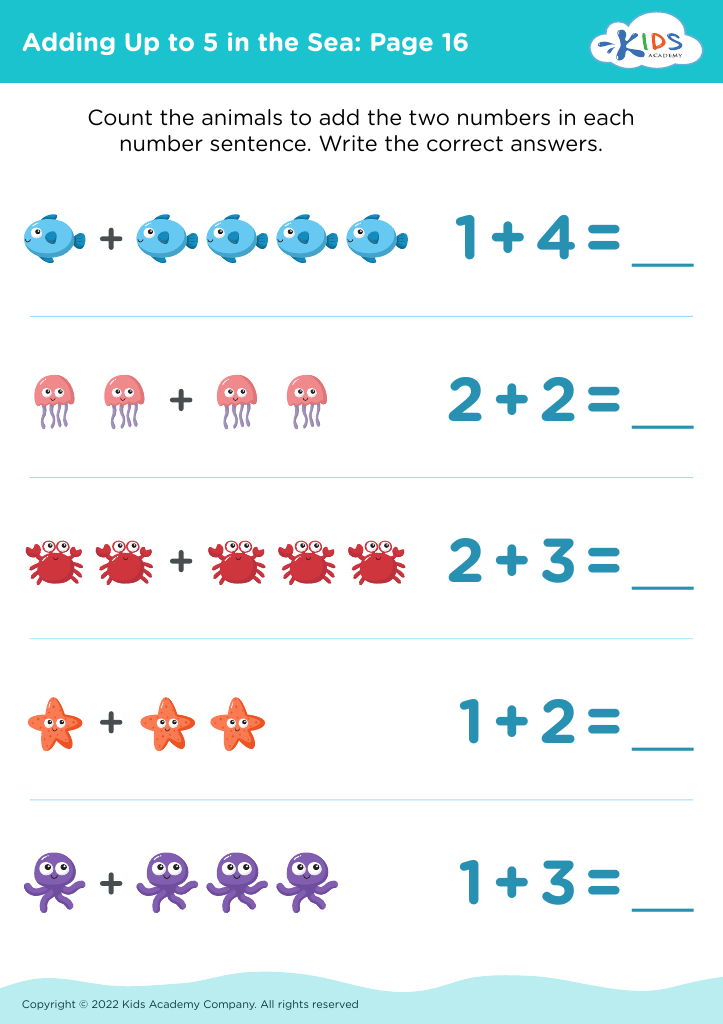
Adding Up to 5 in the Sea: Page 16
Worksheet
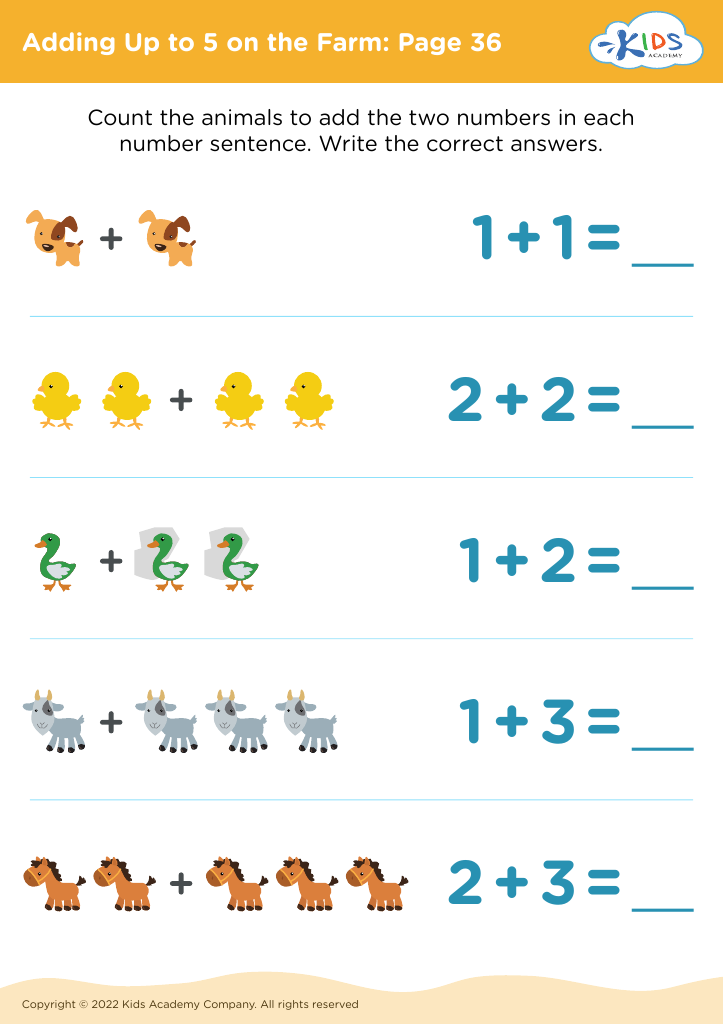
Adding Up to 5 on the Farm: Page 36
Worksheet
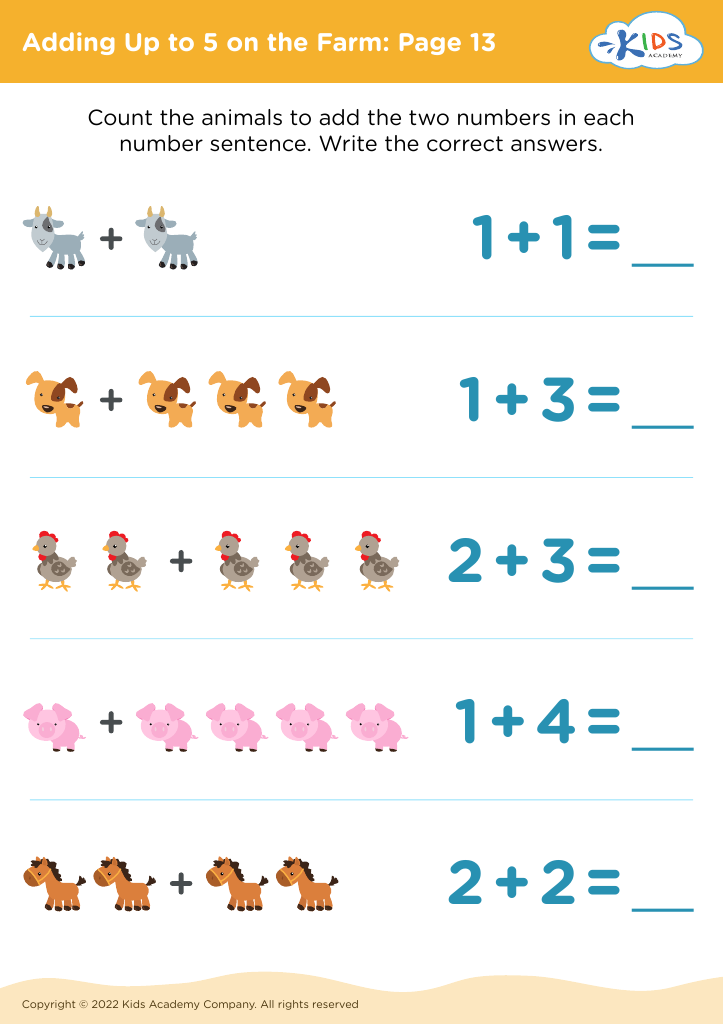
Adding Up to 5 on the Farm: Page 13
Worksheet
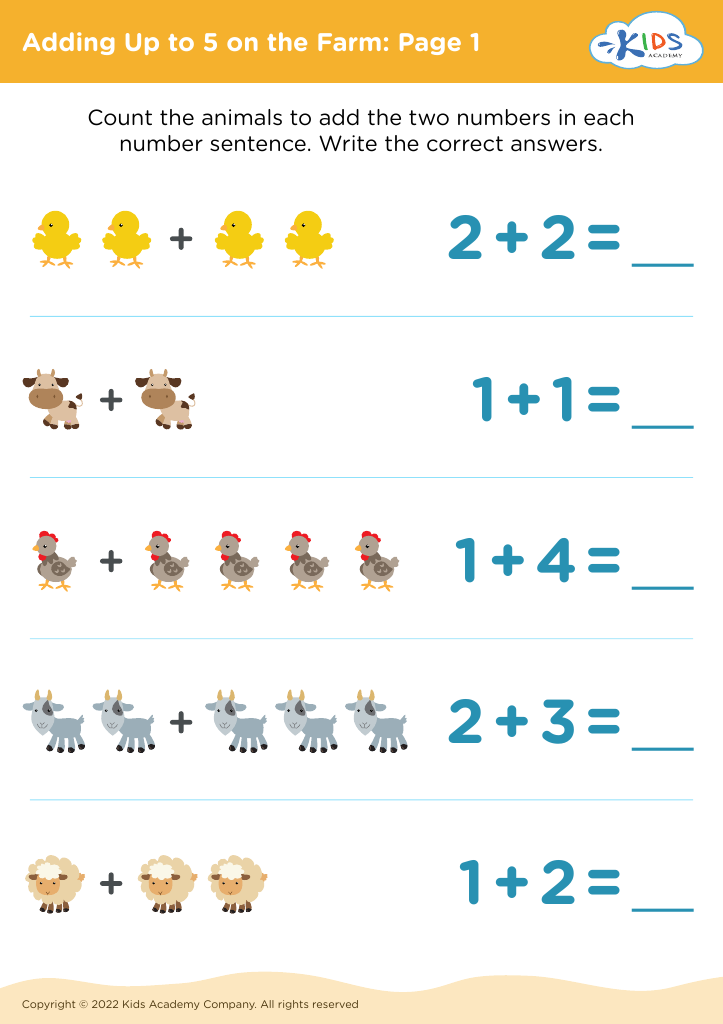
Adding Up to 5 on the Farm: Page 1
Worksheet
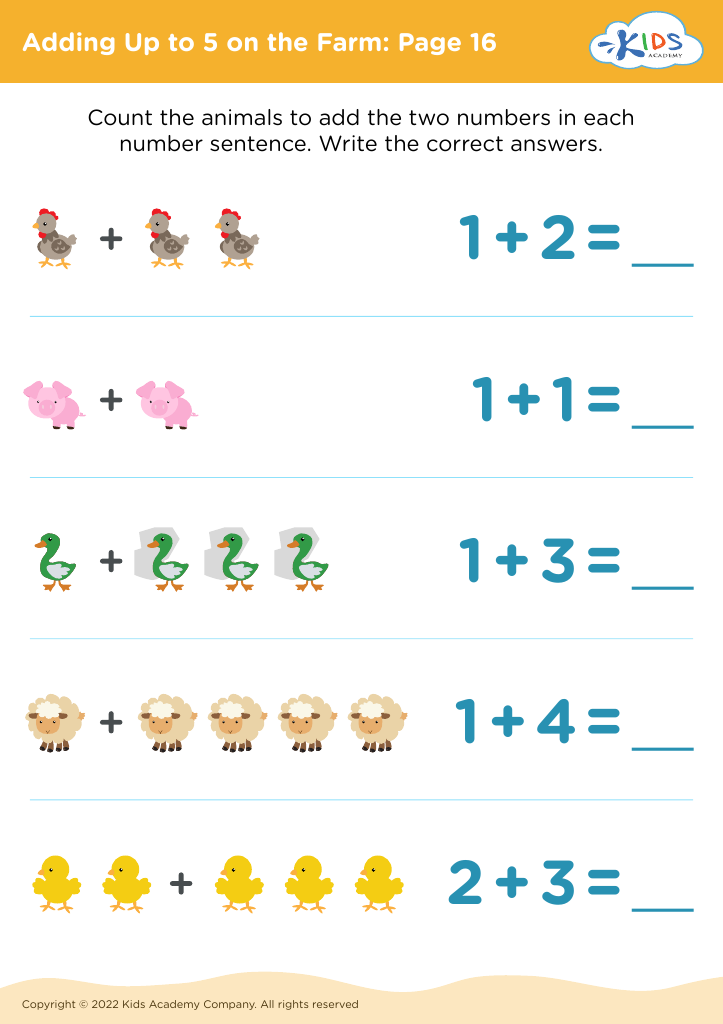
Adding Up to 5 on the Farm: Page 16
Worksheet
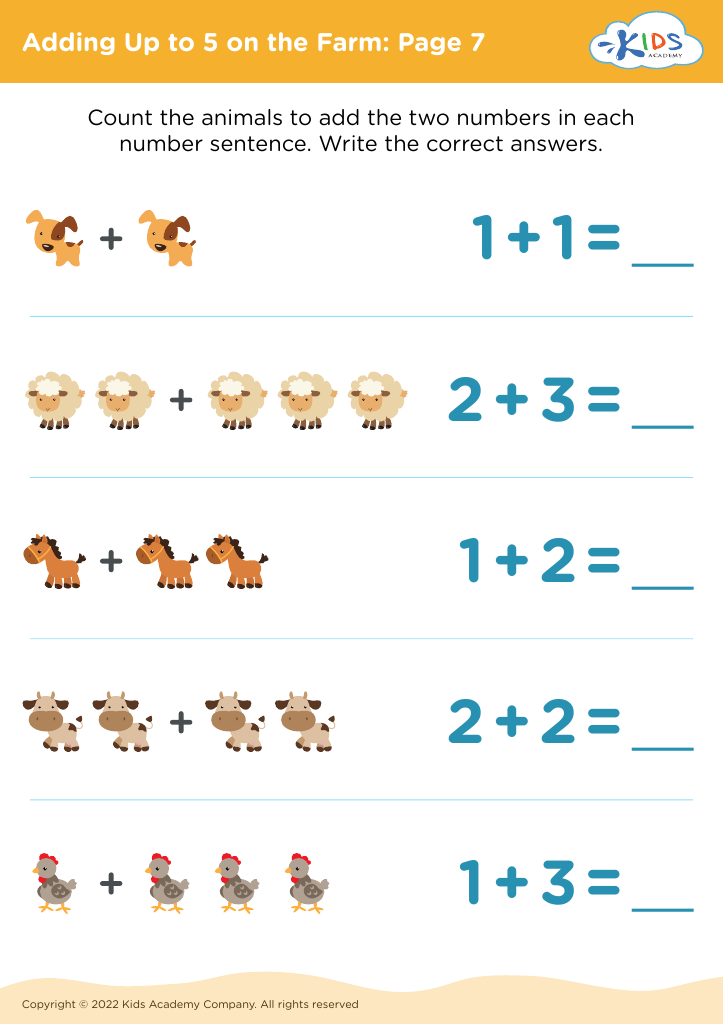
Adding Up to 5 on the Farm: Page 7
Worksheet
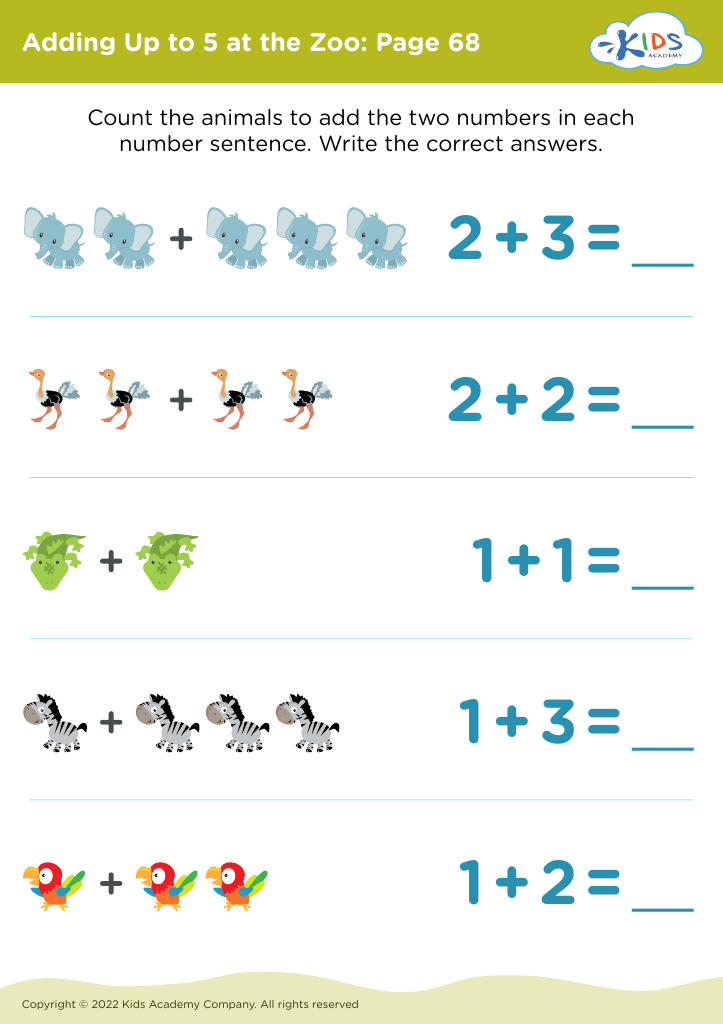
Adding Up to 5 at the Zoo: Page 68
Worksheet
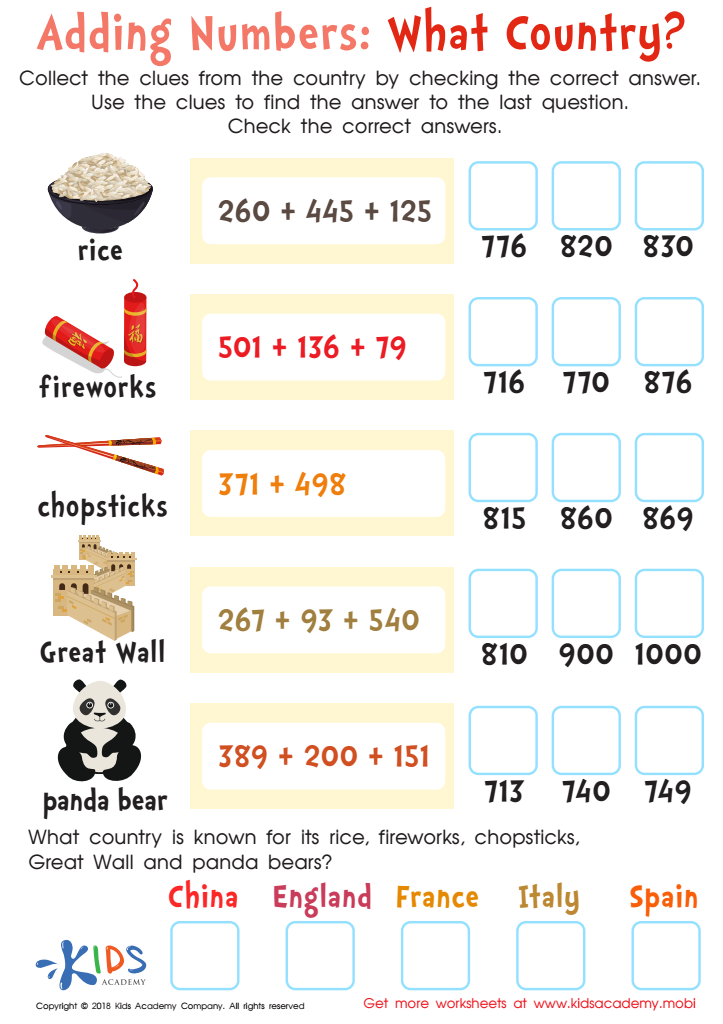
Adding Numbers: What Country Worksheet

Adding Numbers: What Country Worksheet

Students can use this worksheet to learn more about different countries. Have them collect clues from the worksheet to answer the last question. Help them check the correct answer, and they'll gain knowledge about each country's food, animals, celebrations, and landmarks.
Adding Numbers: What Country Worksheet
Worksheet
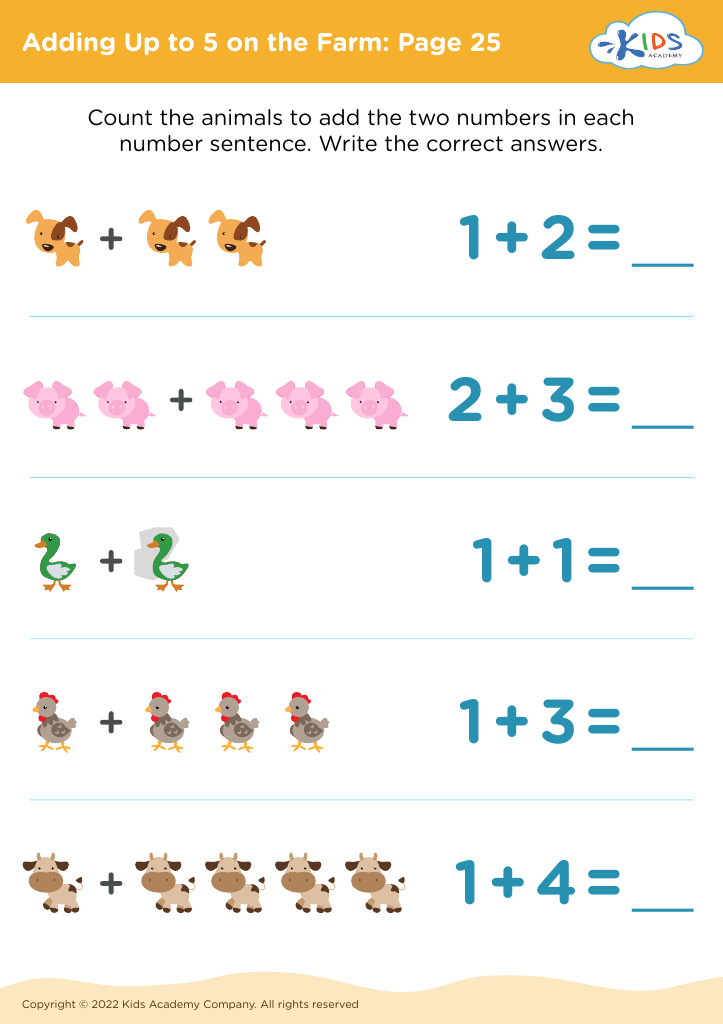
Adding Up to 5 on the Farm: Page 25
Worksheet
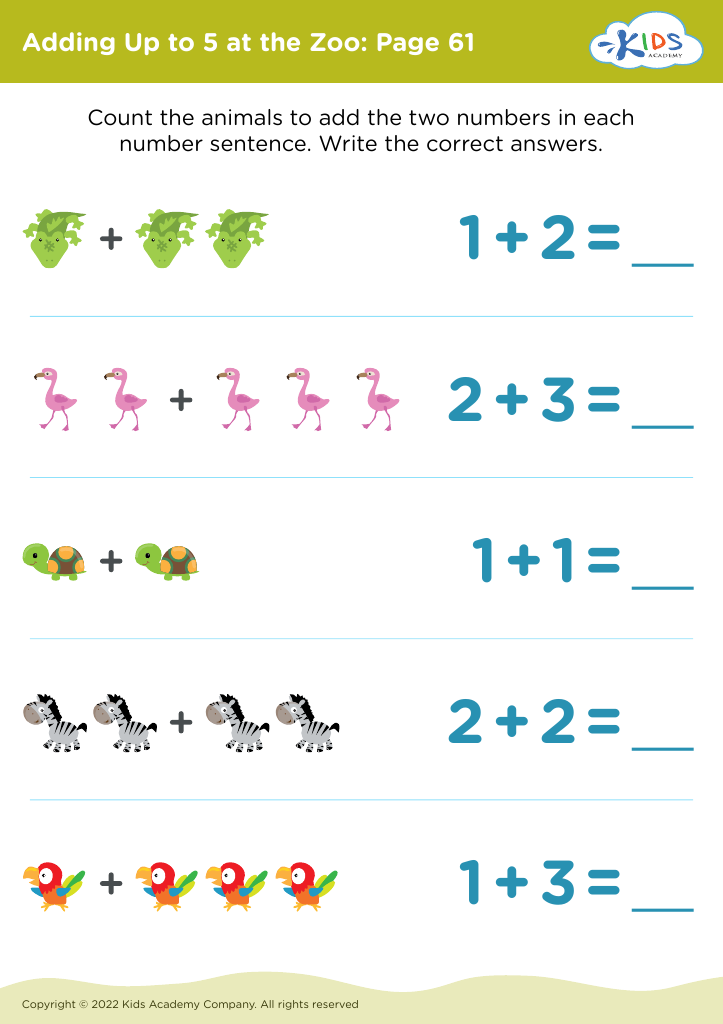
Adding Up to 5 at the Zoo: Page 61
Worksheet
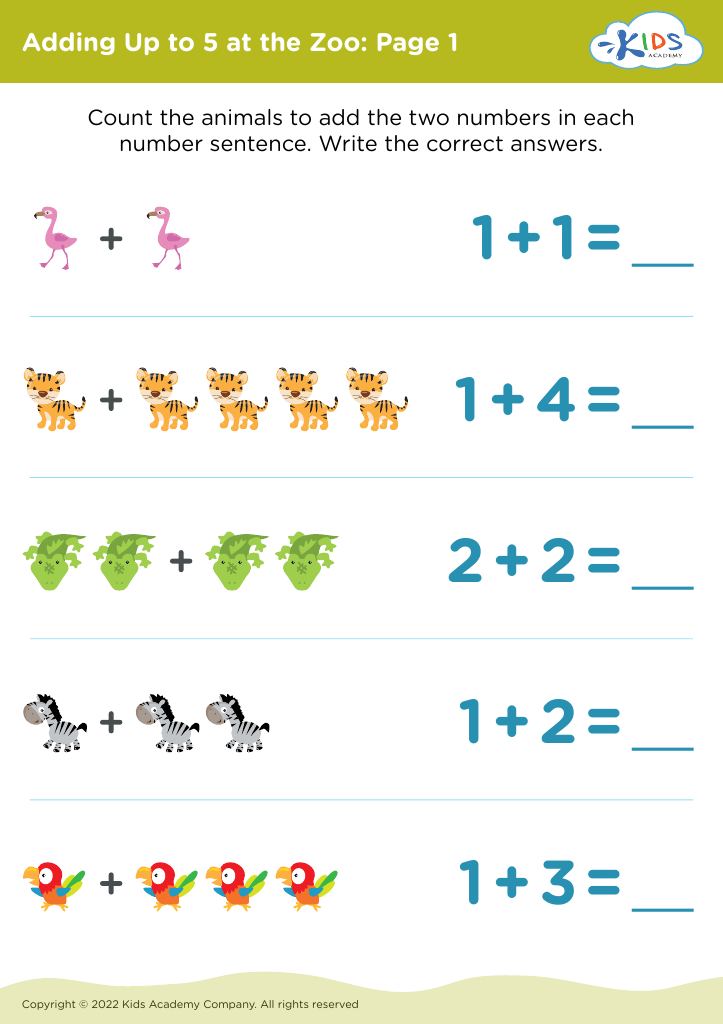
Adding Up to 5 at the Zoo: Page 1

Adding Up to 5 at the Zoo: Page 1

Adding Up to 5 at the Zoo: Page 1
Worksheet
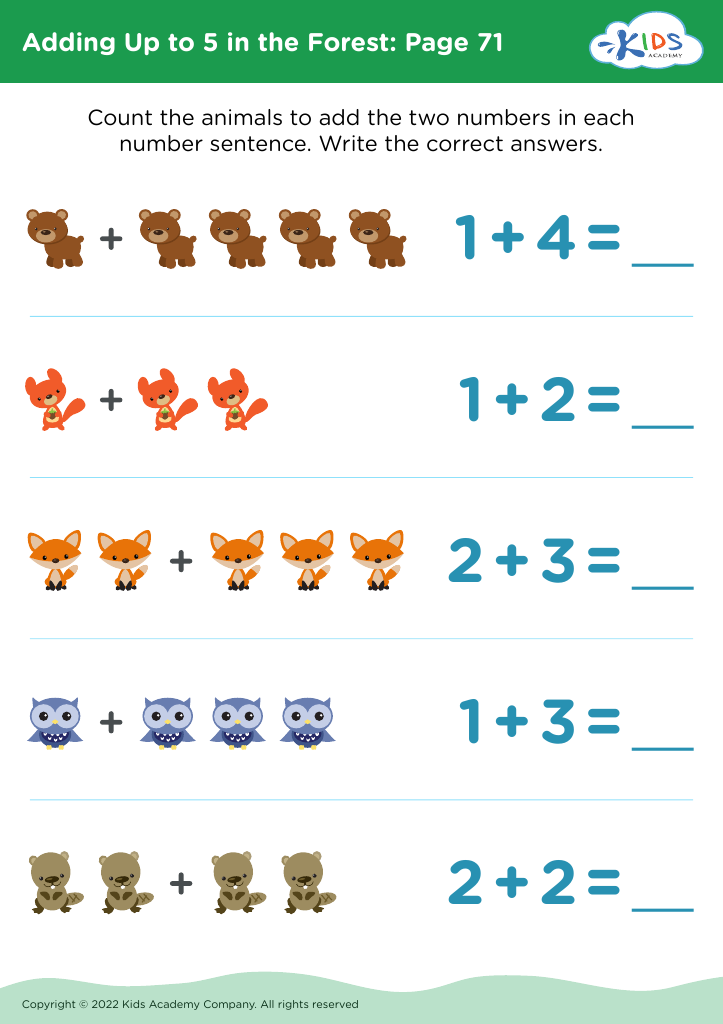
Adding Up to 5 in the Forest: Page 71
Worksheet
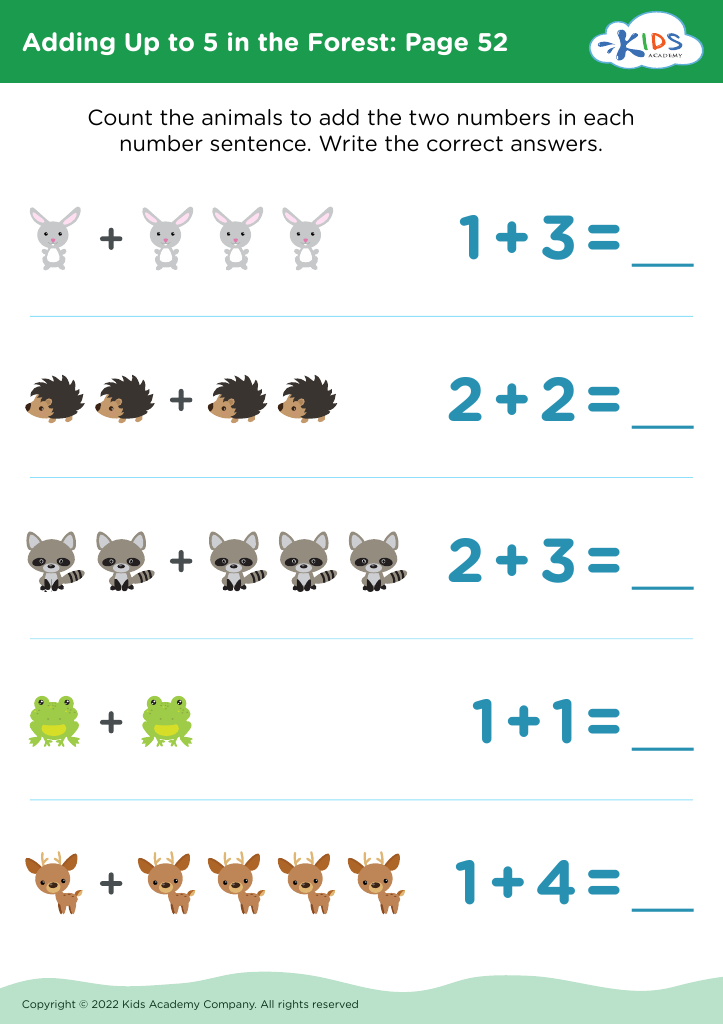
Adding Up to 5 in the Forest: Page 52
Worksheet
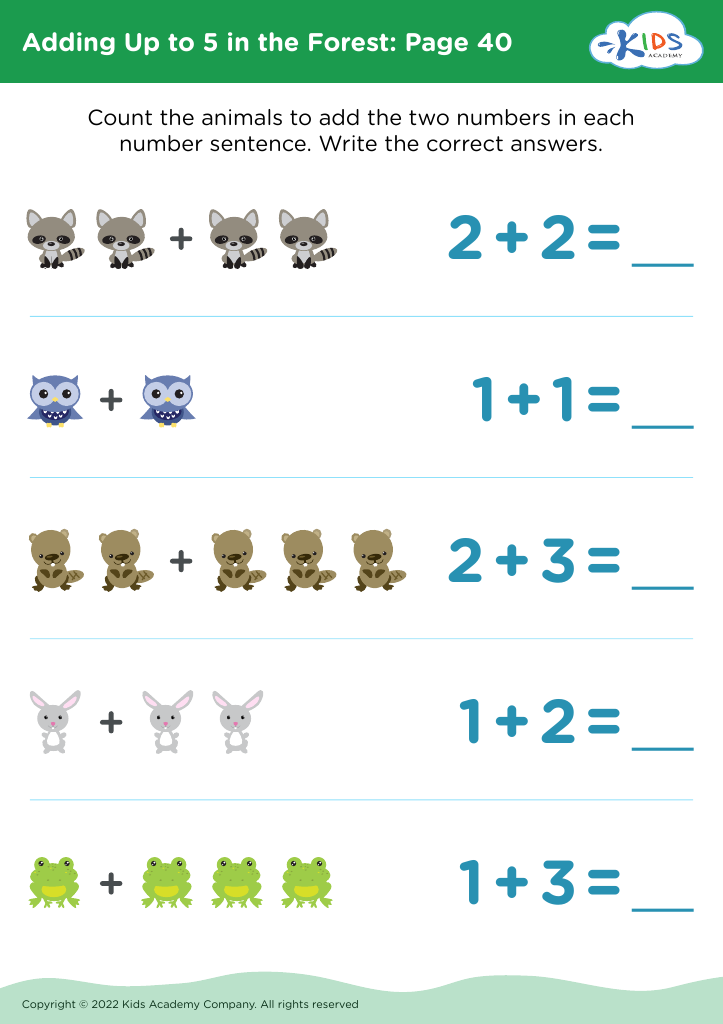
Adding Up to 5 in the Forest: Page 40
Worksheet
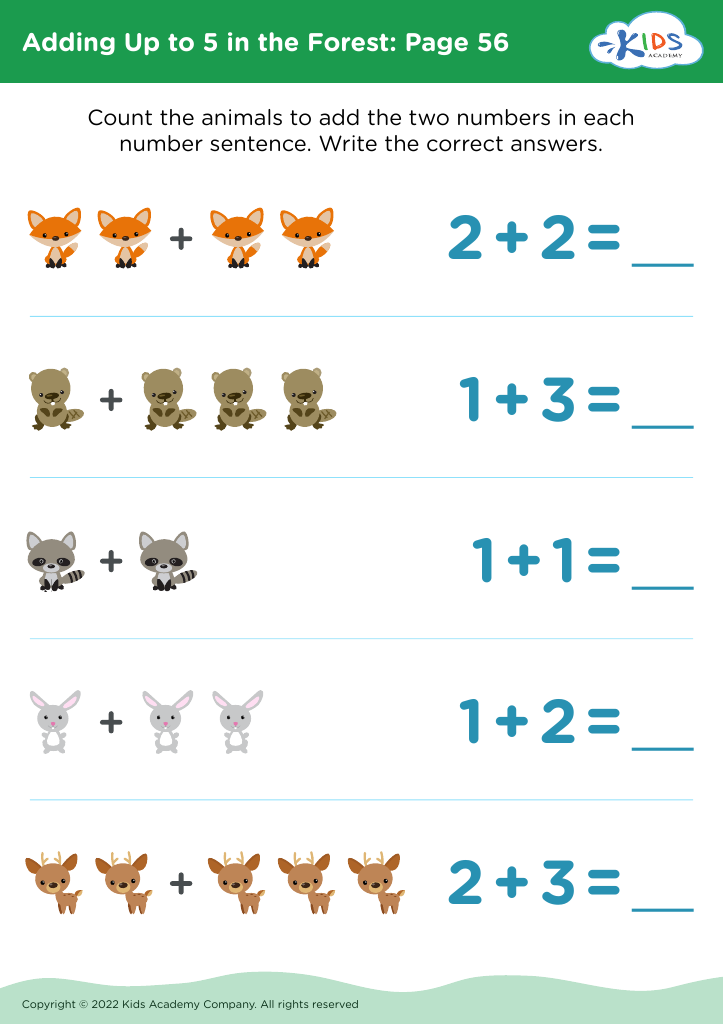
Adding Up to 5 in the Forest: Page 56
Worksheet
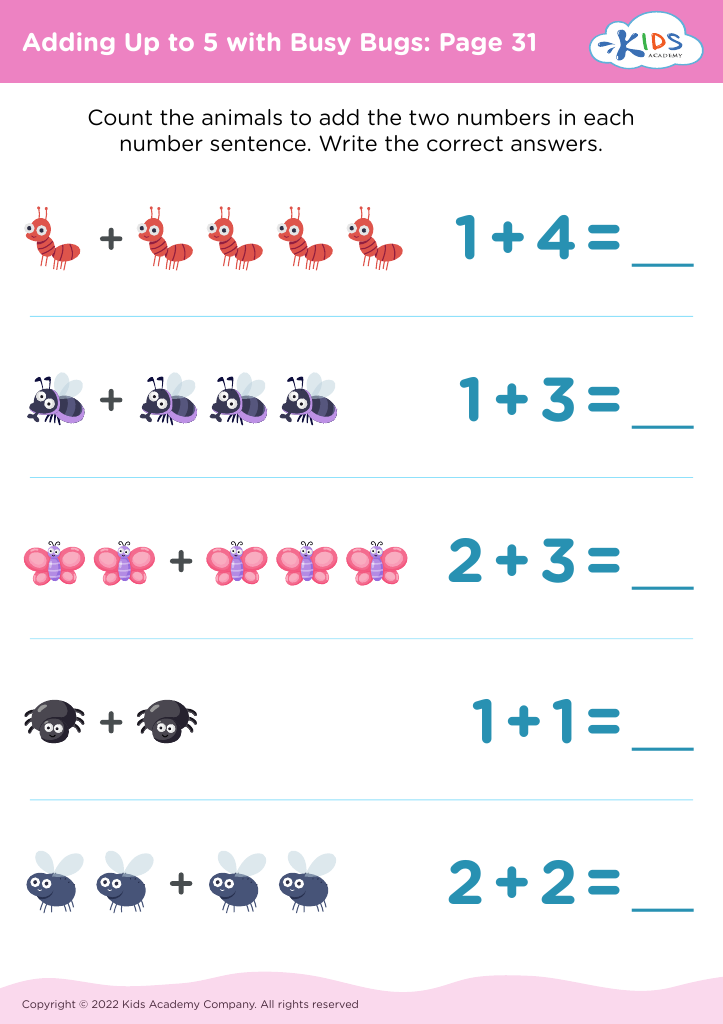
Adding Up to 5 with Busy Bugs: Page 31
Worksheet
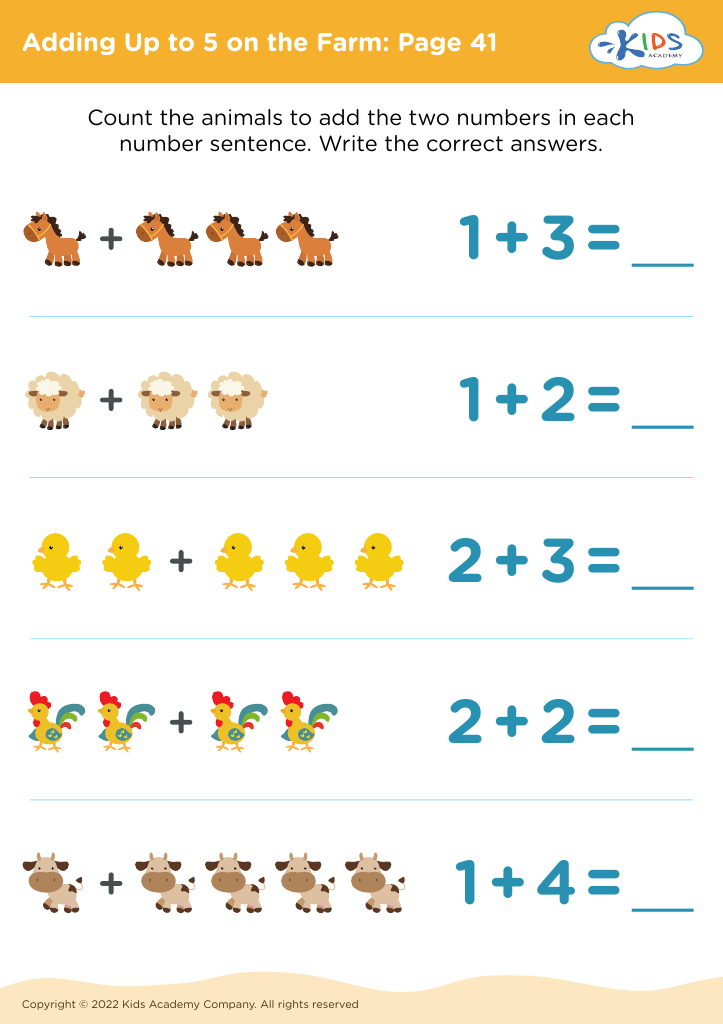
Adding Up to 5 on the Farm: Page 41
Worksheet
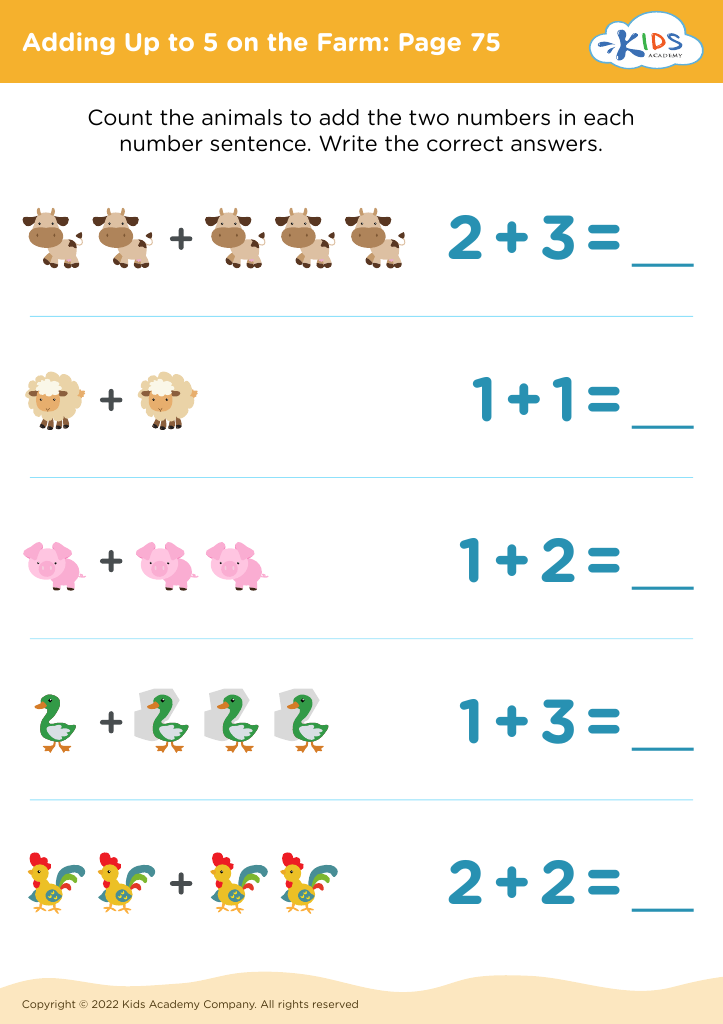
Adding Up to 5 on the Farm: Page 75
Worksheet
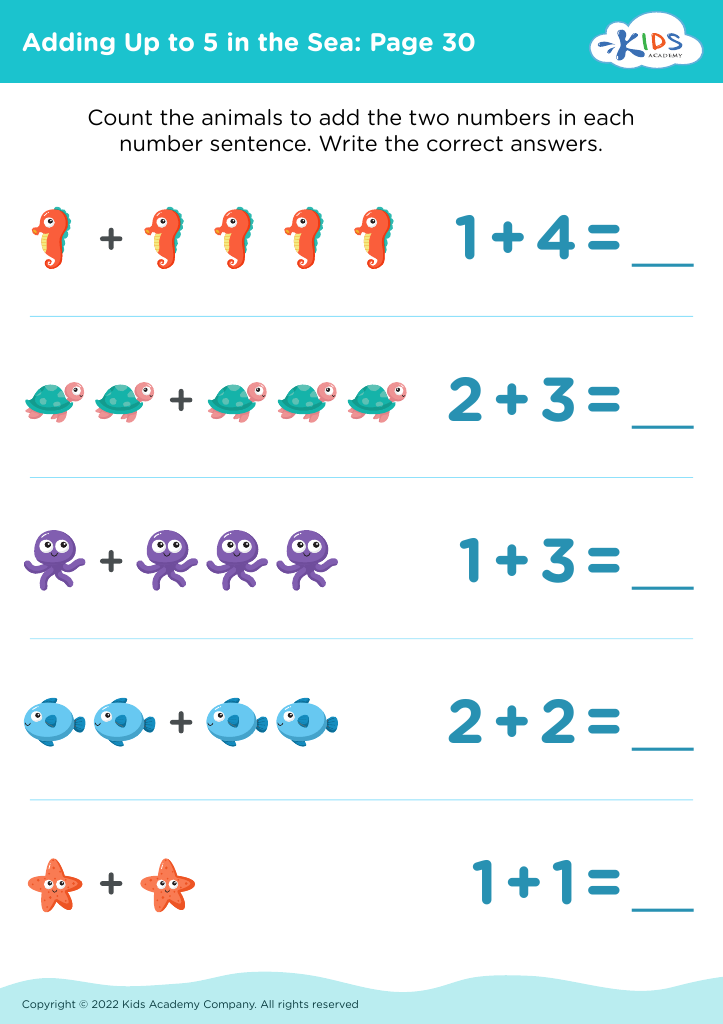
Adding Up to 5 in the Sea: Page 30
Worksheet
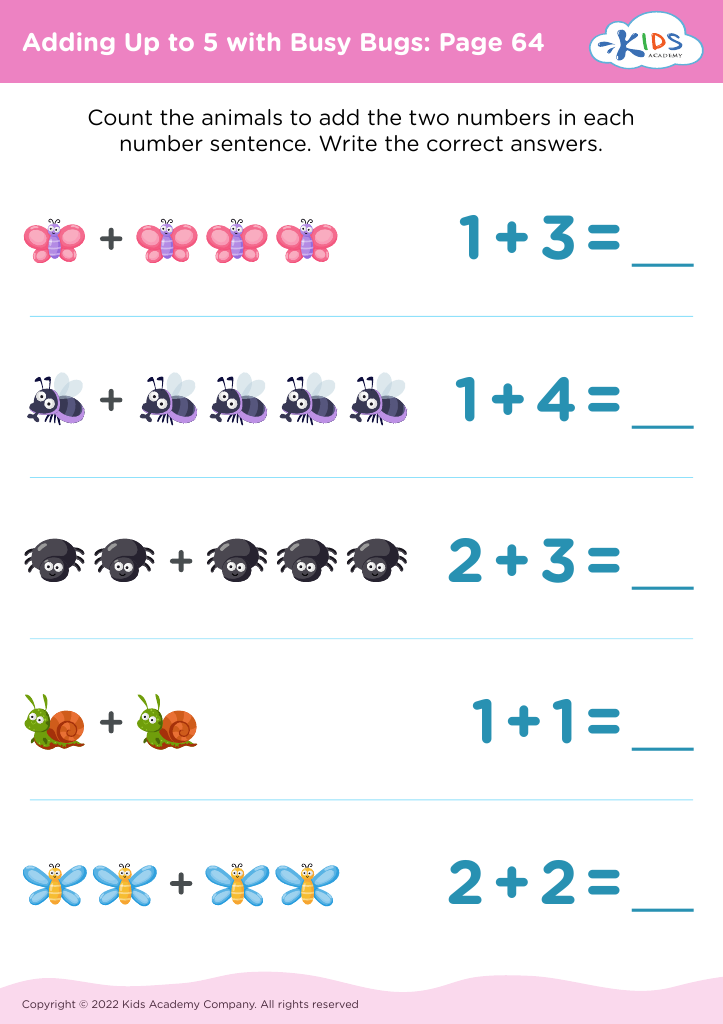
Adding Up to 5 with Busy Bugs: Page 64
Worksheet
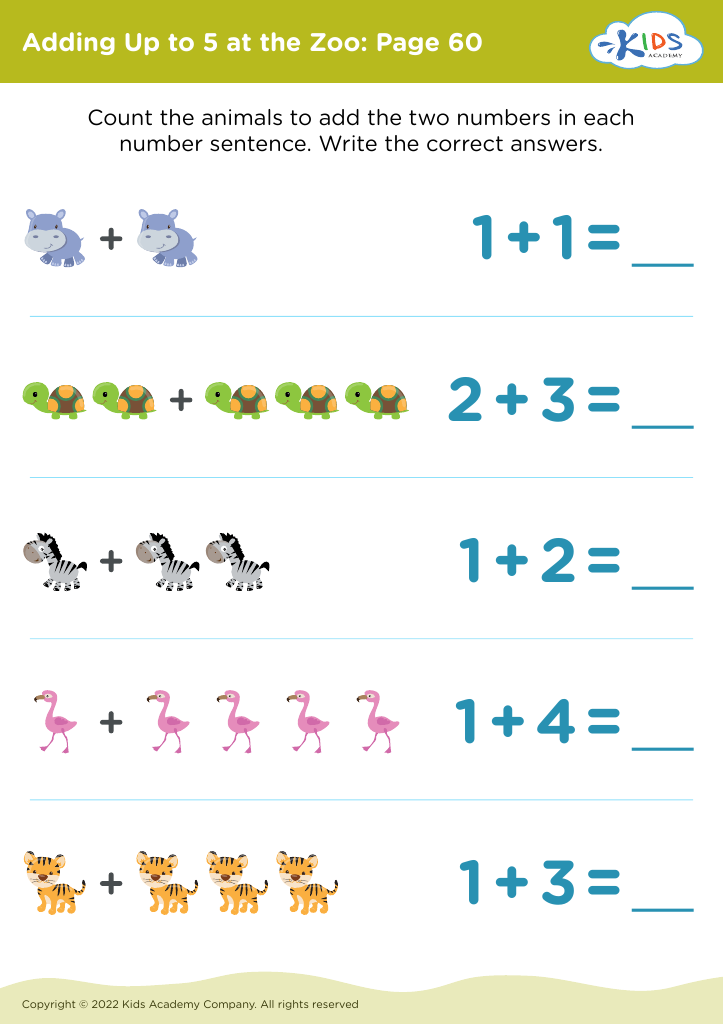
Adding Up to 5 at the Zoo: Page 60
Worksheet
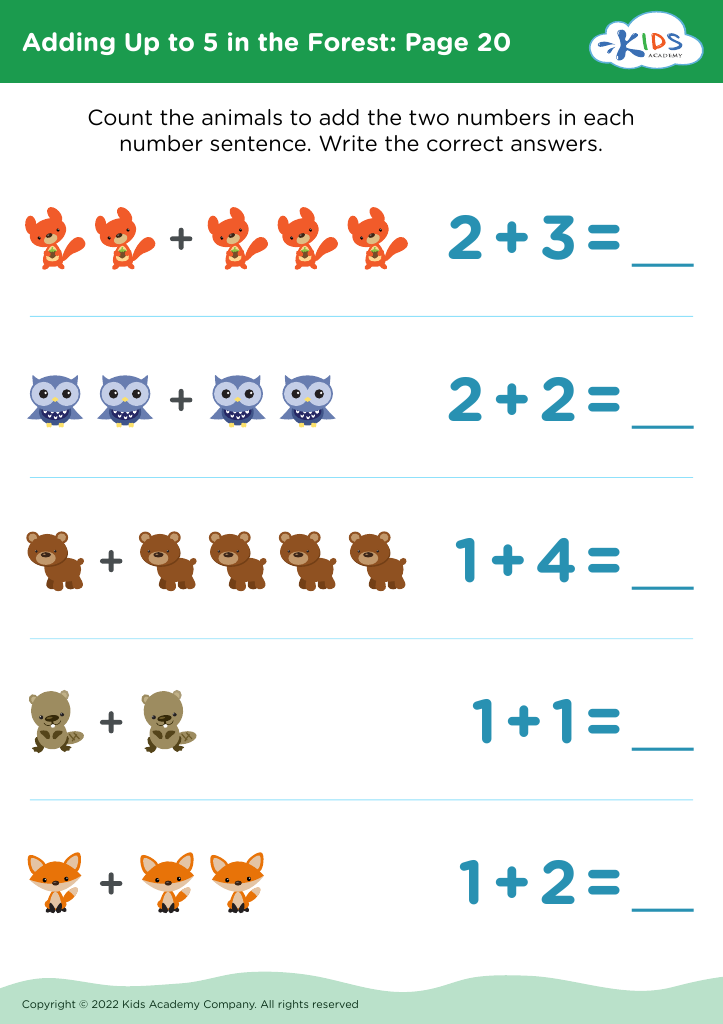
Adding Up to 5 in the Forest: Page 20
Worksheet


Basic addition skills are foundational for children's mathematical understanding and overall academic success. For children ages 4-9, the ability to perform simple addition not only enhances their numeracy but also fosters critical thinking and problem-solving capabilities. Early math skills are linked to a child's ability to grasp more advanced concepts later, making it essential for parents and teachers to prioritize these skills.

Addition serves as an introduction to mathematical concepts, including number relationships, patterns, and strategies for approaching problems. Mastery of basic addition enables children to build confidence in their abilities, promoting a positive attitude toward math, which is crucial during these formative years. Without a solid foundation, children may struggle in more complex areas of math, leading to difficulties in subjects and reducing overall academic performance.

Moreover, adding these essential skills supports everyday activities, from counting snacks to understanding time and money, providing real-world applications that encourage engagement. Supporting young learners in basic addition not only prepares them for future educational challenges but also equips them with practical skills for daily interactions. Concerned parents and teachers play a critical role in nurturing these important abilities, underscoring their long-term benefits for children’s academic journeys and life skills.