Basic Addition Worksheets for Ages 4-9 - Page 4
79 filtered results
-
From - To
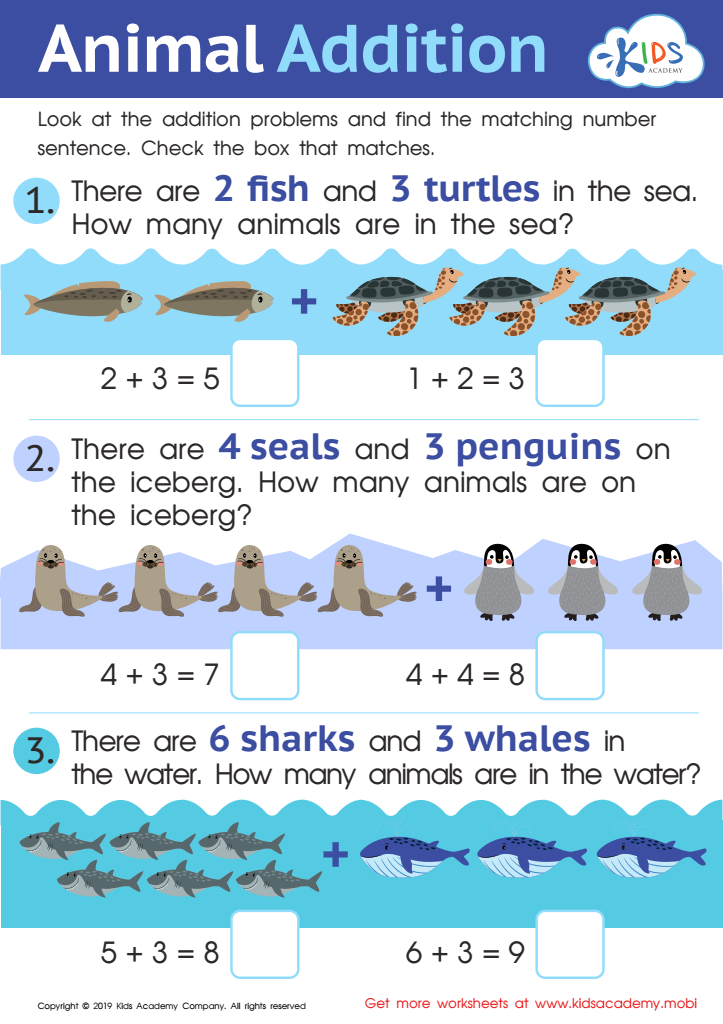
Animal Addition Worksheet
 Assign to My Students
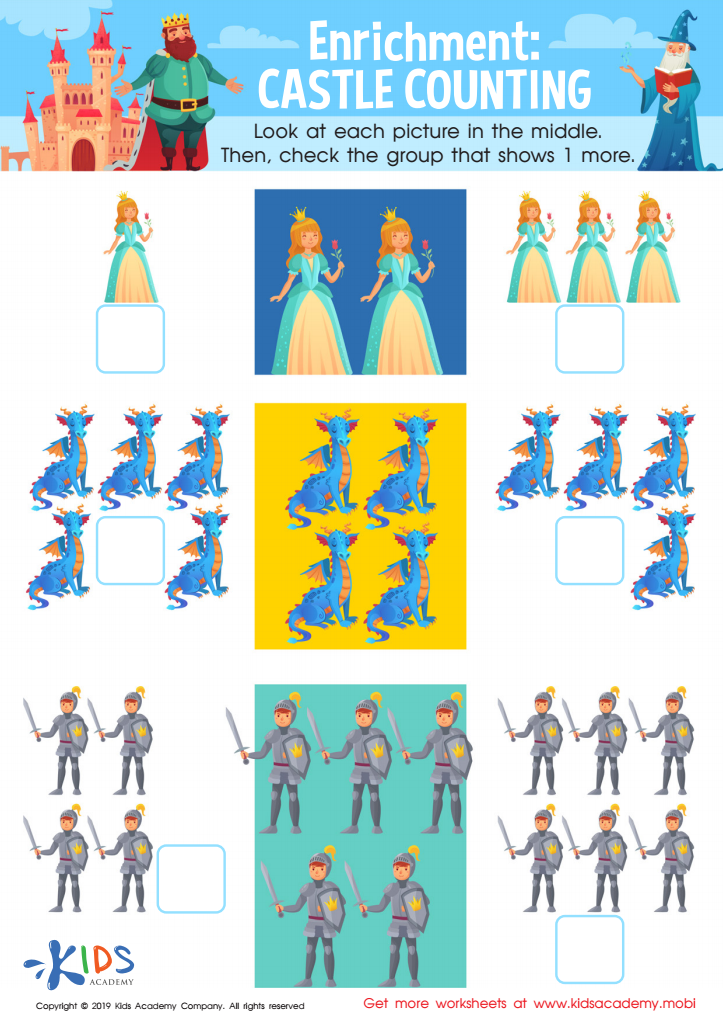
Enrichment: Castle Counting Worksheet
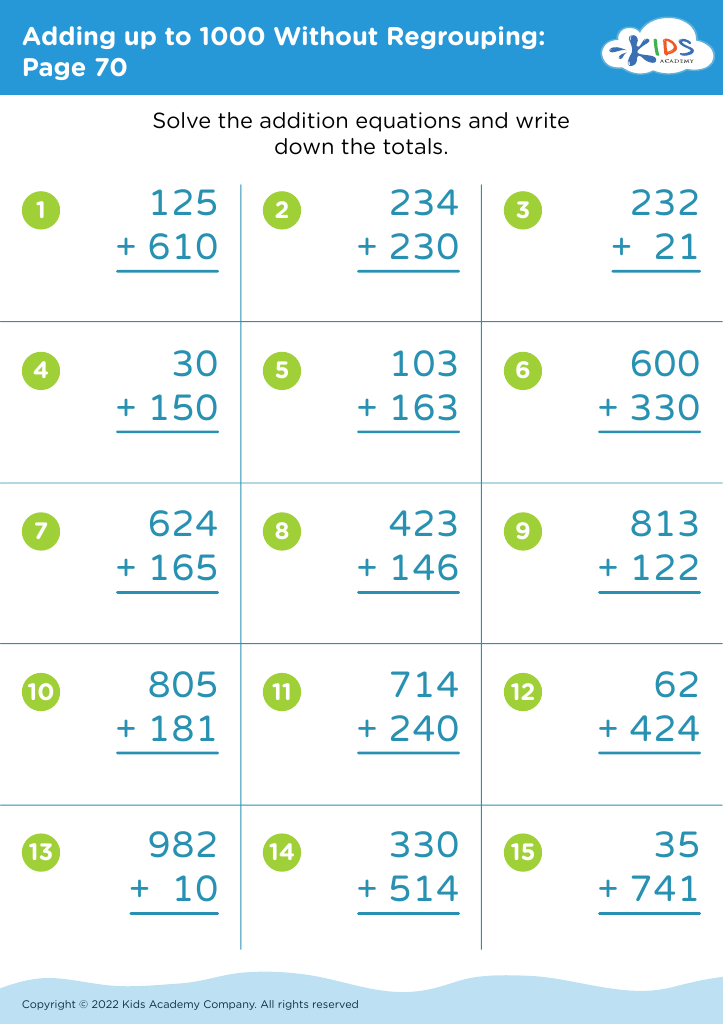
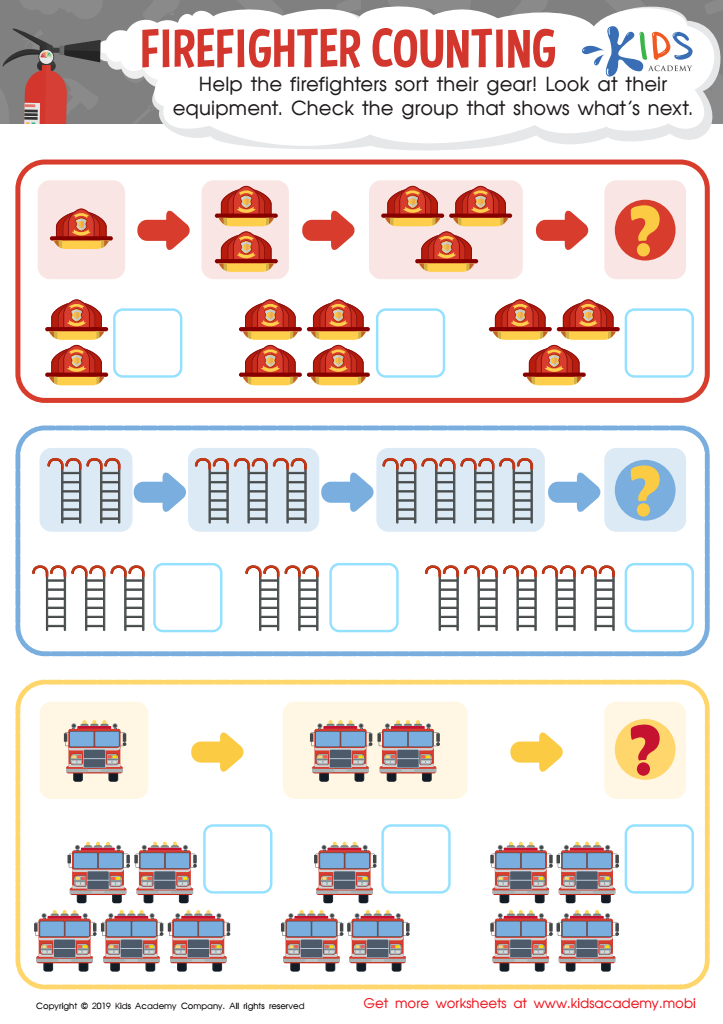
Firefighter Counting Worksheet
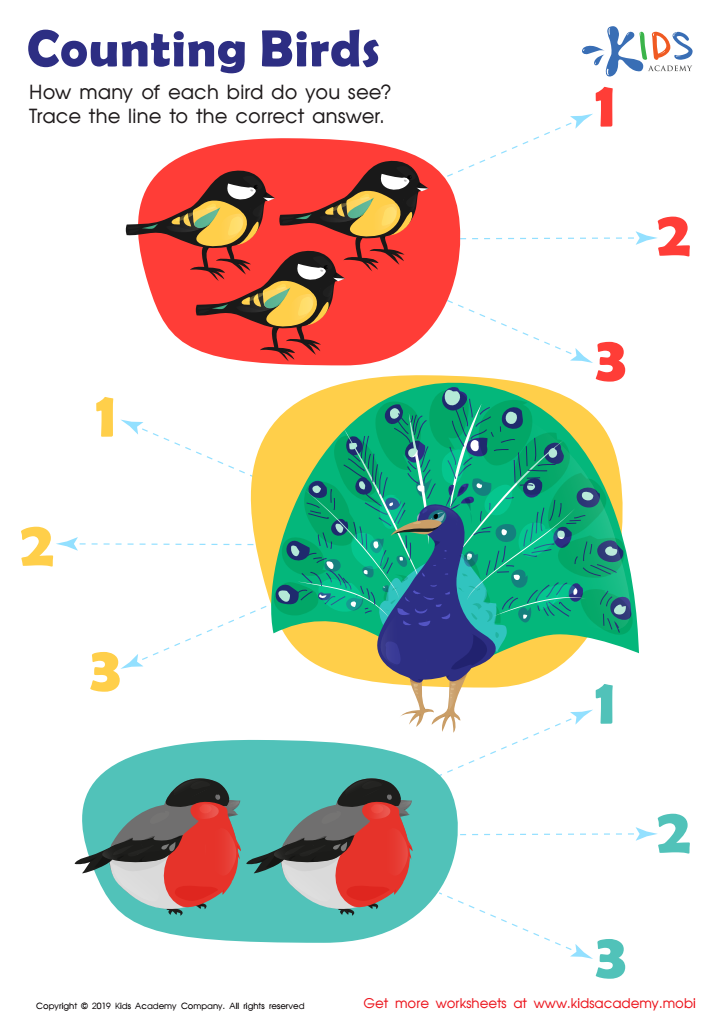
Counting Birds Worksheet


.jpg)





Basic addition is foundational for children's mathematical understanding and cognitive development, making it essential for parents and teachers to prioritize for ages 4-9. During this critical period, children are like sponges, actively absorbing information that will shape their educational journey.
Learning addition helps young learners develop crucial problem-solving skills and reasoning abilities. It enhances their understanding of quantity, introduces them to concepts of quantity comparison, and lays the groundwork for more advanced math topics like subtraction, multiplication, and division. Moreover, mastering basic addition boosts children's confidence and fosters a positive attitude toward math, reducing anxiety and fear associated with the subject later in school.
Effective addition instruction enhances not only math skills but also develops social skills when children engage in collaborative learning through games and activities centered around mathematics. Furthermore, when parents and teachers show enthusiasm for math, it encourages children to adopt a similar mindset, integrating learning into daily life.
By ensuring children grasp basic addition, adults empower them for academic success, equip them with essential life skills, and inspire a lifelong appreciation for learning. Ultimately, investing time in teaching these fundamentals can yield significant long-term benefits for children's educational trajectories.








