Discover a treasure trove of engaging worksheets designed to enhance analytical skills for children aged 4-9. Our carefully crafted activities focus on critical thinking, problem-solving, and logical reasoning. Each worksheet provides interactive and age-appropriate exercises that challenge young minds while keeping learning fun. From puzzles and pattern recognition to shape sorting and comparisons, these resources cater to various learning styles. Parents and educators can easily access and print these materials to inspire curiosity and exploration in their students. Boost your child's analytical aptitude and set the stage for lifelong learning with our dynamic worksheets, designed to ignite their imaginations!

Check out this FREE "Improving analytical skills" Trial Lesson for age 4-9!

Special Moves: En Passant

Favorites
With answer key
Interactive
  • 4-9
  • Improving analytical skills
Comparing with a Third Object Worksheet

Comparing with a Third Object Worksheet

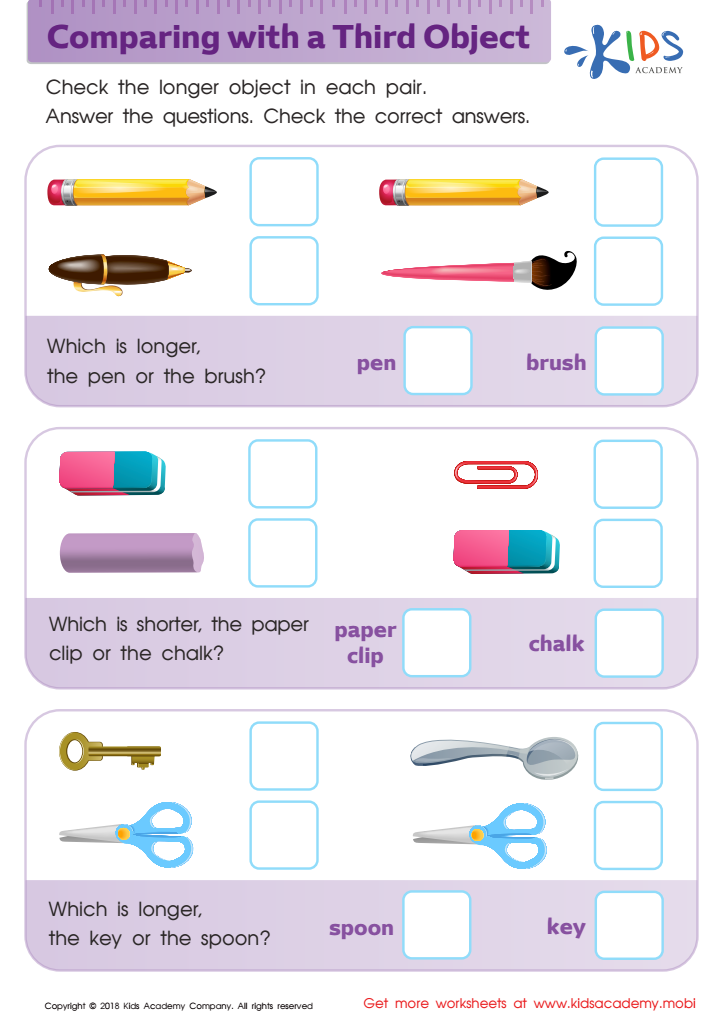
Help your child master measurement skills with this free downloadable math worksheet! Ask them to compare each pair of objects, checking the box for the longer one. Then, read the question and compare the objects across the pairs before ticking the box and continuing to the next group of pictures.
Comparing with a Third Object Worksheet
Worksheet
Lady Liberty Worksheet

Lady Liberty Worksheet

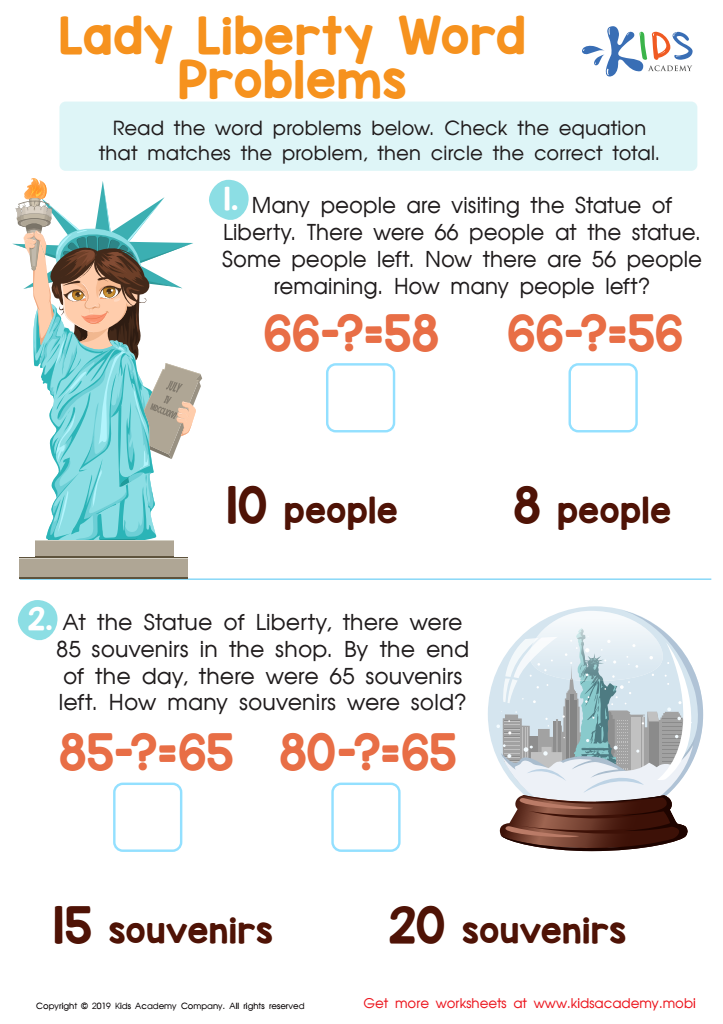
Have your students ever been to the Statue of Liberty? Ask them to tell you where it is and what it looks like. Every day, the statue draws a crowd admiring its beauty, taking pics and learning more about it. Pose a word problem and help them check the answer. Circle the correct total. (80 words)
Lady Liberty Worksheet
Worksheet
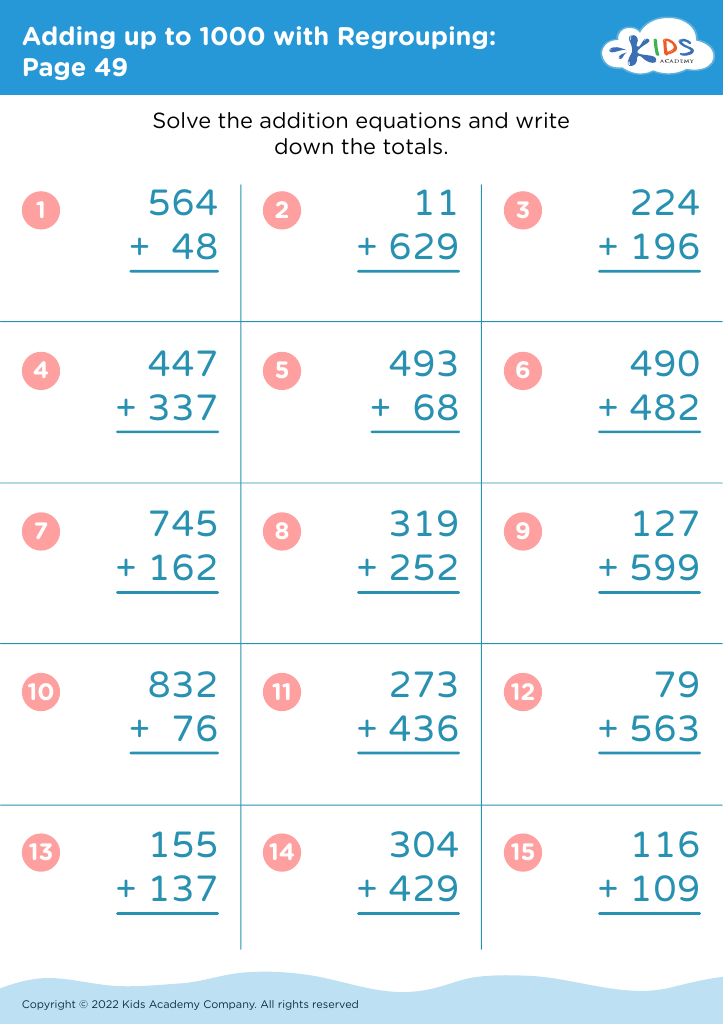
Adding up to 1000 with Regrouping: Page 49
Worksheet
En Passant: Tricky Pawn Capture Worksheet

En Passant: Tricky Pawn Capture Worksheet

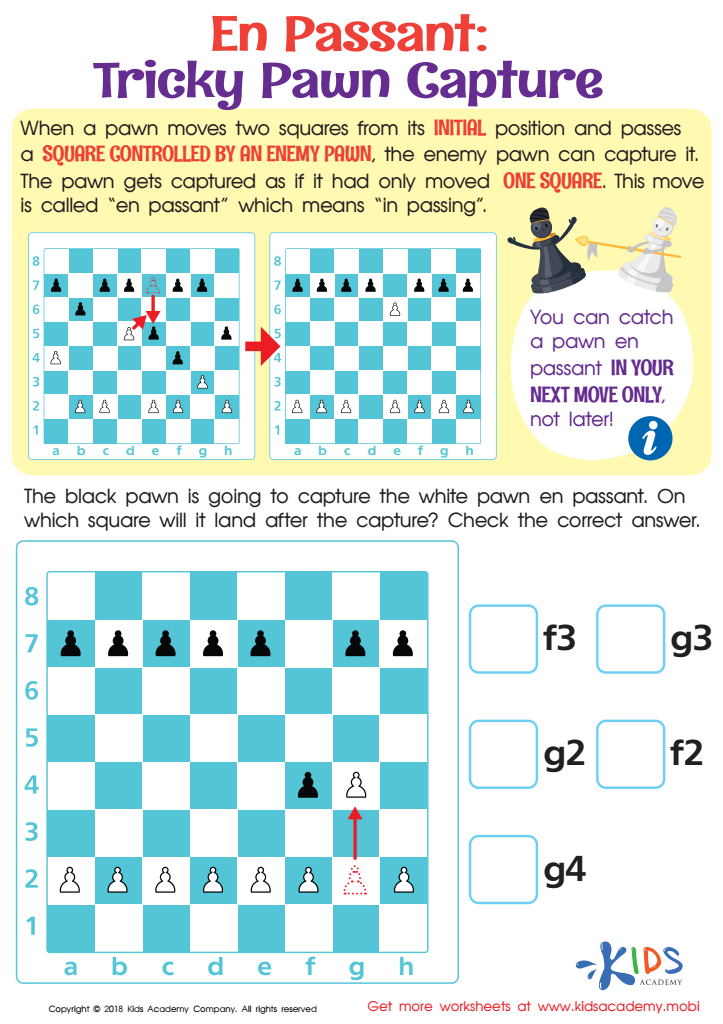
When a pawn moves two squares from its initial position and enters a square controlled by an enemy, the enemy can capture it as if it had moved one square. This move is called "en passant" (in passing). Ask your child which square the black pawn will land on after capturing the white pawn en passant using the provided chessboard.
En Passant: Tricky Pawn Capture Worksheet
Worksheet
Horse Race Worksheet

Horse Race Worksheet

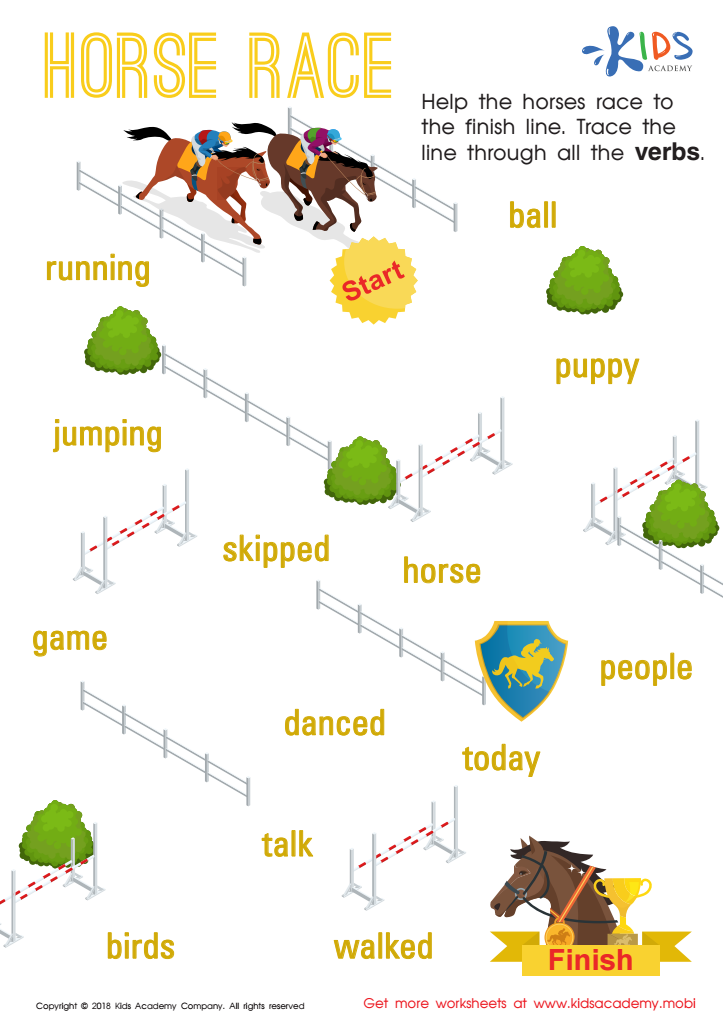
This tracing sheet is perfect for horse-loving kids! Start by confirming they know what a verb is - it's a word that shows an action (e.g. jump, talk, walk, play, read). Then ask them to give you some more examples. Finally, help them trace the line through all the verbs. They'll be delighted!
Horse Race Worksheet
Worksheet
Matching and Sorting  for Preschool: Assessment 3 Worksheet

Matching and Sorting for Preschool: Assessment 3 Worksheet

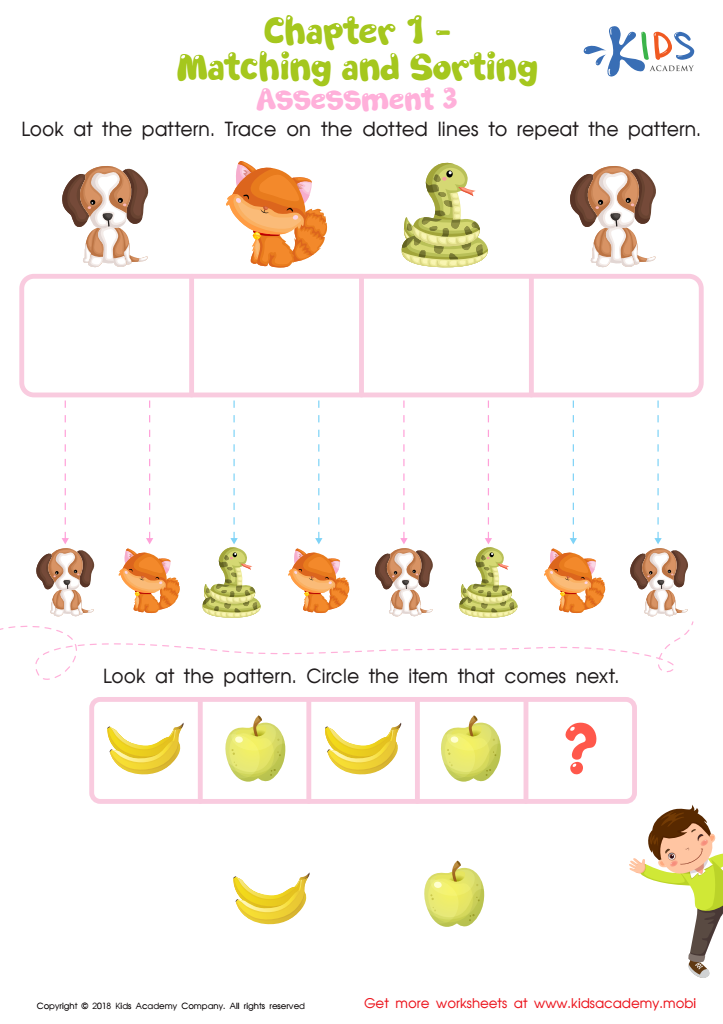
This worksheet helps kids practice and improve pattern recognition and matching skills. Task one: Ask your child to trace the pattern on the dotted lines. Task two: Look at the arrangement of fruits and ask your child to circle the corresponding item in the pattern. With this exercise, your child will gain a better understanding of pattern recognition and matching.
Matching and Sorting for Preschool: Assessment 3 Worksheet
Worksheet
Nonfiction Features Worksheet


Nonfiction Features Worksheet

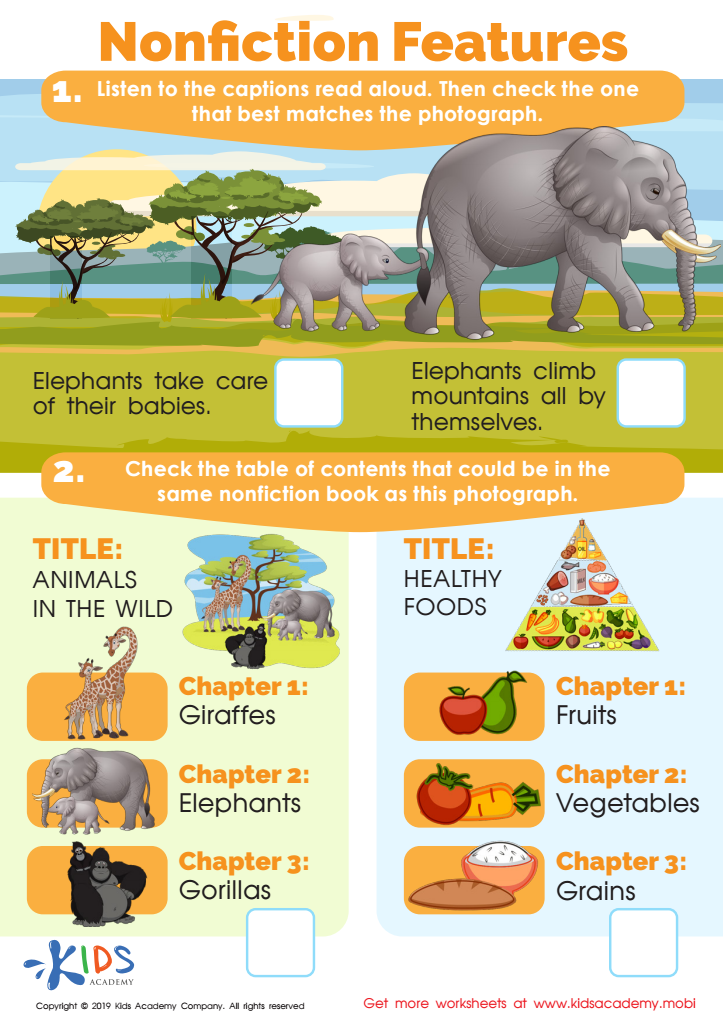
Fiction writing is made up of characters and events created by the author. Ask your students to match the captions to the picture. Help your preschoolers explore the contents of a non-fiction book that may have the same photo.
Nonfiction Features Worksheet
Worksheet


Improving analytical skills in children aged 4-9 is crucial for their overall development and future learning success. At this stage, children are naturally curious and eager to explore their surroundings, making it an ideal time to foster critical thinking and problem-solving abilities. Developing analytical skills helps children learn to identify patterns, understand relationships, and make connections between concepts, which are foundational for their educational journey.

Parents and teachers play a vital role in nurturing these skills by providing engaging activities that promote inquiry and exploration. Through puzzles, games, and hands-on projects, children learn to approach challenges systematically, enhancing their ability to think logically and independently. These skills not only benefit academic learning but also equip children to make informed decisions, enhancing their self-confidence and resilience in everyday life.

Furthermore, strong analytical skills aid in early literacy and numeracy, as children learn to assess information, understand instructions, and analyze data. As these skills are refined, they support children in thriving in a rapidly changing world, preparing them for higher education and career opportunities. Investing effort into strengthening analytical skills during these formative years laid the groundwork for lifelong learning and adaptability, key attributes for success in the 21st century.