Mathematical application Worksheets for Ages 4-9
3 filtered results
-
From - To
Discover our engaging Mathematical Application Worksheets designed specifically for children aged 4-9. These worksheets provide a fun and interactive way for young learners to develop essential math skills, including addition, subtraction, counting, and problem-solving. Each worksheet features colorful illustrations and age-appropriate exercises that foster a love for math while enhancing critical thinking. Perfect for use in the classroom or at home, our worksheets help children build confidence in their mathematical abilities. Encourage a strong foundation in math through exciting activities that promote learning and growth. Browse our collection today and ignite your child's passion for mathematics!
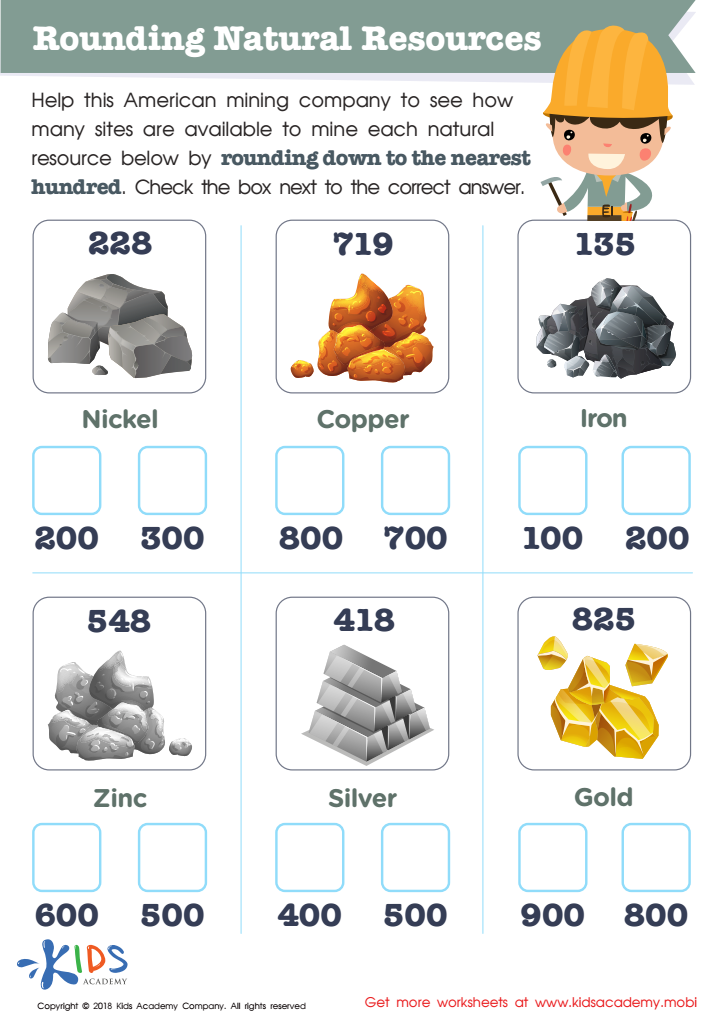
Rounding Natural Resources Worksheet
 Assign to My Students
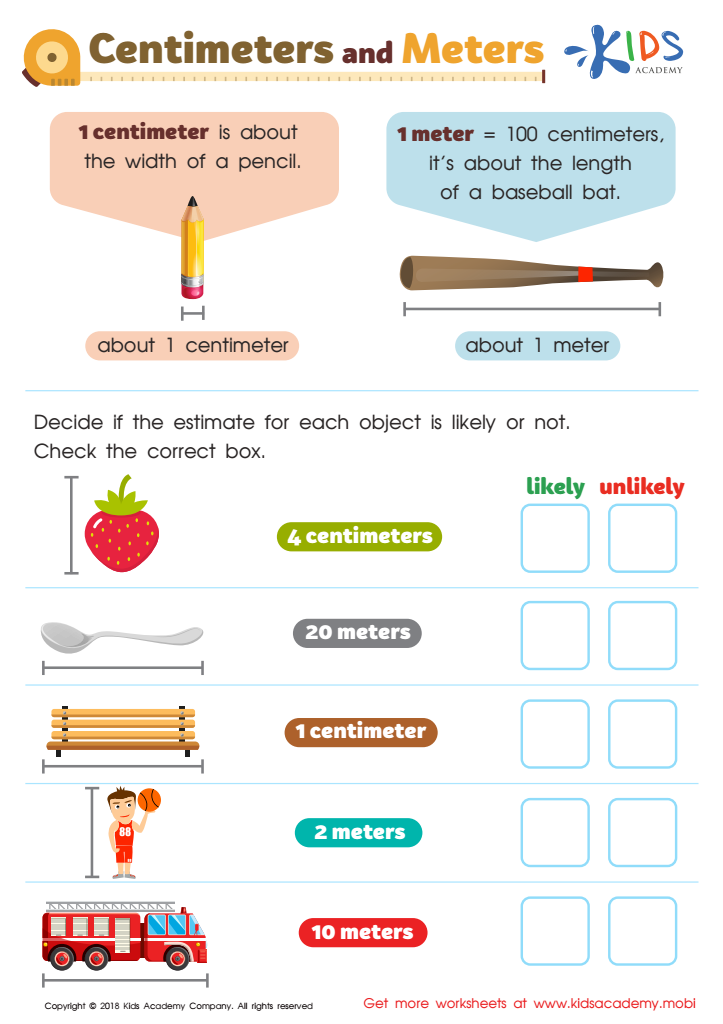
Centimeters and Meters Worksheet
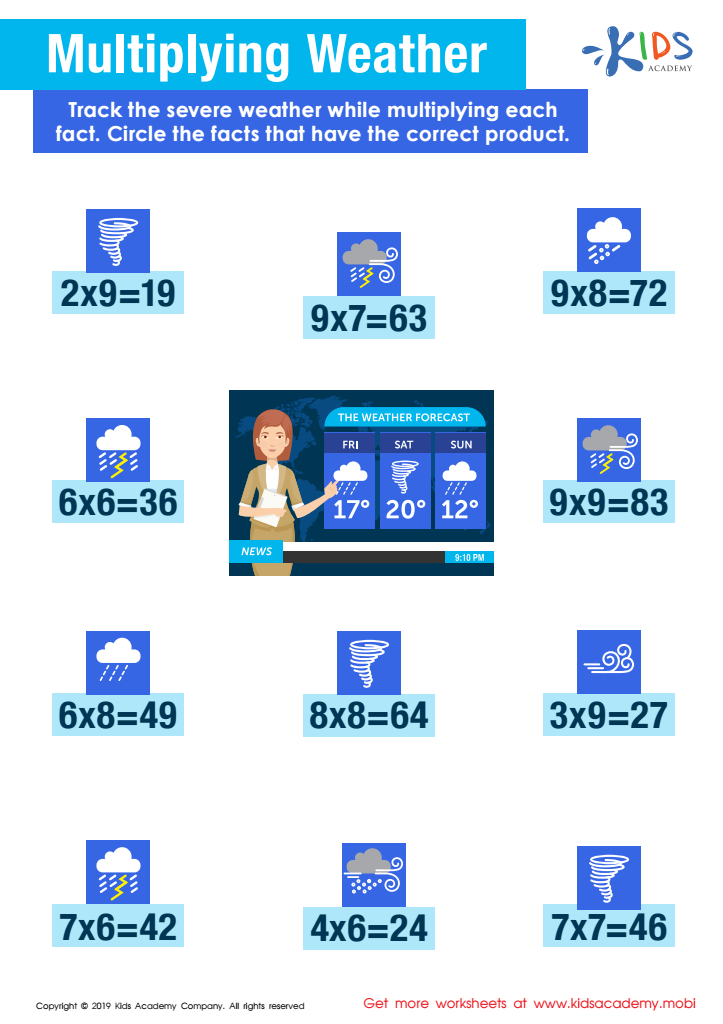
Multiplying Weather Worksheet








Mathematical application for children aged 4-9 is crucial for their cognitive and social development. At this age, children are naturally curious, and engaging in mathematical concepts lays the foundation for critical thinking and problem-solving skills. Real-life applications of math, such as measuring ingredients in a cooking activity or counting items during shopping, encourage students to see the relevance of math in everyday life, fostering a love for learning.
Parents and teachers should recognize that a strong grasp of foundational math enhances students' overall academic performance. Children equipped with early math skills are better prepared for more complex concepts later on, making them more confident learners. Additionally, regular engagement with math can nurture logical reasoning abilities, which are essential for success not only in academics but also in future careers.
Moreover, the interactive nature of math applications, such as games and hands-on activities, can make learning enjoyable, reducing anxiety often associated with math. By promoting mathematical application through play and practical experiences, both parents and educators help children build resilience and persistence, important traits for thriving in any field. Thus, emphasizing mathematical application at this age forms essential life skills, gearing up children for future learning and real-world challenges.








