Musical instruments recognition Worksheets for Ages 4-9
3 filtered results
-
From - To
Discover our engaging "Musical Instruments Recognition Worksheets" designed for children ages 4-9! These interactive resources will help young learners identify and classify various musical instruments through fun activities like matching, coloring, and completing puzzles. Each worksheet is crafted to enhance recognition skills while integrating music education into your child’s learning journey. Perfect for home or classroom use, these worksheets support cognitive development, fine motor skills, and artistic expression. Designed to be both entertaining and educational, our worksheets will ignite a passion for music in your little ones. Get started today and watch their love for music flourish!
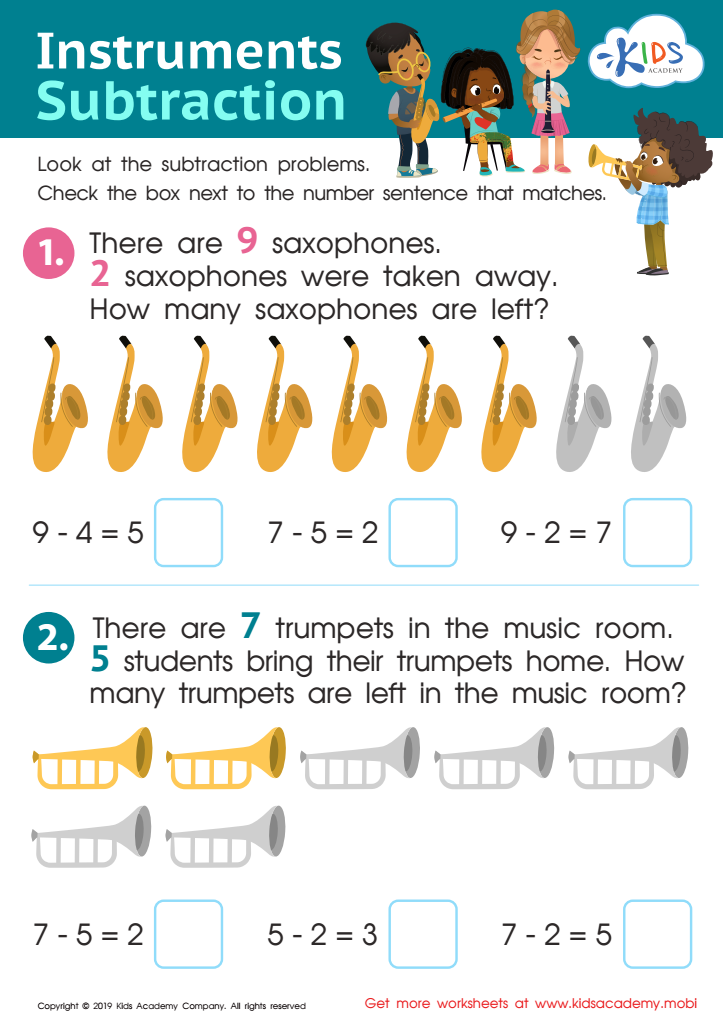
Instrument Subtraction Worksheet
 Assign to My Students
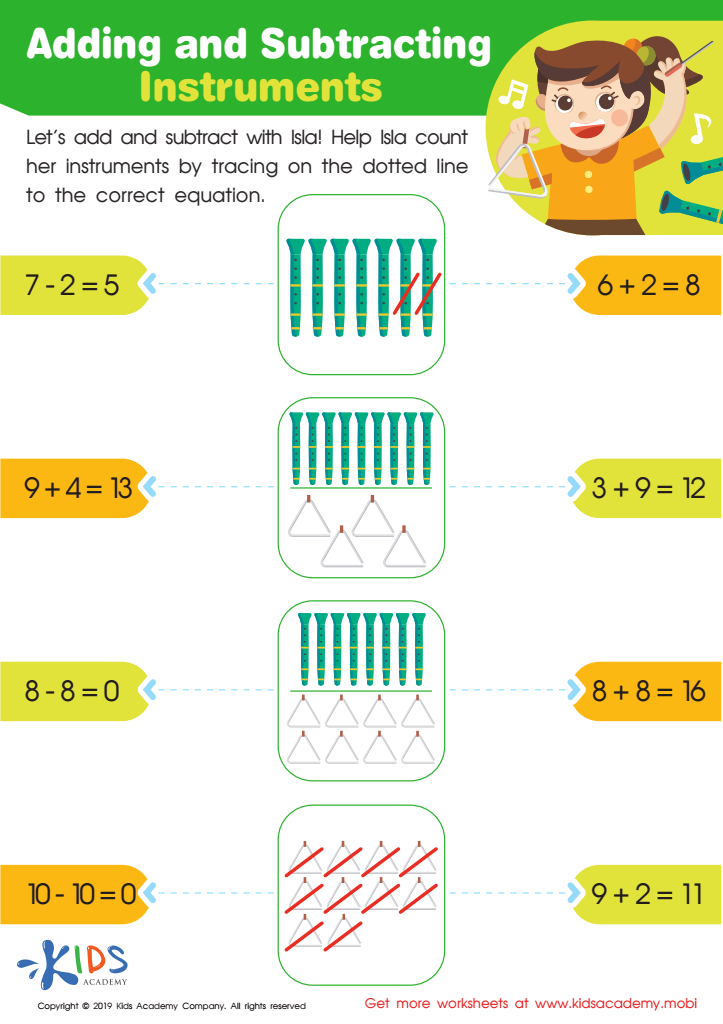
Adding and Subtracting: Instruments Worksheet
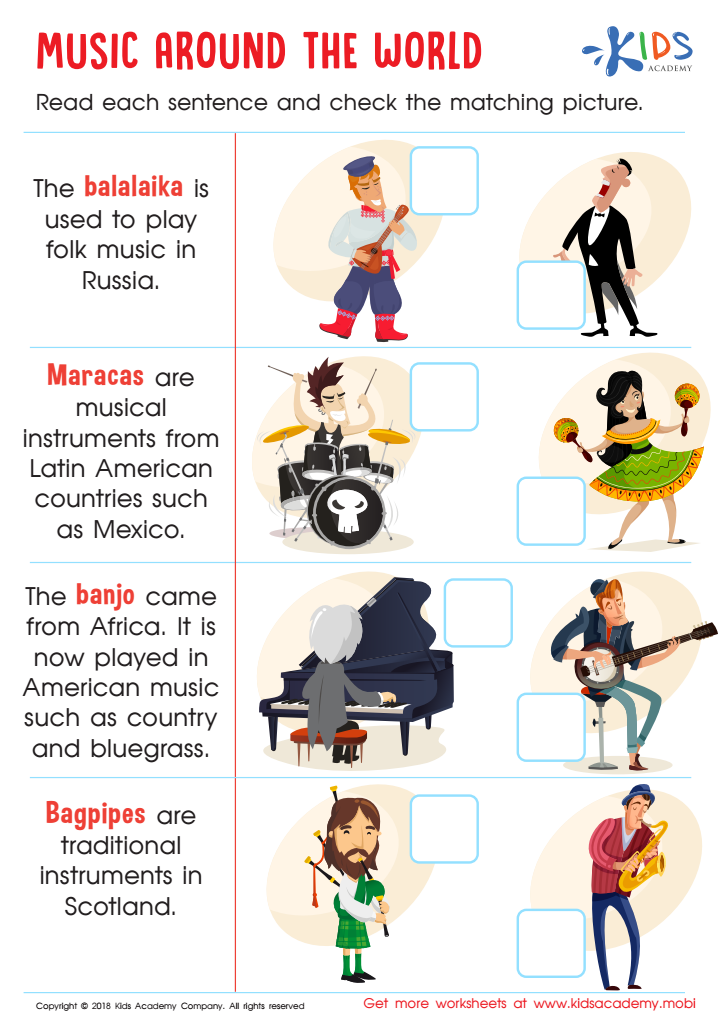
Music Around the World Worksheet








Parents and teachers should care about musical instrument recognition for children ages 4-9 because it supports several critical areas of development. First, identifying and understanding musical instruments enhances children's auditory discrimination skills, aiding language development and literacy. When children can distinguish between different sounds, they sharpen their listening skills, which is essential for effective communication.
Moreover, early exposure to musical instruments nurtures creativity and self-expression. Learning to recognize instruments opens doors to hands-on experiences with music, fostering an appreciation for different cultures and traditions. This knowledge can also boost children's self-esteem; when they recognize and interact with music, they gain confidence in their artistic abilities.
Additionally, engaging with music, including recognizing instruments, promotes cognitive skills such as memory and problem-solving. Participating in musical activities helps develop a sense of teamwork and cooperation when children share their musical experiences with peers.
Finally, understanding musical instruments can encourage lifelong enthusiasm for music, paving the way for potential musical education or even careers in the arts. As such, promoting musical instrument recognition in young children enriches their educational experiences and supports holistic development, making it an essential area for parents and educators to focus on.








