Number sequence learning Worksheets for Ages 4-9
3 filtered results
-
From - To
Discover our Number Sequence Learning Worksheets designed for ages 4-9, perfect for nurturing early math skills. These engaging printables from Kids Academy help young learners grasp number sequences, counting patterns, and logical ordering through fun and interactive activities. Our worksheets cater to different skill levels, ensuring that children can progress at their own pace. Packed with vibrant illustrations and hands-on exercises, these resources are ideal for both home and classroom settings. Download today to make learning numbers an exciting adventure for your child, paving the way for a strong mathematical foundation.
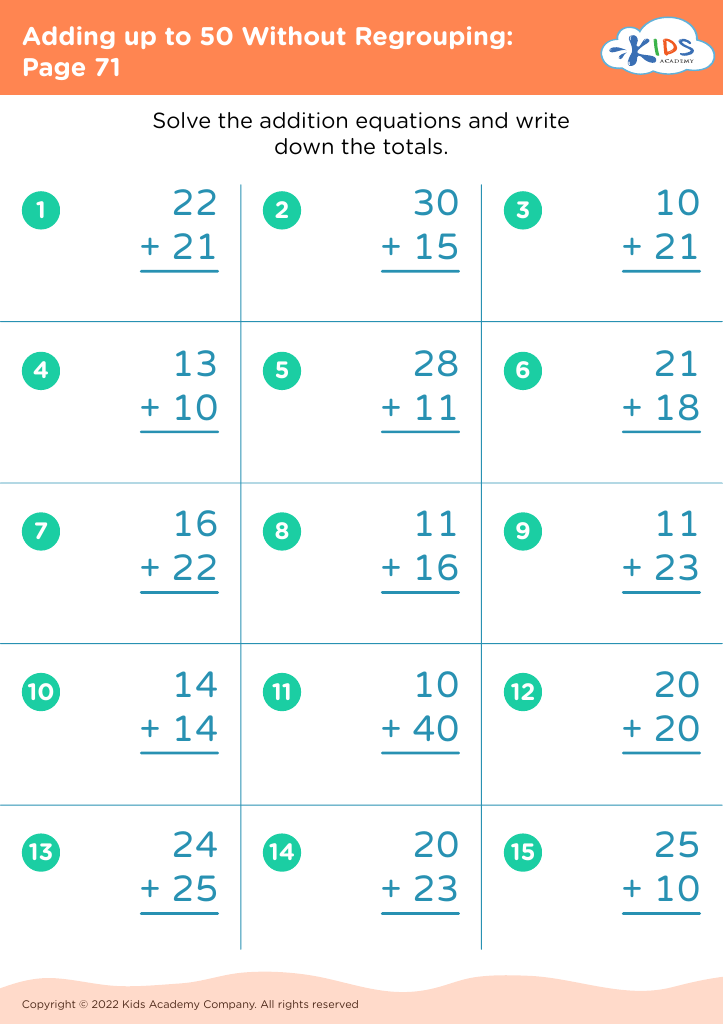
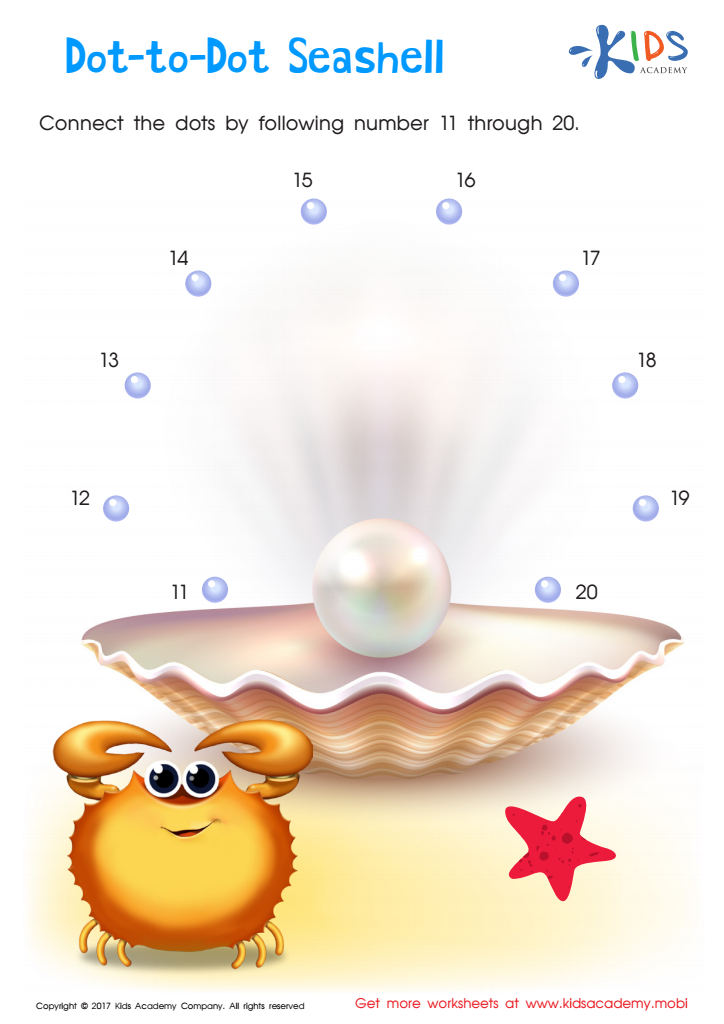
Ordering 11–20: Dot–to–dot Seashell Printable
 Assign to My Students
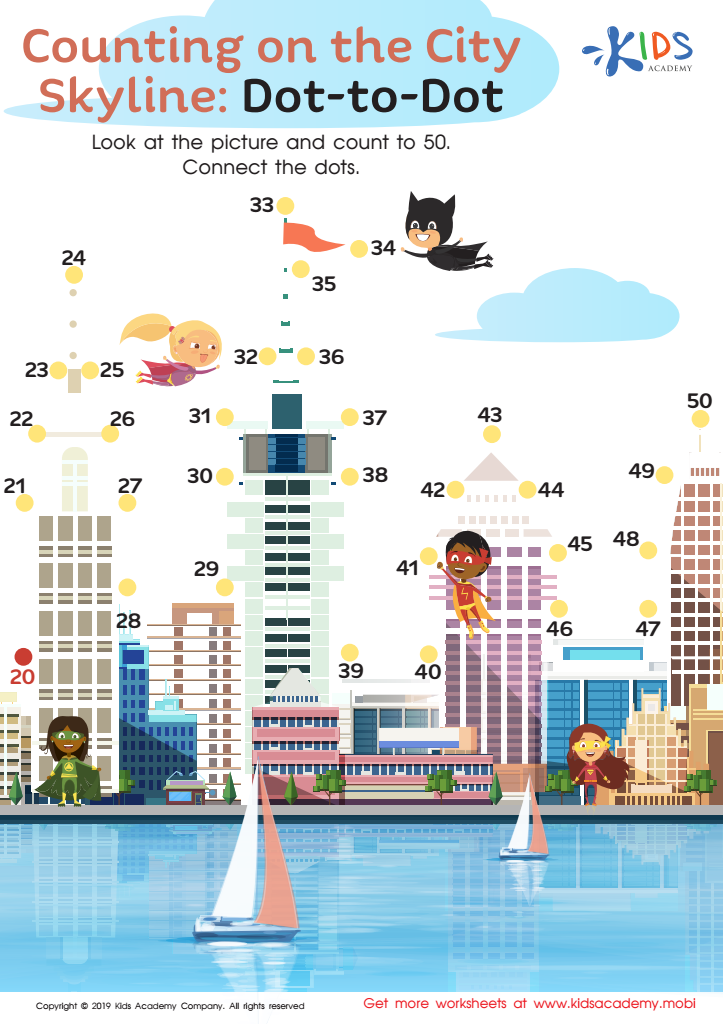
Counting on the City Skyline: Dot-to-Dot Worksheet





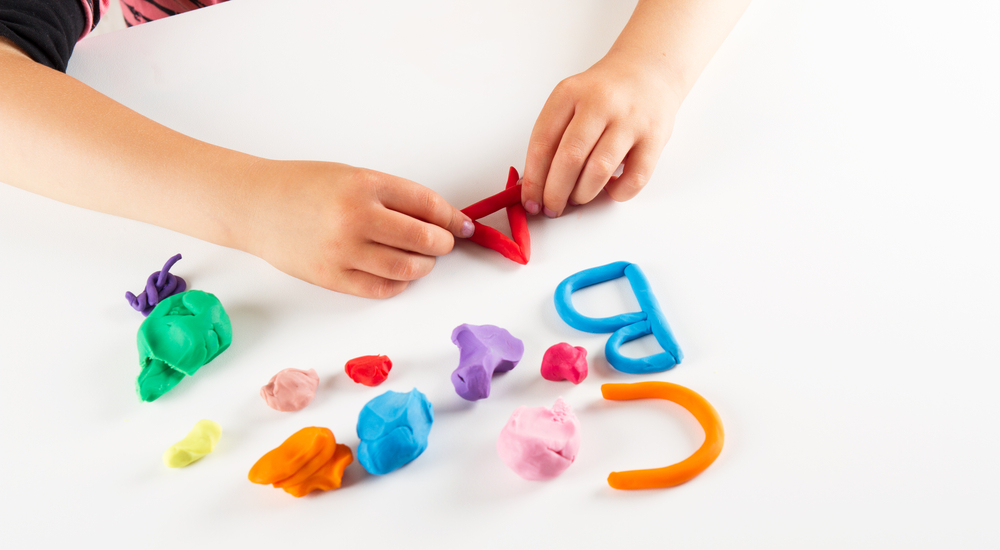

Number sequence learning is foundational for children ages 4-9 as it develops critical early math skills. Understanding number sequences helps children grasp the order and value of numbers, which is fundamental for more complex mathematical concepts. It enhances logical thinking and problem-solving abilities, which are crucial skills not just in math, but in everyday decision-making.
For young learners, mastering number sequences contributes to their ability to count forwards and backwards, recognize number patterns, and understand ordinal positions (i.e., first, second, third). This aids in fluency with basic arithmetic, such as addition and subtraction, which are core elements of the primary school math curriculum.
Parents and teachers should care because proficiency in number sequence learning is strongly correlated with academic success. Early difficulties in math can lead to ongoing challenges and a lack of confidence in their abilities. By fostering these skills, adults help establish a positive attitude towards learning and strengthen children’s ability to tackle higher-level math topics in later years.
Moreover, engaging with number sequences can be fun and incorporated into daily activities, fostering an enjoyable learning environment. Through games, songs, and interactive experiences, children can develop a love for numbers and learning in general, setting them up for lifelong success.








