Sentence completion Worksheets for Ages 4-9
5 filtered results
-
From - To
Discover our engaging Sentence Completion Worksheets designed for children aged 4-9! These fun and interactive worksheets help young learners develop important language skills by encouraging them to think critically and creatively. With a variety of prompts, kids will practice vocabulary, improve sentence structure, and enhance their reading comprehension. Perfect for use at home or in the classroom, our worksheets cater to different learning styles, making them suitable for every child. Help your students boost their confidence in writing and communication while having a great time. Explore our collection to inspire a love for language in your little learners today!
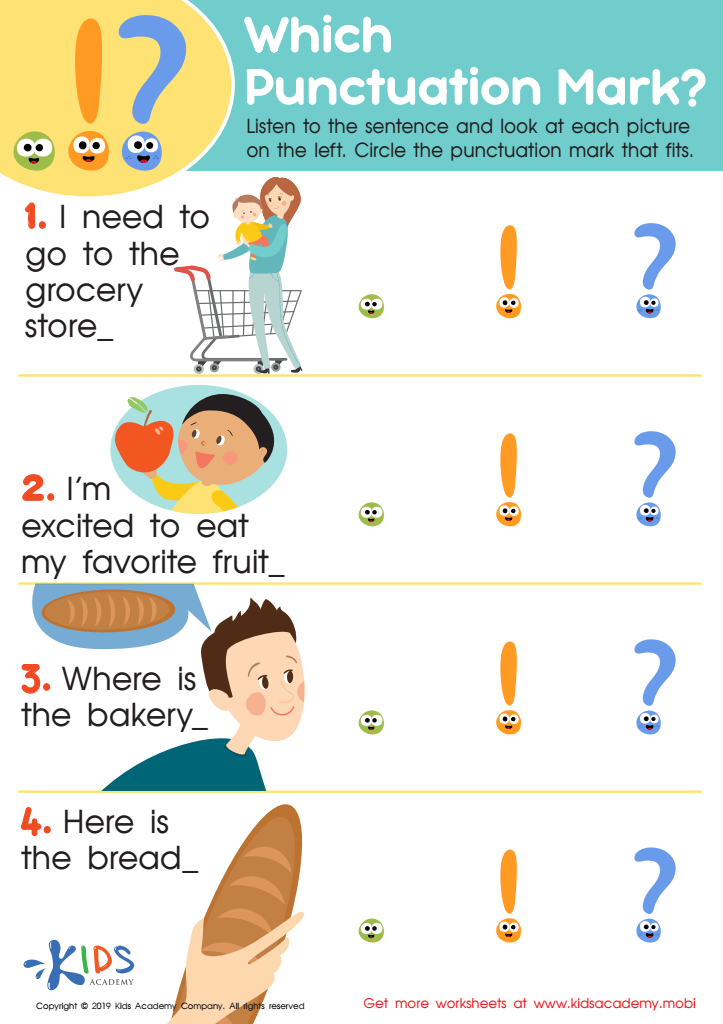
Which Punctuation Mark Worksheet
 Assign to My Students
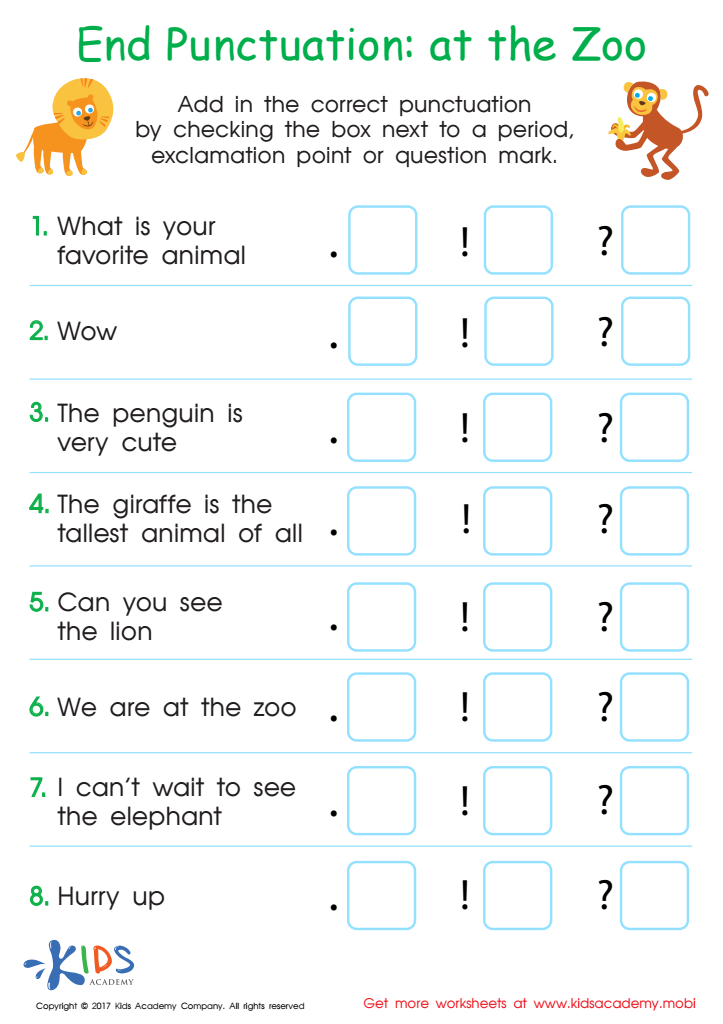
End Punctuation: At the Zoo Worksheet
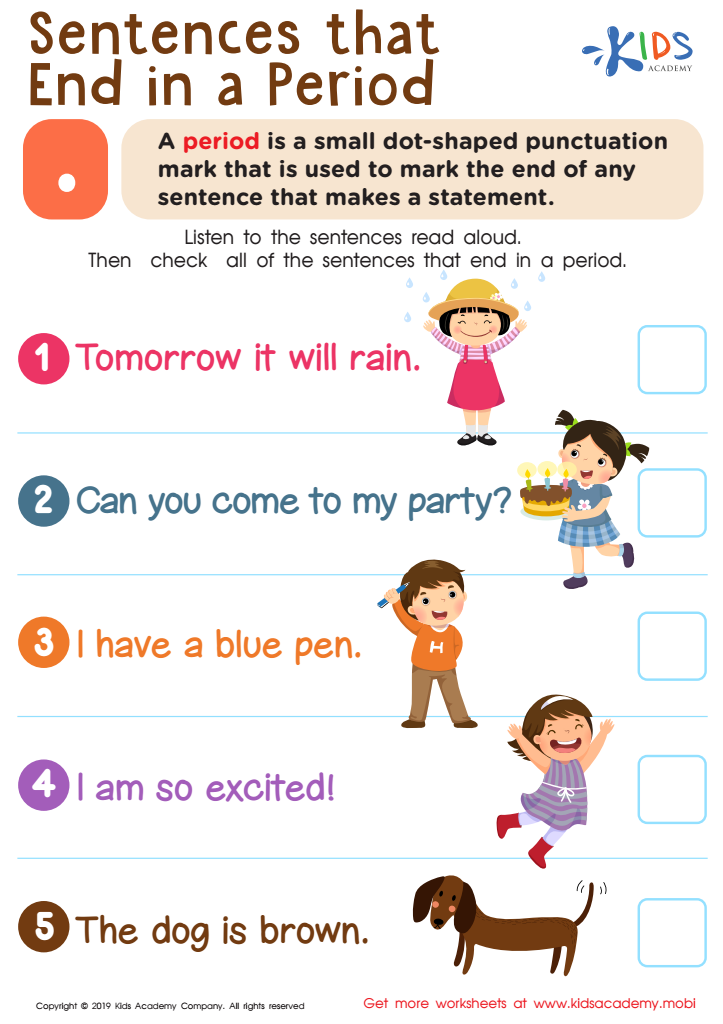
Sentences That End in a Period Worksheet
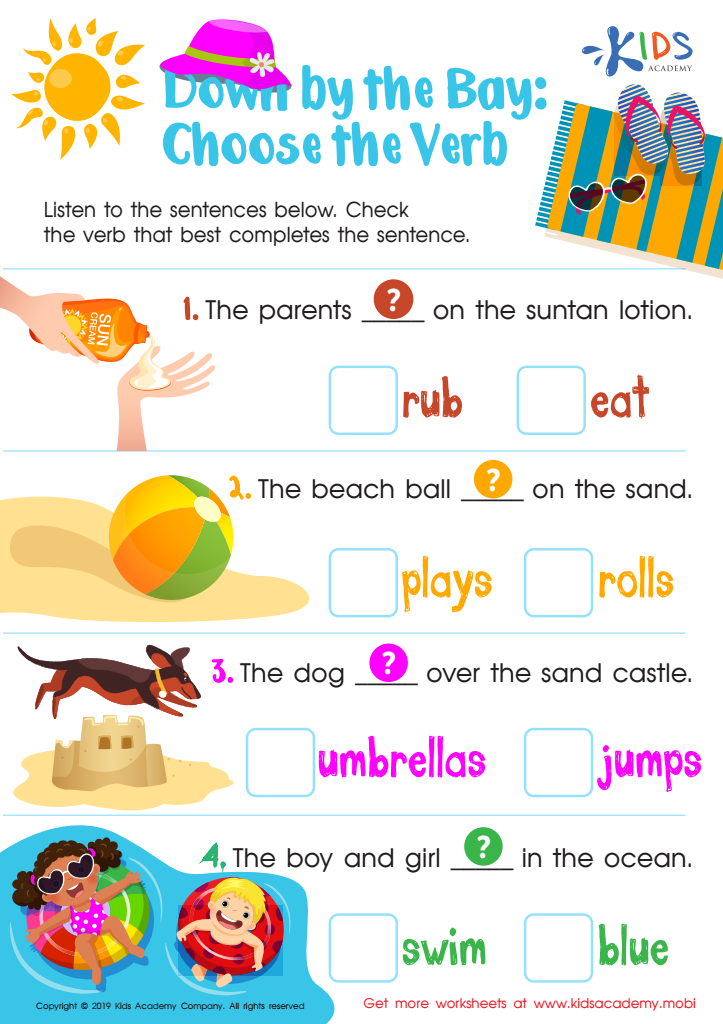
Down by the Bay: Choose the Verb Worksheet
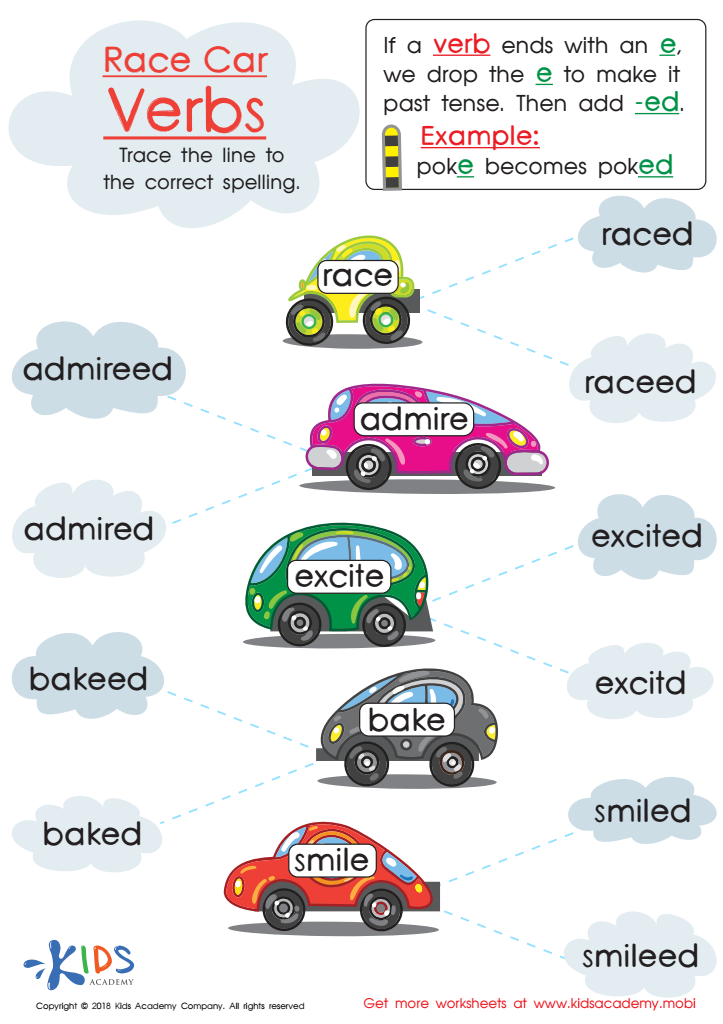
Race Car Verbs Worksheet







Sentence completion activities are crucial for children aged 4-9, as they play a significant role in language development and cognitive skills. Engaging in these exercises helps young learners expand their vocabulary and improves their understanding of sentence structure. By prompting children to fill in the blanks or complete sentences, we encourage them to think critically about language use and gain familiarity with grammar.
Moreover, sentence completion boosts creativity and self-expression. It allows children to explore their thoughts and feelings, making the learning process enjoyable and personal. As they craft sentences, they develop confidence in their writing and communication skills, which are essential for academic success and social interaction.
Additionally, these activities foster listening and comprehension skills. When children hear sentences being read and learn to predict logical or imaginative completions, they enhance their ability to interpret information and respond appropriately. Importantly, sentence completion is a highly adaptable tool that can cater to various learning styles and abilities, making it an effective approach to inclusivity in the classroom.
For parents and teachers, supporting sentence completion exercises will not only strengthen a child’s academic skills but also lay a strong foundation for lifelong learning and communication.








