
Sound discrimination Worksheets for Ages 4-9
4 filtered results
Difficulty Level
Grade
Age
-
From - To
Subject
Activity
Standards
Boost your child's auditory skills with our Sound Discrimination Worksheets for Ages 4-9. Specifically designed to enhance listening abilities, these engaging and educational worksheets help children identify and differentiate between various sounds. With fun activities, including matching sounds, identifying syllables, and recognizing rhymes, children develop crucial skills important for reading and language development. Ideal for preschool and early elementary students, these printables support teachers and parents in fostering a strong auditory foundation. Visit Kids Academy's website to explore our extensive collection and watch as your child's confidence and proficiency in sound discrimination grow!
Favorites
With answer key
Interactive
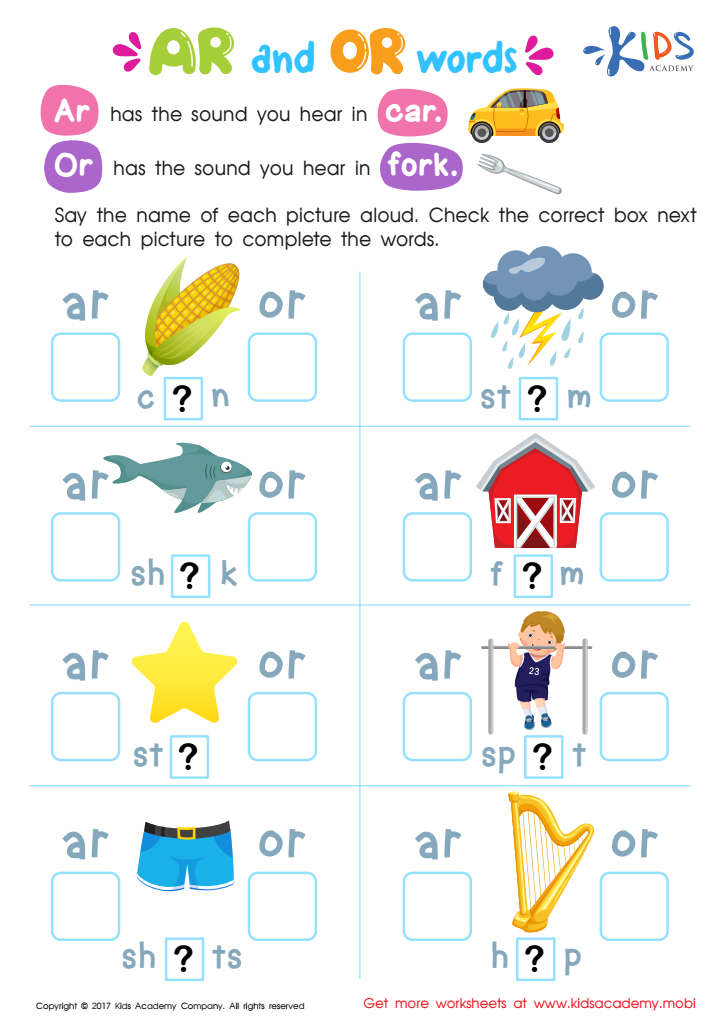
Ar and Or Words Phonics Worksheet
Master the distinct digraphs 'ar' and 'or' with this fun phonics worksheet from Kids Academy! With meaningful illustrations, it'll guide your child to choose the right one. Get ready for the great results!
 Assign to My Students
Ar and Or Words Phonics Worksheet
Worksheet
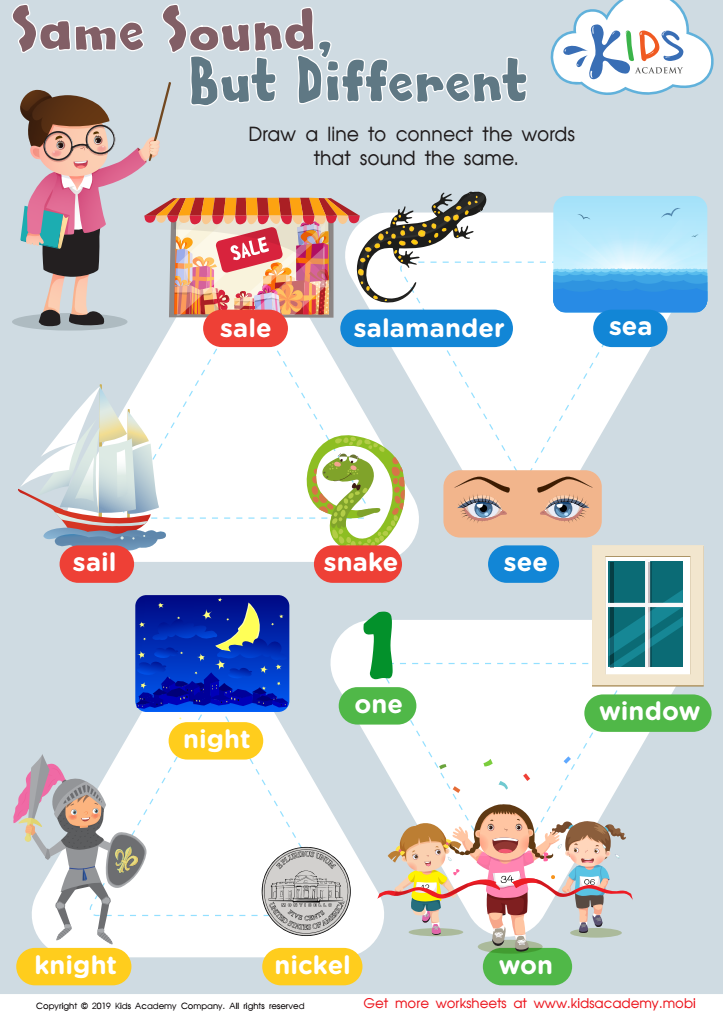
Sound Different Worksheet
Homophones can be tricky for new readers and writers. This PDF worksheet helps kids understand the differences using pictures. It asks them to draw lines to connect the homophones and provides concrete imagery for reference. It's a great way to learn the right definition and spelling of words that sound the same.
Sound Different Worksheet
Worksheet
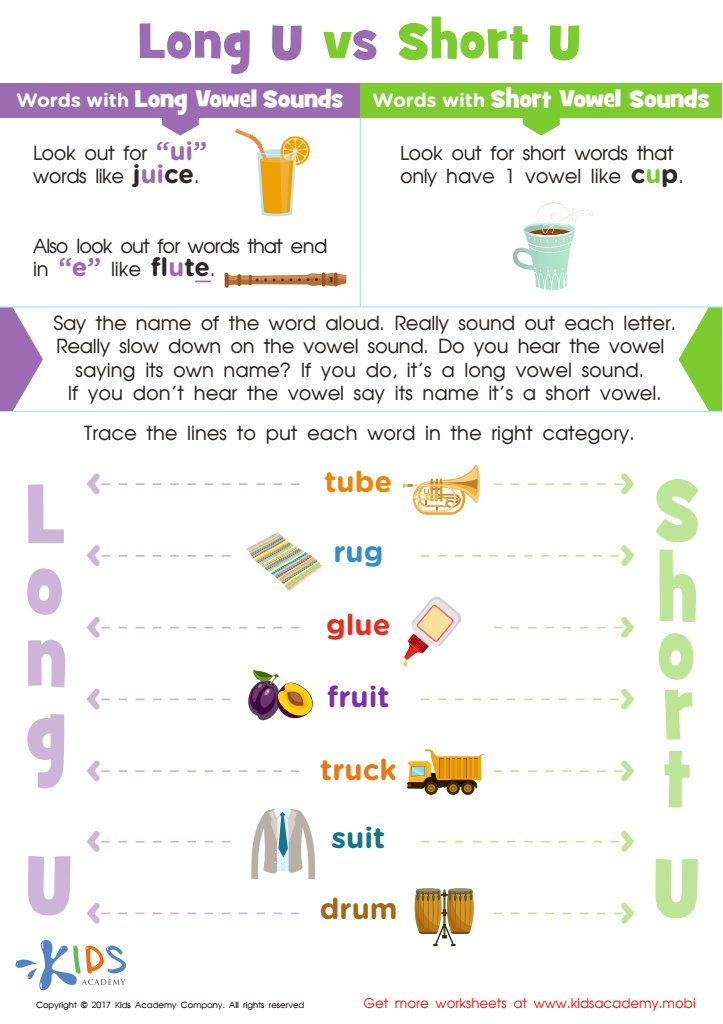
Long and Short Vowel U Spelling Worksheet
Help your child learn long and short vowel sounds with this fun long and short vowel U worksheet! Kids can become proficient spellers by mastering simple spelling tricks and sounding out letters.
Long and Short Vowel U Spelling Worksheet
Worksheet
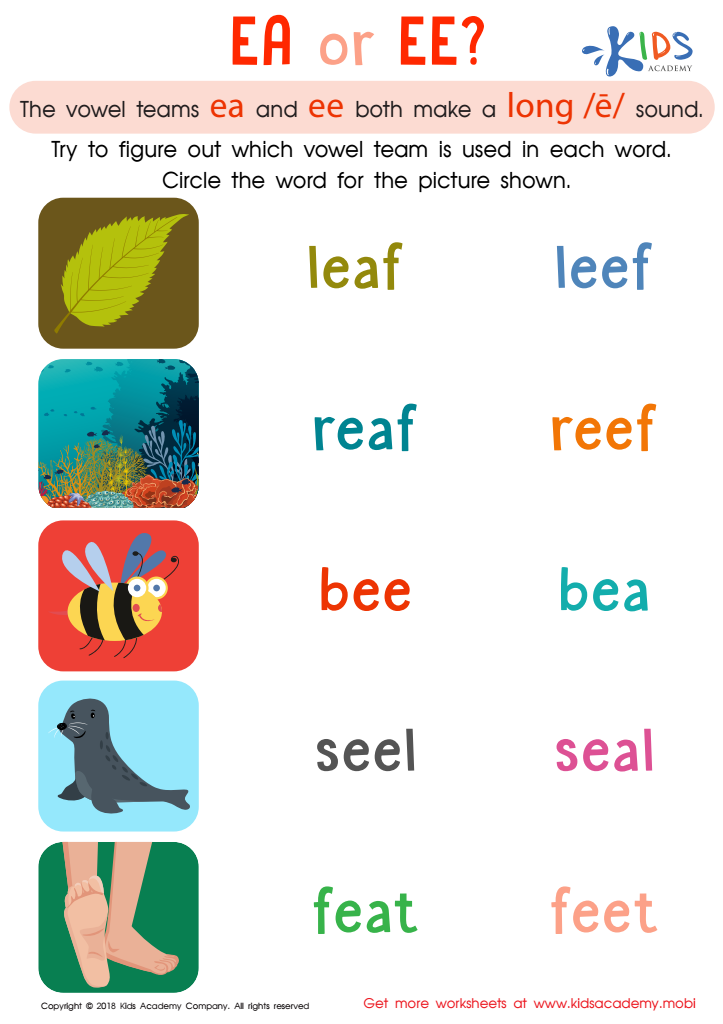
Reading: EA and EE Worksheet
Confused by the long E sound's varying spellings? Give students practice with this printable. It will improve their reading and spelling skills by helping them identify the correct spellings for words with the /ee/ and /ea/ vowel teams. Clear up the confusion and sharpen their skills.
Reading: EA and EE Worksheet
Worksheet
Join Kids Academy for Free
Who is primarily going to use this learning content?





.jpg)


Sound discrimination is a foundational skill that parents and teachers should prioritize for children aged 4-9 because it directly impacts their ability to develop effective language and reading skills. At this formative age, children are rapidly acquiring their native language, and the ability to differentiate between similar sounds is crucial for learning vocabulary, pronunciation, and grammar.
For instance, distinguishing between sounds like /b/ and /p/ or /m/ and /n/ affects not only speech clarity but also reading proficiency. When children recognize subtle sound differences, they can better decode words and comprehend text, fostering stronger reading abilities.
Moreover, sound discrimination aids in auditory processing, a key element in following oral instructions, participating in conversations, and understanding classroom lessons. It's the bedrock of phonemic awareness, which is essential for spelling and writing skills. Children who struggle with sound discrimination may find it challenging to blend sounds to form words, which can lead to reading difficulties and impede academic progress.
Early intervention and activities that promote sound discrimination — like rhyming games, listening exercises, and phonics instructions — can prevent long-term literacy challenges. By nurturing this skill, parents and teachers help build confident communicators and proficient readers, setting children on a path to academic success and effective lifelong learning.








