Spelling improvement Worksheets for Ages 4-9 - Page 2
26 filtered results
-
From - To
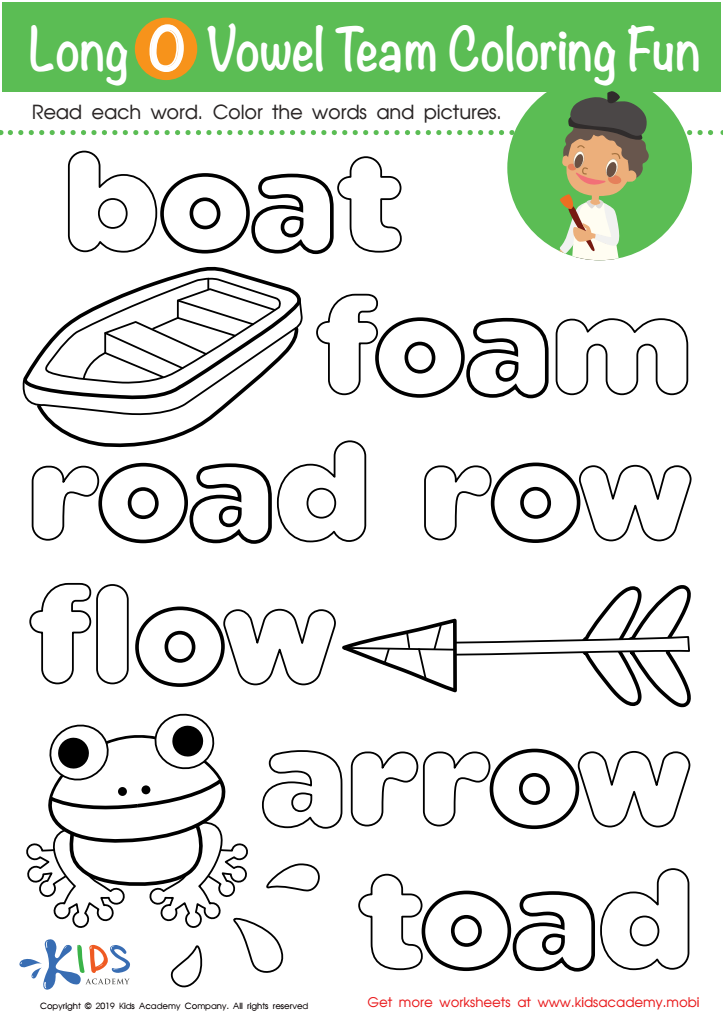
Long O Vowel Team Coloring Worksheet
 Assign to My Students
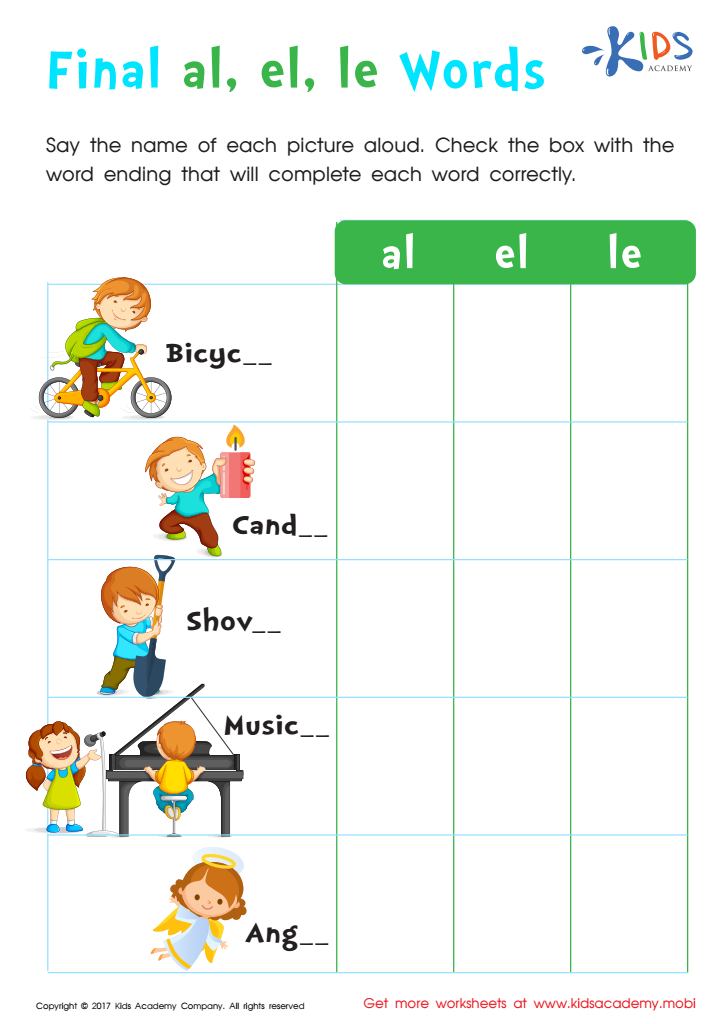
Spelling Words Ending with –le, –el and –al Worksheet








Spelling improvement in early childhood is crucial as it lays the foundation for a child’s literacy skills. For children aged 4-9, developing strong spelling abilities not only enhances their reading skills but also significantly impacts their writing and overall communication skills. When children spell words correctly, it promotes confidence in their abilities and fosters a love for learning.
Moreover, spelling helps children understand phonetics and the relationship between sounds and letters. This understanding advances with word recognition and aids in comprehension, enriching their overall literacy experience. As children progress in their education, strong spelling skills contribute to their ability to express thoughts clearly and coherently in both oral and written forms.
Parents and teachers play vital roles in supporting spelling improvement through practice, encouragement, and creating a rich language environment. Engaging in fun spelling activities, games, and literacy-focused interactions can transform learning into an enjoyable experience, bolstering motivation.
Overall, prioritizing spelling improvement during the formative years supports academic success, instills lifelong learning habits, and prepares children for effective communication in their future endeavors. By investing in their spelling skills, parents and teachers significantly contribute to a child’s academic and personal growth.








