Discover our engaging Story Analysis Worksheets designed specifically for children aged 4-9! Perfectly tailored to ignite young imaginations, these worksheets offer fun-filled activities that enhance reading comprehension and critical thinking skills. Each worksheet encourages children to explore key story elements such as characters, setting, and plot by answering questions, drawing illustrations, and identifying themes. Our resources not only foster a love for reading but also help develop essential literacy skills in a playful environment. With brightly colored pages and interactive content, your child will enjoy diving into the world of storytelling while boosting their cognitive abilities. Encourage meaningful discussions at home and watch them grow as confident readers!

Check out this FREE "Story analysis" Trial Lesson for age 4-9!

Review

Favorites
With answer key
Interactive
  • 4-9
  • Story analysis
Hansel and Gretel Geometry Maze Worksheet

Hansel and Gretel Geometry Maze Worksheet

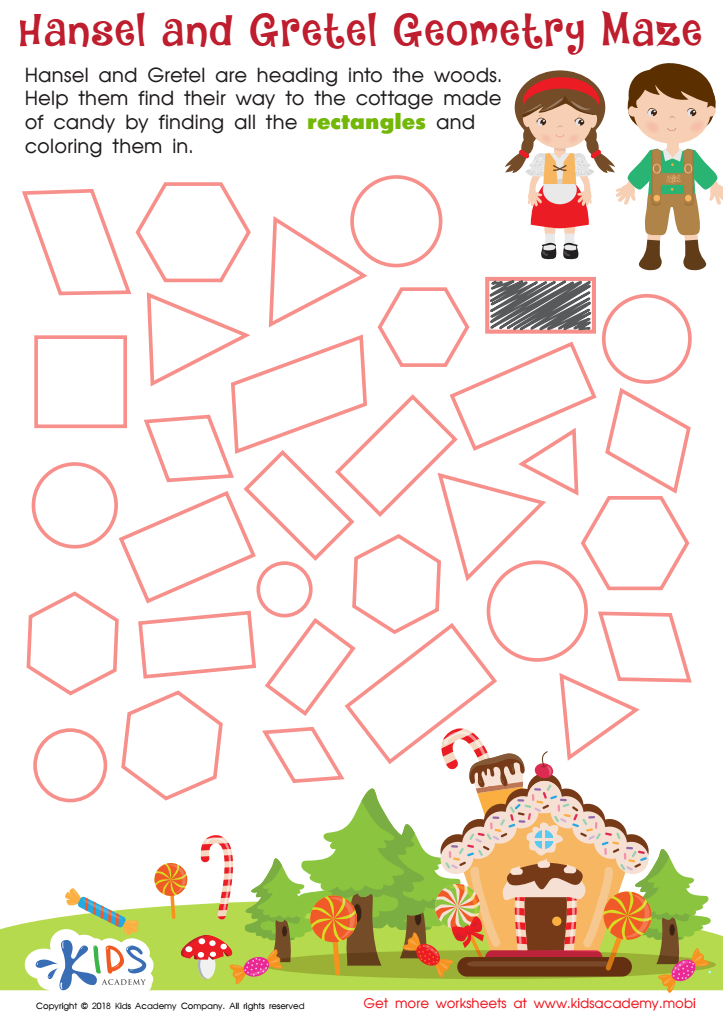
Your kids will have fun helping Hansel and Gretel get through a colorful forest of shapes! This free PDF reinforces the properties of rectangles, building skills in visual discernment and laying the foundations for geometry. They'll be too busy enjoying the story to realize they're learning!
Hansel and Gretel Geometry Maze Worksheet
Worksheet
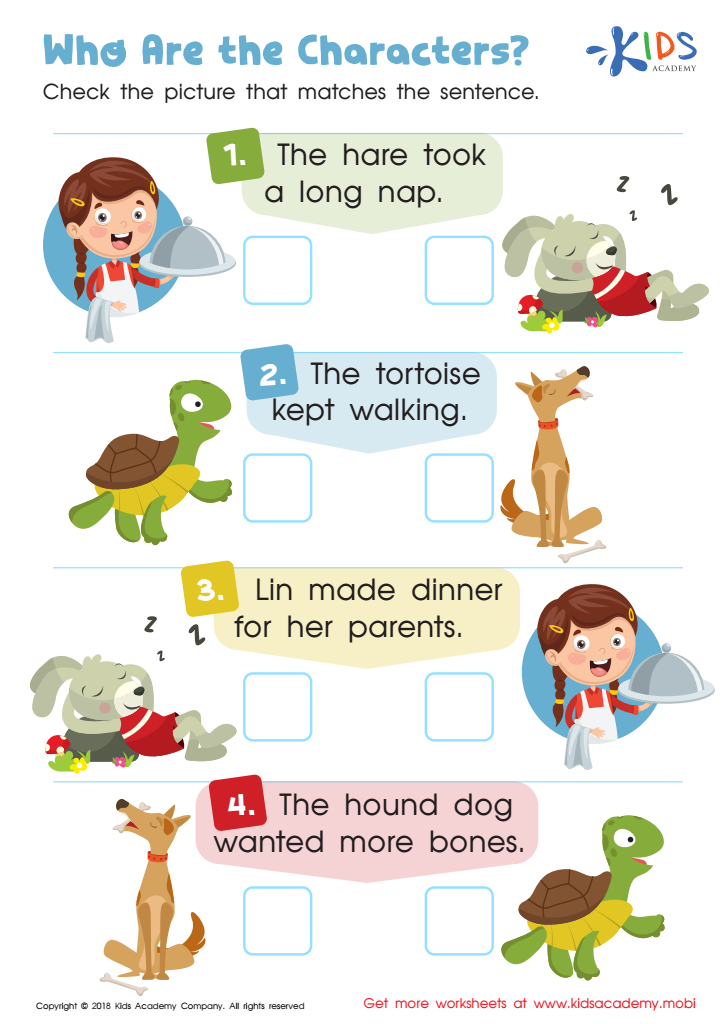
Who Are The Characters Worksheet

Who Are The Characters Worksheet

This worksheet tests your child's reading skills. Read each sentence out loud with them, then ask which of the two pictures match it. Help them check, then repeat this for the other sentences.
Who Are The Characters Worksheet
Worksheet
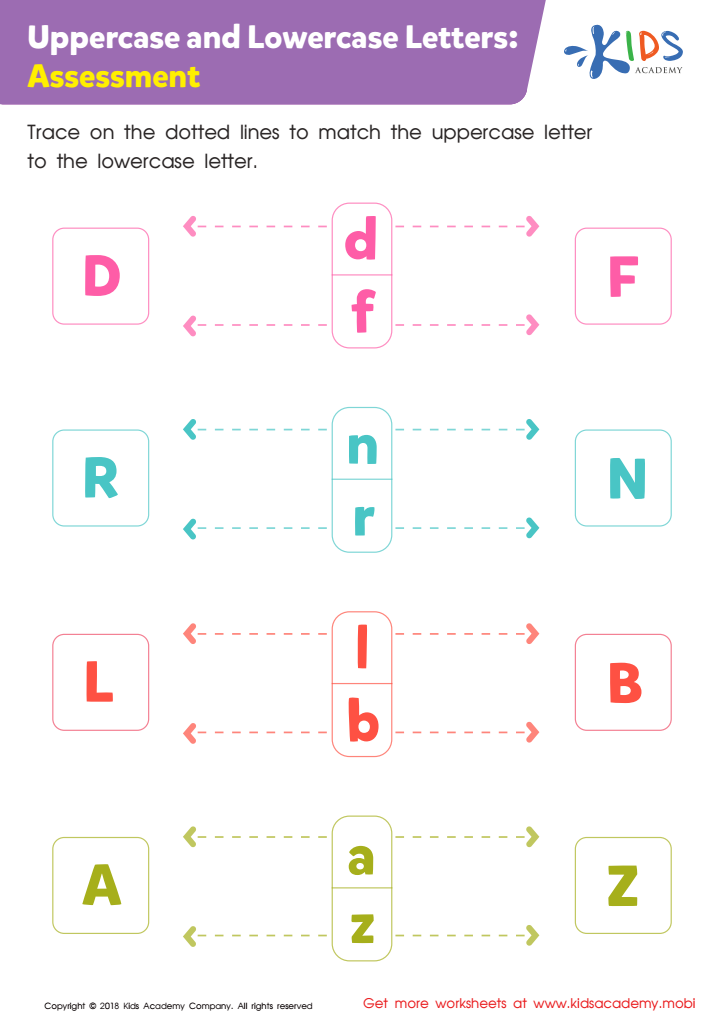
Uppercase and Lowercase Letters: Assessment Worksheet

Uppercase and Lowercase Letters: Assessment Worksheet

Assess your child's knowledge of upper- and lowercase letters with this worksheet. Have them trace the dotted lines to match the lowercase letters with their uppercase counterparts. This is a great way to gauge their progress and identify any areas of difficulty. Get a better understanding of your child's capabilities and encourage their development!
Uppercase and Lowercase Letters: Assessment Worksheet
Worksheet
Key Details from the Princess and the Pea Worksheet

Key Details from the Princess and the Pea Worksheet

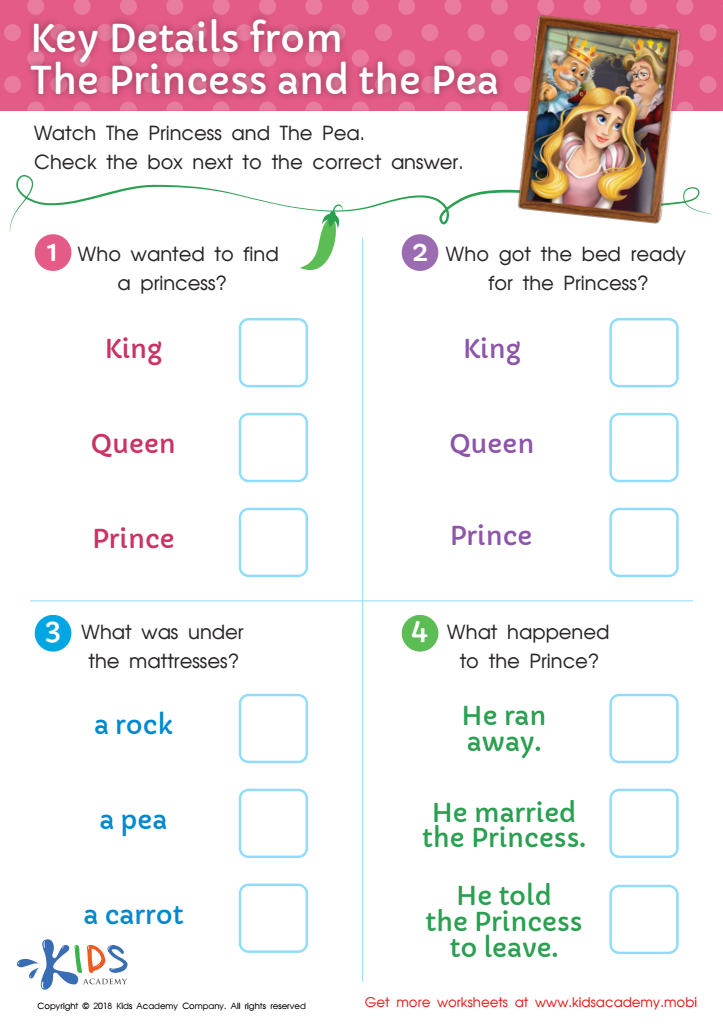
After reading The Princess and the Pea, ask your students questions to assess their comprehension of the story. Check their knowledge of key details. This printable can be used to help evaluate their understanding. Encouraging the recall of story events helps build important reading skills.
Key Details from the Princess and the Pea Worksheet
Worksheet
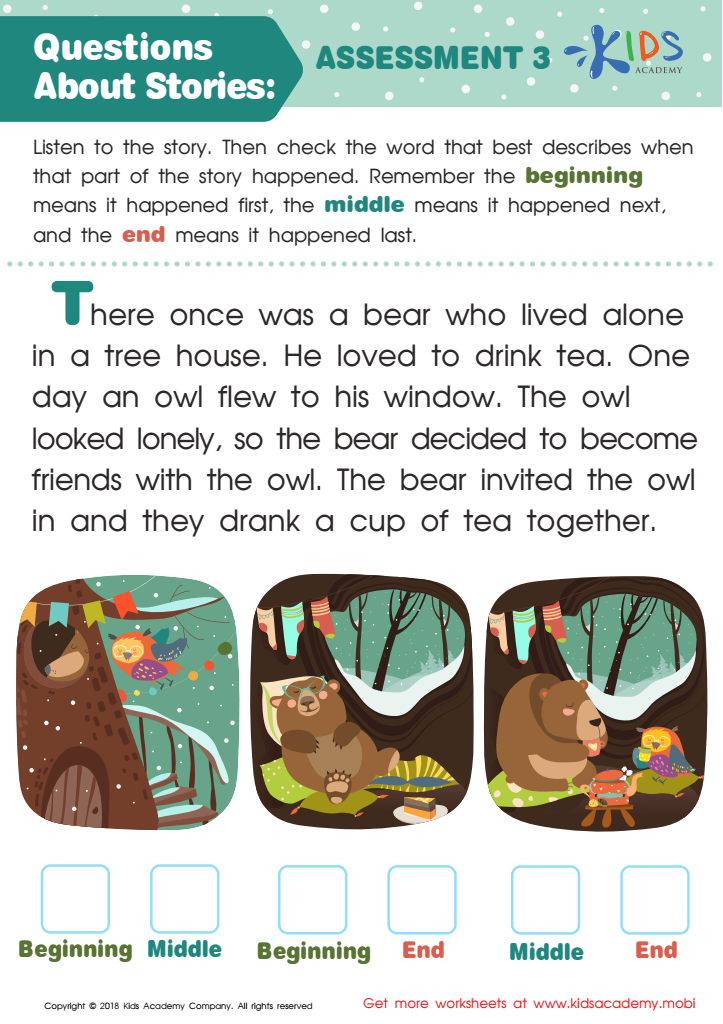
Questions About Stories: Assessment 3 Worksheet

Questions About Stories: Assessment 3 Worksheet

Help kids understand stories by having them listen to a story and check boxes for the beginning, middle, and end. This worksheet makes it fun for even the youngest learners to recall story elements and sequence of events. Let them listen to the story from start to finish, then look at the pictures to check which part of the story they depict.
Questions About Stories: Assessment 3 Worksheet
Worksheet
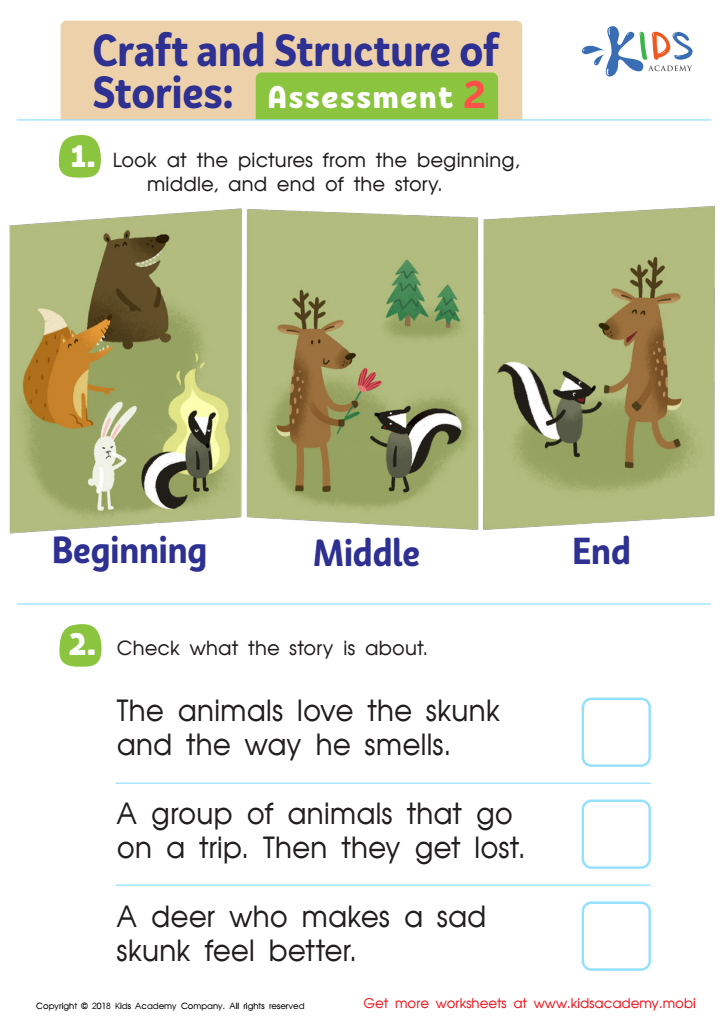
Craft and Structure of Stories: Assessment 2 Worksheet

Craft and Structure of Stories: Assessment 2 Worksheet

Help your child assess their story sequencing and reading comprehension skills using this cute worksheet! It encourages them to look at the three pictures on the page, each representing a scene from the beginning, middle and end. Ask them what the story is about, then let them check the box next to the correct answer. This is a great way to ensure they understand the main events of a story.
Craft and Structure of Stories: Assessment 2 Worksheet
Worksheet
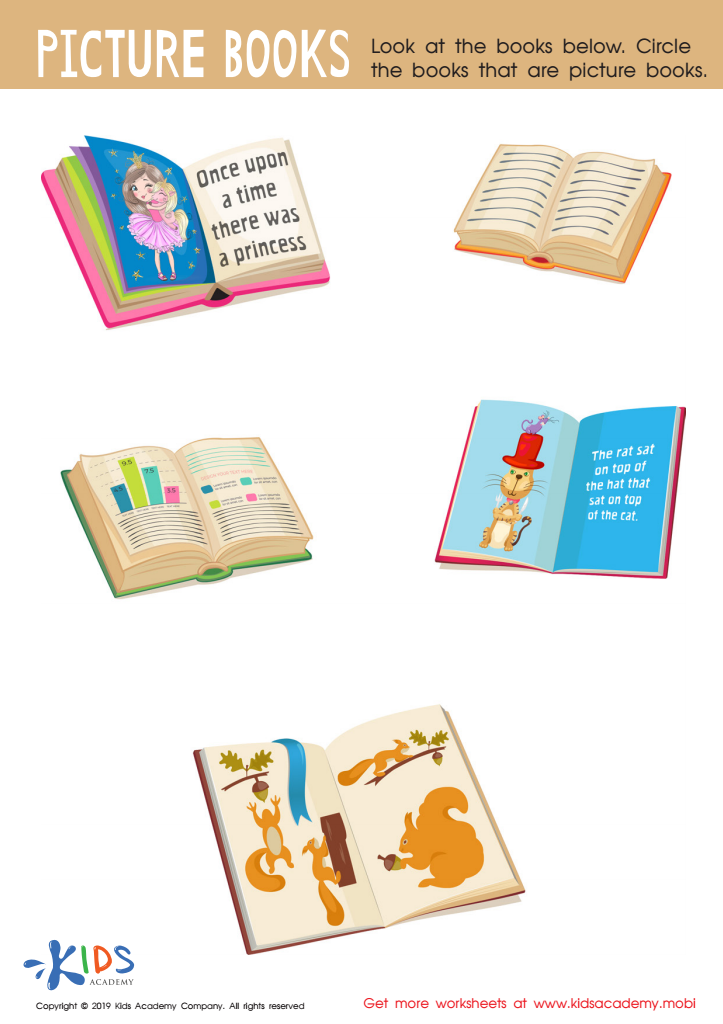
Picture Books Worksheet

Picture Books Worksheet

Kids will love this exercise! Get their imaginations going with five colorful picture books. Ask them to circle the books that are picture books and have them enjoy the exciting stories, along with the colorful images. Reading can become that much more enjoyable!
Picture Books Worksheet
Worksheet
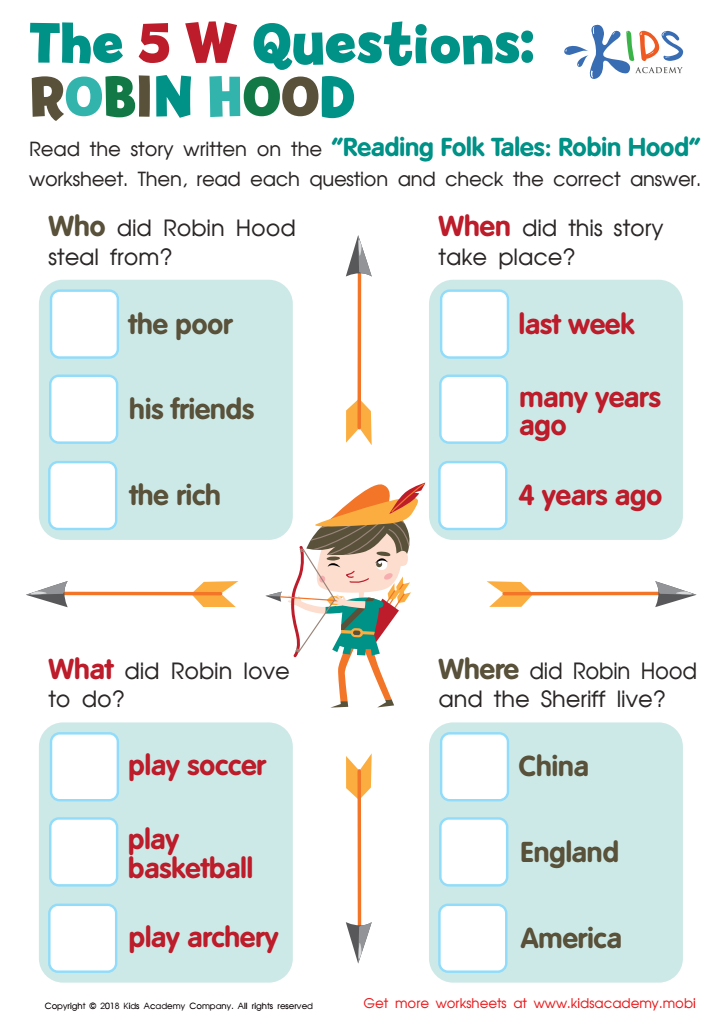
The 5 W Questions: Robin Hood Worksheet

The 5 W Questions: Robin Hood Worksheet

Before embarking on this Robin Hood adventure, ensure your child reads and comprehends the 'Reading Folk Tales: Robin Hood' worksheet. Have them consider the story's lessons, and observe the details. Read the questions and help your kids select the correct answers.
The 5 W Questions: Robin Hood Worksheet
Worksheet
Books For Kids PDF Worksheets: The Three Little Pigs

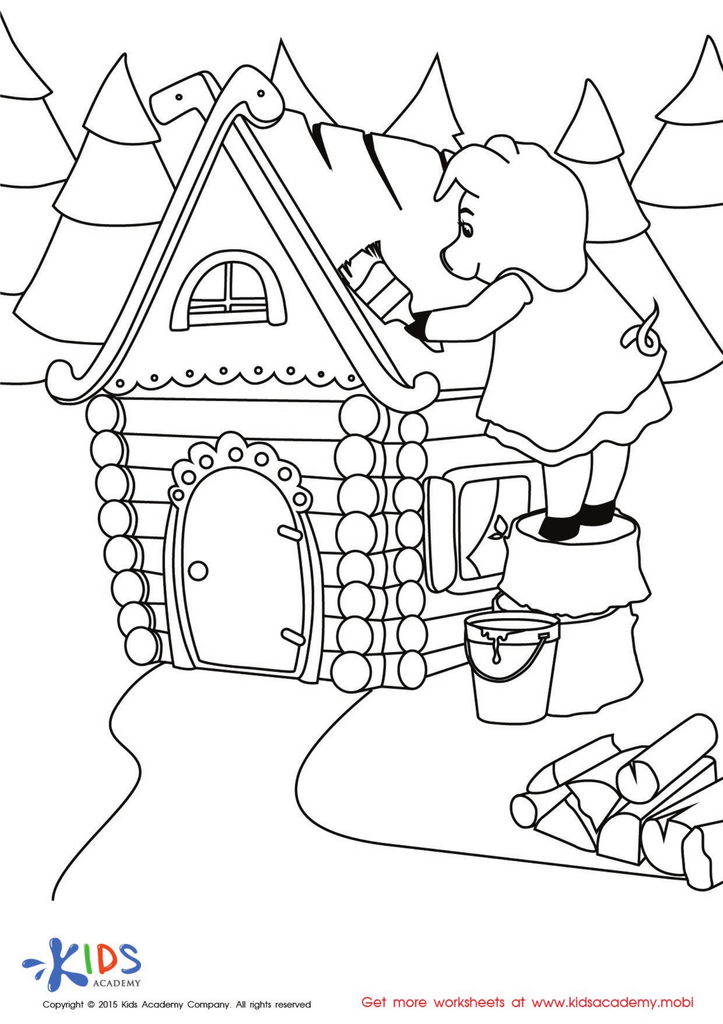
The Three Little Pigs Worksheet

Print out this fun coloring page and unleash your creativity! It features a cute little pig painting her new sticks house. What color will you choose? Work those fine motor muscles and enjoy the picture come to life! See what happens next to the three little pigs.
The Three Little Pigs Worksheet
Worksheet
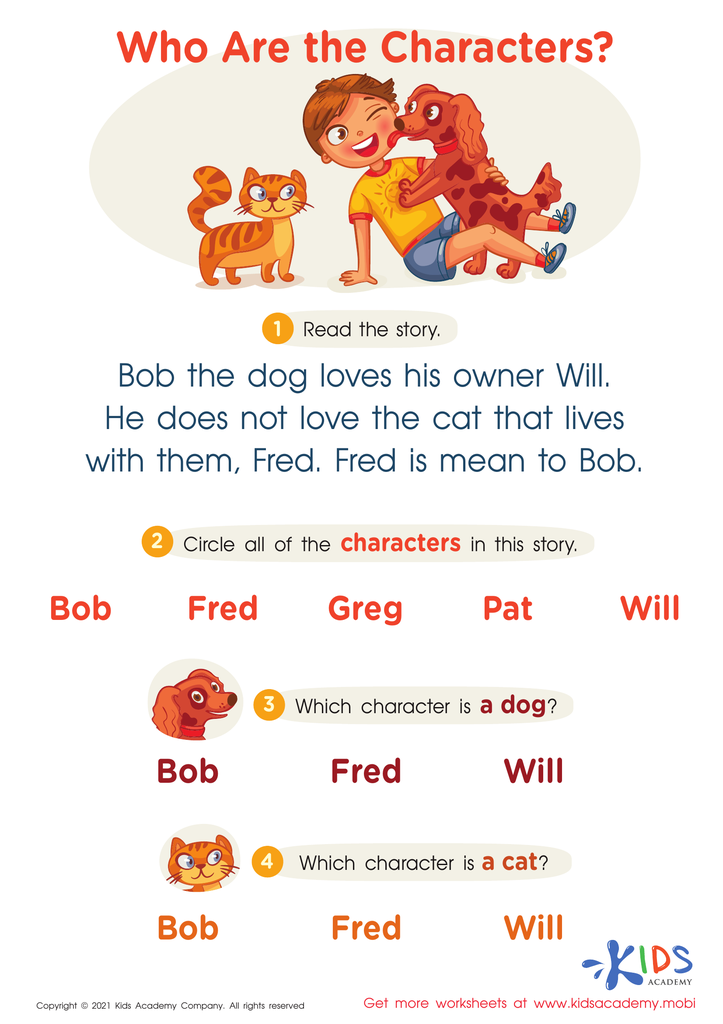
Who Are the Characters? Worksheet

Who Are the Characters? Worksheet

Original: The annual summer festival takes place on the last day of June and is celebrated with a parade and a carnival that features rides, games, and yummy food. Rewrite: Every June end marks the annual summer festival with a parade and carnival. Enjoy rides, games, and delicious food!
Who Are the Characters? Worksheet
Worksheet
Puss in Boots Vocabulary Worksheet


Puss in Boots Vocabulary Worksheet

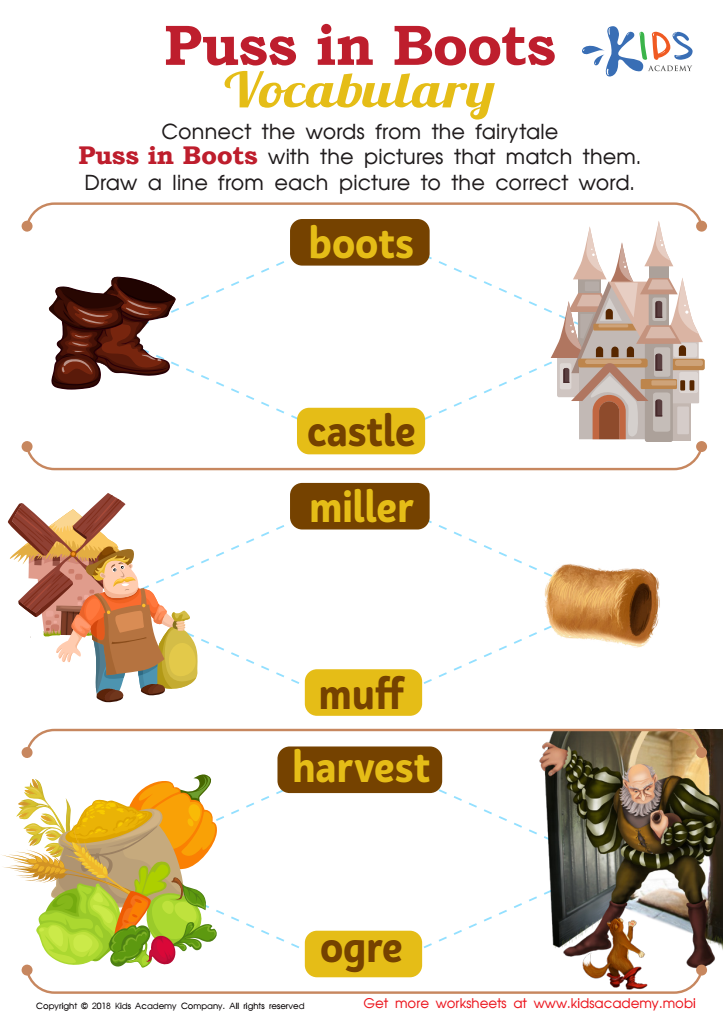
Let your kids enjoy story-telling while learning at the same time. Help them learn from the fairytale, Puss in Boots, by connecting words from the worksheet with the matching pictures. Ask them to draw a line between each picture and corresponding word to build their vocabulary.
Puss in Boots Vocabulary Worksheet

Worksheet


Story analysis is vital for children aged 4-9, as it promotes critical thinking, empathy, and language development. At this age, children are naturally curious about narratives, and by engaging in story analysis, educators and parents can deepen their understanding of the plots, characters, and underlying themes.

Through story analysis, children learn to identify and discuss key elements such as setting, conflict, and resolution, fostering comprehension skills essential for their academic success. This process encourages them to articulate their thoughts and connect personal experiences to the stories they read, enhancing their communication skills.

Additionally, analyzing stories exposes children to diverse perspectives and cultures, which nurtures empathy and emotional intelligence. When they explore characters’ motivations and feelings, they develop a greater understanding of social dynamics and moral dilemmas.

Furthermore, story analysis empowers parents and teachers to engage actively with children’s reading experiences, turning storytelling into a collaborative and interactive activity. This relationship enhances children’s love for reading and literature, laying a foundation for lifelong learning. Ultimately, story analysis is a fundamental tool for developing well-rounded, thoughtful individuals who appreciate the rich tapestry of human experiences reflected in stories.