
Story sequencing skills Worksheets for Ages 4-9
3 filtered results
Difficulty Level
Grade
Age
-
From - To
Subject
Activity
Standards
Enhance your child's storytelling abilities with our Story Sequencing Skills Worksheets, specifically designed for ages 4-9. These engaging and interactive worksheets help kids understand the order of events in stories, a crucial skill for comprehension and creativity. With colorful illustrations and age-appropriate tasks, children will enjoy practicing sequencing through fun exercises that capture their imagination. Our worksheets support essential literacy skills while boosting critical thinking, enabling young learners to connect ideas logically. Ideal for home or classroom use, these resources make learning enjoyable. Start fostering a love for stories and enhance your child's learning journey today!
Favorites
With answer key
Interactive
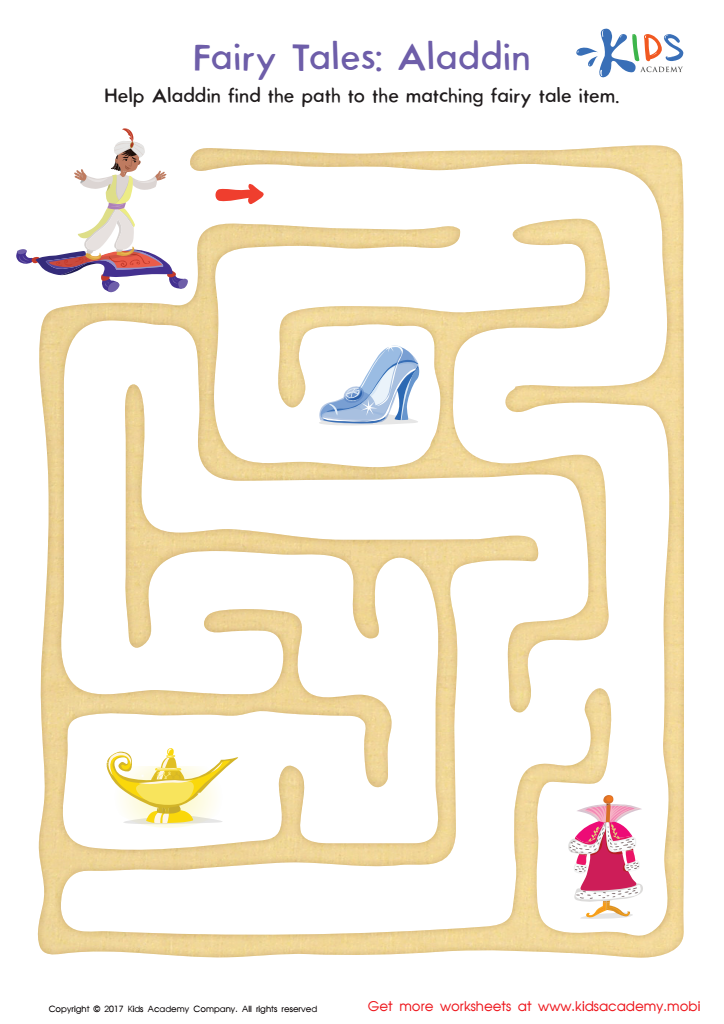
Fairy Tales Aladdin Printable
Test your child's reading recall with this challenge: the Aladdin maze worksheet! Guide your learner to identify objects linked to the story, then ask them to retell it afterwards. Hone those memory skills while having fun!
 Assign to My Students
Fairy Tales Aladdin Printable
Worksheet
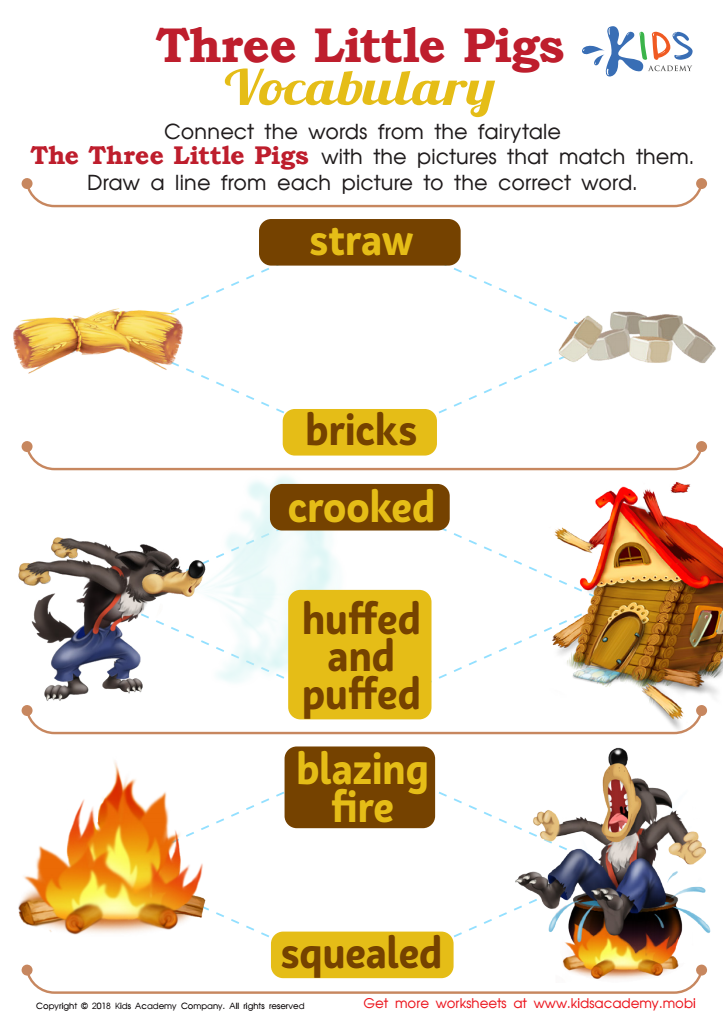
Three Little Pigs Vocabulary Worksheet
Read the Three Little Pigs to your children. Have them use the tracing sheet to connect the story words with the pictures. This is a fun and educational way to help them build their vocabulary.
Three Little Pigs Vocabulary Worksheet
Worksheet
Join Kids Academy for Free
Who is primarily going to use this learning content?







Story sequencing skills are essential for children aged 4-9 as they form the foundation for reading comprehension, cognitive development, and communication. Understanding the order of events in a story enhances a child's ability to interpret and retain information, which is crucial for learning in all subjects. For young learners, mastering sequencing means recognizing the beginning, middle, and end of a narrative, fostering their imagination and creativity as they recount tales in their own words.
Parents and teachers should emphasize sequencing skills because they promote critical thinking. Developing the ability to connect ideas logically helps children troubleshoot problems and draw meaningful conclusions. Additionally, these skills enhance vocabulary and language proficiency, making communication clearer and more effective.
Moreover, strong sequencing abilities allow children to integrate knowledge across various domains, whether recalling the steps in a science experiment or following a recipe in math class. By nurturing these skills, parents and educators empower children to become confident readers and storytellers, laying the groundwork for future academic success. Ultimately, teaching story sequencing helps cultivate well-rounded, articulate individuals prepared to navigate and understand the world around them.








