Understanding area Worksheets for Ages 4-9
3 filtered results
-
From - To
Explore our engaging "Understanding Area Worksheets" designed for children aged 4-9! These resources provide a fun and interactive way for young learners to grasp the concept of area, fostering a foundational understanding of measurement. Our worksheets feature colorful visuals and age-appropriate activities that encourage critical thinking and problem-solving skills. Kids will enjoy hands-on experiences as they measure, calculate, and compare different shapes and spaces. Perfect for classroom activities or at-home learning, these worksheets make mastering the concept of area enjoyable and accessible. Help your child build essential math skills with our thoughtfully crafted materials that inspire curiosity and learning!
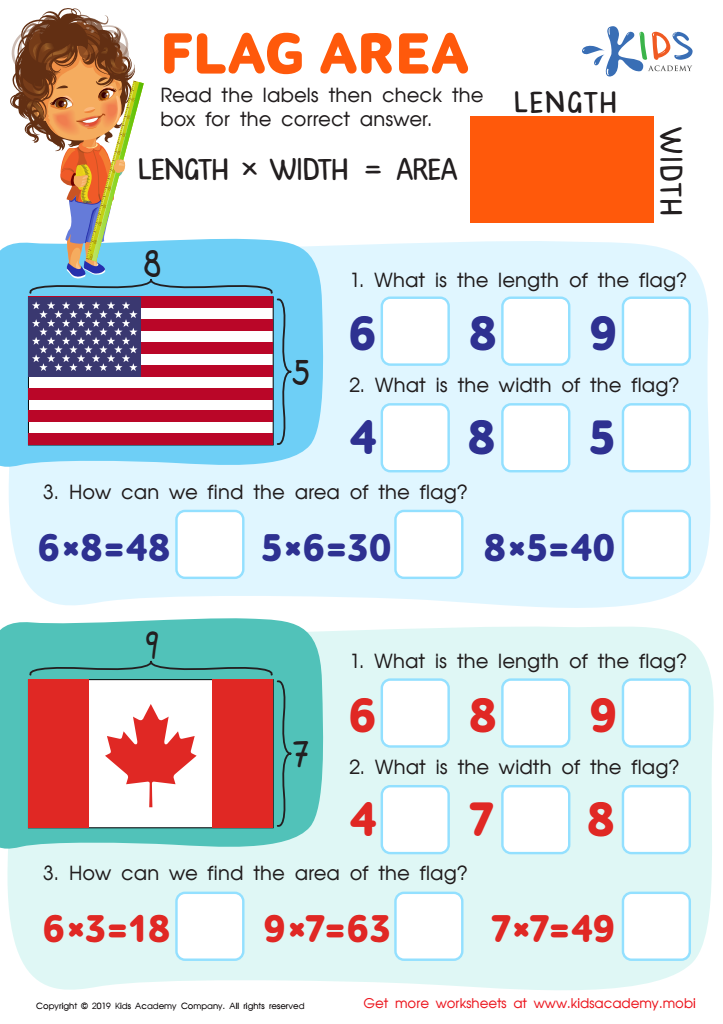
Flag Area Worksheet
 Assign to My Students
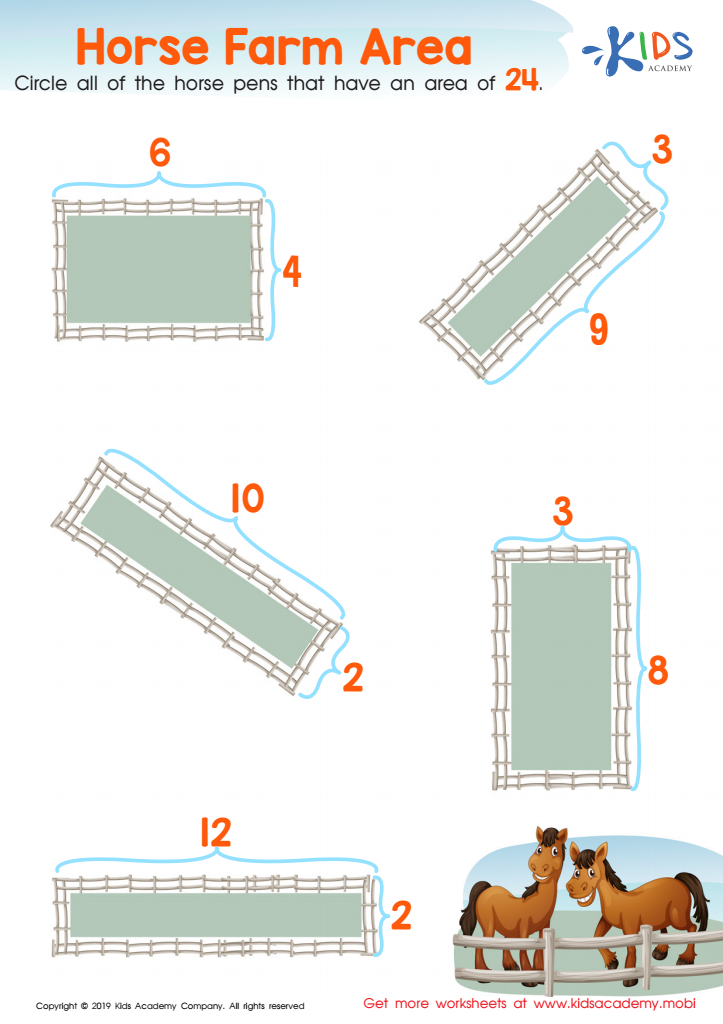
Horse Farm Area Worksheet
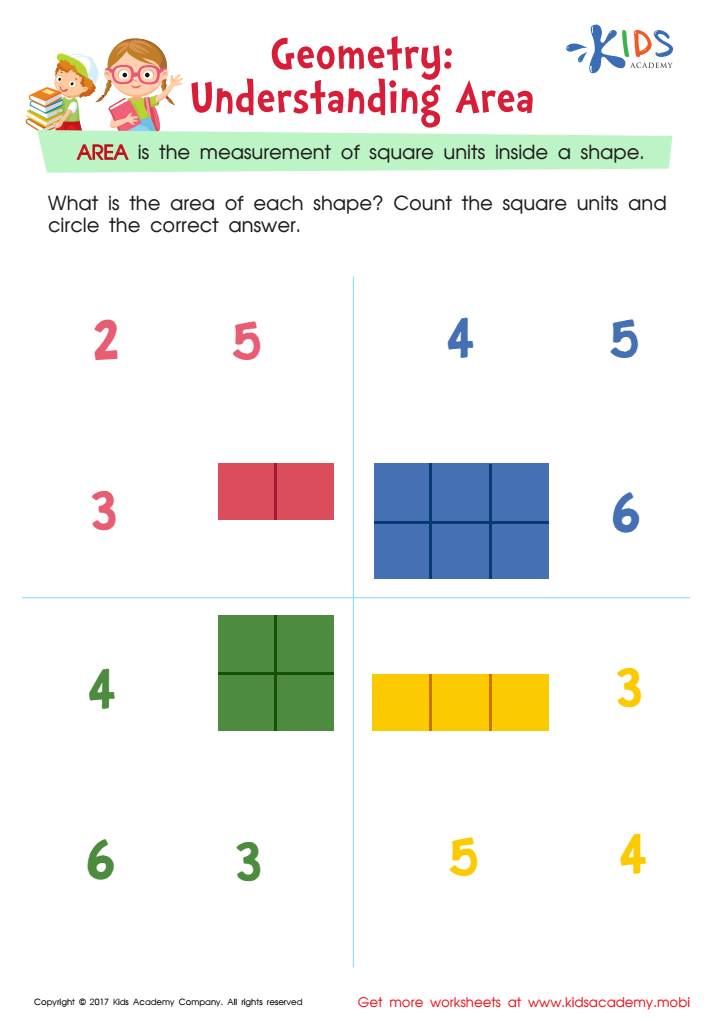
Understanding Area Worksheet








Understanding area is vital for children aged 4-9 as it lays the groundwork for essential mathematical concepts, fosters spatial awareness, and enhances critical thinking skills. At this developmental stage, children are naturally inquisitive, making it an ideal time to explore measurements and geometry. By grasping the concept of area, children learn to recognize and compare different spaces, which is fundamental for later mathematics and science education.
Additionally, knowledge of area encourages problem-solving and logical reasoning. For instance, when kids measure the area of a rectangle or squares, they practice multiplication and addition in practical situations. This connection to their immediate surroundings helps to make math relevant and engaging.
Moreover, understanding area can boost creativity through arts and crafts activities, where children can calculate space for projects, encouraging hands-on learning.
When parents and teachers promote an understanding of area through playful activities, they build confidence in children's mathematical skills, paving the way for success in more complex topics later on. Overall, teaching area cultivates logical thought, enhances recreational and educational activities, and sets the foundation for lifelong learning and appreciation of mathematics.








