Understanding democracy Worksheets for Ages 4-9
3 filtered results
-
From - To
Unlock the world of democracy for young minds with our "Understanding Democracy Worksheets for Ages 4-9." Designed to simplify complex concepts, these engaging and age-appropriate worksheets help children grasp the fundamentals of democratic values. Through fun activities, colorful illustrations, and step-by-step tasks, kids will learn about voting, fairness, community, and the importance of everyone's voice. Foster critical thinking and civic awareness early on, ensuring that the principles of democracy are not just understood but appreciated. Perfect for classroom and home use, these worksheets lay the groundwork for tomorrow’s informed and active citizens.
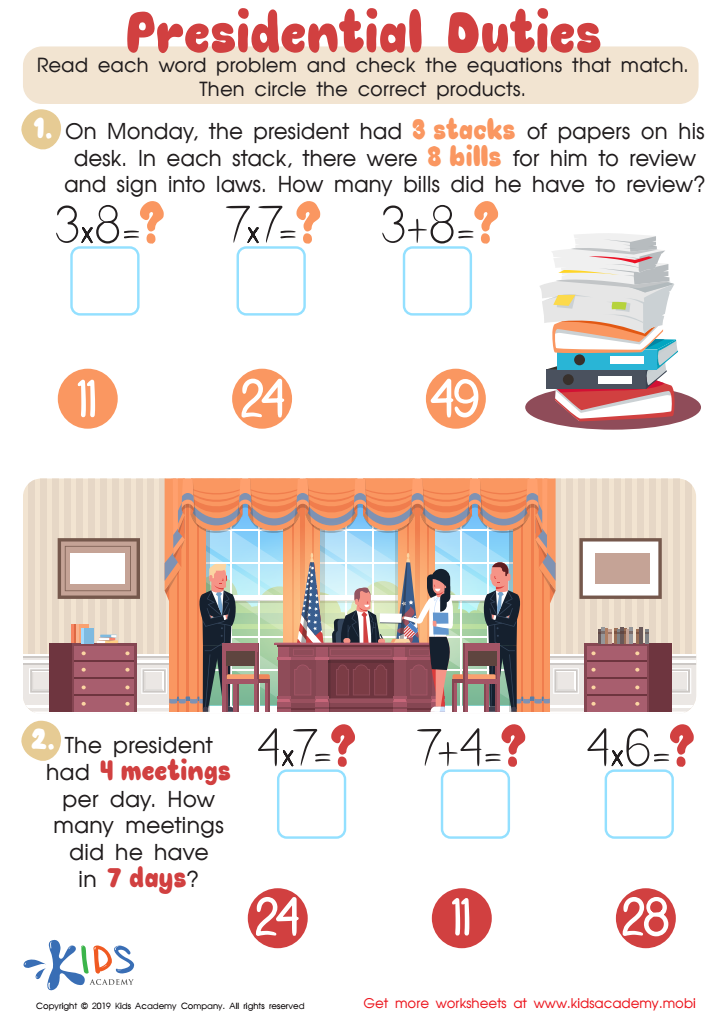
Presidential Duties Worksheet
 Assign to My Students
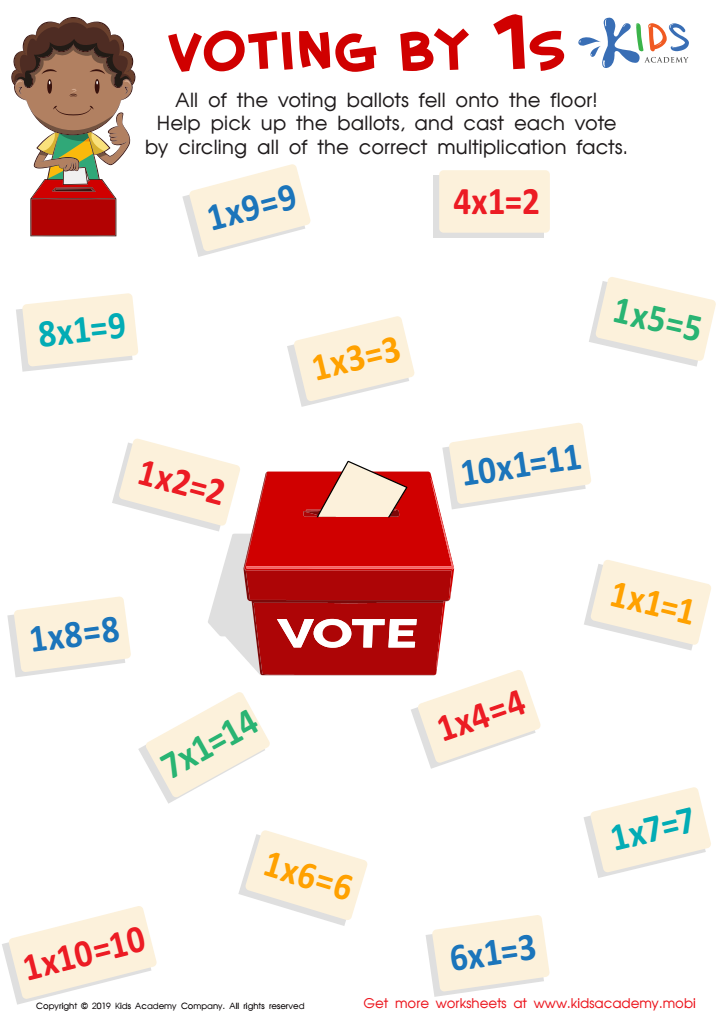
Voting by 1s Worksheet
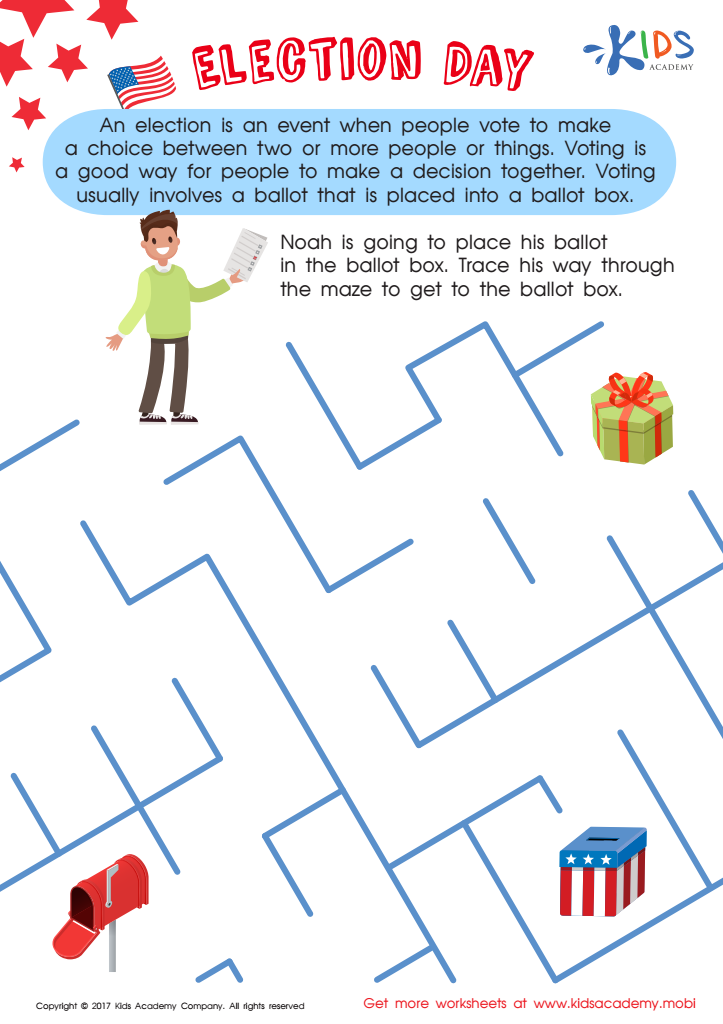
Election Day Worksheet







.jpg)
Understanding democracy at an early age lays the foundation for confident and informed future citizens. For ages 4-9, introducing the basics of democracy helps children grasp key concepts such as fairness, equality, and the importance of every individual’s voice. These values not only shape responsible adults but also cultivate an inclusive and empathetic classroom culture.
When parents and teachers underscore the principles of democracy, they empower children to make thoughtful and ethical decisions. This guidance fosters a sense of agency in youngsters, encouraging them to believe that their ideas and opinions matter. Taking turns, sharing, and respectful communication are relatable elements of democracy that can be seamlessly incorporated into everyday activities.
Moreover, understanding democracy from a young age equips children with cooperative and critical thinking skills. By learning to listen, articulate their views, and appreciate diverse perspectives, kids become more adept at problem-solving and working collaboratively. This mirrors democratic processes in broader society.
In essence, teaching democracy paves the way for children to grow into engaged, respectful, and active participants in their communities. Building these qualities early not only benefits individual growth but also enhances collective civic life, creating a stronger, more empathetic society for the future.








