Understanding force Worksheets for Ages 4-9
3 filtered results
-
From - To
Explore our engaging "Understanding Force Worksheets" designed specifically for children aged 4-9. These worksheets provide a fun and interactive way for young learners to grasp the fundamental concepts of force in a relatable manner. With vibrant illustrations and diverse activities, kids will discover how forces influence motion through games, puzzles, and hands-on challenges. Whether they’re pushing, pulling, or exploring the effects of gravity, these resources encourage critical thinking while enhancing their fine motor skills. Perfect for home or classroom use, our worksheets offer an excellent opportunity for parents and educators to spark curiosity and foster a love for science early in life!
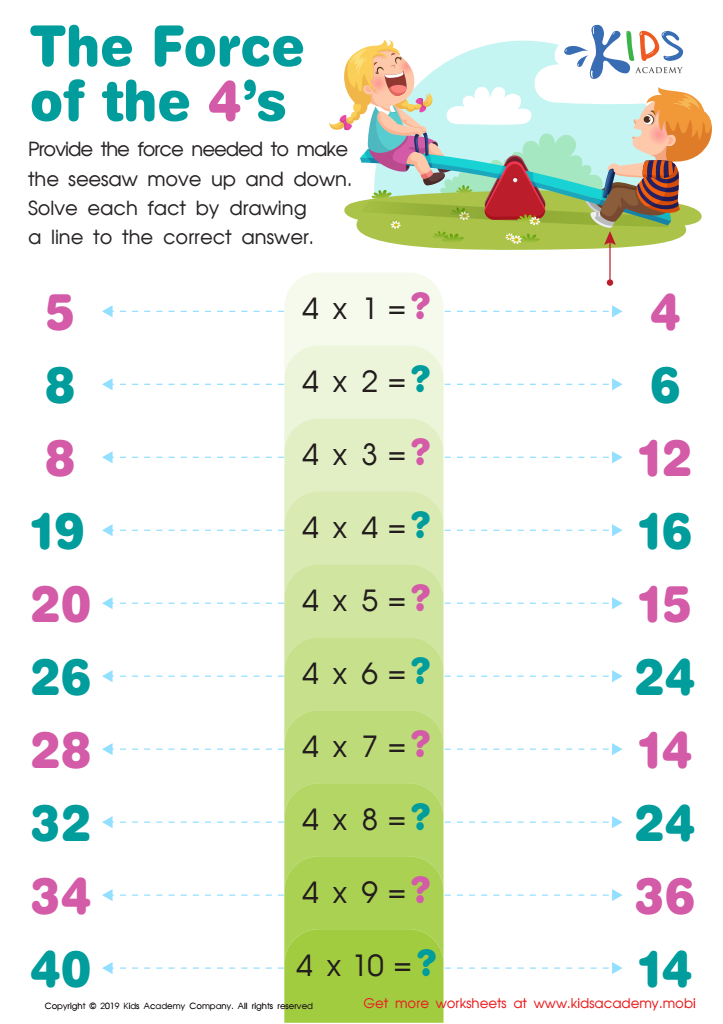
The Force of the 4's Worksheet
 Assign to My Students
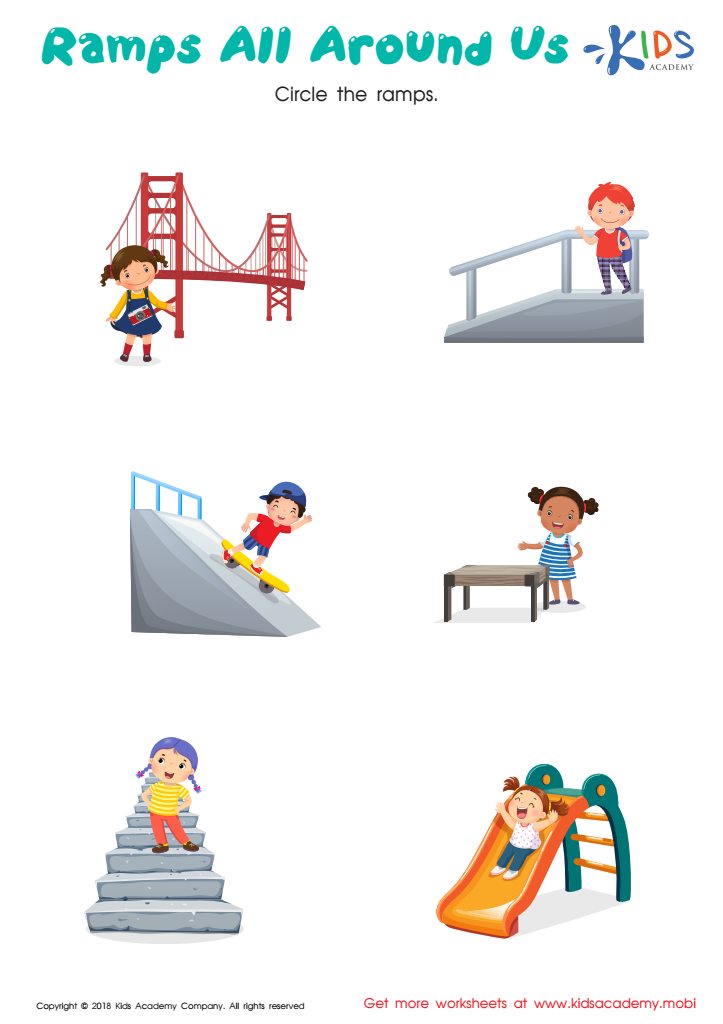
Ramps All Around us Worksheet
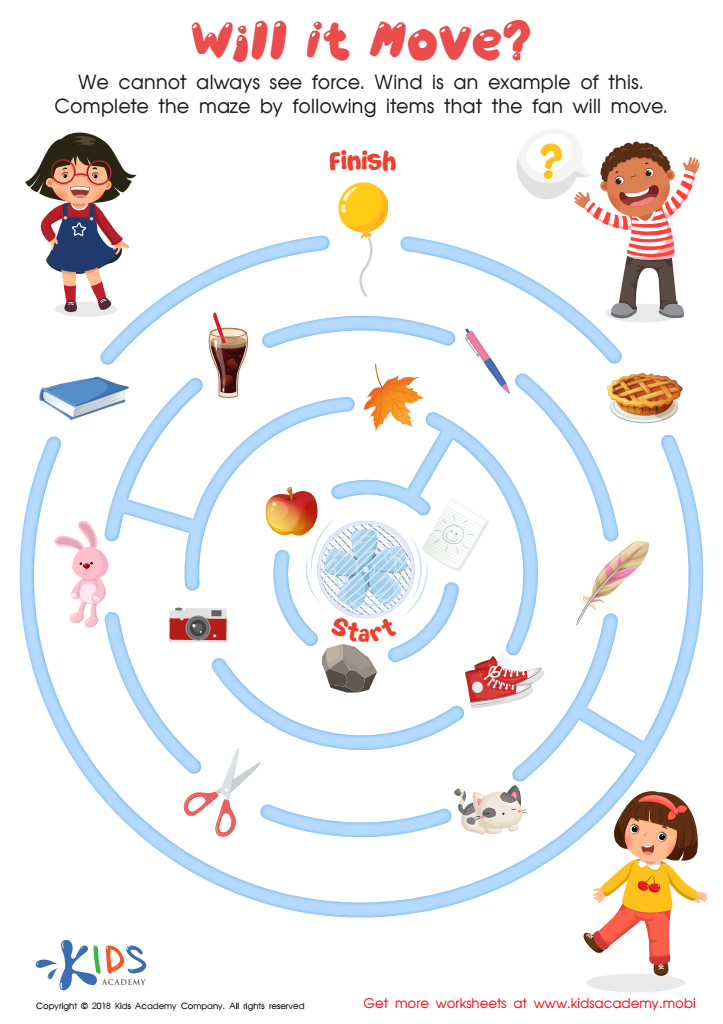
Will it Move? Worksheet








Understanding forces is crucial for children aged 4-9 as it lays the foundation for their scientific literacy and critical thinking skills. At this age, children are naturally curious about how things work, making it an ideal time to introduce concepts like push and pull. Engaging with the principles of force enables children to explore their environment, enhancing their observational skills and encouraging hands-on learning.
Incorporating concepts of force into everyday experiences helps reinforce inquiry-based learning. This age group benefits from play-based activities, such as building structures, rolling balls, or conducting simple experiments. These playful interactions facilitate understanding, as children can see firsthand the effects of different forces.
Moreover, force concepts foster problem-solving abilities. For instance, when tasked with moving an object across a surface, children experiment with different techniques and discover optimal solutions, enhancing their cognitive development.
Finally, encouraging discussions around forces nurtures collaboration and communication skills. Parents and teachers who actively engage children in these topics cultivate a sense of wonder about the world, making science relatable and enjoyable. Ultimately, grasping the basics of force not only supports academic growth but also equips young learners with essential skills for future learning.








