Understanding number patterns Worksheets for Ages 4-9
6 filtered results
-
From - To
Explore our "Understanding Number Patterns Worksheets" specifically designed for children aged 4-9! These engaging worksheets help young learners grasp the foundational concept of number patterns through fun, interactive exercises. By recognizing and completing patterns, kids enhance their critical thinking and problem-solving skills while building confidence in mathematics. Each worksheet is tailored to different learning levels, ensuring that every child can progress at their own pace. Perfect for home or classroom use, these worksheets make learning enjoyable and effective. Discover the joy of mastering number patterns with our carefully crafted resources that encourage exploration and creativity in early mathematics!
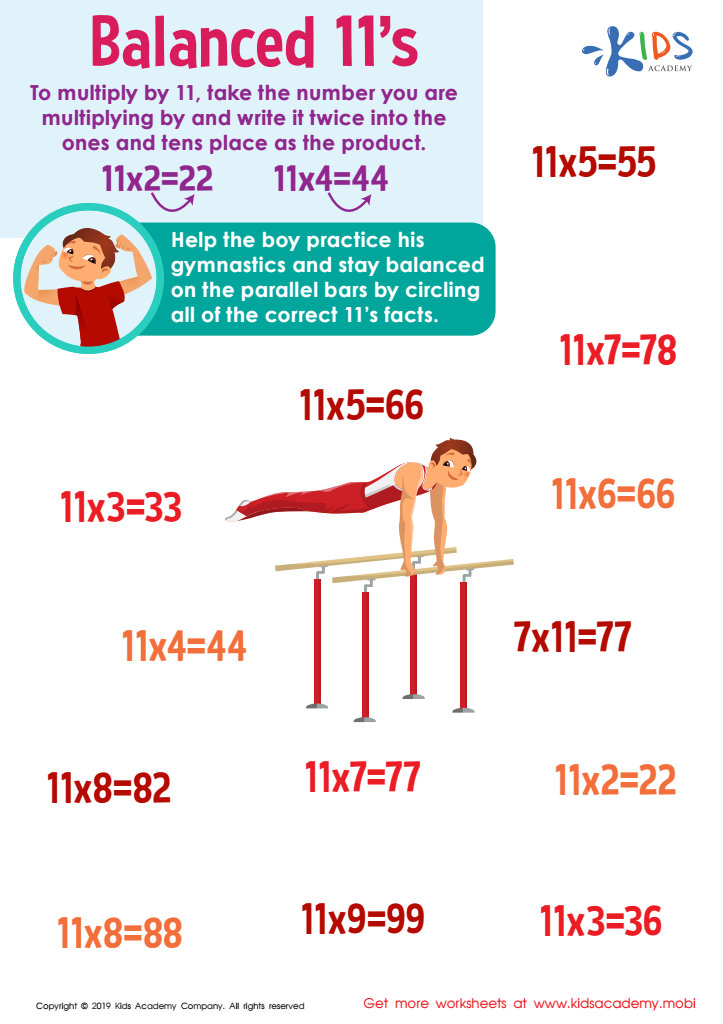
Balanced 11s Worksheet
 Assign to My Students
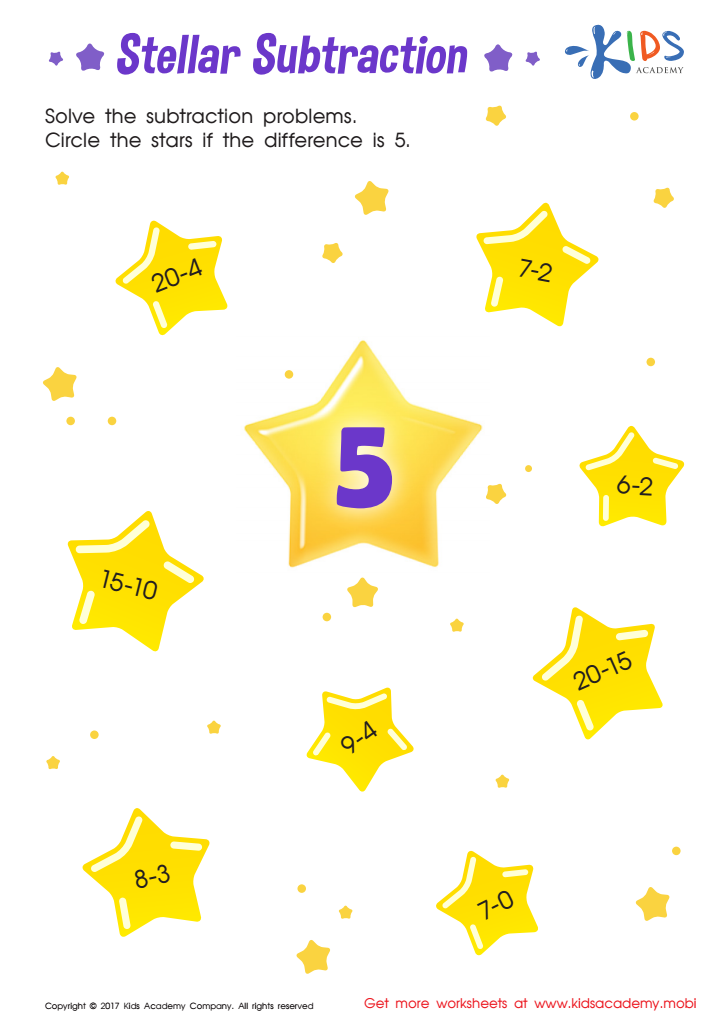
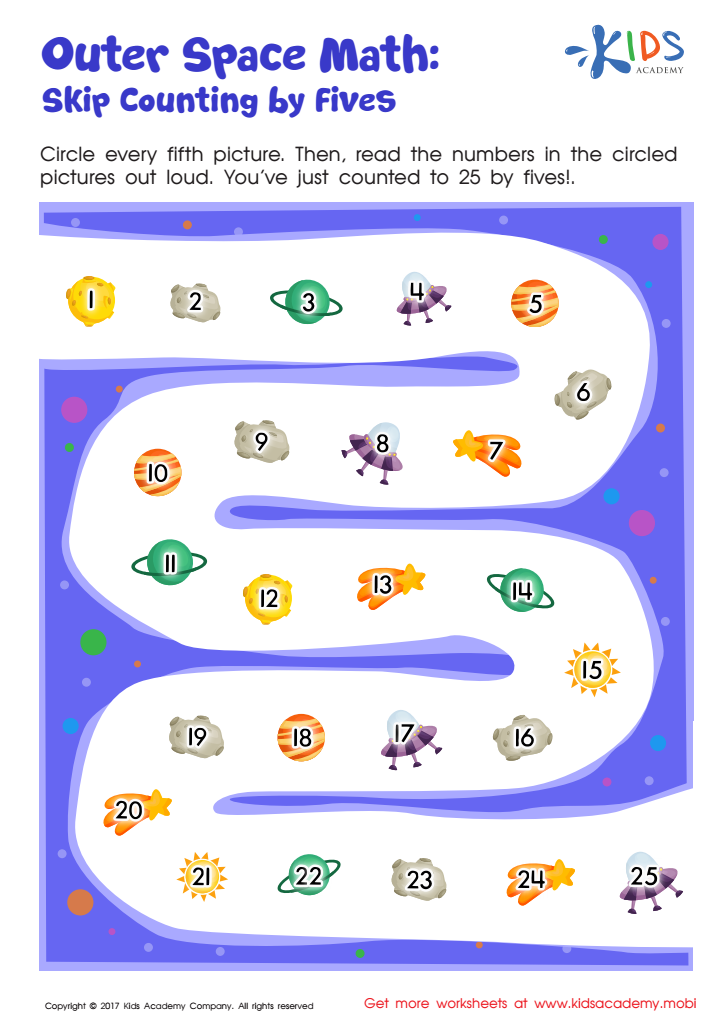
Skip Counting by 5s: Outer Space Math Printable
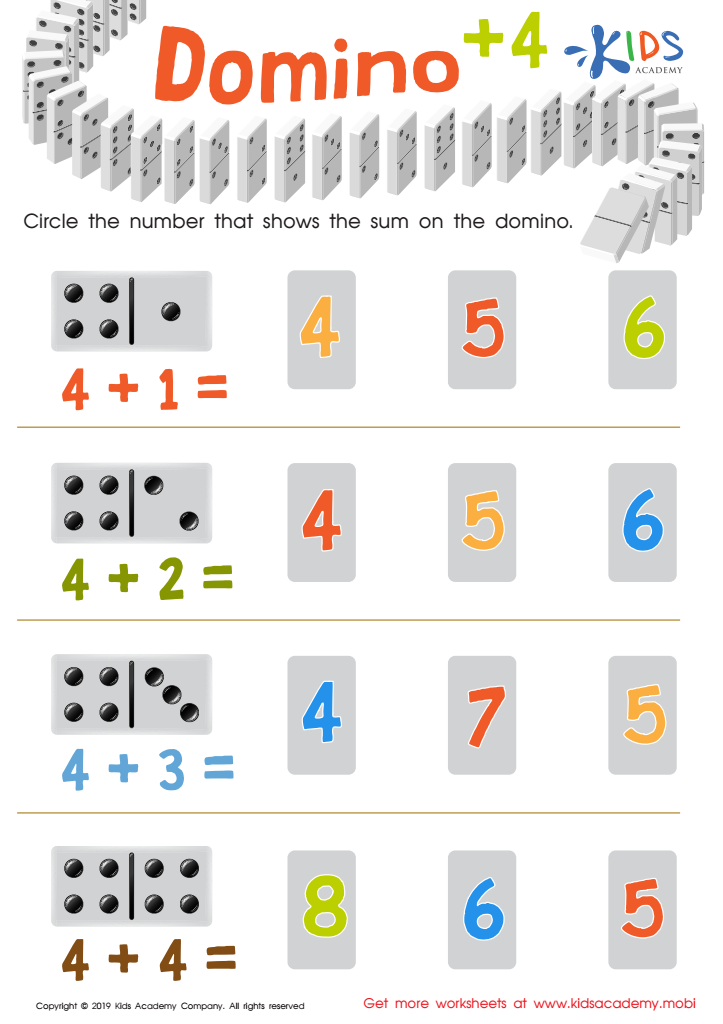
Domino +4 Worksheet
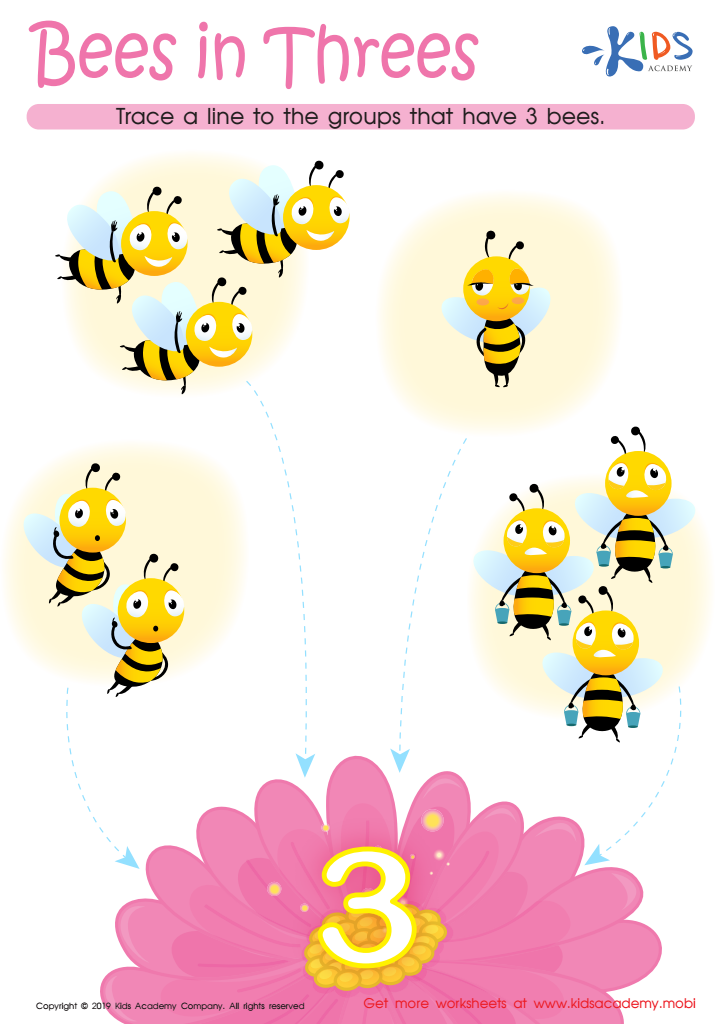
Bees in Threes Worksheet





Understanding number patterns is crucial for children aged 4-9 as it lays the foundation for their mathematical development. By recognizing and constructing patterns, children enhance their problem-solving skills, which are valuable beyond math. Patterns help children make connections between numbers, promoting logical thinking and reasoning abilities. For example, identifying sequences such as even and odd numbers or award patterns fosters a deeper understanding of the number system.
Additionally, engaging with patterns encourages critical cognitive skills, like prediction and abstraction. For instance, when students learn to recognize patterns in addition or multiplication, they can see the relationships and rules governing numbers, making complex operations easier to grasp later on. Parents and teachers also benefit, as understanding number patterns helps in monitoring developmental milestones and addressing individualized needs effectively.
Moreover, pattern recognition forms the basis for more advanced mathematical concepts, such as algebra, geometry, and statistics, creating a strong foundation for future learning. By recognizing the importance of number patterns, educators and caregivers can create rich learning environments that nurture mathematical thinking and prepare children for academic success in mathematics and beyond. In conclusion, fostering an early appreciation for number patterns dramatically influences a child's confidence and inclination toward math as they grow.








