Understanding patterns Worksheets for Ages 4-9 - Page 3
61 filtered results
-
From - To
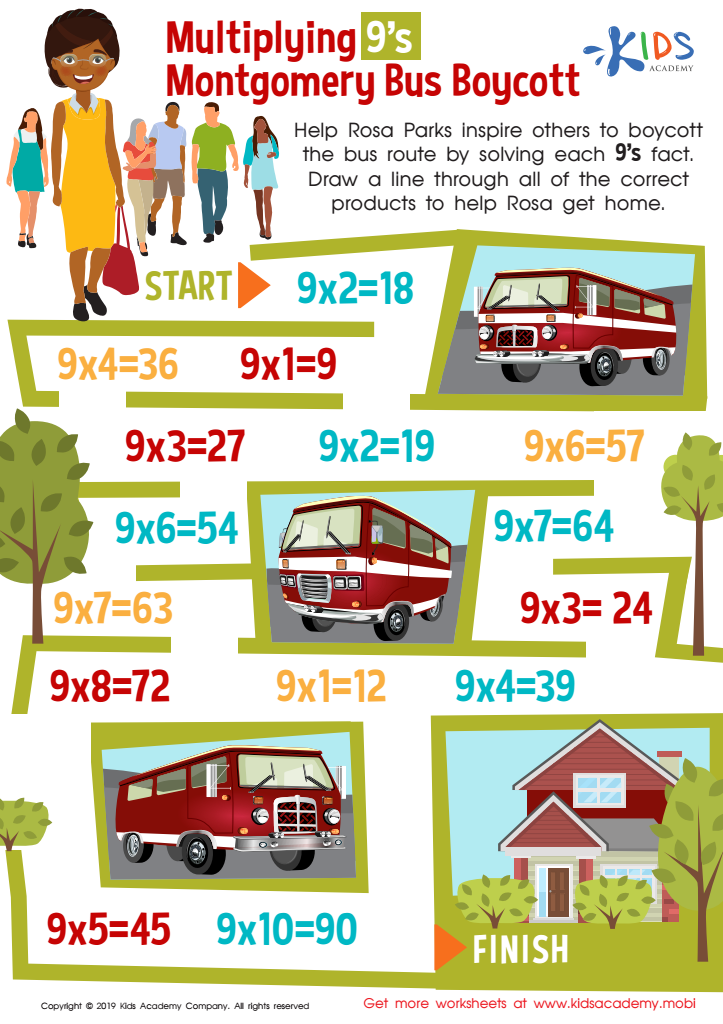
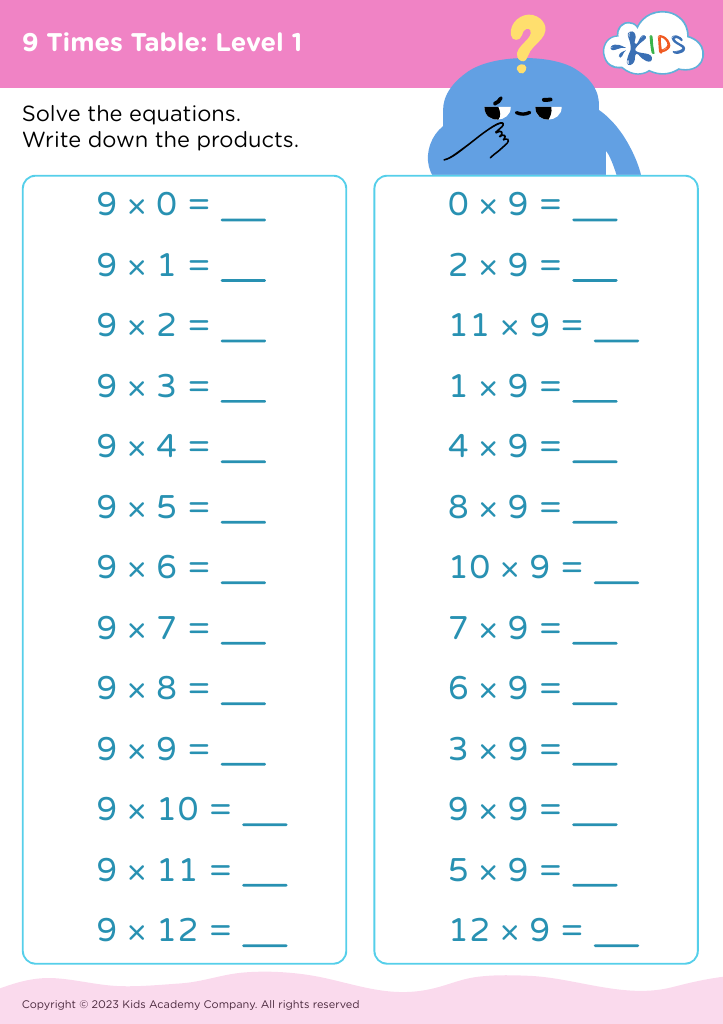
Multiplying 9’s Montgomery Bus Boycott Worksheet
 Assign to My Students


%20(1).jpg)




Understanding patterns is fundamental for children aged 4-9 as it forms the bedrock of mathematical thinking and problem-solving skills. Early recognition of patterns aids in developing logical reasoning and critical thinking. When children identify patterns, they learn to anticipate what comes next, leading them to become more organized in their thinking and better equipped to tackle complex tasks in the future.
Patterns are omnipresent in everyday life, from nature to art and beyond, providing children with a framework to understand the world around them. By exploring patterns in various contexts—whether through shapes, colors, or sounds—children enhance their observational skills and creativity.
Parents and teachers play a crucial role in facilitating this learning. Providing fun and engaging activities that encourage pattern recognition—like games, music, or art—can significantly enrich a child's educational experience.
Furthermore, early exposure to patterns provides a pathway to more advanced mathematical concepts, such as multiplication and geometry, allowing children to grasp these concepts more readily later in life. Ultimately, understanding patterns cultivates a love for learning and exploration, setting a strong foundation for lifelong skills in mathematics and beyond. Engaging children in patterns also supports social skills, as they learn to collaborate and communicate through group activities.








