Understanding pollination Worksheets for Ages 4-9
4 filtered results
-
From - To
Discover the fascinating world of pollination with our "Understanding Pollination Worksheets" designed for children ages 4-9! These interactive, engaging worksheets introduce young learners to essential concepts about how plants reproduce and the vital role insects and wind play in this process. With colorful illustrations and fun activities, children will explore the journey from flower to fruit while enhancing their reading and comprehension skills. Perfect for classrooms or at-home learning, these worksheets provide a hands-on approach to environmental education that nurtures curiosity and appreciation for nature. Start your child's adventure in understanding pollination today!
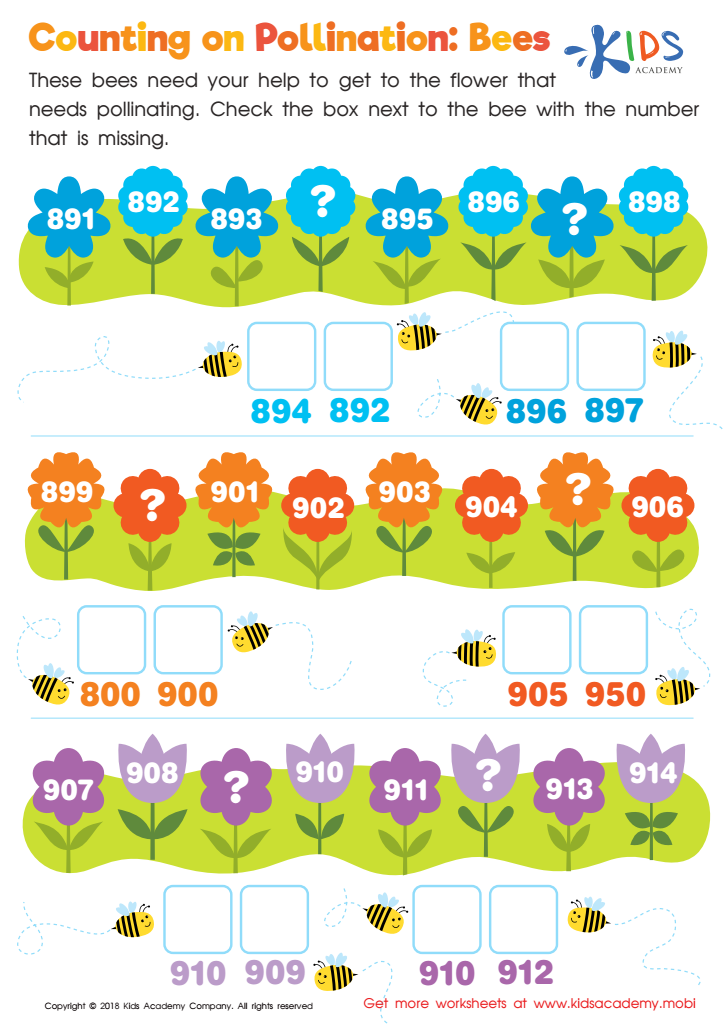
Counting on Pollination: Bees Worksheet
 Assign to My Students
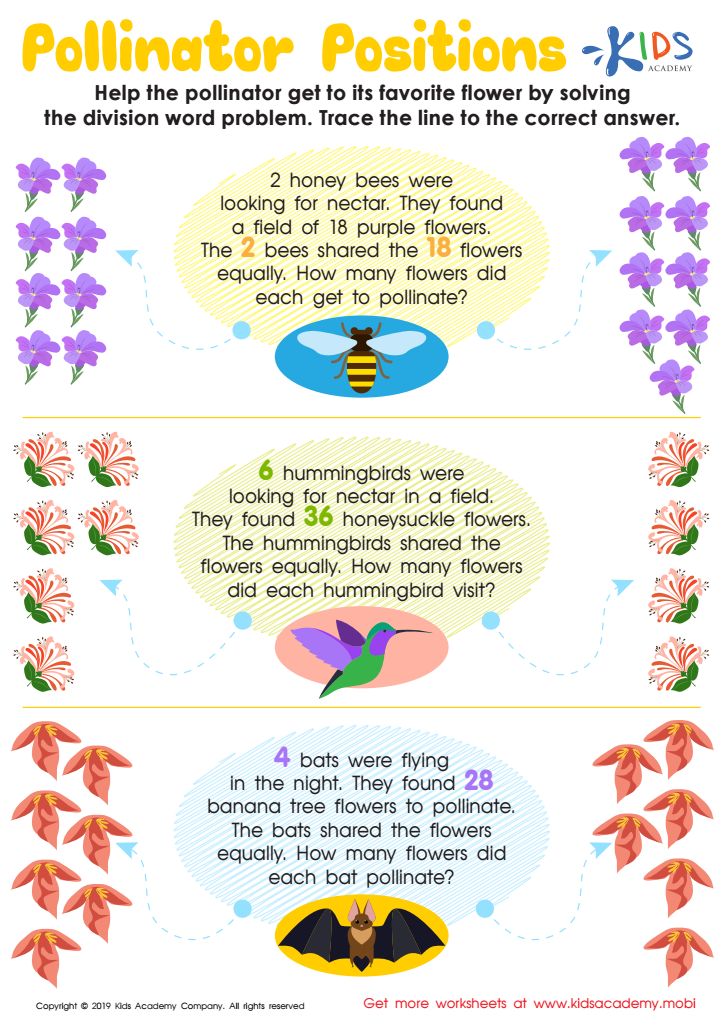
Pollinator Positions Worksheet
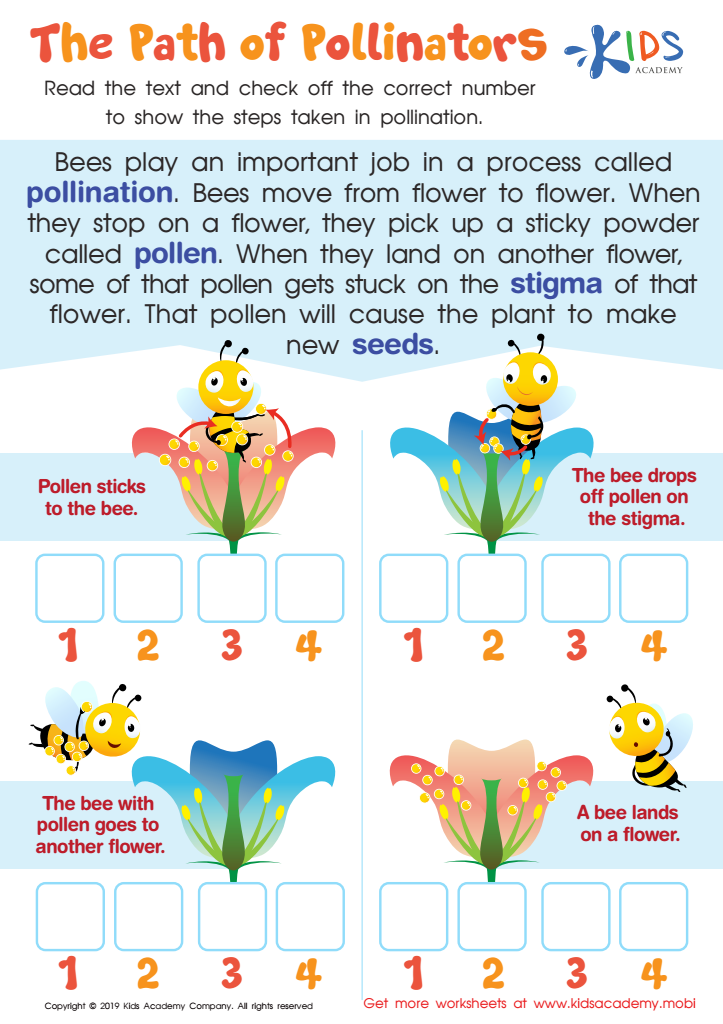
The Path of Pollinators Worksheet
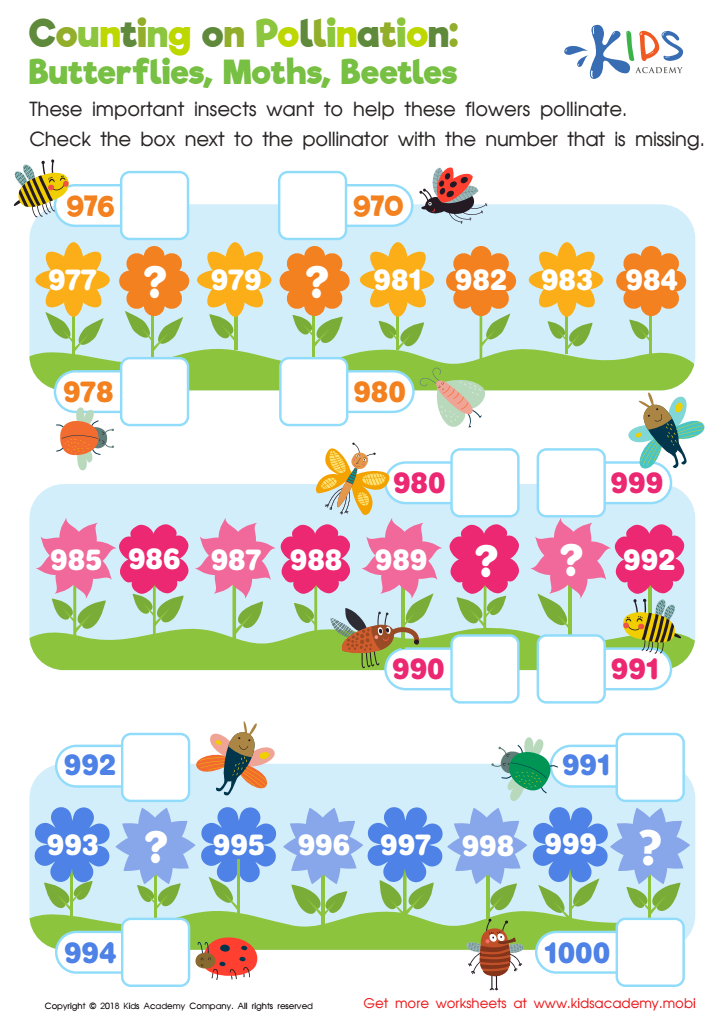
Counting on Pollination: Butterflies, Moths, Beetles Worksheet





.jpg)


Understanding pollination is essential for children aged 4-9 because it connects them to the natural world and the importance of biodiversity. Teaching young learners about pollination fosters curiosity about plants and animals, helping them appreciate the environment around them. Pollinators like bees, butterflies, and birds play a critical role in ecosystem health by enabling the reproduction of plants. When children know how pollination works, they recognize its impact on food production, including fruits and vegetables, which is vital for their nutrition.
Moreover, awareness of pollination ignites an interest in science and nature, laying a foundation for lifelong learning. It provides children with hands-on exploration opportunities, such as growing a garden or observing wildlife, encouraging them to engage in outdoor activities and develop a sense of responsibility for caring for the environment.
Finally, discussing pollination helps instill values of sustainability and the importance of protecting pollinators from environmental threats. Parents and teachers can inspire the next generation of conservationists, empowering children to take actions that support the health of our planet. By fostering an understanding of pollination, we equip children with knowledge to be mindful stewards of their surroundings, nurturing an appreciation for the intricate connections within our ecosystems.








