Understanding symmetry Worksheets for Ages 4-9 - Page 2
38 filtered results
-
From - To
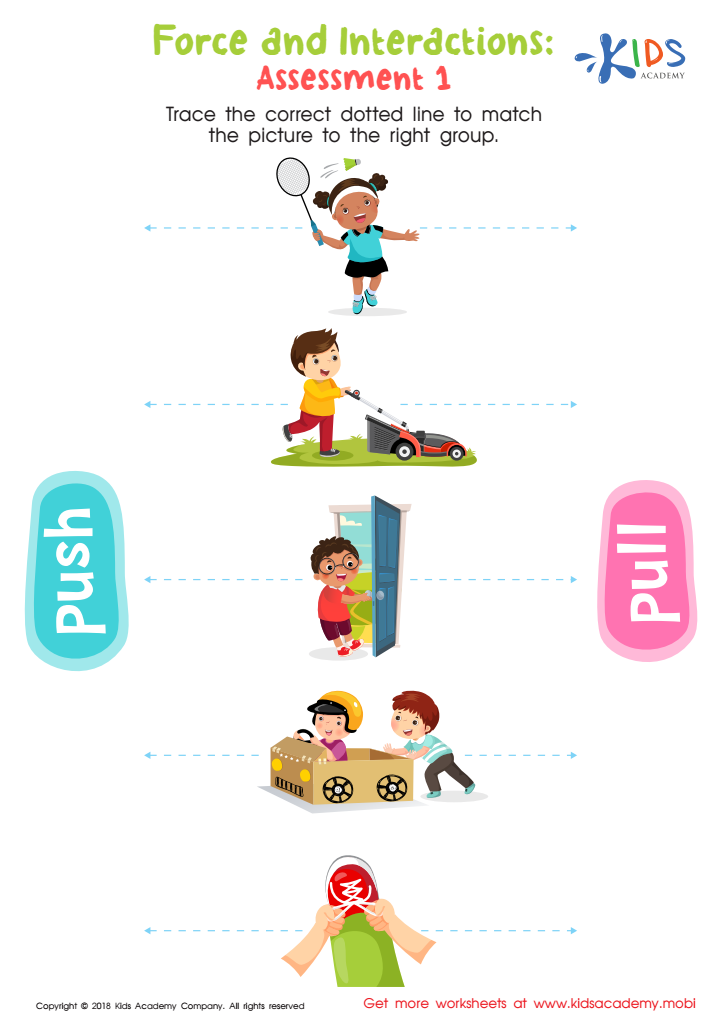
Force and Interactions: Assessment 2 Worksheet
 Assign to My Students
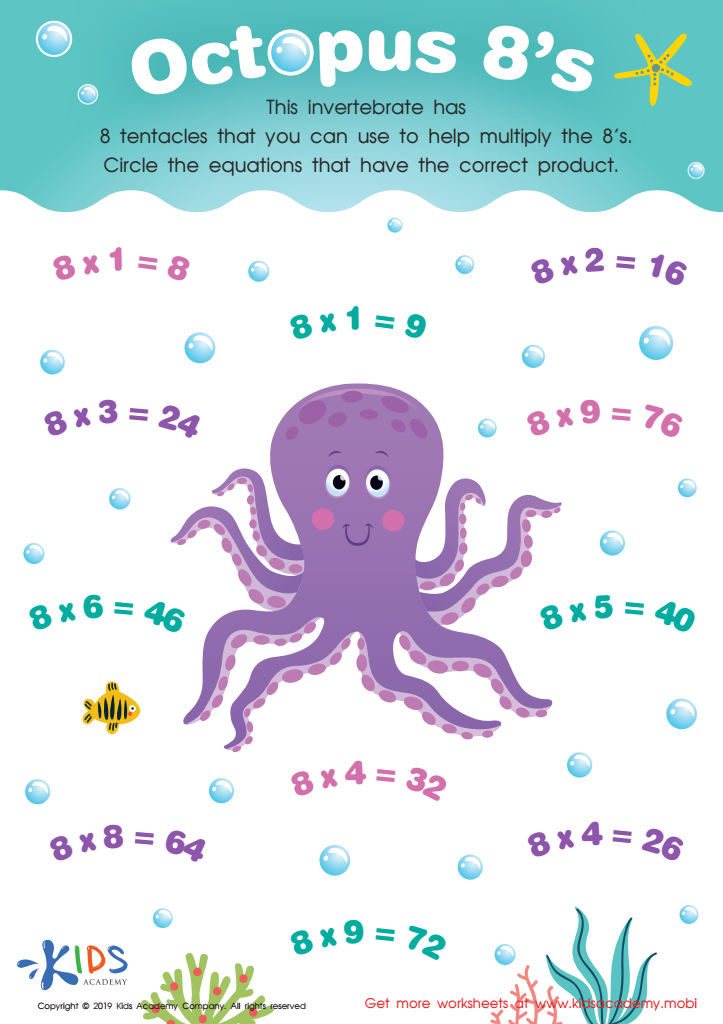
Octopus 8’s Worksheet







Understanding symmetry is crucial for children ages 4-9, as it lays the foundation for various cognitive and spatial skills essential for their overall development. Symmetry is not just a mathematical concept; it's a natural principle that children encounter in their everyday lives. By learning about symmetry, children develop critical thinking and pattern recognition skills, which enhance their problem-solving abilities.
For parents and teachers, emphasizing symmetry can ignite a child's curiosity and creativity. Engaging in activities involving symmetrical designs, like drawing, folding paper, or exploring nature, fosters an appreciation for both art and science. It helps children recognize relationships and balance, which are pertinent in both subjects, thereby making learning more interconnected.
Moreover, engaging with symmetry enhances fine motor skills, as children manipulate objects to understand mirroring and balance. This understanding sets the stage for advanced mathematical concepts in later grades, making future learning smoother.
Ultimately, encouraging comprehension of symmetry promotes logical reasoning, analytical skills, and creativity, which are vital in today’s diverse learning environments. By focusing on symmetry, parents and teachers equip children with essential tools for future academic success and everyday problem-solving.








